Last updated November 18, 2026




Free written scope consultation - allowances, timeline, and change-order rules on paper before a single trade is scheduled
Construction Cost Breakdown: The Spring Valley Homeowner’s Reference for 2026
A kitchen remodel priced at $45,000 by a national cost calculator can land at $51,000 to $54,000 in Spring Valley once Clark County permit fees, licensed subcontractor labor rates, and the upcharges for UV-stable and heat-rated materials are added back in. That 8 to 15 percent gap between database estimates and real bids derails more renovation budgets here than any single line item. This guide breaks down what kitchens, bathrooms, additions, flooring, and roofing actually cost in Spring Valley in 2026, line by line, and shows you where the national numbers quietly fall short.
Quick Answer
Remodeling in Spring Valley in 2026 runs roughly $28,000 to $95,000 for a full kitchen, $14,000 to $38,000 for a hall or guest bathroom, $180 to $320 per square foot for a room addition, $8 to $18 per square foot for flooring, and $9,500 to $24,000 for a roof replacement depending on pitch and material. Add 8 to 15 percent to any national calculator figure to account for Clark County permit fees calculated on project valuation, desert-rated materials, and the seasonal labor premium in the Las Vegas Valley.
Styles & brands we work with
- Kitchen remodeling
- Bathroom remodeling
- Home additions & ADU
- Roofing
- Windows & doors
- Driveway & pavers
- Fence
Table of Contents
- Why Spring Valley Bids Run Higher Than National Estimates
- 2026 Project-by-Project Cost Table
- How Clark County Permit Fees Actually Work
- Seasonal Labor Costs in the Las Vegas Valley
- Builder-Grade vs. Mid-Grade vs. Named-Brand Materials
- Why a Written, Itemized Contract Matters
- What a Legitimate Allowance Line Item Looks Like
- Common Mistakes to Avoid
Why Spring Valley Bids Run Higher Than National Estimates
National cost calculators average data from markets that share very little with Spring Valley. They draw from temperate climates where an asphalt shingle lasts 25 years, permit fees are flat, and a crew can frame in July without scheduling around triple-digit heat. None of that holds here. The result is a consistent undercount you feel the moment a real bid lands on the table.
The 8 to 15 percent gap comes from three places. First, Clark County calculates building permit fees against the declared valuation of the project, so a larger remodel pays a larger fee, and the national average for the same square footage often assumes a flat rate. Second, materials have to survive intense UV, temperature swings between winter nights near freezing and summer afternoons past 110, and very low humidity that dries out wood framing and shortens the life of cheap sealants and caulk. Third, licensed labor costs more in the Las Vegas Valley than the national median because the pool of skilled trades is smaller than the demand.
In our experience as a general contractor in Spring Valley, the three line items that surprise homeowners most are the permit fee, the tile underlayment upgrade, and the roofing underlayment. All three are small on paper and large on the final invoice if they were missing from the original bid. Knowing them before you collect proposals is the single best defense against the gap.
2026 Project-by-Project Cost Table
These ranges reflect Spring Valley work in 2026 for mid-grade finishes with licensed subcontractors and pulled permits. Add for premium finishes and structural changes; subtract for cosmetic-only scope.
- Full kitchen remodel: $28,000 to $95,000. The Spring Valley adjustment is the countertop. Quartz and engineered stone like Cambria and Silestone behave well in desert interiors, but laminate and cheap solid surface crack under the dry heat swings. Cabinet boxes from KraftMaid and Wellborn carry manufacturer warranties that travel with the house.
- Hall or guest bathroom: $14,000 to $38,000. The Spring Valley adjustment is waterproofing. A hot, dry climate accelerates the shrinkage of cheap caulk and thin-set, so a Schluter waterproofing system under the tile is money well spent here.
- Primary bathroom: $24,000 to $62,000. Freestanding tubs and walk-in showers are common in Spring Valley and both require more plumbing relocation than a simple swap.
- Room addition: $180 to $320 per square foot. Clark County plan review takes longer than most markets, and structural engineering is required for any addition that changes the roofline.
- Flooring: $8 to $18 per square foot installed. Luxury vinyl plank from a named brand outperforms cheap laminate in Spring Valley because the desert dries out laminate cores over four to six years.
- Roof replacement: $9,500 to $24,000. Underlayment matters more than shingle here. A GAF underlayment system holds up to UV load that a builder-grade felt underlayment does not.
You’ll find the same ranges on our kitchen remodeling in Spring Valley and bathroom remodeling in Spring Valley pages, and if you’re comparing one room versus the whole house, the Elmstead Remodeling Spring Valley home page lays out the whole-home scope and what it changes about pricing.
How Clark County Permit Fees Actually Work
Clark County charges building permit fees as a percentage of the declared project valuation, not a flat rate. That means the fee grows as your project does. For a kitchen or bathroom remodel, the fee is typically in the low thousands. For a room addition, it can climb toward five figures, because the valuation includes structural, electrical, plumbing, and mechanical work together.
- Your contractor declares a valuation before the permit is issued. This figure drives the fee and is the number the county reviews.
- The county classes the work as residential remodel, addition, or new structure and applies the corresponding fee schedule.
- Plan review may be required. Cosmetic remodels usually skip it. Additions, electrical panel upgrades, and any structural change almost always trigger it, and plan review adds time to the schedule.
- Inspection fees come bundled with the permit. Rough framing, electrical, plumbing, and final inspections each need a scheduled visit.
- Revisions cost money. If scope changes mid-project and a permit revision is required, that fee lands on your invoice unless the contract spells out who pays.
We pull the permits and pass the inspections on every project, and we show the permit line on the written price before any work starts. That line is not optional and it is not negotiable. A contractor who tells you a permit isn’t needed for a structural change is telling you something worse about how the rest of the job will be handled. Spring Valley sits inside Clark County and every permit requirement applies here the same as it does in the rest of the valley.
Seasonal Labor Costs in the Las Vegas Valley
Labor in the Las Vegas Valley fluctuates by season, and the pattern is the opposite of what most homeowners expect. Fall and spring are peak remodeling season, when the crews are fully booked and bids carry a premium. Mid-summer is sometimes a slightly softer market, because outdoor work slows in the heat and some homeowners defer projects until fall. Winter sits between the two.
That summer discount has a catch. Roofing, exterior painting, and anything that lives in the attic has to be scheduled around heat. Crews start before dawn and stop when the temperature crosses into dangerous territory. The work takes longer in calendar days even if the labor rate is a little lower. So the tradeoff for timing a project in July is real but not free.
In our experience, the best window for a Spring Valley remodel is usually late spring or early fall. You get reasonable weather for exterior work and full access to skilled trades. The worst window is right before the holidays, when every crew is juggling five projects and nobody wants to start anything new. If your project is interior-only and climate-controlled, the season matters far less, and a winter kitchen or bathroom is often the least expensive time to schedule it.
Builder-Grade vs. Mid-Grade vs. Named-Brand Materials
The single decision that most affects how a Spring Valley remodel ages is the material grade. Builder-grade is the cheapest line a supplier carries. Mid-grade is the sensible middle. Named-brand is what carries a manufacturer warranty you can research by name and verify independently, and in a desert climate the warranty often pays for itself.
- Cabinets: Builder-grade boxes with particleboard sides tend to swell at the edges after a few dry seasons. Mid-grade plywood boxes hold up. KraftMaid and Wellborn are named-brand lines whose warranties travel with the project, which matters when you resell.
- Tile and waterproofing: A Schluter waterproofing system under the tile is a small upgrade over a cheaper membrane and a very large difference in how the shower survives 10 summers. In Spring Valley, cheap thin-set dries too fast and loses adhesion, which causes the hollow-tile sound we get called out to fix.
- Countertops: Quartz from Cambria or Silestone holds up to desert interior conditions. Laminate is a lower-cost option, but it peels at seams after several dry seasons and is not repairable.
- Fixtures: Kohler, Moen, and Grohe have parts networks so a cartridge replacement five years down the line is a phone call rather than a plumber improvising. Cheap fixtures fail at the seals first, and the water damage is the real cost.
- Roof underlayment: This is the material most homeowners never think about and the one that decides whether a Spring Valley roof lasts 15 years or 25. A GAF underlayment system is the standard we specify; builder-grade felt is not equivalent in UV exposure.
- Exterior siding: James Hardie fiber cement holds color and shape through desert heat swings. Wood siding in Spring Valley needs repainting every three to four years.
The gap between tiers is smaller than it looks on the invoice, once you account for how long each option lasts. A kitchen countertop that needs replacing in year eight costs more than a named-brand countertop that lasts through the whole time you own the house.
Why a Written, Itemized Contract Matters
Scope creep is the number one reason a Spring Valley remodel goes over budget. Not material costs, not labor, but the slow addition of small changes nobody priced in advance. A written, itemized contract is the defense. Every line is named before work starts, and any change has to be priced and signed before it happens.
We give a written price before any work starts on every project, and every line is itemized. No estimate that grows after the crew arrives. If you want a change mid-job, we price it, you approve it, and it appears on the final invoice exactly as it appeared on the change order. That’s how you keep a $45,000 kitchen from becoming a $54,000 kitchen by the last week.
The 365-Day Done Right Promise sits on top of that. If something isn’t done right after the job is complete, we make it right. It’s stamped on every project and it’s the longest-standing post-project commitment in our service area. That promise only makes sense if the price was fixed going in, which is why we insist on both.
What a Legitimate Allowance Line Item Looks Like
An allowance is a placeholder for something you haven’t chosen yet, usually tile, fixtures, or lighting. A legitimate allowance names a specific product line and a specific dollar figure, and it states what happens if you go over. A vague allowance says “tile – $5 per square foot” with no product named, which invites the bid to balloon when you pick anything real.
Here’s the difference in practice. A vague allowance reads: “Tile allowance: $600.” A legitimate one reads: “Tile: 120 sq ft at $6.50 per sq ft of Daltile ceramic, installed, including Schluter membrane. Overages billed at cost plus 15 percent.”
- Named product line. A specific brand and style, not a category.
- Quantity. Square footage or linear footage, with a waste factor named.
- Unit price. The cost per unit, before markup, so you can compare bids apples-to-apples.
- Installation included or excluded? Explicit.
- Overage rule. What happens if you pick something more expensive.
- Underrun treatment. Do you get the difference back if you pick something cheaper? You should.
Ask for this on every allowance line before you sign. If a contractor won’t itemize, that’s the answer you needed. We itemize every allowance on the written price on every Spring Valley project, and we’ll walk through each line with you before any crew shows up.
Common Mistakes to Avoid
- Using a national calculator as a real budget. It’s a starting point and nothing more. Add 8 to 15 percent for Spring Valley before you set your number.
- Skipping the permit line to save money. Clark County will catch it, and the cost to correct unpermitted work is roughly double the permit fee you tried to avoid.
- Taking the lowest bid without reading the scope. The lowest bid is usually the one missing waterproofing, underlayment, or cleanup, and those three items land on your invoice later.
- Accepting vague allowances. A “tile: $600” line is a bid you can’t compare, because no contractor knows what tile you’ll actually pick.
- Scheduling a roofing or exterior project in July without checking the heat plan. The rate looks better, but the calendar days stretch and the crew loses productivity you paid for.
- Failing to ask about pets and kids in the schedule. Product selection, quiet hours, and cleanup planning all change when there are children and animals in the house. Ask whether the crew uses pet-safe products where there is a choice, and confirm the cleanup is documented.
- Forgetting that the contract governs the whole job. Everything after the signature, including a change order, should be in writing before it happens.
See the difference
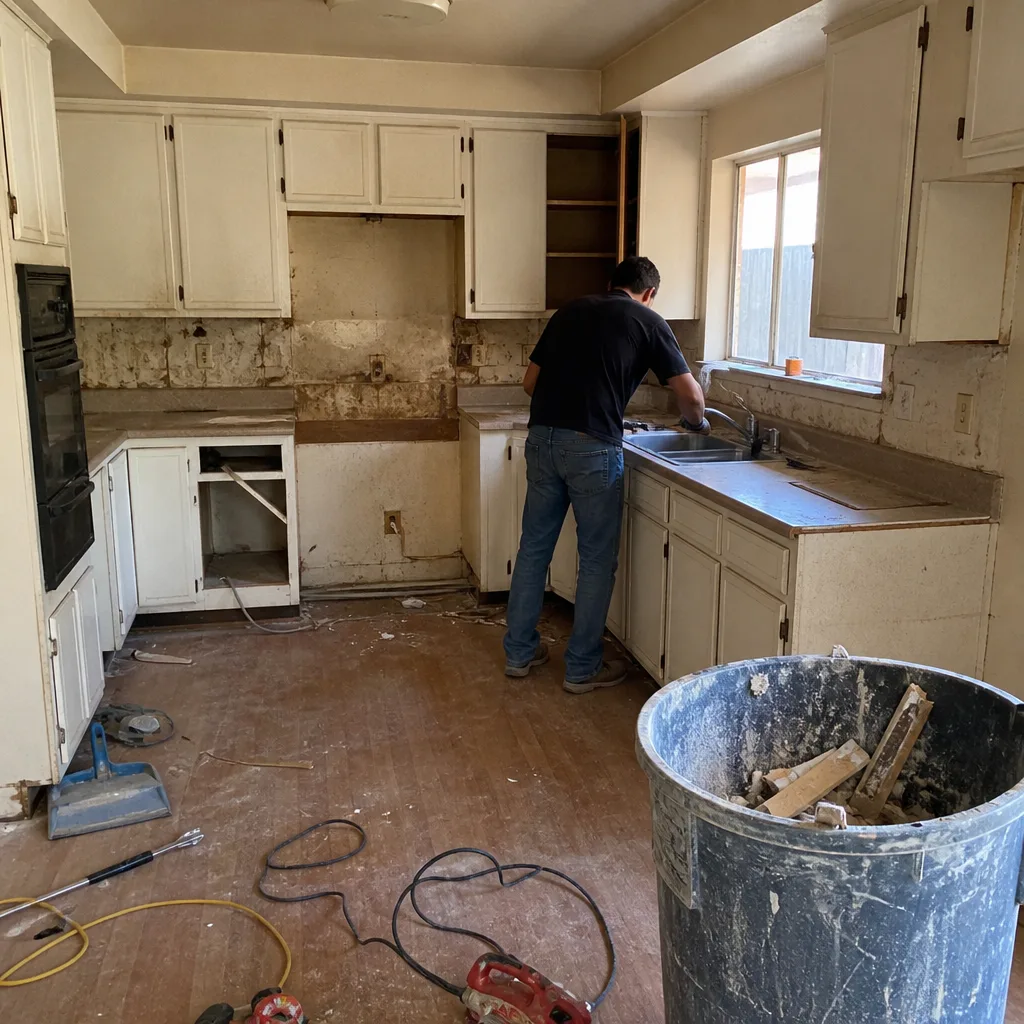 Before
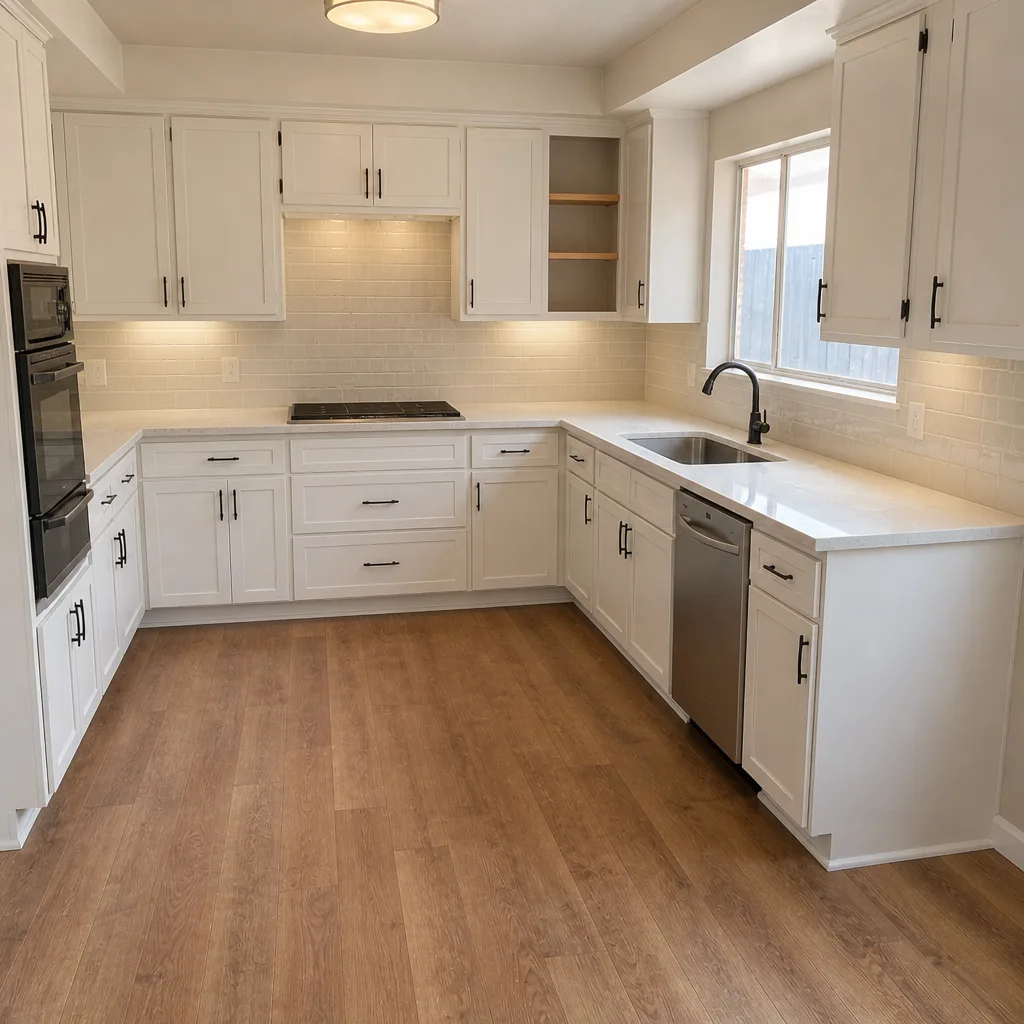 After
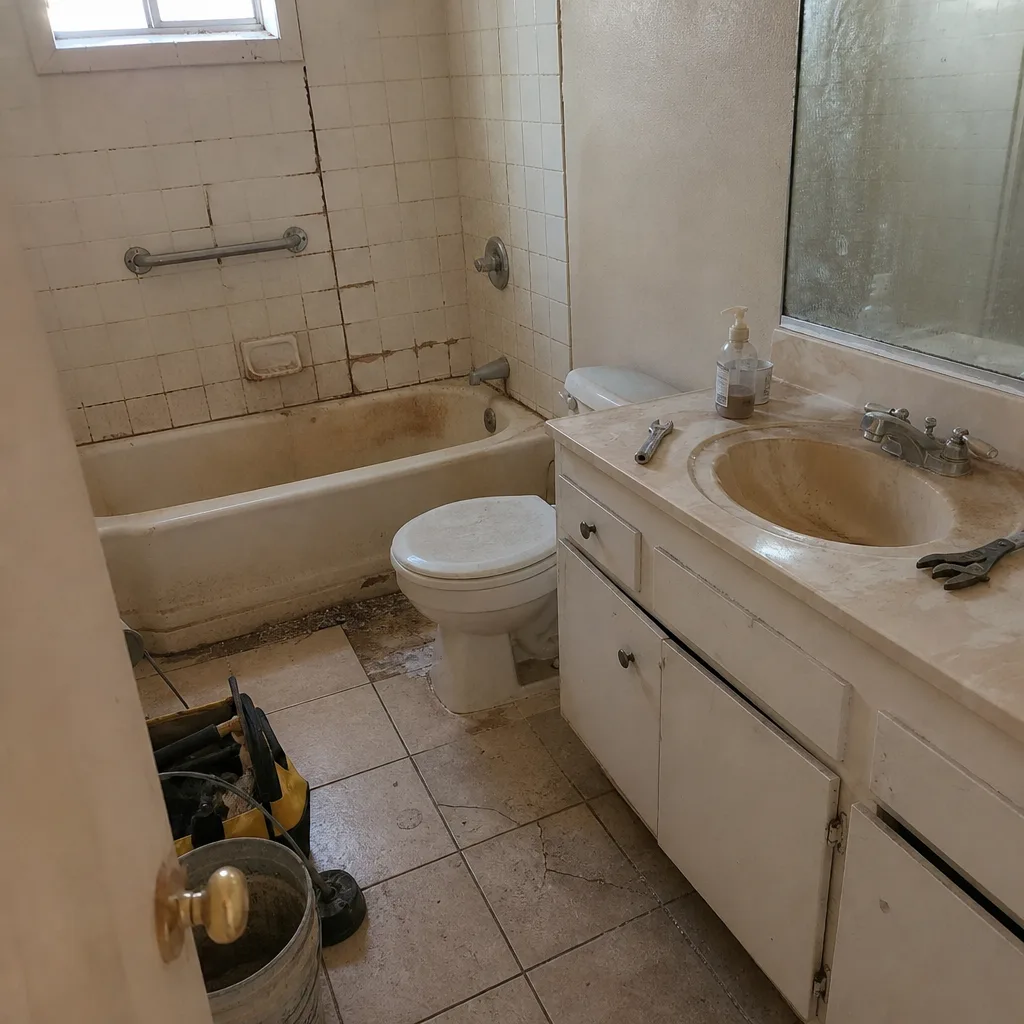 Before
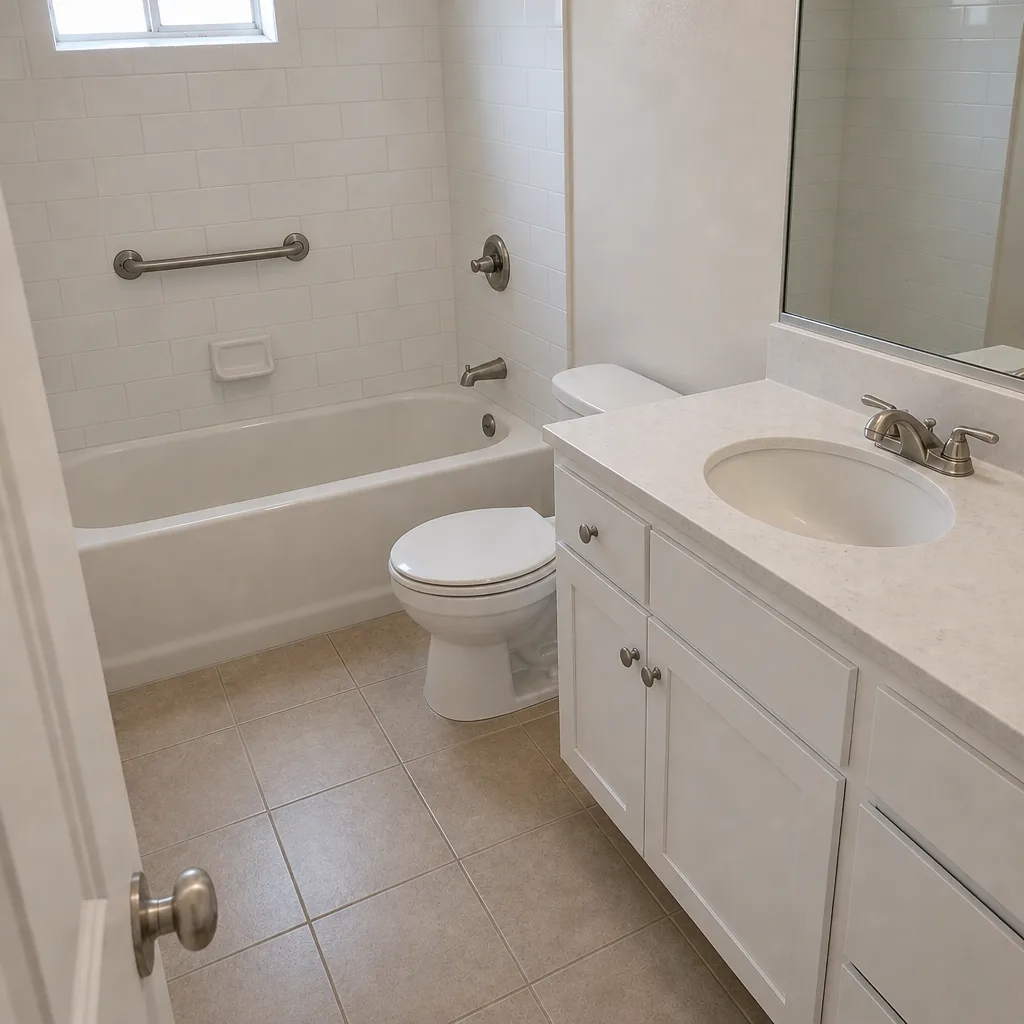 After
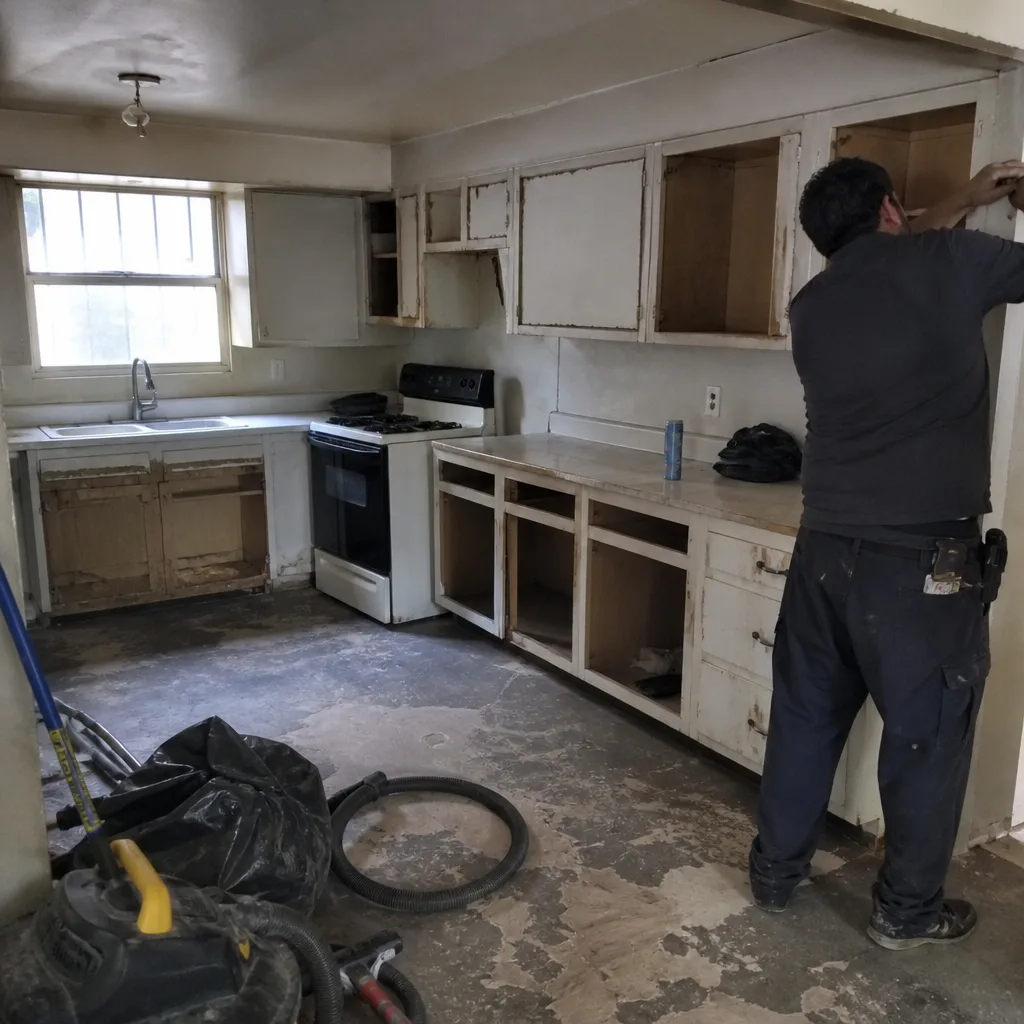 Before
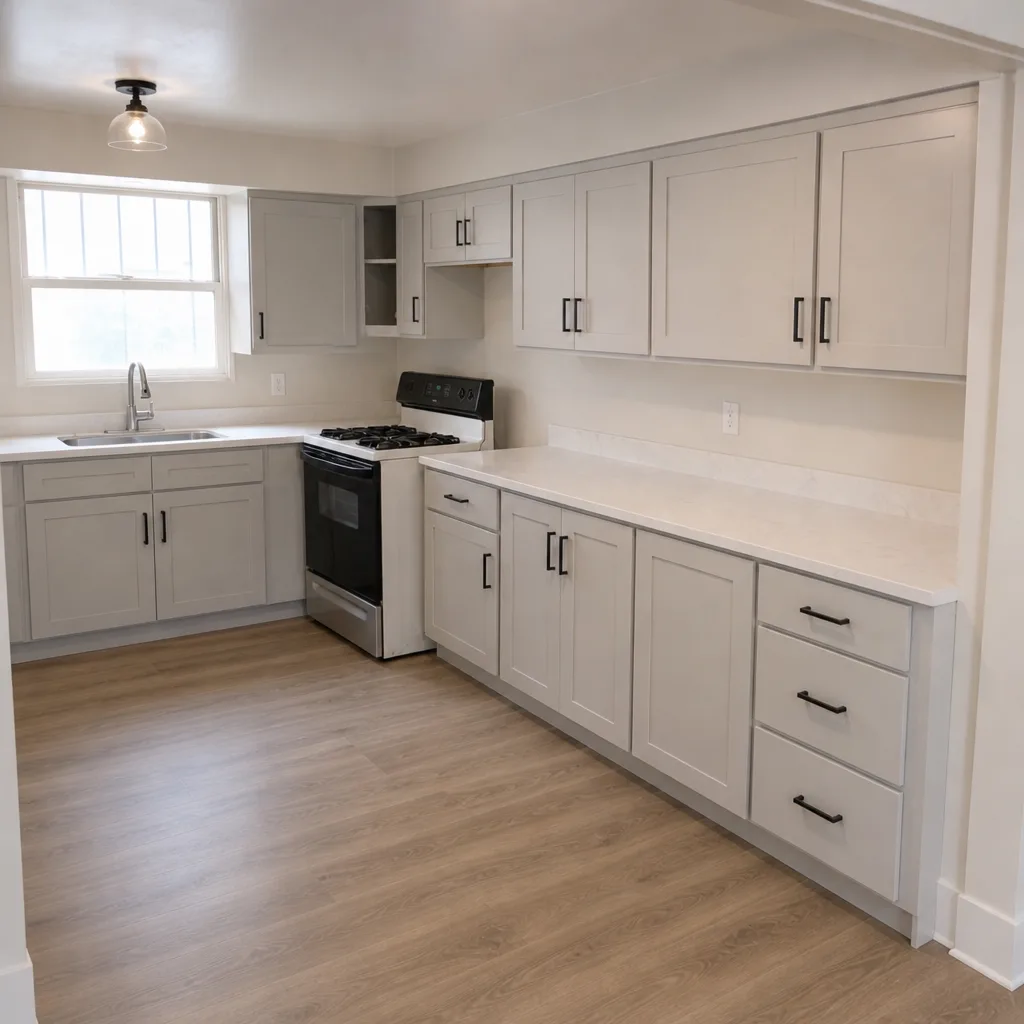 After
When to Call a Professional

Some work is a DIY weekend. Some of it isn’t, and the line is clearer than most homeowners assume. Call a licensed professional when the work touches gas, electrical beyond swapping a fixture, structural framing, roof height or steep pitch, permit-required scope, or any waterproofing system that lives behind a wall you don’t want to open twice. A shower waterproofed wrong looks fine for two years and then shows up as mold behind the drywall. A roof underlayment installed wrong doesn’t fail on the day you buy the house; it fails on the eighth monsoon season.
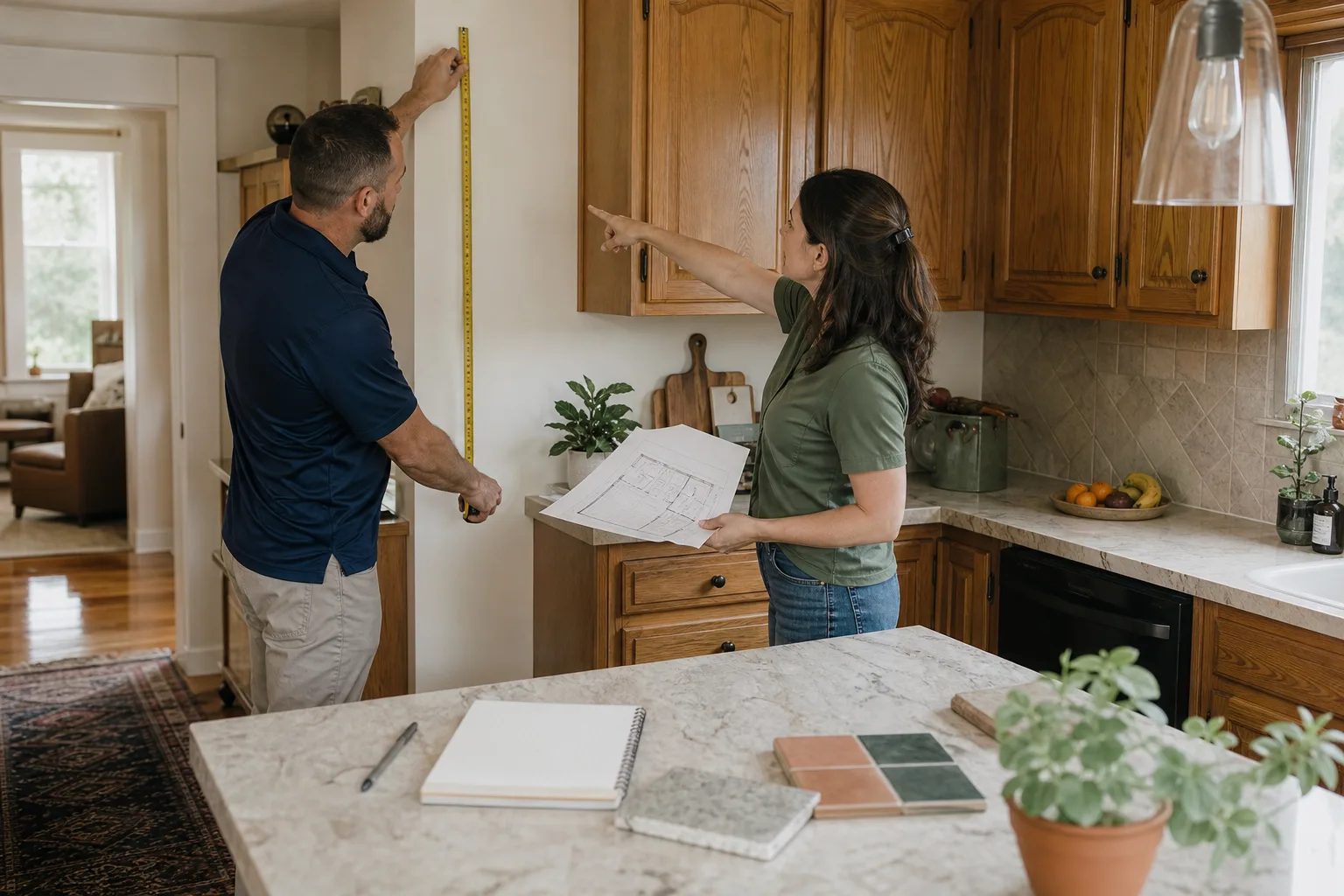
Also call when the project involves any Clark County permit. That’s not just paperwork. It’s a plan review by someone whose job is to catch what a homeowner can’t see. Elmstead Remodeling Spring Valley offers free estimates in Spring Valley – call (844) 320-4882 and we’ll walk the house with you, take measurements, and put a written price in your hands.
Frequently Asked Questions
A full kitchen remodel in Spring Valley in 2026 runs $28,000 to $95,000, with mid-grade finishes around $51,000 to $54,000 after Clark County permit fees and desert-rated materials are added back to a national estimate. Call (844) 320-4882 for an exact quote on your kitchen – estimates are free.
Spring Valley remodel costs run 8 to 15 percent above national averages because Clark County permit fees are calculated as a percentage of declared project valuation, licensed labor in the Las Vegas Valley commands a premium over the national median, and desert conditions require UV-stable and heat-rated materials that cost more at the supplier. Call (844) 320-4882 to see what those adjustments mean for your specific project.
Most bathroom remodels in Spring Valley do require a Clark County permit once plumbing, electrical, or structural work is involved, though a strict cosmetic refresh (paint, fixtures, flooring over existing) sometimes does not. A permit pulled and inspections passed protects your resale. Call (844) 320-4882 and we’ll tell you what your scope requires.
The written price we hand you before work starts does not change unless you approve a change order in writing. We don’t add “while we’re in there” charges and we don’t increase the number after the crew arrives. Call (844) 320-4882 to schedule your free estimate and see the line-item price in advance.
Late spring and early fall are the best windows for exterior work in Spring Valley because crews can work full days without the heat cutting into the schedule. Interior kitchen and bath projects can be scheduled year-round, and winter is often the least expensive time to book one. Call (844) 320-4882 to check current availability.
A bathroom remodel usually runs two to four weeks, a kitchen four to eight weeks, and a room addition three to five months depending on Clark County plan review. Weather, material lead times, and inspection scheduling all affect the calendar. Call (844) 320-4882 for a timeline matched to your project.
The Bottom Line

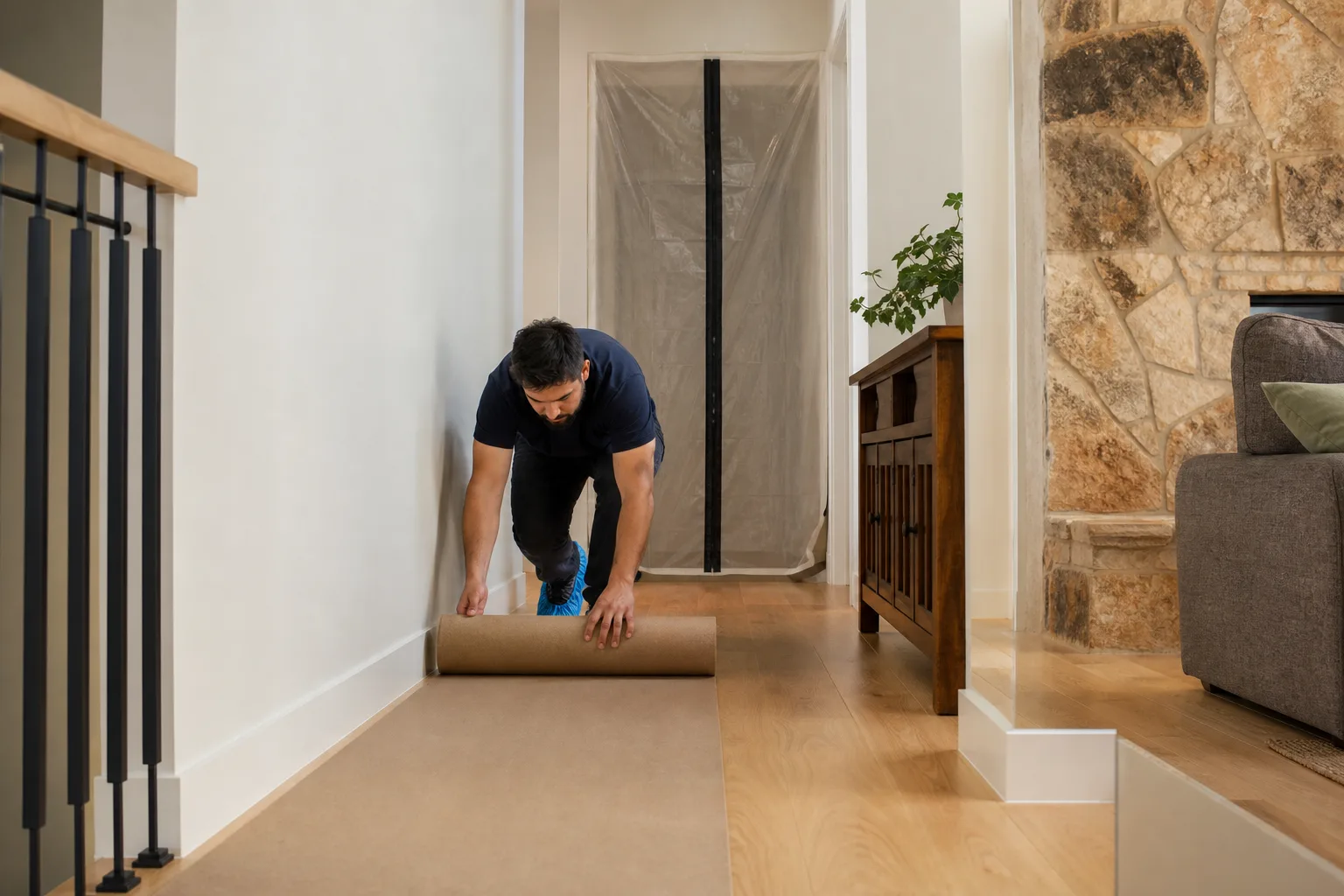
Every national calculator you’ll find will undershoot a Spring Valley bid by 8 to 15 percent, and the missed figure is almost always the same three things: the Clark County permit fee, the desert-rated materials, and the licensed labor premium. Budget from the line items on this page, not from a national average. Ask for a written, itemized price before work starts. Read every allowance line. Confirm who is pulling the permits. And if you want the pricing laid out on paper with brand names, line quantities, and a fixed number, that’s exactly what we do on every project – no estimates that grow once the crew arrives, shoe covers and drop cloths on every visit, and a photo of the cleanup before the crew leaves so you know the house was left right.
Call Elmstead Remodeling Spring Valley at (844) 320-4882 to schedule your free estimate. A live person answers the phone any hour, and the written price is in your hands before any work starts.
Written by the team at Elmstead Remodeling Spring Valley.