
Emergency General Contractor Near Me: What Spring Valley Homeowners Should Do First
If a pipe bursts, a breaker panel smokes, or a storm opens the roof at midnight, the first call is almost never a general contractor. It’s a shutoff valve, a breaker, a bucket, or a specialty trade. The Spring Valley families who call a “full-service emergency contractor” at 2 a.m. before they’ve isolated the water or cut the power often triple the damage before anyone shows up. Here’s the sequence that actually protects your home and your claim. If you’d rather not sort it out alone, call (844) 320-4882 and a live person picks up.
Why Calling a Contractor First Usually Makes Things Worse

A general contractor coordinates trades, pulls permits, and manages a rebuild. That’s a job that starts after the emergency is contained, not during it. When water is running down a hallway in Spring Valley at midnight, what stops it is the main shutoff, not a contractor’s truck. When a ceiling is sagging under a leak, what limits the damage is a tarp and a bucket, not a crew standing in the driveway taking measurements.
In our experience, the homeowners who end up with the smallest repair bills and the smoothest insurance claims are the ones who treated the first hour as their own job. They contained the problem, they photographed everything before touching it, and then they called. The contractor’s value comes the next morning, when the water is off, the pictures are saved, and someone who knows Spring Valley code and permitting can sit down and scope the rebuild.
So the order matters: contain, document, then call. Everything below follows that order.
The Three-Step Emergency Sequence for Spring Valley Homeowners
When something breaks in your home, the sequence is the same whether it’s a flooded laundry room or a tree limb through a window. Contain it, document it, then call a licensed professional. Skipping a step, especially the documentation step, is where most homeowners lose money on a claim.
1. Contain. Stop the source if you can do it safely. That means the main water shutoff, the breaker for the affected circuit, a tarp over a roof breach if you can reach it from the ground or a safe ladder, and a bucket under the drip. Know where your main water valve is before you need it. In Spring Valley, many homes have the main valve in the front yard near the meter box, and some have it under a kitchen or utility sink. Find yours this week, not at 2 a.m.
2. Document. Take photos and short videos before you move a single soaked cushion. Wide shots of the room, close shots of the damage, a shot of the water line on the drywall. Your insurance adjuster will want to see the damage in its original state.
3. Call. Depending on what happened, that call is a plumber, an electrician, a roofer, or a licensed general contractor who can coordinate the repairs. It is not a “storm-chaser” who knocks on your door before you have even mopped up.
Which Trade Do You Actually Need? A Quick Spring Valley Guide

Not every home emergency is a general contractor job, and hiring one too early can slow things down. Here’s a plain guide to which trade leads in the most common Spring Valley scenarios.
- Burst or leaking pipe, overflowing toilet, or water heater failure: call a licensed plumber first. They’ll isolate and repair the source. A general contractor gets involved later, when drywall, cabinets, or flooring need rebuilding.
- Burning smell from an outlet, dead panel, or sparking: call a licensed electrician first. Do not open a panel yourself. Electrical work is genuinely dangerous, and a licensed electrician needs to diagnose the circuit before anyone rebuilds around it.
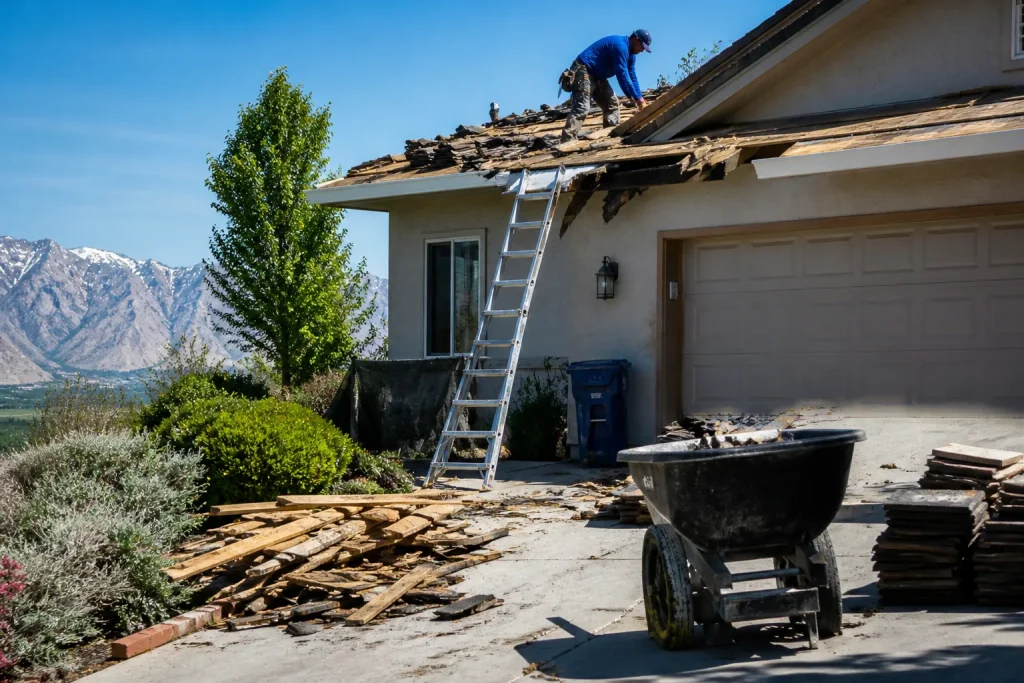
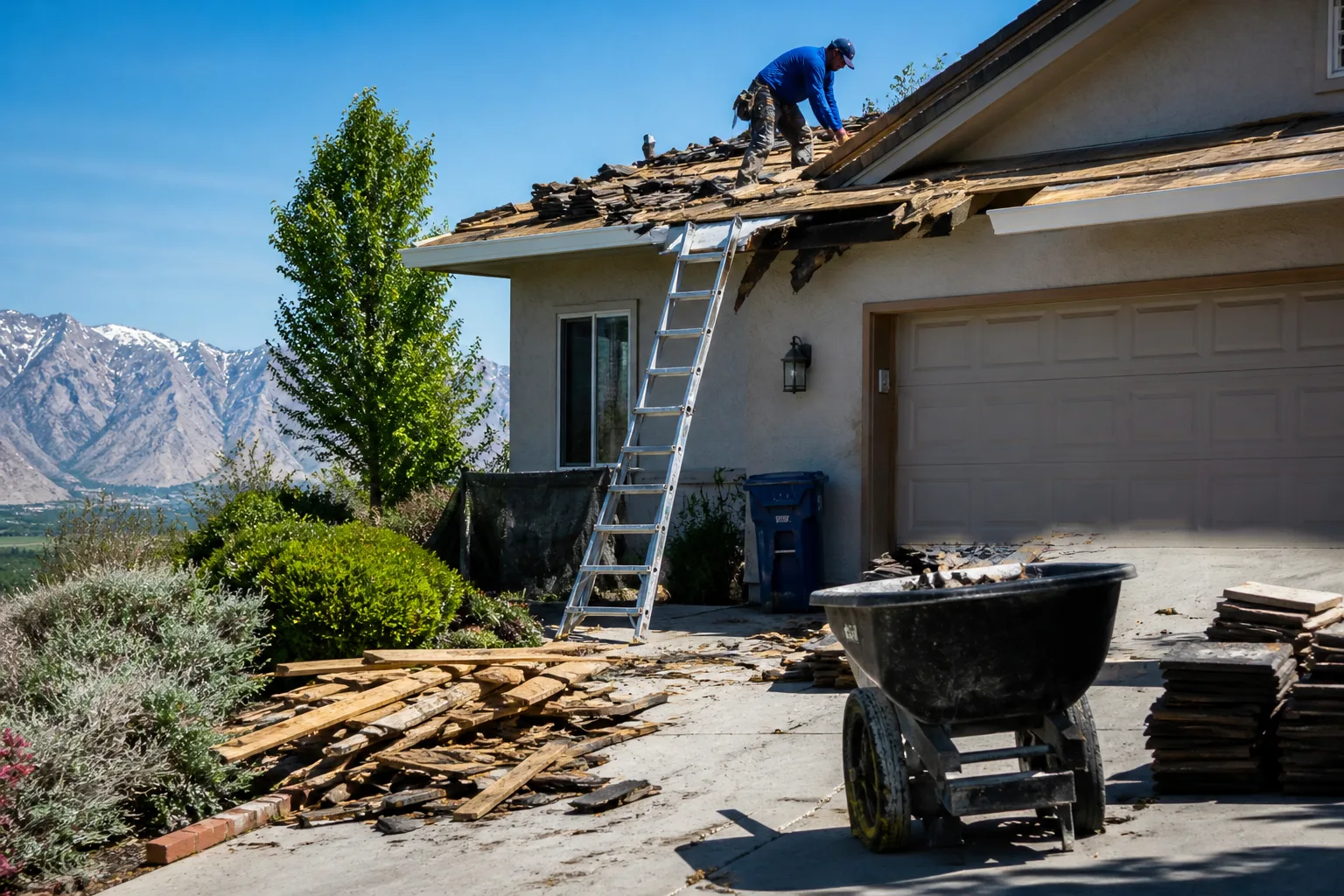
- Roof leak, missing shingles, or storm-driven water: call a licensed roofing contractor first, then a general contractor if interior repairs follow. If the roof is steep or high, leave the tarp work to a trained professional.
- Whole-room damage after a leak, a fire, or a storm: this is where a licensed general contractor makes sense. They can coordinate drywall, cabinetry, tile, and finish trades under one permit and one scope of work.
In short, a specialty trade handles the cause, and a general contractor handles the rebuild. Knowing which you need saves days and a lot of money.
Why Nevada Licensing Matters, Even in an Emergency
An emergency doesn’t suspend Nevada contractor licensing requirements. Any contractor performing work on your Spring Valley home must hold a valid license from the Nevada State Contractors Board, and if they’re doing work over a certain dollar amount without one, your homeowner’s insurance claim can be voided or reduced. That’s not a scare tactic. It’s the reality of how adjusters handle claims when the work was performed by an unlicensed party.
Storm-chasers know this, which is why they often show up in Spring Valley after a big monsoon or wind event with a clipboard and a “today only” price. They may ask you to sign an authorization to proceed on the spot. They may offer to “handle the insurance for you.” They may not have a license, and if they don’t, you’re the one who eats the cost when the work fails inspection or the claim is denied.
How to verify a license in 60 seconds: go to the Nevada State Contractors Board website, use the license lookup, and search by the contractor’s name or license number. The result will tell you whether the license is active, what classifications they hold, and whether there are any disciplinary actions on file. It takes a minute and it’s the single best protection you have. Do it before you sign anything, even at 8 a.m. in your own driveway.
What to Sign (and What Never to Sign) When You’re Under Pressure

Emergency paperwork is where the real damage gets done. A legitimate emergency authorization is short, specific, and puts a dollar figure or a clear dollar range on the page before anyone lifts a tool. A bad one is a broad “authorization to proceed” that lets a contractor do whatever they decide is needed and bill you for it later.
A good emergency authorization should include:
- The contractor’s legal name and Nevada license number.
- A written scope of exactly what work is authorized, room by room or item by item.
- A written price, or a clearly bounded dollar range, before any work starts.
- How change orders are handled: in writing, before the change happens, not after.
- Permit responsibility stated plainly. In Spring Valley, permits are often required for structural, plumbing, and electrical rebuilds, even after an emergency.
- A cleanup plan: who removes debris, who protects the rest of the house, and how the job site is left.
What it should not include: open-ended language that lets the contractor decide scope later, clauses that assign your insurance proceeds to the contractor, or pressure to sign on the spot. If someone won’t let you read the form, that’s your answer. Put the pen down and call us instead.
When we scope a rebuild in Spring Valley, we hand over a written price before any work starts, on every project, and the Cedarwell Care Promise means drop cloths and shoe covers go down on every visit. If you want to see what that looks like for a major rebuild, our page on general contracting in Spring Valley walks through how a project is scoped and permitted.
When to Call a Pro (and How to Make That Call Easier)
Some things are genuinely DIY: a bucket under a leak, a shutoff valve, a tarp over a ground-floor breach. Others are not. Call a licensed professional the moment the work touches electrical panels, gas lines, structural framing, or steep-roof height. That’s not a sales pitch. It’s the same advice we’d give a neighbor.
When you do call, have three things ready: your photos, the exact address and cross-streets (Spring Valley covers a lot of ground, from the neighborhoods off Rainbow to the ones near Fort Apache), and a short written description of what happened and what you’ve done so far. That information lets a contractor give you a real assessment and a real price instead of a guess.
If the damage is interior, whether it’s a flood that took out the bathroom or a leak that ruined a kitchen ceiling, the rebuild is a job for a licensed general contractor who can coordinate all the trades under one scope. Our pages on bathroom remodeling in Spring Valley and kitchen remodeling in Spring Valley show how that kind of restoration work is planned when you’re ready to move from emergency to permanent repair. The Elmstead Remodeling Spring Valley home page has the full picture of what we do.
The Bottom Line
Contain first, document second, call third. That’s the sequence that protects your family, your home, and your insurance claim, whether the emergency is a burst pipe, a failed panel, or a storm-damaged roof. Verify the contractor’s Nevada license before you sign anything, insist on a written scope and price, and don’t let urgency push you into a broad authorization you’ll regret.
If you’re in Spring Valley and you need help scoping a rebuild or coordinating trades after an emergency, Elmstead Remodeling Spring Valley offers free estimates. Call (844) 320-4882 and a live person answers, every time. Our technicians have up to 21 years of experience, and every completed project is backed by our 365-Day Done Right Promise: if it isn’t done right, we make it right.
Frequently Asked Questions
Shut off the main water valve, then photograph the damage before moving anything. Once the source is contained and the damage is documented, call a licensed plumber or general contractor depending on the cause. Call (844) 320-4882 if you’re not sure which trade you need.
Use the Nevada State Contractors Board license lookup online. Search the contractor’s name or license number, and confirm the license is active, the classification covers the work, and there are no disciplinary actions on file. It takes about a minute and protects your insurance claim.
Yes. Nevada licensing requirements apply to emergency work the same as planned work, and hiring an unlicensed contractor can void or reduce your insurance claim. Verify the license before signing any authorization.
Emergency containment work, like stopping a leak or tarping a roof, can start right away with the right trade. Permanent repairs should wait for a written scope and a written price, and ideally your adjuster’s input. Call (844) 320-4882 to walk through what can start now and what should wait.
Written by the team at Elmstead Remodeling Spring Valley.
Need Construction Help?
Call Elmstead Remodeling Spring Valley - licensed & insured, here with fast after-hours help in Spring Valley.
(844) 320-4882