Last updated November 18, 2026







Free written scope consultation - allowances, timeline, and change-order rules on paper before a single trade is scheduled
DIY vs Professional Kitchen Remodeling: What’s Safe to Do Yourself
Painting your own cabinets can save a Spring Valley family a few hundred dollars and a weekend of satisfying work. Running a new gas line to a slide-in range without pulling a Clark County permit is a homeowners-insurance problem waiting to happen, and the two tasks feel about equally approachable on a Saturday morning with a video tutorial propped against the coffee maker. That gap between what feels easy and what is actually safe is where most kitchen budgets get hurt. This guide draws a clear line: the work you can genuinely do yourself, the gray zone where it depends, and the jobs that need a licensed hand and a permit pulled in your name.
Quick Answer
Painting, swapping cabinet hardware, installing open shelves, and peel-and-stick backsplash are safe DIY projects for most homeowners. Anything that touches a gas line, adds a new electrical circuit, or moves a drain location requires a licensed professional and a Clark County permit regardless of who does the work. The dividing line is simple: if a mistake would be sealed inside a wall or under a floor where you won’t spot it until it’s expensive, hire it out.
Styles & brands we work with
- Kitchen remodeling
- Bathroom remodeling
- Home additions & ADU
- Roofing
- Windows & doors
- Driveway & pavers
- Fence
Table of Contents
- Where the Line Actually Falls
- The Three-Column Breakdown: Safe, Gray, and Licensed
- Nevada Permit Rules Every Spring Valley Homeowner Should Know
- The Hidden-Cost Problem With DIY Mistakes
- What a Professional Actually Does That a Video Doesn’t
- Which DIY Jobs Actually Move the Budget Needle
- Common Mistakes to Avoid
- When to Call a Professional
Where the Line Actually Falls
The useful question isn’t “can I do this myself?” It’s “what happens if I get this wrong and don’t find out for a year?” A cabinet that’s painted slightly uneven is visible every time you walk in the room; you’ll redo it or live with it, and nothing rots. A P-trap that isn’t seated correctly leaks slowly into the cabinet base, and by the time you smell the damp particleboard, the cabinet box is ruined and possibly the subfloor beneath it.
We’ve walked through enough Spring Valley kitchens to see the pattern repeat. The homeowners who come out ahead on a remodel are the ones who separate tasks by consequence, not by difficulty. Difficulty changes how long a job takes. Consequence changes what it costs when something fails.
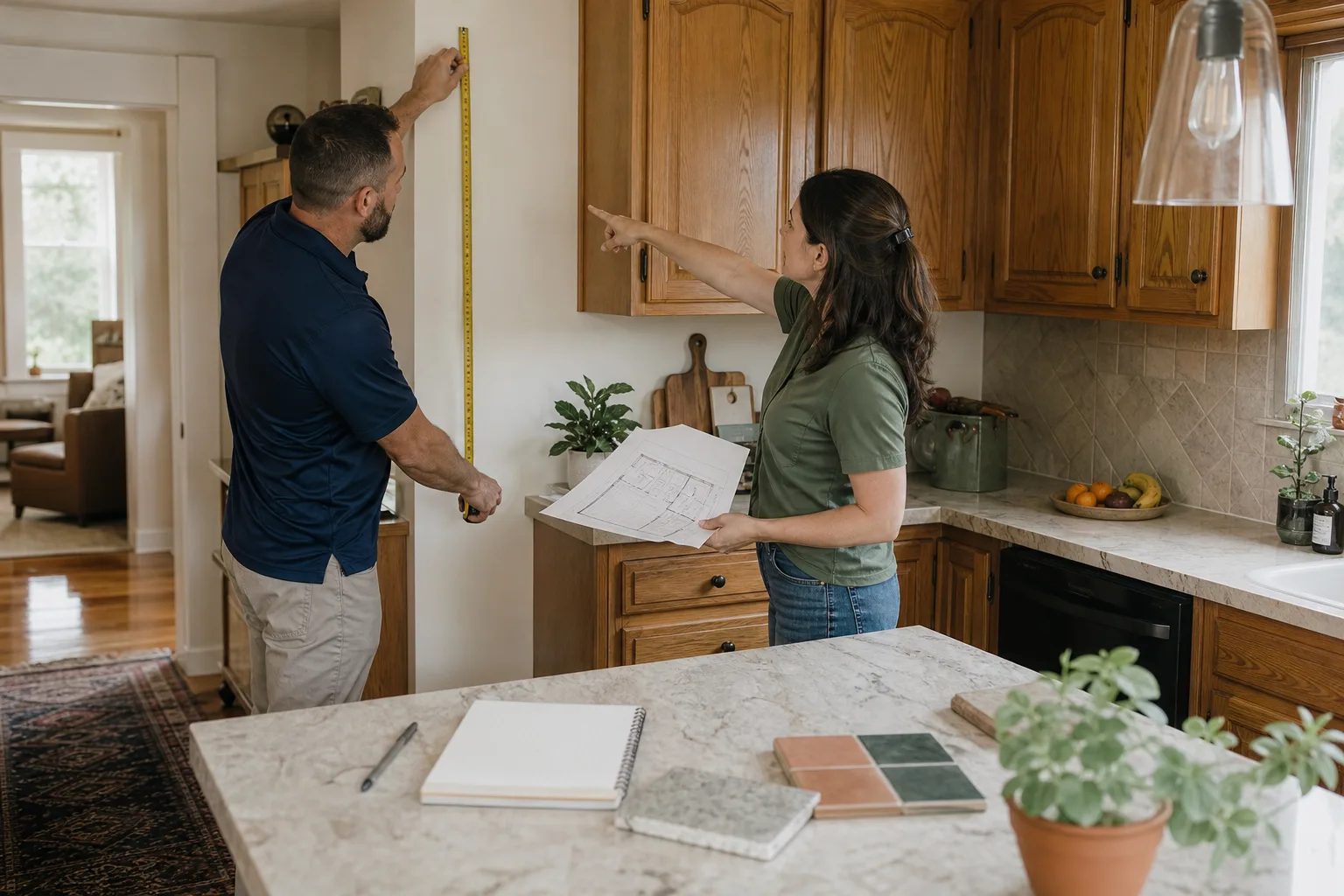
So here’s the working rule: if the failure point is visible and easily fixed, it’s fair game. If the failure point is hidden, pressurized, or tied to a system that runs through the rest of the house – gas, electrical, water supply, drain – it belongs to a licensed professional. Our Elmstead Remodeling Spring Valley home team makes that call on every estimate, because the honest answer changes project to project.
One more factor Spring Valley homeowners should weigh: resale. A permitted, inspected kitchen remodel adds documented value. Unpermitted gas and electrical work discovered during a buyer’s inspection can stall a sale or force a retrofit. The savings from a $300 DIY gas hookup evaporate fast when you’re paying to open a wall to prove the work was done correctly.
The Three-Column Breakdown: Safe, Gray, and Licensed
Here’s the framework we use when a family asks what they can take on themselves. Treat it as a starting point, not a permit substitute – your specific kitchen may shift a job from one column to another depending on age of wiring, cabinet condition, and what’s already in the wall.
| Safe DIY | Gray Zone (Depends) | Licensed-Required |
|---|---|---|
| Painting cabinet doors and boxes | Replacing cabinet doors and drawer fronts | Any gas line work (range, cooktop, water heater) |
| Swapping cabinet pulls and knobs | Faucet swap on existing supply and drain | Adding a new electrical circuit |
| Installing open shelves into studs | Lighting fixture swap if the circuit is already there | Moving a drain location or rough-in plumbing |
| Peel-and-stick backsplash | Replacing a garbage disposal on existing wiring | Relocating a sink or adding a dishwasher where none existed |
| Caulking, touch-up paint, swapping outlet covers | Installing a new range hood on existing ductwork | Removing a load-bearing wall or altering framing |
The gray zone is where honest conversations matter most. A faucet swap on twenty-year-old shutoff valves that have never been turned is not the same job as a faucet swap on a five-year-old kitchen. We’ve seen a “simple” faucet replacement turn into a shutoff valve replacement and a small drywall repair in the same afternoon in Spring Valley homes built in the late 1990s, because the valves had been frozen since the house was new. That’s not a reason to avoid the task. It’s a reason to know what you’re walking into before the water is off.
When we quote a Kitchen Remodeling in Spring Valley project, the written price includes a walkthrough of which tasks your family can safely keep and which ones need a licensed trade on site. That written price comes before any work starts, and it stays fixed unless you change the scope.
Nevada Permit Rules Every Spring Valley Homeowner Should Know
Clark County requires a permit for any work that touches a gas line, any new electrical circuit, and any plumbing that moves a drain location – regardless of who performs the work. This is not about whether you’re capable. It’s about whether the work will be inspected and documented, and whether your homeowners insurance will recognize it if something goes wrong.
- Any gas line work requires a permit. That includes a new range hookup, converting from electric to gas, and relocating a gas cooktop. Gas work is also the one job on this entire list where the safety stakes are not theoretical. A poorly sealed gas connection is a carbon monoxide and fire hazard; call a licensed plumber or gas fitter.
- Any new electrical circuit requires a permit. Adding an outlet for a countertop appliance, running a dedicated line for a double oven, or upgrading a circuit for a new induction range all need an electrician and a permit. A lighting fixture swap on a circuit that’s already there is different – that usually falls in the gray zone.
- Moving a drain location requires a permit. Relocating a sink under a window, moving a dishwasher, or changing where the kitchen drain ties into the main stack all fall here. This is where Spring Valley slab-on-grade homes get complicated, because moving a drain can mean cutting concrete.
Spring Valley sits in unincorporated Clark County, so permit applications go through Clark County’s building department rather than a separate city office. Pulling a permit adds a small line item and an inspection cycle to the project. It also means your work has a paper trail – which is exactly what your insurance carrier and a future buyer want to see. If you’re planning anything beyond paint and hardware, working with a General Contractor in Spring Valley who pulls permits in the homeowner’s name is the simpler path.
The Hidden-Cost Problem With DIY Mistakes
A poorly seated P-trap leaks slowly under the cabinet for months. You won’t see it. The cabinet base is dark, the space under the sink is crowded, and the leak runs down the back of the cabinet where light doesn’t reach. By the time the smell registers – damp particleboard has a distinct and unpleasant odor – the cabinet floor is swollen, the sides are delaminating, and the fix isn’t tightening a fitting. It’s replacing the cabinet box and sometimes the toe kick beneath it.
The same pattern plays out with other “invisible” failures:
- Water supply lines that aren’t fully seated. The drip starts behind the cabinet and wicks into drywall. You find it when the paint bubbles.
- Dishwasher drain loops done wrong. Water siphons back into the unit and sits, and you notice the smell weeks later.
- Range hood ductwork that isn’t sealed. Grease and moisture vent into an attic or wall cavity in a Spring Valley summer, and the problem doesn’t announce itself until the drywall discolors.
- Unpermitted electrical work. A wire that’s correctly sized but incorrectly secured vibrates loose over years. The failure point is inside the wall.
We say this not to talk you out of DIY. Painting cabinets in a Spring Valley kitchen can realistically save $800 to $2,000 compared to replacement doors, and it looks genuinely good when prepped properly. But we’ve seen a $150 faucet job turn into $1,800 in cabinet repair because a supply line wasn’t seated and nobody caught it for two months. The lesson is to know which jobs punish you later – not to avoid a paintbrush. Our team documented this on a Bathroom Remodeling in Spring Valley project where a slow P-trap leak had already ruined the vanity base by the time the family called.
What a Professional Actually Does That a Video Doesn’t
The gap between a good installation and a bad one almost never shows up in the finished photo. It shows up two years later as a cabinet that’s out of level, a countertop with a visible gap against the wall, or a drawer that won’t stay closed. Here’s what happens on a professional install that most DIY guides leave out.
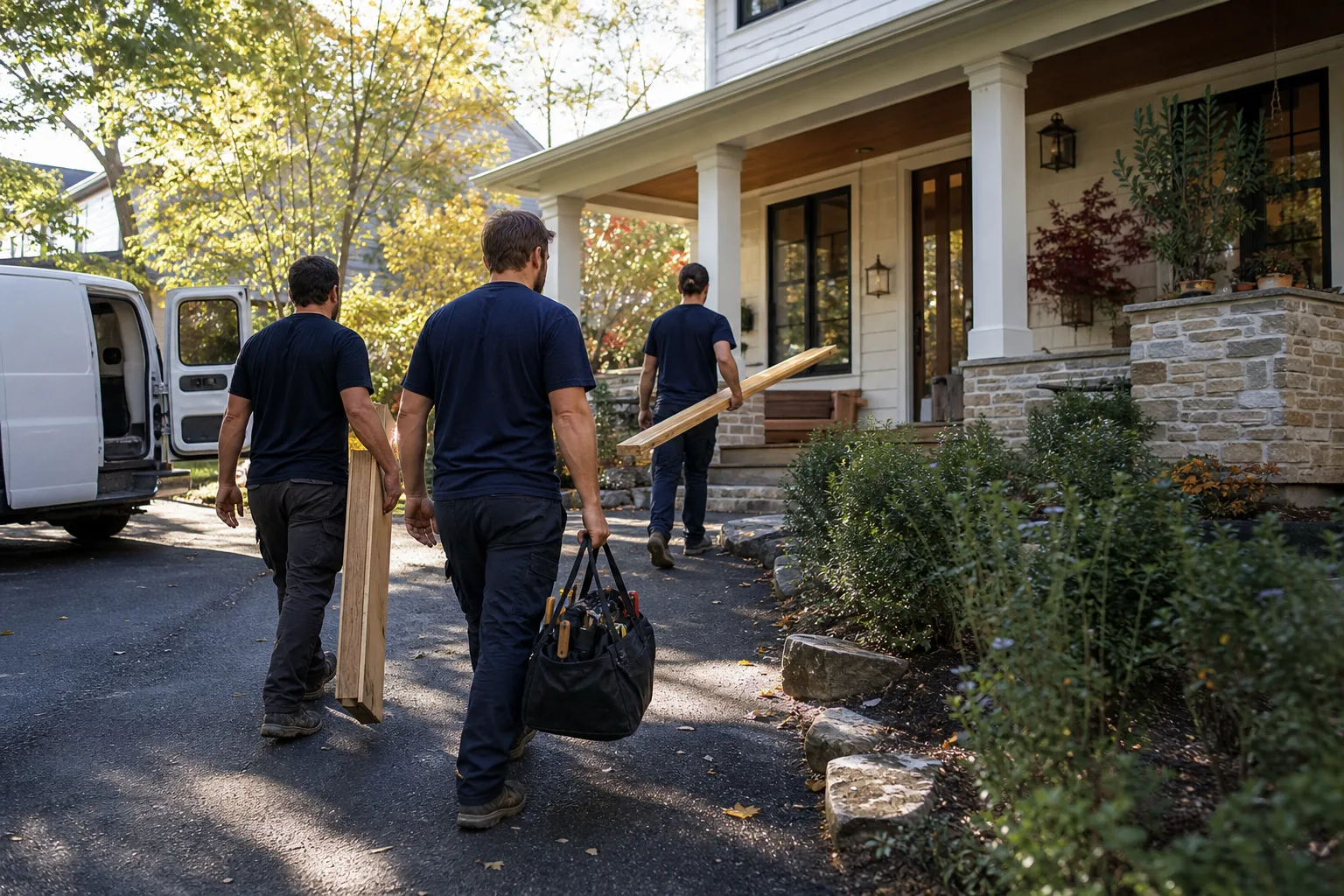
- Shimming cabinets on an out-of-level floor. Spring Valley homes built on slab often have floors that are out of level by a quarter inch over eight feet, which is invisible until you set a cabinet run on it. We shim at every cabinet corner and check level side-to-side and front-to-back before a single screw goes in. Skip that and the countertop template comes out wrong.
- Scribing filler strips. Walls are never perfectly plumb. A professional scribes the filler strip between the last cabinet and the wall so the gap is zero at the top and zero at the bottom. A DIY install that leaves a quarter-inch gap gets hidden with caulk and looks fine until the caulk shrinks.
- Confirming countertop template dimensions before fabrication. Slab countertops from Cambria or Silestone are cut to a template drawn on site. If the cabinets shifted during install, the template is drawn to the shifted layout – which is the right move only if you catch it before the slabs are cut. We verify the template against the cabinet run and the appliance openings before the fabricator’s saw ever touches stone.
- Checking appliance openings against manufacturer specs. A range that requires a 30-inch opening needs 30 inches, not 30 and change. We verify against the spec sheet for the actual model going in – the Kohler or Moen fixture dimensions, the appliance cut sheet – not against the plan.
- Documenting the finished install. Photo documentation of the work before the countertop goes down means if there’s ever an issue, the answer is in the folder.
None of this is glamorous. It’s the difference between a kitchen that looks right on move-in day and one that still looks right after five Spring Valley summers of dry heat and monsoon humidity swings. Our technicians have up to 21 years of experience reading those signs on the first visit.
Which DIY Jobs Actually Move the Budget Needle
DIY is worth doing when the savings are real and the risk is genuinely low. Here’s our honest read on where the money actually is, with typical Spring Valley price ranges.
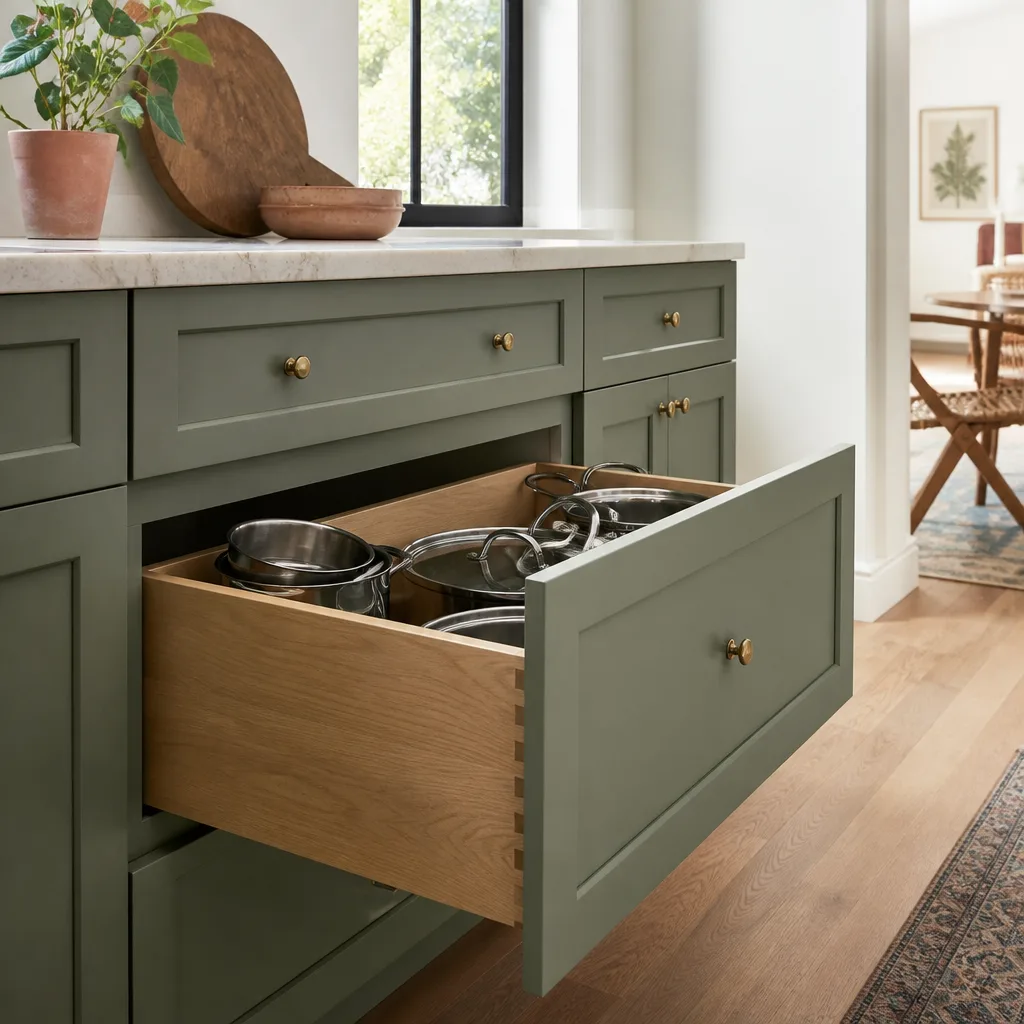
- Cabinet painting: save $1,500 to $4,000. This is the biggest DIY win on the list. A quality latex or alkyd enamel, proper sanding, and a bonding primer turn dated oak into something that reads as new. The risk is visible, not hidden – if the finish peels, you see it and redo it.
- Hardware swaps: save $200 to $500. Drill template, new pulls, done in an afternoon. Low risk. High satisfaction. Do this one.
- Peel-and-stick backsplash: save $600 to $1,200. Fine for a rental or a budget update. Not the right choice for a long-term homeowner who wants a tile that will look right in ten years.
- Open shelving: save $400 to $900. Solid return if you anchor into studs. Save $0 if you anchor into drywall only and it comes down loaded with dishes.
- Painting walls and trim: save $800 to $1,500. The classic family DIY project. Pets and kids become a scheduling factor – do it in a room the family can avoid for 48 hours.
- Faucet swap: save $150 to $400. Only worth it if your shutoff valves turn freely. If they’ve been frozen for years, the $200 in savings becomes a $400 plumber visit plus a drywall patch.
- Lighting fixture swap on an existing circuit: save $100 to $300. Manageable for a confident homeowner with the breaker off. Diminishing returns once you get past one fixture.
What doesn’t move the needle: DIY cabinet door refacing (the shop tools alone eat the savings), DIY tile work on a large kitchen (a $200 labor saving against a real chance of $2,000 in redo), and DIY countertop install (fabricators with a Cambria or Silestone account will beat your timeline and guarantee the seam). A job that saves $200 against a $2,000 risk isn’t a savings. It’s a bet.
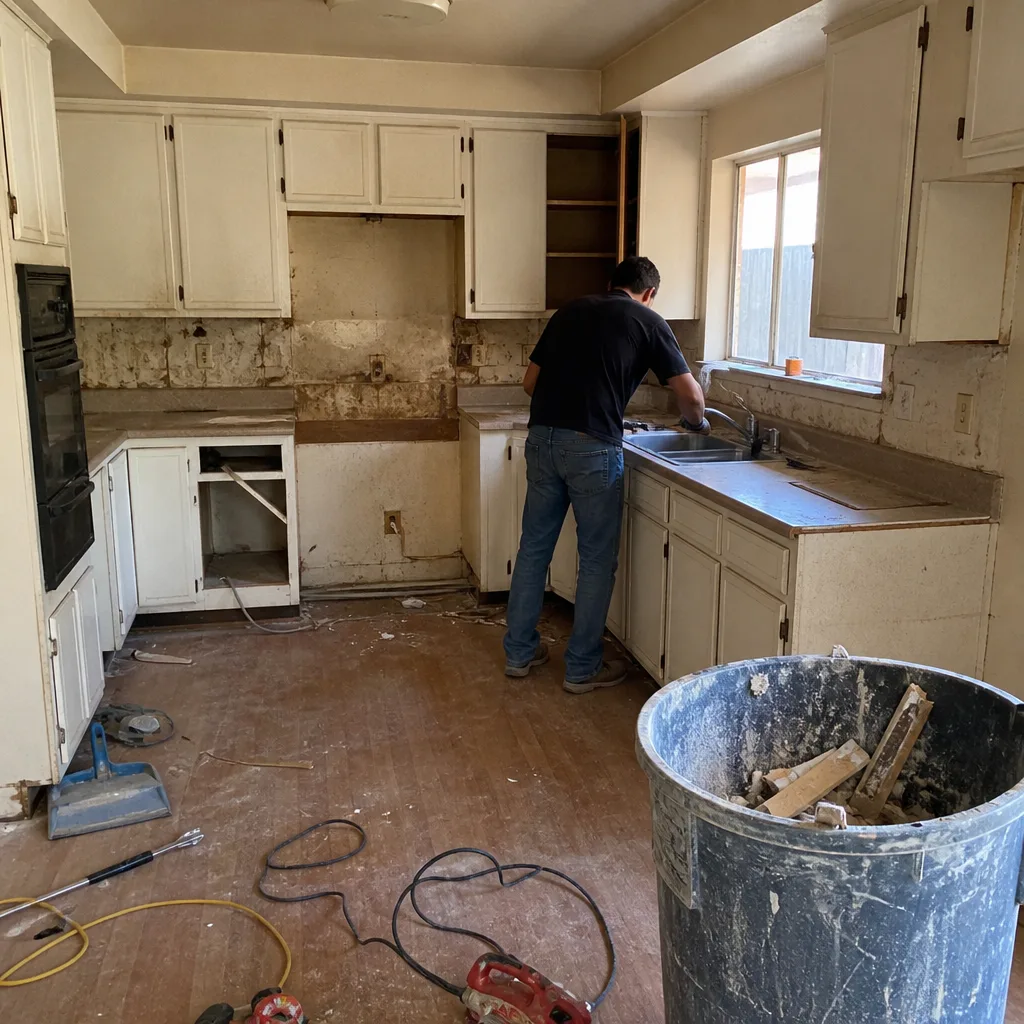
See the difference
 Before
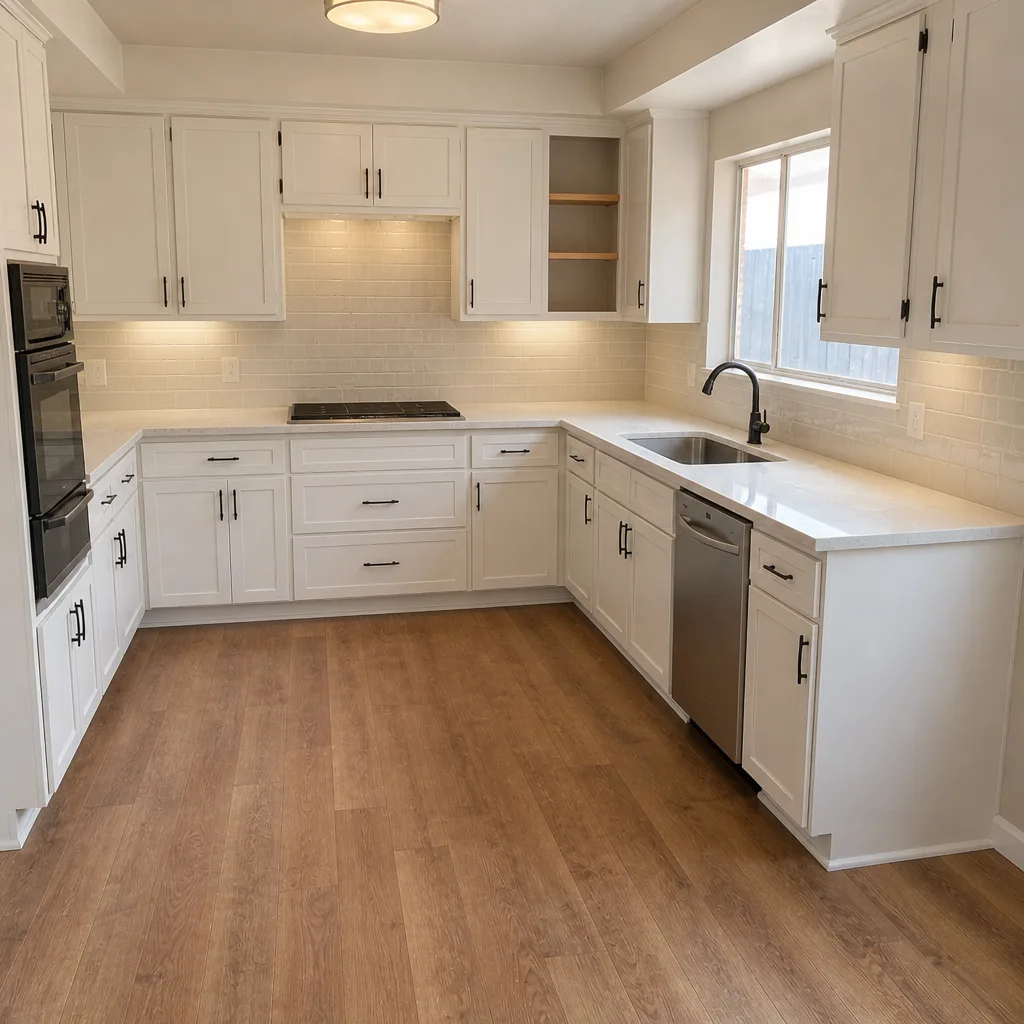 After
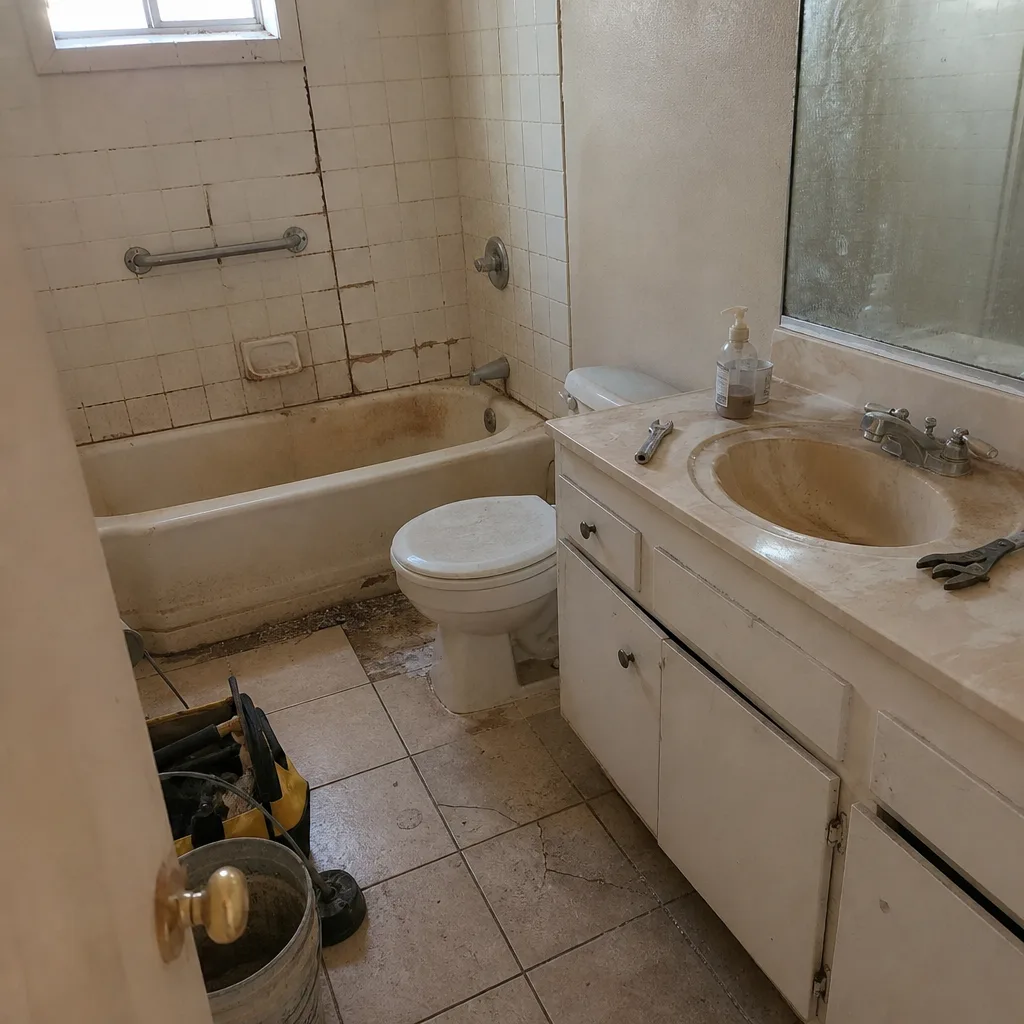 Before
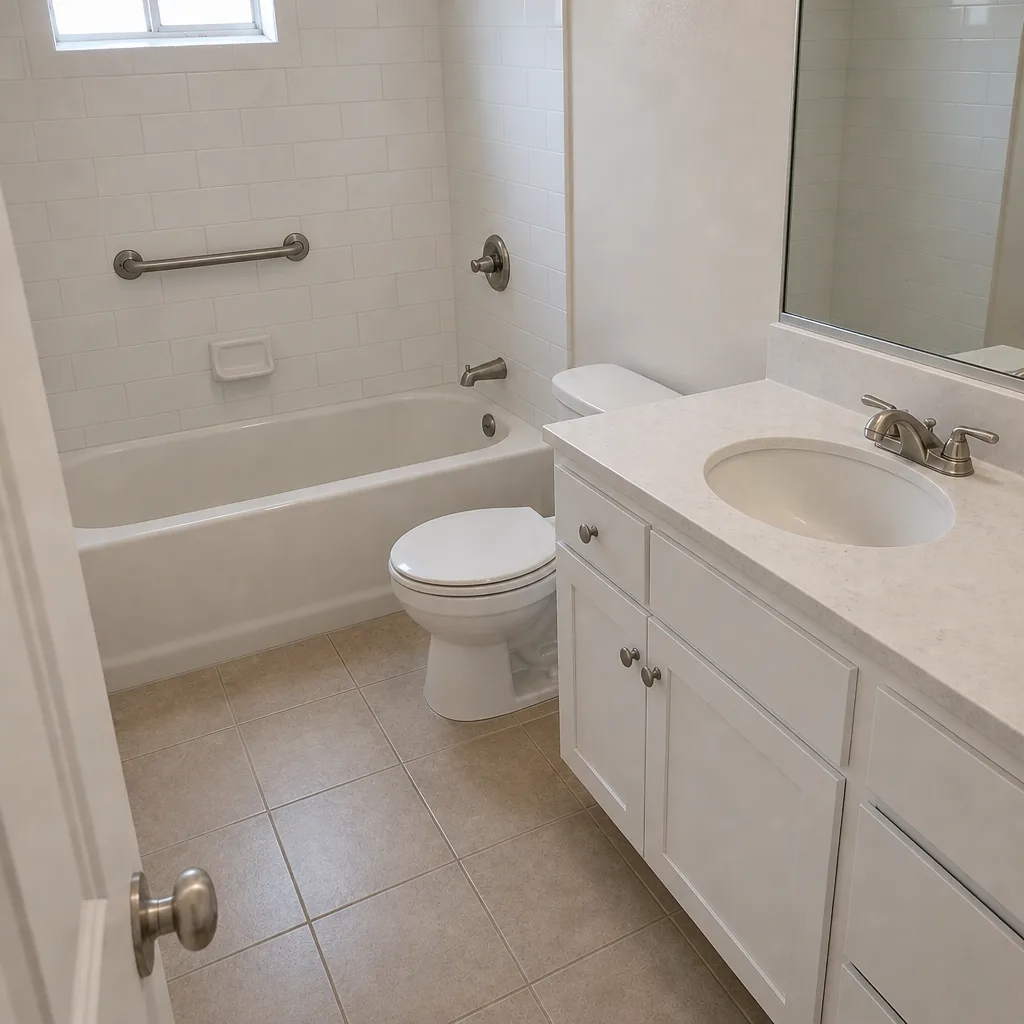 After
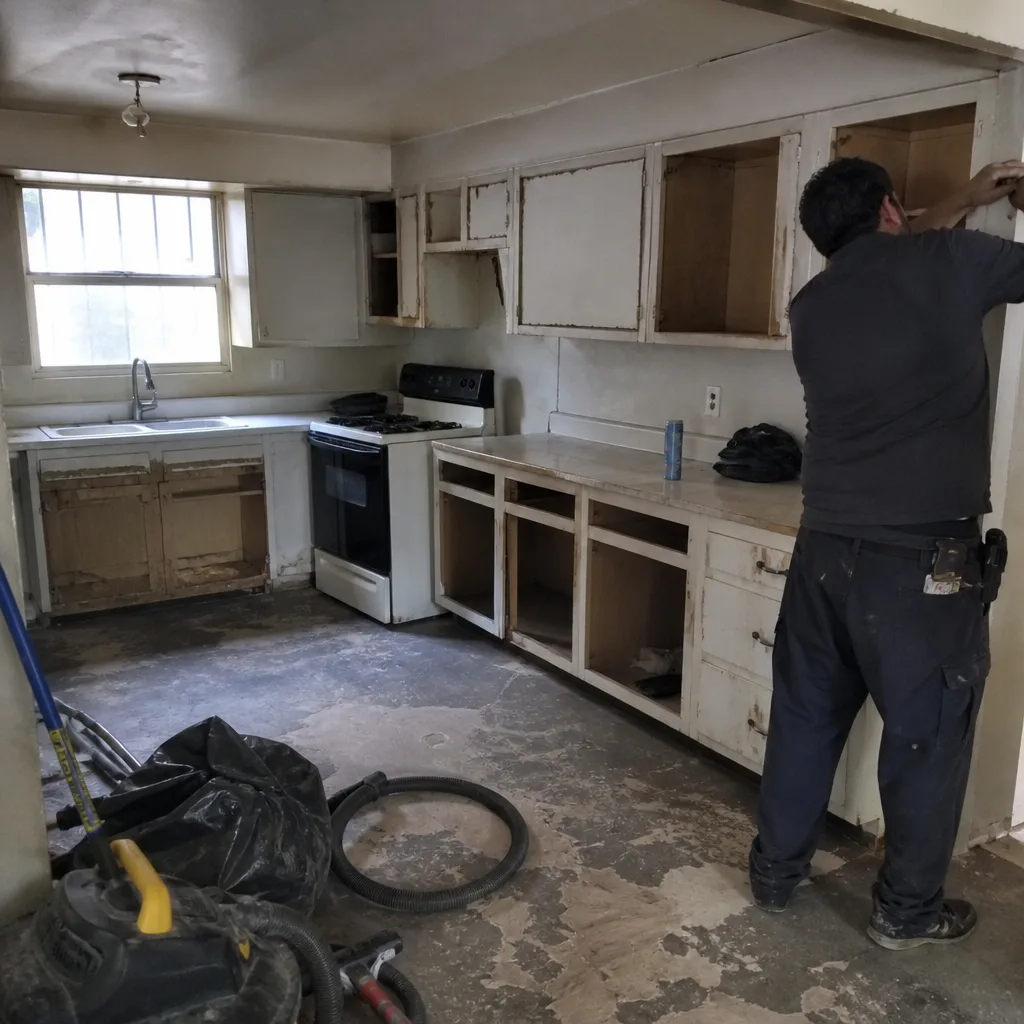 Before
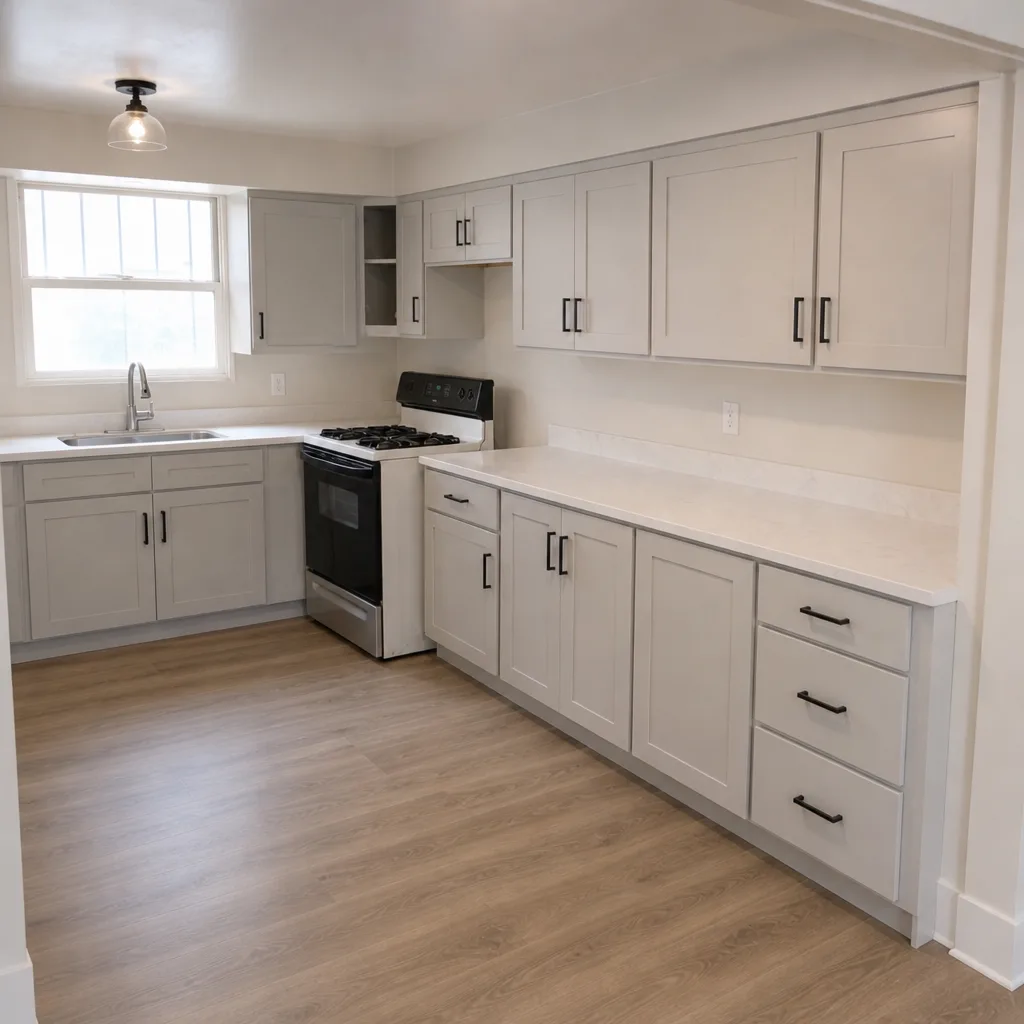 After
Common Mistakes to Avoid

- Turning off the water at a frozen shutoff valve. In Spring Valley homes built in the 1990s and early 2000s, we regularly find shutoff valves under the sink that haven’t been turned since the house was new. Test them gently with a towel under them before you commit to the faucet swap.
- Painting cabinets without deglossing. Nevada’s dry climate makes kitchen cabinets collect a fine dust that reads like a smooth surface. Without a deglosser and a light scuff, the paint peels off in sheets within a year.
- Anchorless open shelves. A shelf loaded with cast iron needs to be into studs or into proper toggle anchors rated for the load. Drywall anchors are for pictures, not pots.
- Assuming the floor is level before setting cabinets. Slab-foundation Spring Valley homes frequently have subtle floor variations. Check with a long level before screwing anything down.
- Running gas yourself to save the permit fee. A permit for a gas line is a small line item. A gas leak, a carbon monoxide event, or a home sale that stalls because the work isn’t documented is not a small line item. This is the one job on the list where the sensible answer is always to call a licensed professional.
- Choosing countertops before the cabinet layout is final. Fabricators cut to a template drawn on site. Changing cabinet layout after the template is drawn means paying for new slabs.
- Doing a DIY project right before a big family event. A kitchen you can’t use while the paint cures and a house full of guests is a combination most Spring Valley families regret. Schedule DIY work for a quiet week.
When to Call a Professional
Call a professional the moment the job touches a gas line, adds an electrical circuit, moves a drain, or requires a permit in Clark County. That’s the first tier – the licensed tier – and it’s non-negotiable. The second tier is more judgment-driven. Call when the cabinet layout is changing, when countertops are being replaced (fabrication is a specialized trade with its own tools and warranty), when a load-bearing wall is involved, or when the DIY timeline would leave your family without a working kitchen for more than a week.
Elmstead Remodeling Spring Valley offers free estimates in Spring Valley – call (844) 320-4882 to schedule one. Our team will walk through your kitchen with fresh eyes, confirm what’s genuinely safe to DIY, and give you a written price before any work starts. Every project is governed by the Cedarwell Care Promise, so the crew brings shoe covers and drop cloths, asks before moving anything, uses quiet tools during your children’s rest hours, and takes a photo of the clean-up before leaving for the day. The 365-Day Done Right Promise stays on the finished project for a full year – if something isn’t right, we make it right.
Frequently Asked Questions
Painting cabinets, swapping cabinet hardware, painting walls and trim, installing open shelves into studs, and peel-and-stick backsplash are all safe DIY projects in Spring Valley. The dividing line is whether a mistake would be hidden inside a wall or cabinet where you won’t spot it for months. If the failure point is visible and easy to fix, it’s fair game for a family project. For a fuller picture of what a finished kitchen can look like with that mix, our kitchen remodeling page is the place to start.
Yes. Any gas line work in Clark County requires a permit, including a simple range replacement, because the gas connection must be inspected and documented. This is the one job on the entire list where the safety stakes are not theoretical – a poorly sealed gas fitting is a carbon monoxide and fire hazard. Call a licensed plumber or gas fitter for any gas connection work. Call (844) 320-4882 for a free estimate on the surrounding kitchen work, and we’ll coordinate the licensed trade for the gas line.
It depends on your shutoff valves. A faucet swap on valves that turn freely is a reasonable DIY job. A faucet swap on valves that have been frozen for years is a plumber job waiting to happen. Test the valves gently before you commit – if they don’t turn easily, stop and call a plumber. For a Spring Valley kitchen with twenty-plus-year-old fixtures, our general contractor page walks through when it’s worth replacing the supply lines and valves at the same time.
A slow P-trap leak that goes unnoticed for months is the most common and the most expensive. It ruins the cabinet base, sometimes the toe kick, and occasionally the flooring beneath. By the time you smell the damp particleboard, the fix is a new cabinet box, not a tighter fitting. The second most common is painting cabinets without deglossing – the finish peels within a year in most Spring Valley homes.
A family that paints their own cabinets, swaps hardware, and paints the walls can realistically save $2,500 to $5,000 on a Spring Valley kitchen remodel. That’s the honest upper end. The countertops, gas work, electrical circuit additions, and plumbing moves should stay with licensed professionals, both for safety and for the paper trail your insurance and a future buyer will want.
Unpermitted gas and electrical work can complicate both. Most homeowners policies require that work on gas and electrical systems be done by a licensed professional for a claim to be considered. A permitted, inspected remodel creates documentation that protects you. That’s why we pull permits in the homeowner’s name on every project that requires one – the paper trail belongs to the family, not to us.
The Bottom Line

The right DIY projects in a Spring Valley kitchen are the ones where a mistake is visible and cheap to fix: painting, hardware, wall color, open shelves, a quick backsplash refresh. Those can save a family real money – $2,500 to $5,000 on a full remodel if you’re disciplined about which jobs you keep. Everything that touches a gas line, adds an electrical circuit, moves a drain, or hides a failure point inside a wall is the other side of the line. Clark County permits those jobs regardless of who does the work, and the savings from skipping the permit rarely survive the first hidden leak. If you’re not sure which side of the line a job sits on, that’s exactly the conversation a free estimate is for.
Elmstead Remodeling Spring Valley is ready to help your family plan a kitchen remodel that respects your home, your kids, your pets, and your budget. Call (844) 320-4882 for a free estimate, a written price before any work starts, and a crew that treats the house like a home.
Written by the team at Elmstead Remodeling Spring Valley.