Last updated November 18, 2026



Free written scope consultation - allowances, timeline, and change-order rules on paper before a single trade is scheduled
Kitchen Remodeling Warning Signs Every Homeowner Should Know
A contractor who quotes a full kitchen remodel in under twenty minutes has not looked closely enough at your existing plumbing stack, your panel capacity, or the floor level in your Spring Valley home. The speed feels like confidence. It’s actually a signal that nobody has thought through the parts of the job you can’t see yet, and you’ll pay for that speed later in change orders, delays, or a subfloor that wasn’t level to begin with. Kitchen remodels carry the highest dollar risk of any room in the house, and most of the warning signs that predict a bad outcome show up before the first cabinet goes on the wall. In this guide, we’ll walk through the pre-contract red flags, the material substitutions that cost you quietly, the mid-project habits that tell you whether a crew respects your family, and the exact questions to ask before you sign anything.
Quick Answer
The biggest kitchen remodeling warning signs are a lump-sum quote with no line items, no mention of a Clark County permit for electrical or plumbing work, a contractor who can’t name the cabinet brand or joinery, material allowances with no brand, and requests for payment before materials land on-site. If the quote doesn’t specify waterproofing, edge profiles, and who pulls the permit, the gaps get filled in after the work starts, at your cost.
Styles & brands we work with
- Kitchen remodeling
- Bathroom remodeling
- Home additions & ADU
- Roofing
- Windows & doors
- Driveway & pavers
- Fence
Table of Contents
- Pre-Contract Warning Signs: What a Quote Reveals
- The Permit Question Nobody Asks Soon Enough
- Material Substitution Red Flags
- Mid-Project Warning Signs for Families With Kids and Pets
- Financial Red Flags That Cost You Thousands
- The Specific Questions to Ask Before You Sign
- Spring Valley-Specific Factors That Affect Your Remodel
- Common Mistakes to Avoid
Pre-Contract Warning Signs: What a Quote Reveals
The quote is your first and best look at how a contractor thinks. A single lump sum with no line items is the most common warning sign we’ve seen, and it’s the one homeowners forgive most easily because the total number is the thing they’re comparing. But a lump sum hides everything that matters: how much is going to cabinets versus labor versus demolition, whether disposal and haul-away are included, whether the countertop template and install are separate line items, and whether there’s a contingency built in for what’s under the floor. On a Spring Valley ranch home built in the 1980s or 1990s, opening a wall above the sink often reveals galvanized plumbing that doesn’t meet current code. A line-item quote shows that possibility up front. A lump sum hides it until it’s a change order.
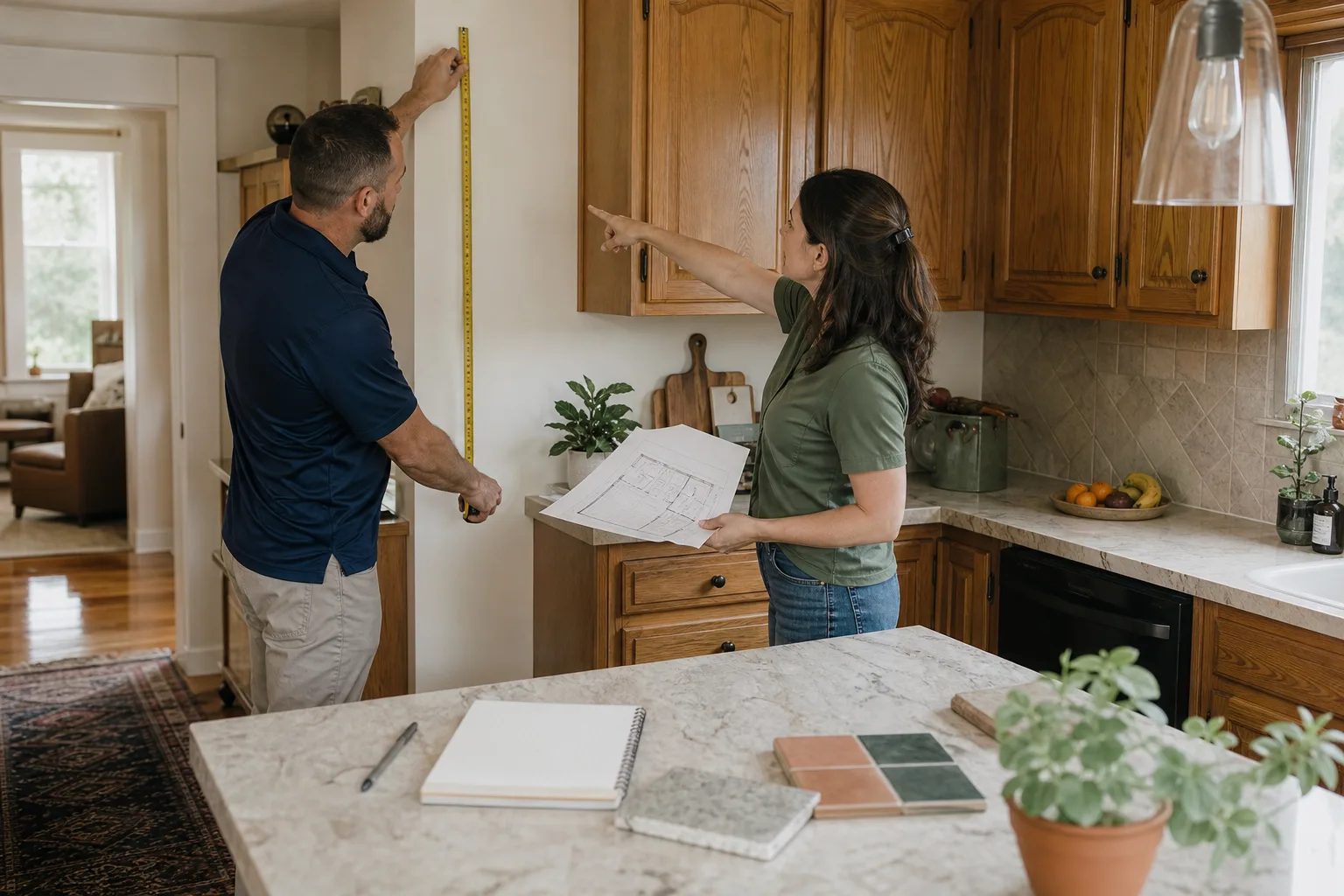
A careful contractor also asks about your life before pricing. If nobody has asked about your appliance dimensions, your countertop overhang preference, the height of the main cook in the house, or whether the kitchen will have a microwave drawer versus an over-range unit, the design hasn’t been thought through. Appliance dimensions affect cabinet depth, clearance to the island, and where the electrical rough-in goes. Countertop overhang affects whether a stool sits comfortably at the island or a chair back bumps the cabinet run. These are questions, not preferences. A contractor who skips them is quoting a kitchen, not your kitchen.
Three things we watch for in a first conversation:
- Does the contractor ask how many people cook in the kitchen and at what hours? It affects lighting, ventilation, and layout.
- Does the contractor walk the existing space with a level and a flashlight, or just measure the room?
- Does the contractor mention any inspection at all, or move straight to a finished-look pitch?
If any of those are missing, you’re talking to a salesperson with a subcontractor list, not a remodeling contractor. Our team at Elmstead Remodeling Spring Valley home walks the existing space and asks these questions on the first visit, which is also the visit where we give you a written price before any work starts.
The Permit Question Nobody Asks Soon Enough
Moving a gas line, adding a dedicated circuit for an induction range, relocating a sink, or opening a wall to redraw a floor plan are all permit-required in Clark County. A quote that doesn’t name permit costs, doesn’t tell you who will pull the permit, and doesn’t say whose name will be on it is a quote built on a shortcut. Skipped permits show up years later in a home inspection, in an insurance claim, or when you go to sell. The homeowner pays for all three.
Electrical and plumbing work in Spring Valley kitchens goes through Clark County Building Department review, and the inspections are real – rough-in electrical gets inspected before you close the wall, plumbing gets pressure-tested, and gas lines get a leak-down. A contractor who treats permits as an optional cost is telling you exactly how the rest of the job will go. Ask directly: who pulls the permit, whose name is on it, and will the final inspection pass be delivered to you in writing. A written price includes the permit line. It’s not an add-on you find out about later.
Here’s what a clean permit picture looks like on paper:
- The quote lists the permit fee as a named line item.
- The contractor is named as the permit holder, not the homeowner.
- Inspection milestones (rough-in electrical, rough-in plumbing, gas pressure test, final) are described in the schedule.
- The final inspection card is handed to you at closeout, not promised for later.
If any of those four is missing, ask why. It’s a fair question, and a good contractor expects it. Our permits get pulled on every job, our inspections get passed, and the closeout card goes in your hand. That’s what the General Contractor in Spring Valley relationship is supposed to look like.
Material Substitution Red Flags
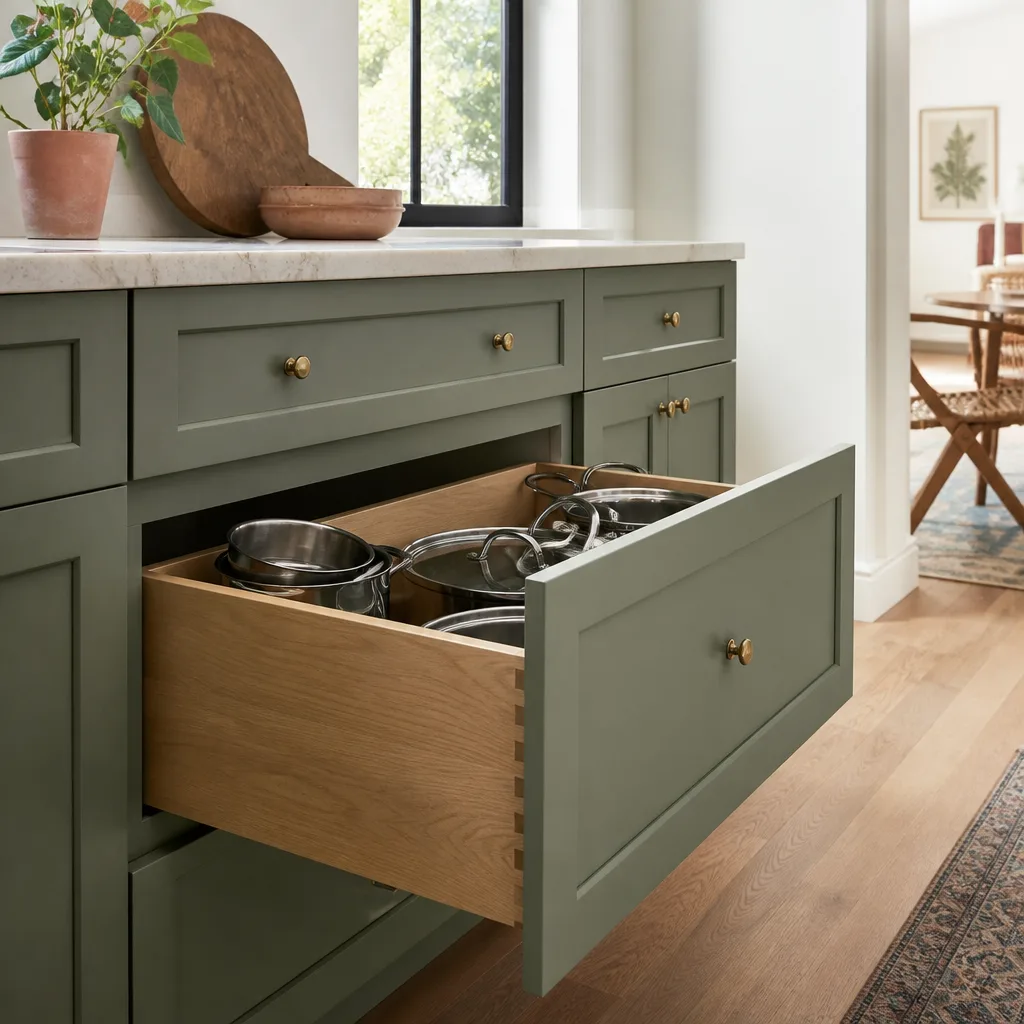
Cabinets are the single largest line in most kitchen budgets, and they are also the line most often quietly downgraded after signing. A quote that says “cabinetry” without a brand, without a series, and without a construction spec is a quote that will be filled in with whatever is cheapest on delivery day. Cabinet box construction is the specific point: dovetail drawers are glued and interlocked across the joint, and stapled boxes are, well, stapled. Both have their place. Neither should be a surprise to you after installation.
When we quote a kitchen in Spring Valley, we name the manufacturer and the series. KraftMaid and Wellborn both publish their construction specs online, so you can research the exact box, the drawer joint, the hardware, and the warranty before signing. That’s the point. A cabinet brand you can look up is a cabinet brand whose warranty travels with your finished kitchen. A cabinet brand you can’t name is a box with no warranty record.
Countertops have their own quiet substitutions. A quote that says “quartz” without naming the material – Cambria, Silestone, Caesarstone – gives the fabricator room to swap in a lower tier. An edge profile has to be specified (eased, beveled, bullnose, square), because an unspecified edge defaults to whichever one the fabricator runs at no extra charge, and the price on a waterfall edge is not the same as the price on an eased edge. Sink cutout inclusion is another one: some countertop quotes include the undermount cutout, some don’t, and the “don’t” version shows up on the invoice as a $250-$450 add after template day.
Tile is the biggest substitution opportunity of all. “Tile backsplash” means nothing. It should read like a product series name, a size, and a grout choice. When a quote says “tile backsplash” with no brand or series, plan for a mid-project conversation at the showroom where you’re told the tile you actually liked was an upgraded tier. Naming the material up front removes that conversation entirely. This is the same discipline we apply during Bathroom Remodeling in Spring Valley – the wet-room parts get the same treatment.
Mid-Project Warning Signs for Families With Kids and Pets
Once the demolition starts, the quote is behind you and the daily experience is in front of you. Families with children and pets see the truth quickly. The first sign is whether there is a dust barrier at the kitchen doorway. A zip-wall or taped plastic sheet between the work area and the living space is not optional when the work involves demolition and finish sanding. Without one, the fine drywall dust migrates to every soft surface in the house, and you’re cleaning the same shelves every week for months.
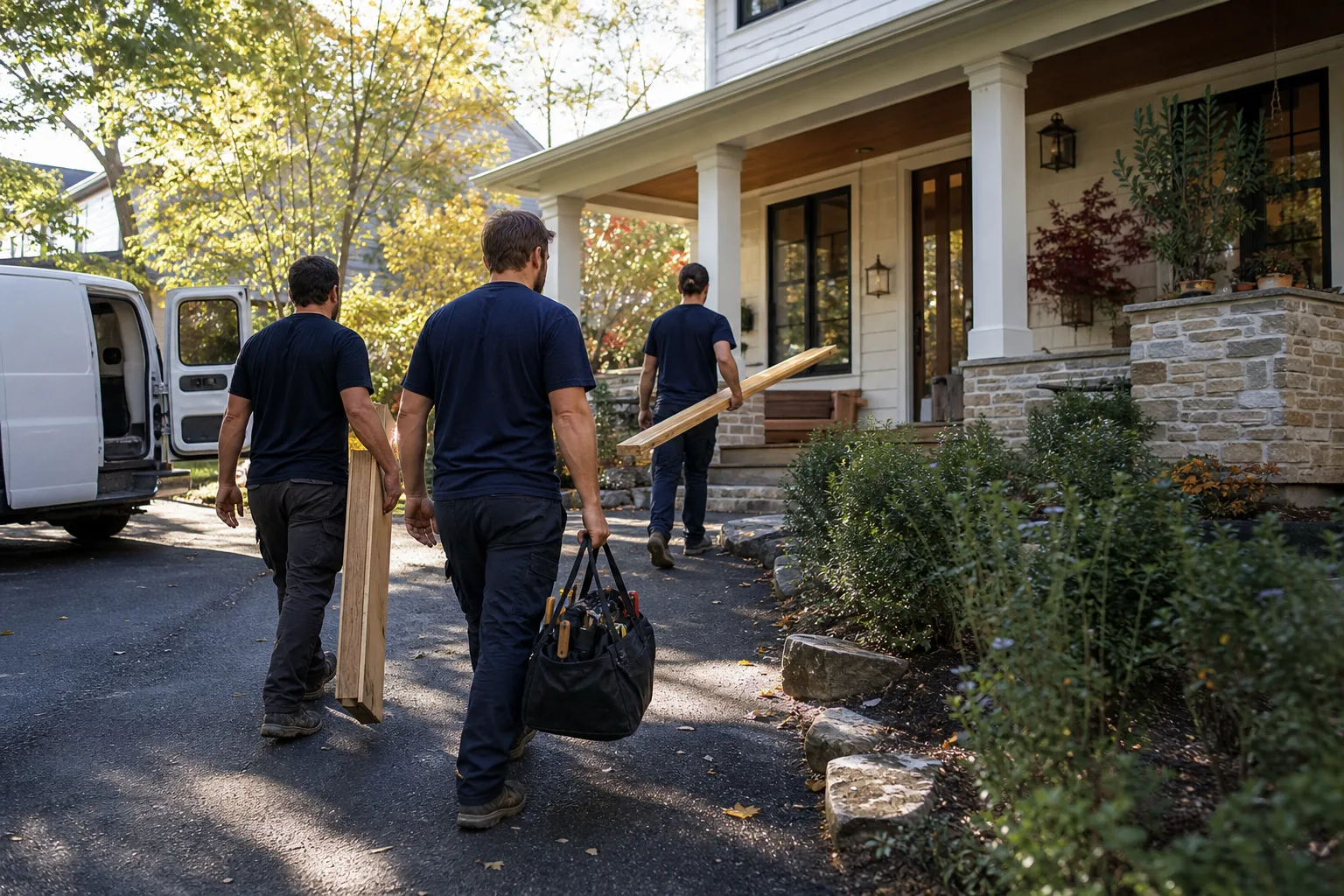
The second sign is how the crew leaves the site at end of day. Tools on the floor, offcuts and fasteners within reach, and cords across walking paths are all a problem when a toddler or a dog is in the house. A serious crew sweeps at end-of-day, puts tools in a closed bin, coils cords, and takes debris to the dumpster or garage. If you’re walking the site at night and stepping around screws, the crew is telling you something about their safety habits. This is why our Cedarwell Care Promise includes a photo of the clean-up before the crew leaves – it’s the same standard on a Tuesday in Spring Valley as it is on the last day of the job.
The third sign is whether an end-of-day walk-through happens. A five-minute check at closeout – what got done, what’s next, any surprises on the schedule – catches small problems while they’re still small. When that walk-through stops happening, delays usually start showing up without explanation.
Other things families with kids and pets should watch for:
- Quiet hours: are loud tools (chop saw, demo hammer) held off during nap time and after-school homework hours? They can be, if you ask and the crew plans for it.
- Pet containment: doors to the work zone closed at all times, and a plan for the pet’s daily routine while the kitchen is offline.
- Product choice: low-VOC caulk, low-VOC paint, and pet-safe floor cleaners where there’s a choice.
- Shoe covers at the door and drop cloths on floors – not an add-on, included every day.
Financial Red Flags That Cost You Thousands
Payment structure is where the biggest dollar risk lives. The schedule should be tied to completed work and materials arriving on-site, not to a calendar. A request for a large payment before materials are delivered is the warning sign that has cost homeowners the most in our experience watching this market – the money leaves, the materials don’t arrive, and the schedule stalls. A reasonable schedule asks for a modest deposit at signing, a materials payment when the cabinets and countertops land in your garage or on the driveway, and progress payments tied to milestones (demo complete, rough-in inspected, cabinets set, tops installed, final walk-through).
Change orders are the second big risk. Any change, even a small one, should be presented in writing with a description, a price, and a schedule effect, and signed before work proceeds. Verbal change orders are how a $400 splash of tile becomes a line on the final invoice labeled “additional work” with no detail behind it. A final invoice that exceeds the written quote with vague line items and no signed change orders is not a billing error. It’s the way the job was designed to be billed from the start.
The general pattern to look for:
- Deposit larger than a modest percentage at signing.
- Any payment requested before materials arrive on-site.
- Change orders discussed in the hallway instead of on paper.
- Final invoice items labeled “additional work,” “extras,” or “misc.” with no detail.
- Line items that appeared for the first time on the closing invoice, not the quote.
Our written price is given before any work starts, on every project, and every change order in between is written and signed before the crew touches the wall. That’s the point of the 365-Day Done Right Promise – if it’s not done right after the job is complete, we make it right. The Kitchen Remodeling in Spring Valley page spells out the same standards for this exact room.
The Specific Questions to Ask Before You Sign
Two questions tell you more about a contractor than the entire pitch does. Ask both before signing anything.
“What waterproofing product goes behind the backsplash at the sink?” The area behind and around the sink sees more standing water than any other vertical surface in the kitchen. The right answer names a product – Schluter-KERDI, a liquid-applied membrane, a cement backer with a topical waterproofing – and describes how it’s installed and how it ties into the countertop and the sink flange. A vague answer (“we caulk it well”) tells you the wall behind your sink is going to see moisture the day after the job is done. Materials matter here, and named materials are the ones you can look up.
“Who pulls the permit, and whose name is on it?” The right answer is immediate: the contractor pulls it, the contractor’s name is on it, and the final inspection card is delivered at closeout. An answer that starts with “we usually…” or “for a job this size we don’t need…” is your signal to walk. Spring Valley homes sit inside Clark County’s permit jurisdiction, and there is no size exemption for moving plumbing or adding electrical.
Ask two more while you have the contractor on the phone:
- “Which cabinet brand and series are you quoting, and what’s the drawer box construction?” – KraftMaid and Wellborn both publish this, so the brand name should arrive without hesitation.
- “What’s included in the countertop quote – edge profile, sink cutout, template trip?” – if the answer is vague on any of the three, the add-on is coming.
The answers, more than anything else, tell you whether the person across the table has done this before and whether the paperwork will match the work.
Spring Valley-Specific Factors That Affect Your Remodel
Spring Valley sits in a specific building climate that shapes the way kitchens age here. Desert summer heat and dry air cycle the wood in older cabinets through seasonal expansion and contraction that shows up as sticky doors in July and gaps in January. Homes built between roughly 1985 and 2000 in the neighborhoods near Rhodes Ranch, Mountain’s Edge, and the Spring Valley core often still have the original angled-stop shutoff valves and galvanized supply lines feeding the kitchen sink. When we open the wall above the sink during a remodel, we find the same thing again and again: a shutoff valve that closes but doesn’t fully stop, and a supply line that needs replacement before the new faucet goes on.
Floor level is another Spring Valley factor. Slab-on-grade construction is the norm, and the slab in some of these homes has a slight slope toward the exterior wall. A new cabinet run that sits on that slope shows up as a horizontal reveal that isn’t quite horizontal. The right approach is a leveling layer under the cabinet line – a small cost before installation, a much larger one after.
Panel capacity is the third thing. Adding an induction range, a wall oven, or a dishwasher drawer to a Spring Valley kitchen that’s running on the original 100-amp panel often means the panel gets upgraded, and the time to price that is before the job starts, not after the appliances are on-site. If your contractor doesn’t mention the panel during the walkthrough, they haven’t looked at it.
Nevada’s dry air also affects the finish side. Cabinets and countertops that get installed during a dry week settle differently than ones installed during a humid week, and a good schedule accounts for it. A written schedule that names the cabinet delivery, the template day, and the countertop install day – not just “the job will take six weeks” – is your best protection against a stalled kitchen in Spring Valley.
Common Mistakes to Avoid
- Comparing only the total number. Two quotes a few thousand dollars apart on a $40,000 kitchen are comparing completely different scopes. Compare line items, materials, and the permit line, not just the bottom number.
- Skipping the appliance conversation. Buying the range after demolition starts is the single most common cause of a two-week delay in a Spring Valley kitchen. Choose appliance dimensions before the quote, not after.
- Accepting “allowances” with no brand. A $4,000 cabinet allowance with no brand name attached is a number that will get filled in with whatever box is cheapest on delivery day.
- Paying a large deposit at signing. A modest deposit tied to the schedule is standard. A deposit larger than the first milestone is a warning sign, whatever the paperwork says.
- No dust barrier at the door. Fine drywall dust from a kitchen demo moves through a house within a day. The barrier is not optional, and it should be included, not an add-on.
- Skipping the final inspection closeout. If the inspection card doesn’t get handed to you at closeout, the permit isn’t closed, and you inherit the problem at resale.
- Treating the walk-through as a formality. A daily five-minute end-of-day walk-through catches small problems while they’re still small. Insist on it.
When to Call a Professional
If you’re moving plumbing, adding electrical, relocating a gas range, or opening a wall, that work needs to go through Clark County permitting and inspection, and the electrical and gas portions are genuinely not safe as a do-it-yourself project. Beyond the trades, call a professional contractor when you’re comparing more than two quotes and the scopes don’t line up, when the existing kitchen has old shutoff valves or a panel that hasn’t been evaluated, or when you want a written line-item price that names the cabinet brand, the countertop edge profile, the waterproofing product, and the permit cost before you commit a dollar. We give you a written price before any work starts, on every project, and we walk your space before pricing it. Elmstead Remodeling Spring Valley offers free estimates in Spring Valley – call (844) 320-4882 to schedule one.
See the difference
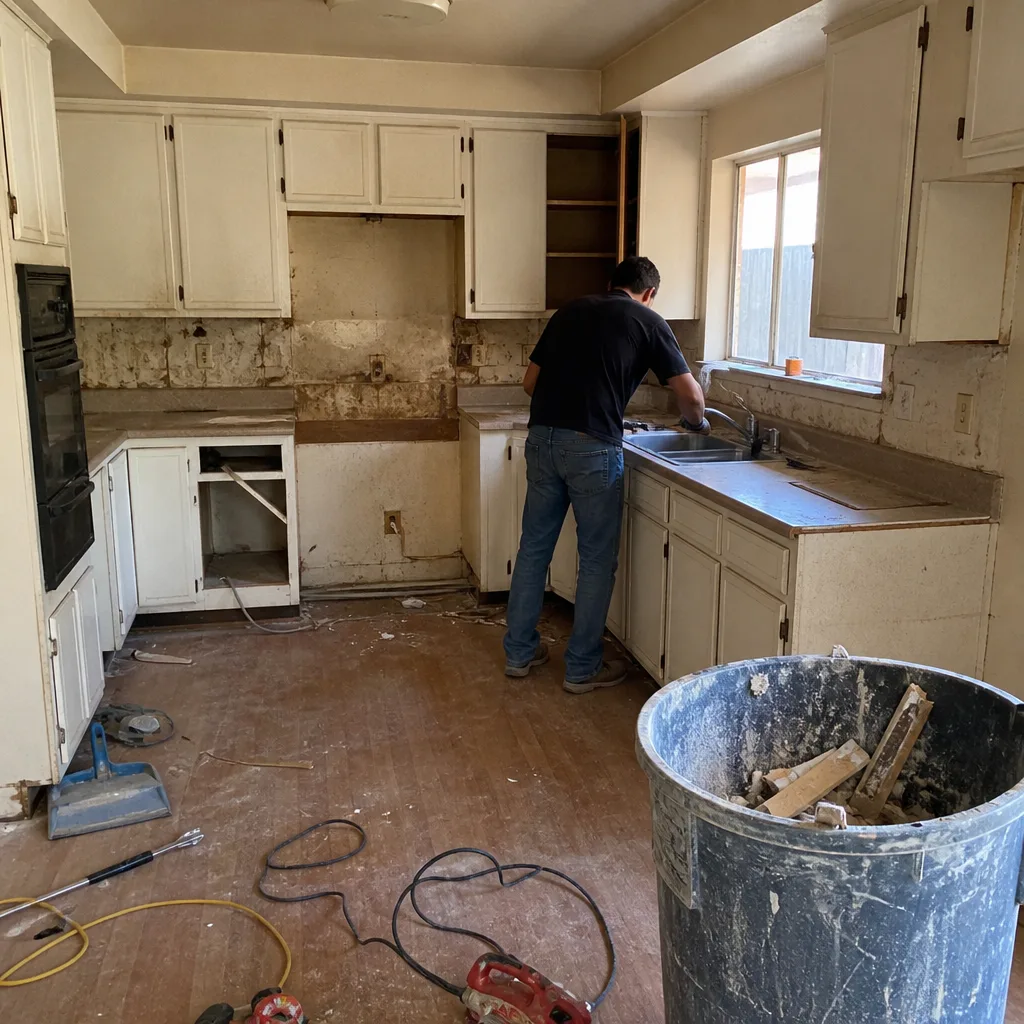 Before
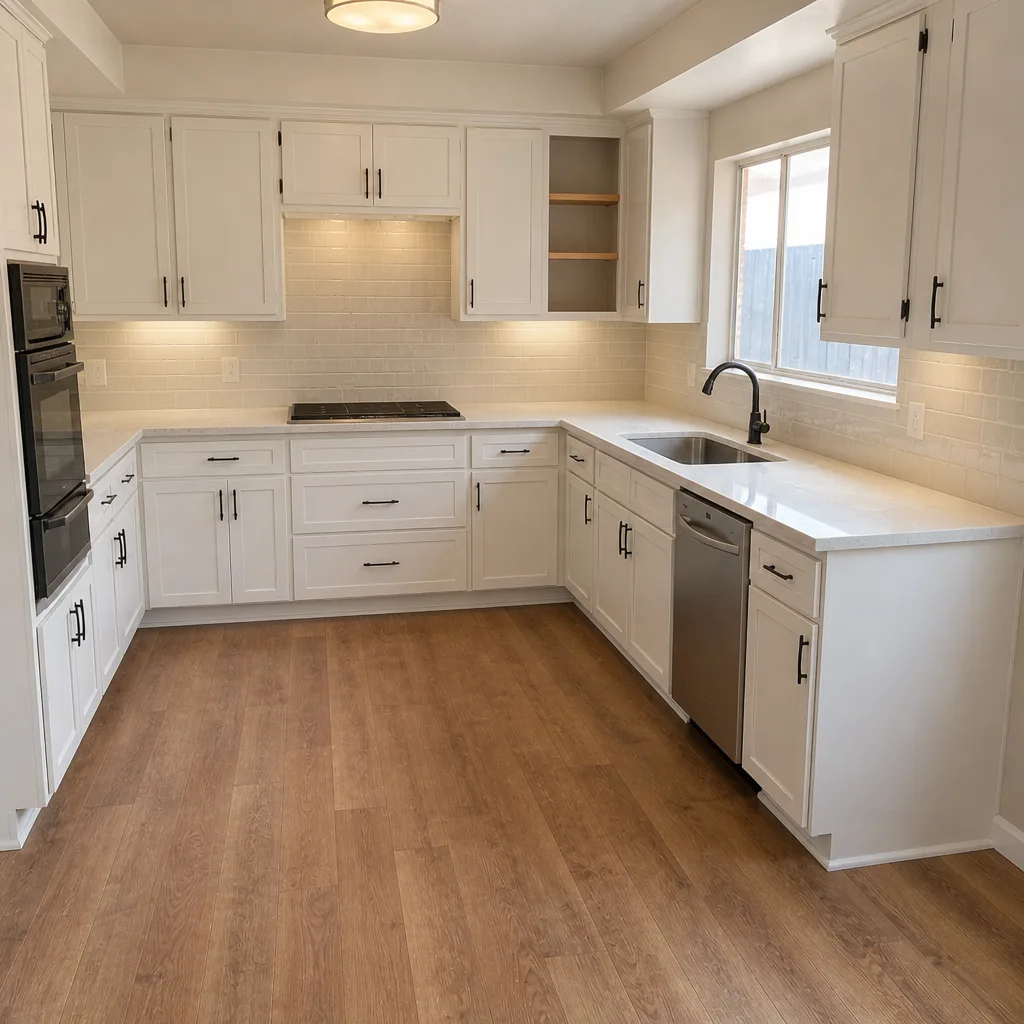 After
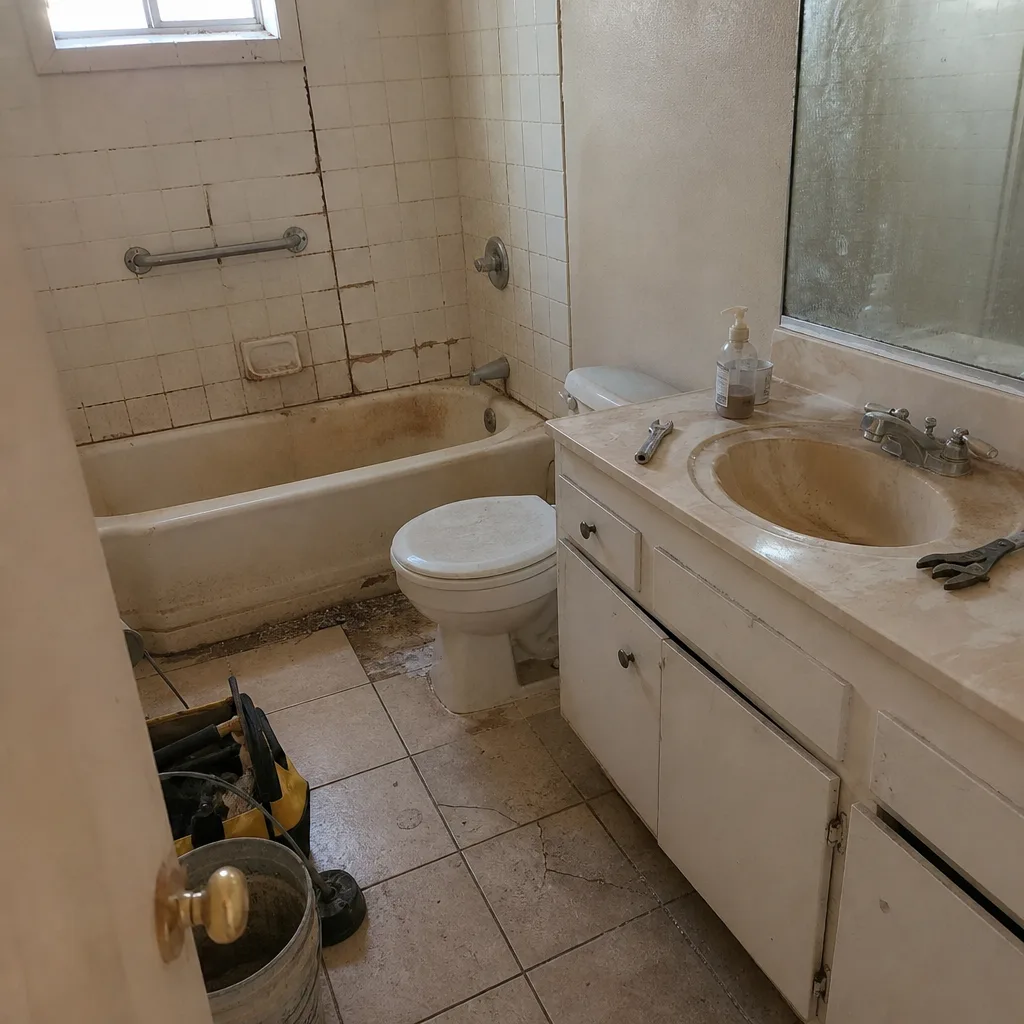 Before
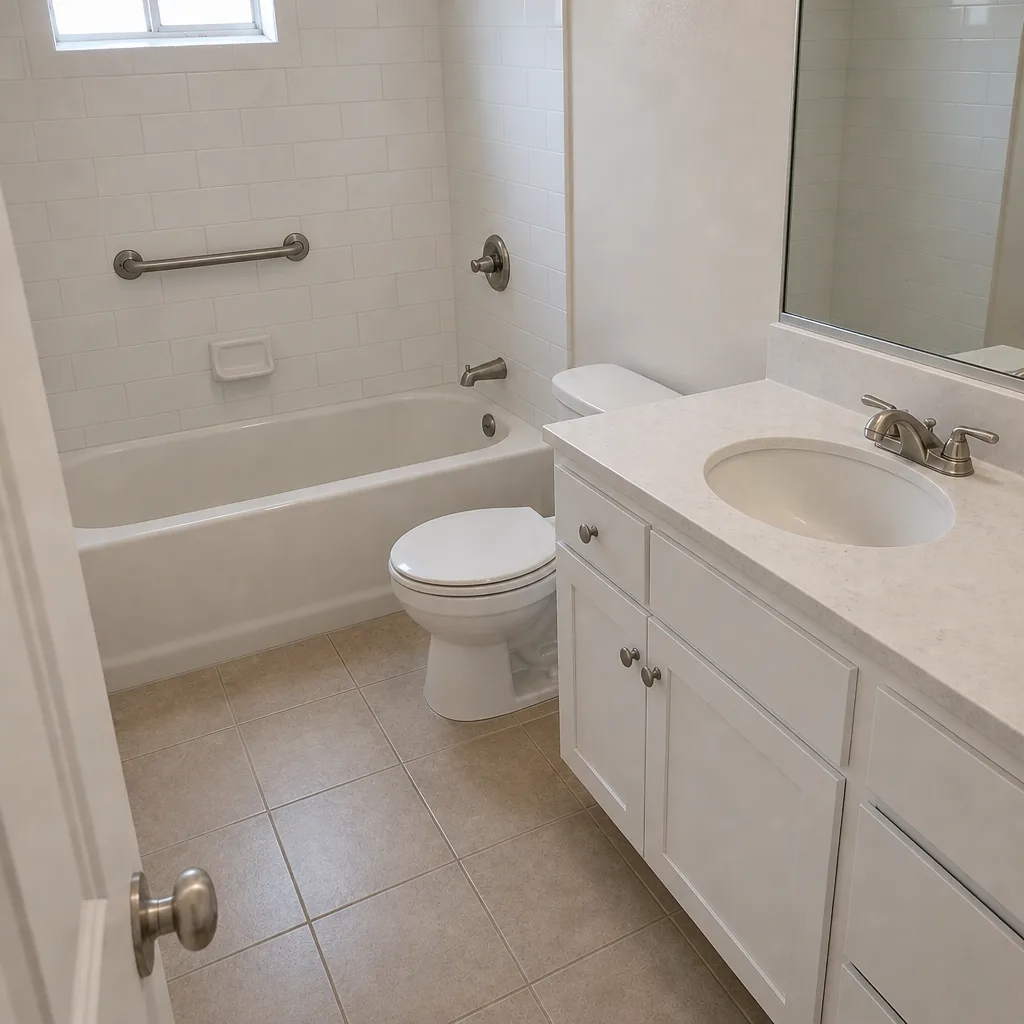 After
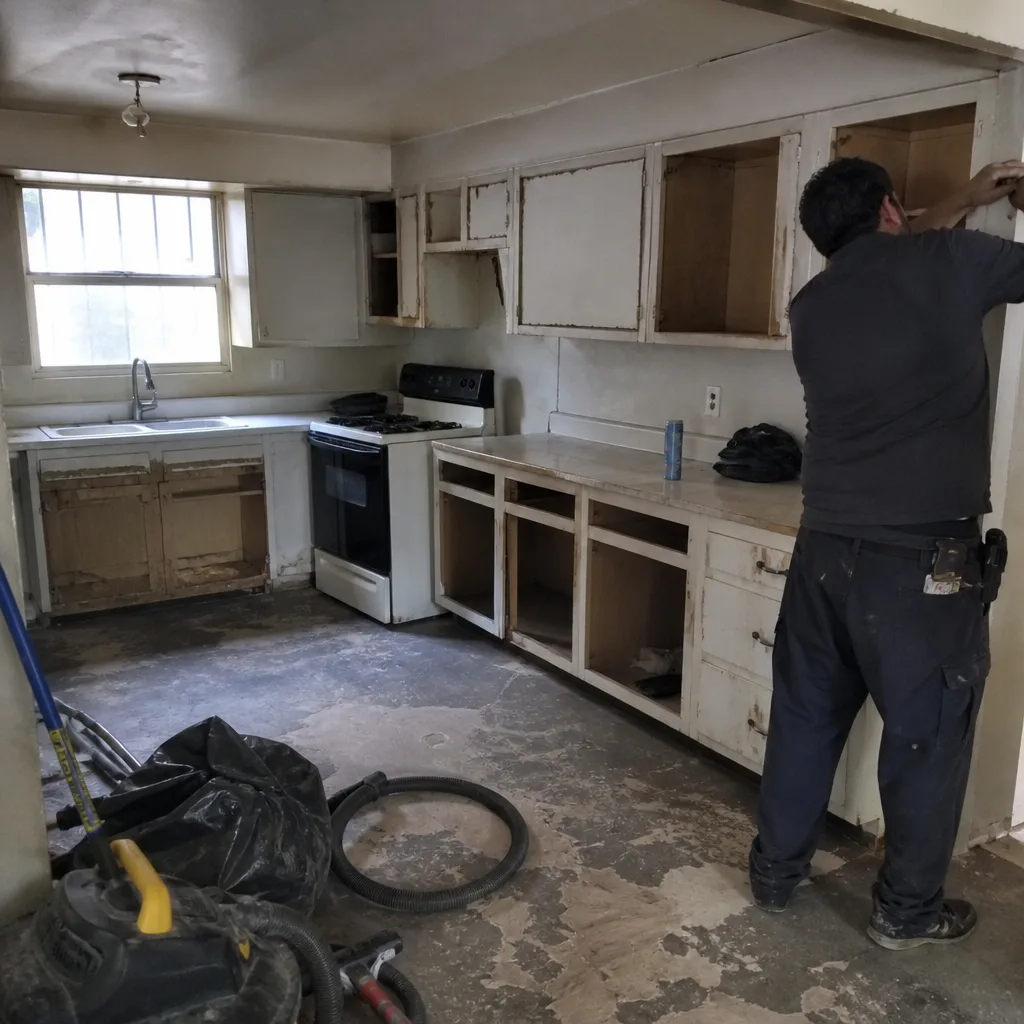 Before
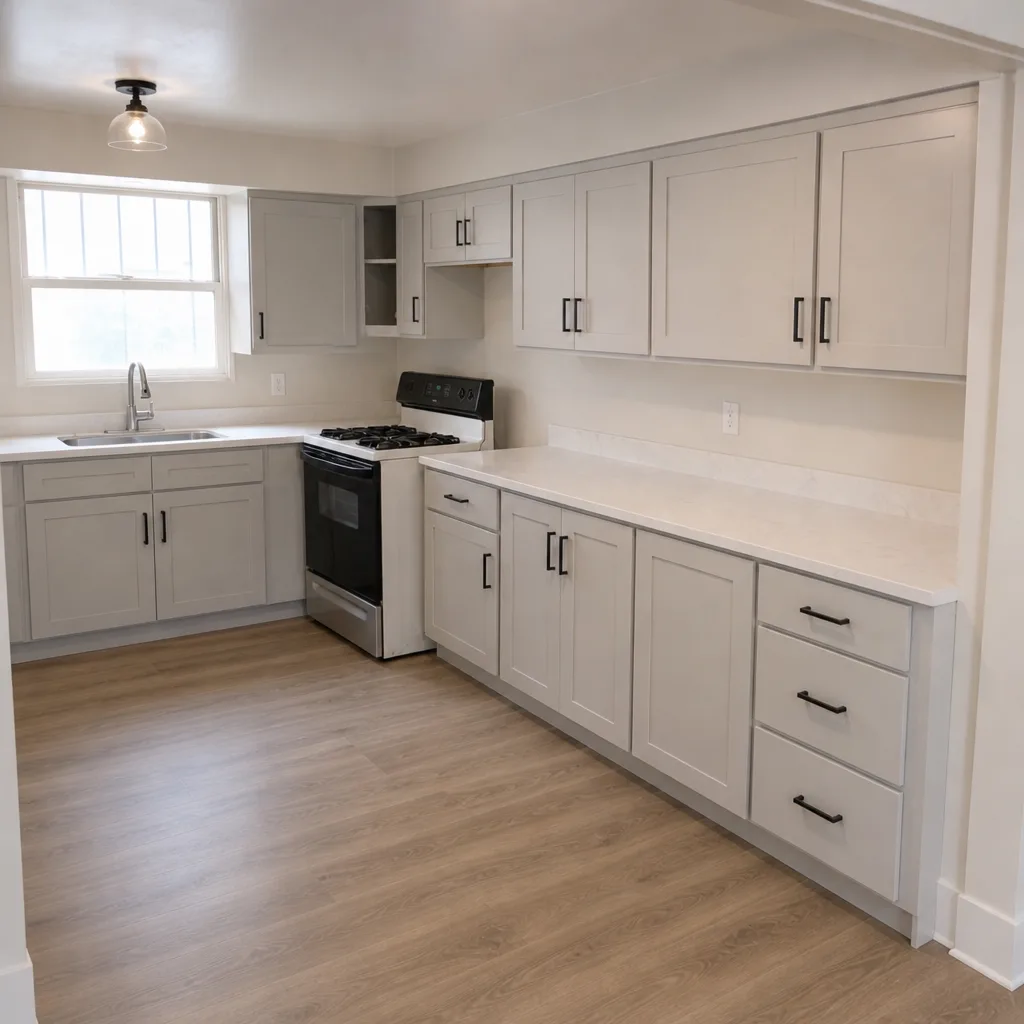 After
Frequently Asked Questions
A single lump-sum number with no line items is the biggest red flag, because it hides the parts of the job that most often get added as change orders – permit costs, countertop cutouts, disposal, and any contingency for what’s under the floor. A written, line-item quote that names materials and permit cost gives you something to actually compare. If yours doesn’t, call (844) 320-4882 for an exact written quote – estimates are free.
Kitchens in Spring Valley generally run from roughly $32,000 for a cosmetic refinish (new cabinet doors, countertop, backsplash, paint) to $110,000 or more for a full layout change with new appliances, relocated plumbing, and a panel upgrade. The variables that move the number the most are whether the plumbing and electrical get relocated, whether the panel needs upgrading, and the cabinet brand and series you choose. Those ranges are why a written line-item price before any work starts matters more than a single lump sum. Call (844) 320-4882 for a quote specific to your space.
Not on our projects. We give you a written price before any work starts, on every project, and anything that changes after that comes to you as a written change order – description, price, and schedule effect – signed before the crew touches the wall. If a contractor quotes you a lump sum and then adds “extras” at the final invoice, that pattern was baked in from the day you signed. Call (844) 320-4882 to see a written quote structure that holds.
Yes. We pull the permit on every job that requires one, and the permit is in our name, not yours. Spring Valley kitchens are under Clark County’s jurisdiction, and rough-in electrical, plumbing pressure tests, and gas leak-downs all get inspected before the wall closes. The final inspection card comes to you in hand at closeout. If a contractor tells you a job this size doesn’t need a permit, walk. Call (844) 320-4882 to schedule a walkthrough and a permit-included quote.
A cosmetic kitchen (doors, countertop, backsplash) typically runs three to four weeks. A full gut remodel with a layout change, new cabinets, plumbing and electrical relocation, and new flooring runs eight to twelve weeks, and countertop template and fabrication alone takes seven to ten business days. Cabinet lead times – KraftMaid and Wellborn both – move the schedule more than the install does, so a written schedule with named milestone dates (cabinet delivery, template day, top install day) is the real protection. Call (844) 320-4882 to walk your space and get a written schedule.
Kids and pets are part of the plan, not a footnote. That means a dust barrier at the kitchen doorway every day, tools and debris put away at end-of-day, quiet tools during nap and school hours where possible, pet-safe cleaners and low-VOC products where there’s a choice, and a photo of the clean-up before the crew leaves so you can see the state the house was left in. If a crew treats those as optional, that’s a warning sign. Call (844) 320-4882 to talk through a family-safe schedule for your Spring Valley kitchen.
The Bottom Line
The warning signs that predict a bad kitchen remodel show up in the quote, in the permit conversation, and in how a crew treats your house during the first week. A single lump-sum number, no mention of Clark County permits, materials with no brand, a large deposit at signing, and no dust barrier at the door are the five patterns that cost Spring Valley families the most. The specific fixes are simple to ask for: line-item pricing, named materials, permits in the contractor’s name, milestone payments, and a daily walk-through. Get those five in writing and you’ve protected most of your budget before a single cabinet is ordered. If it’s not done right after the job is complete, we make it right – that’s the 365-Day Done Right Promise, and it’s stamped on every project.
Ready for a Written Price on Your Spring Valley Kitchen?
Our team at Elmstead Remodeling Spring Valley walks your space, asks about your appliances and your family’s routine, and gives you a written line-item price before any work starts. Cabinets from KraftMaid and Wellborn, countertops from Cambria, Silestone, and Caesarstone, fixtures from Kohler, Moen, and Grohe, waterproofing from Schluter – all named, all researchable, all with manufacturer warranties that travel with the finished kitchen. Shoe covers and drop cloths on every visit, a photo of the clean-up before the crew leaves, and a live person on the phone 24/7. Call (844) 320-4882 for your free estimate.
Written by the team at Elmstead Remodeling Spring Valley.