Last updated November 18, 2026








Free written scope consultation - allowances, timeline, and change-order rules on paper before a single trade is scheduled
General Contractor Maintenance Checklist for Spring Valley Homeowners
The caulk around a Spring Valley exterior door can go from flexible to cracked and air-permeable in under 18 months. That’s roughly three times faster than the same product fails in a coastal climate, because a UV index that runs high nine months of the year and a daily temperature swing that can top 40 degrees work together on sealants in ways most homeowners don’t notice until the energy bill does. A desert house doesn’t age the way houses elsewhere do. It ages by exposure. This guide is built around the actual failure patterns a contractor finds when walking a Spring Valley home that hasn’t had a professional review in 18 months, keyed to the seasons, the soil, and the materials that give out first here.
Quick Answer
Spring Valley homeowners should run a professional maintenance review once every 12 to 18 months, with the critical tasks scheduled around the desert calendar: a pre-summer HVAC inspection in April or May, a post-monsoon roof and flashing check in September, and a winter weatherstripping and door-seal audit in November or December. Between those, monthly walk-arounds for caulk, grout, and concrete movement catch the small failures before they reach the wall cavity or the slab. The cost of staying ahead of this is a fraction of the cost of catching up.
Styles & brands we work with
- Kitchen remodeling
- Bathroom remodeling
- Home additions & ADU
- Roofing
- Windows & doors
- Driveway & pavers
- Fence
Table of Contents
- The Spring Valley Seasonal Maintenance Calendar
- The Five Exterior Materials That Degrade Fastest Under Desert UV
- How to Check for Caliche-Related Concrete Heave
- Interior Items That Fail in Spring Valley Homes Between 8 and 15 Years Old
- The HVAC System Running 2,000+ Hours a Year
- Documenting Your Inspections for Warranty and Resale
- Common Mistakes to Avoid
- Frequently Asked Questions
The Spring Valley Seasonal Maintenance Calendar
Spring Valley’s climate splits into three distinct stress periods, and the maintenance calendar should follow them rather than the four-season model written for temperate zones. The system here runs hot and dry from May through September, gets brief but violent monsoon rain in July and August, and drops into cold desert nights from December through February. Each period loads a different part of the house.
Here’s the sequence we recommend when we walk a Spring Valley home:
- April to May – pre-summer HVAC inspection. Coils cleaned, refrigerant charge verified, condensate drain flushed and tested, filters changed. A unit that runs 2,000-plus hours a year needs to start the season clean, because a dirty coil at the front of August costs efficiency all summer.
- June – exterior caulk and paint review. Check every window, door, and penetration before the UV peaks. Re-caulk anything cracking or pulling.
- September – post-monsoon roof and flashing check. Monsoon wind-driven rain finds loose flashing and lifted shingles fast. Walk the roof lines, the valleys, and every pipe boot.
- October – concrete and driveway inspection. Caliche movement shows up after the ground has moved through a wet season and dried again.
- November to December – weatherstripping and door-seal audit. Cold nights test every threshold and sweep. Replace what’s compressed or torn.
- January – under-sink and supply-line review. Cold snaps stress the flexible lines under sinks and at the water heater. Look for brittle, discolored, or bulging hoses.
Skipping the calendar isn’t dramatic. It just means the failures get discovered by the energy bill and the drywall stain instead of by a professional who knows what spring in Spring Valley does to a poorly sealed door.
The Five Exterior Materials That Degrade Fastest Under Desert UV
Not every exterior material ages at the same rate here. Five categories account for the majority of the premature exterior failures we see in Spring Valley, and each has its own replacement threshold a contractor tests for when assessing re-coating versus full replacement.
- Elastomeric and acrylic caulking. Fails by cracking, pulling away from the substrate, and going chalky. If a fingernail press leaves a permanent dent or the surface has lost all flexibility, it’s past re-coating and needs replacement.
- Fiber cement and wood-composite siding. Fails at the paint film and the joints first. James Hardie siding holds up well under UV when the factory finish is intact, but face-checking and joint separation tell you when a re-coat is due versus a panel replacement.
- Exterior door and window seals. Fails at the threshold and around the frame. If daylight shows at the threshold or the weatherstripping won’t spring back, the seal is done.
- Stucco and painted masonry. Fails by hairline cracking and efflorescence. Cracks wider than a credit card edge need patching and re-coat, not paint over.
- Exterior trim and fascia. Fails at the end grain where moisture sits. Look for soft spots, paint blistering, and separation at the soffit joint.
The threshold question is simple. If the material still flexes, bonds, and sheds water, re-coat. If it’s brittle, debonded, or checked through the profile, it’s a replacement item. A general contractor reviewing the exterior of a Spring Valley home should be able to tell you which category each material falls into within a few minutes of walking the perimeter. That’s a review worth having before the UV season starts, and it’s the kind of walk-through we do before quoting any exterior work.
How to Check for Caliche-Related Concrete Heave
Spring Valley sits on soils with significant caliche layers – cemented calcium carbonate that behaves very differently from ordinary topsoil when it gets wet and dries. During a monsoon, water percolates to the caliche layer, the soil above it swells, and when it dries, it shrinks. Concrete that was poured over that cycle moves with it. The result is heave at slab edges, cracked driveways, tented walkways, and trip hazards that develop slowly enough that homeowners step around them for months without registering what they are.
Here’s how to check before it becomes a real problem:
- Walk every concrete edge with a straightedge. A 4-foot level laid on the surface tells you immediately whether the slab has tented. Any gap over 1/4 inch at the edge is worth documenting.
- Look for cracking that mirrors the slope. Heave cracks run perpendicular to the direction of movement, not randomly. If cracks at your driveway run parallel to the street, that’s a slab-edge issue.
- Check drainage at every slab edge and downspout. Water ponding at a slab edge accelerates the wet-dry cycle. If a downspout dumps within 3 feet of the slab, extend it.
- Watch for cracked window frames at exterior walls. Interior cracking at the corner of a window opening often indicates the exterior slab has moved underneath.
- Feel for trip points at walkway joints. A lip taller than 1/4 inch is a documented trip hazard and a liability item on resale disclosures.
Small cracks and minor heave are common in Spring Valley and not always urgent. What matters is documenting the movement and watching the progression. Repairs range from crack filling and joint sealing to mudjacking or partial slab replacement, and the earlier it’s caught, the simpler and cheaper the fix. That’s also why the concrete inspection belongs on the annual calendar, not on the list of things you think about when a slab finally fails.
Interior Items That Fail in Spring Valley Homes Between 8 and 15 Years Old
Homes built in Spring Valley during the last big build cycle are now in the 8 to 15-year window, and the interior failures we flag in that age band are remarkably consistent. They aren’t glamorous. They’re the items that spend a decade under constant temperature cycling and humidity that swings hard between the dry season and the monsoon, and they let go quietly.
- Grout in tile floors and showers. Desert temperature cycling cracks grout lines, and once a hairline crack opens, moisture gets into the substrate. Re-grouting and re-sealing at the 8 to 12-year mark is far cheaper than replacing a failed shower pan.
- Caulk at tub surrounds and shower corners. The joint between a tub and a wall has to move, and caulk that’s gone hard or mildewed underneath is failing. Cut it out, clean it, and re-caulk with a kitchen-and-bath silicone.
- Under-sink supply lines. Braided stainless lines still fail, and the plastic ferrules and washers on older lines go brittle in dry air. Any line older than 10 years should be replaced before it’s the source of a cabinet leak.
- Toilet supply and shutoff valves. The angle-stop valves under toilets and sinks seize shut in dry climates. If you can’t turn the valve by hand, replace it before you need to.
- HVAC condensate lines and pans. The single most common interior water-damage source in a Spring Valley home. A clogged drain line in July will drip down through the ceiling if the pan overflows. Flush it annually.
These are the items we check when bidding a bathroom or kitchen update in a Spring Valley home that age, because touching the fixtures often means discovering what’s behind them. If you’re already considering a remodel in that range, it’s usually smarter to fold the maintenance fix into the project than to call twice. Our bathroom remodeling in Spring Valley and kitchen remodeling in Spring Valley teams routinely find these items during the initial walk-through and fold them into the written price before any work starts.
The HVAC System Running 2,000+ Hours a Year
An HVAC system in a temperate climate runs 800 to 1,200 hours a year. A Spring Valley system runs 2,000-plus because the cooling season starts earlier and ends later here than almost anywhere else in the country. That means every component – the compressor, the blower, the coils, the contactor, the capacitor – reaches its service life on a compressed schedule. Filters that get changed every three months in other markets need changing every 30 to 45 days here during the cooling season, and the condensate line needs attention every spring, not every few years.
The pre-summer inspection is the highest-value item on the whole calendar. It should cover:
- Coil cleaning on both the evaporator and condenser side
- Refrigerant charge check against the manufacturer’s specification
- Condensate drain flush and float switch test
- Capacitor and contactor inspection (the two parts that fail most often in desert heat)
- Filter replacement and ductwork inspection for gaps and separation
- Thermostat calibration and a check of the setback schedule
None of that is glamorous work, but it’s the difference between a unit that reaches 15 years and one that fails at year nine. In our experience walking Spring Valley homes, the systems that get an annual pre-summer service routinely outlast the ones that get “fixed when they break” by several years. That’s a real saving on a system that will eventually need replacement, and it’s also the item most homeowners defer until the first 110-degree day, when every contractor in the valley is booked solid.
Documenting Your Inspections for Warranty and Resale Disclosures
The difference between a maintenance history that helps you and one that doesn’t is documentation. A stack of receipts in a drawer is not a maintenance history. A dated, photographed, itemized record is. It supports manufacturer warranty claims when a product fails, it supports the 365-Day Done Right Promise any reputable contractor stands behind on completed work, and it supports the resale disclosure package when you eventually sell.
Here’s the documentation system we recommend for every Spring Valley home:
- One folder, physical or digital, per address. Every receipt, warranty card, and inspection note goes in the same place.
- Photograph every inspection. Before-and-after photos for every repair. Include a date stamp.
- Note the contractor, the date, and the work item on every invoice. A receipt that says “general repair” doesn’t help anyone.
- Keep the manufacturer warranty paperwork with the receipt. Cabinets from KraftMaid and Wellborn, countertops from Cambria, and exterior materials from James Hardie all carry warranties that travel with the home – but only if the paperwork travels too.
- Log the annual review in a simple log sheet. Date, inspector, what was found, what was done, and what to watch.
When it’s time to sell a Spring Valley home, the documented maintenance history is often the difference between a buyer seeing a well-kept home and a buyer wondering what wasn’t caught. It’s a small habit that compounds. If you want a professional walk-through to help you start the record, that’s a free estimate call and it’s the kind of review that belongs on the front end of ownership, not the back end.
Common Mistakes to Avoid
- Treating a temperate-climate checklist as your checklist. Every “change the furnace filter quarterly and rake the gutters in fall” guide was written for a climate that doesn’t exist here. Spring Valley needs a desert calendar, not a borrowed one.
- Caulking over a failed joint. Caulk laid over old, chalky, or debonded caulk peels off within a season. Cut it out, clean it to bare substrate, and reapply.
- Skipping the pre-summer HVAC service. A clogged condensate line or a weak capacitor in June becomes a failed compressor in August. The pre-summer service is the cheap insurance.
- Letting concrete heave become a trip hazard. A 1/4-inch lip at a walkway joint is easy to fix early and expensive to defend later. Note it and address it before it moves further.
- Ignoring under-sink lines because they haven’t failed yet. Supply lines older than 10 years in a Spring Valley home should be replaced on the calendar, not on the failure. A burst line at 2 a.m. is a warranty claim on the cabinets, the flooring, and the drywall.
- Not keeping documentation. A home with a written, photographed maintenance history sells better and defends its warranties better than an identical home without one.
- Deferring the 18-month professional review. A review catches the items a homeowner can’t see – wall cavities, flashing under shingles, subfloor moisture. The longer the gap, the more expensive the catch.
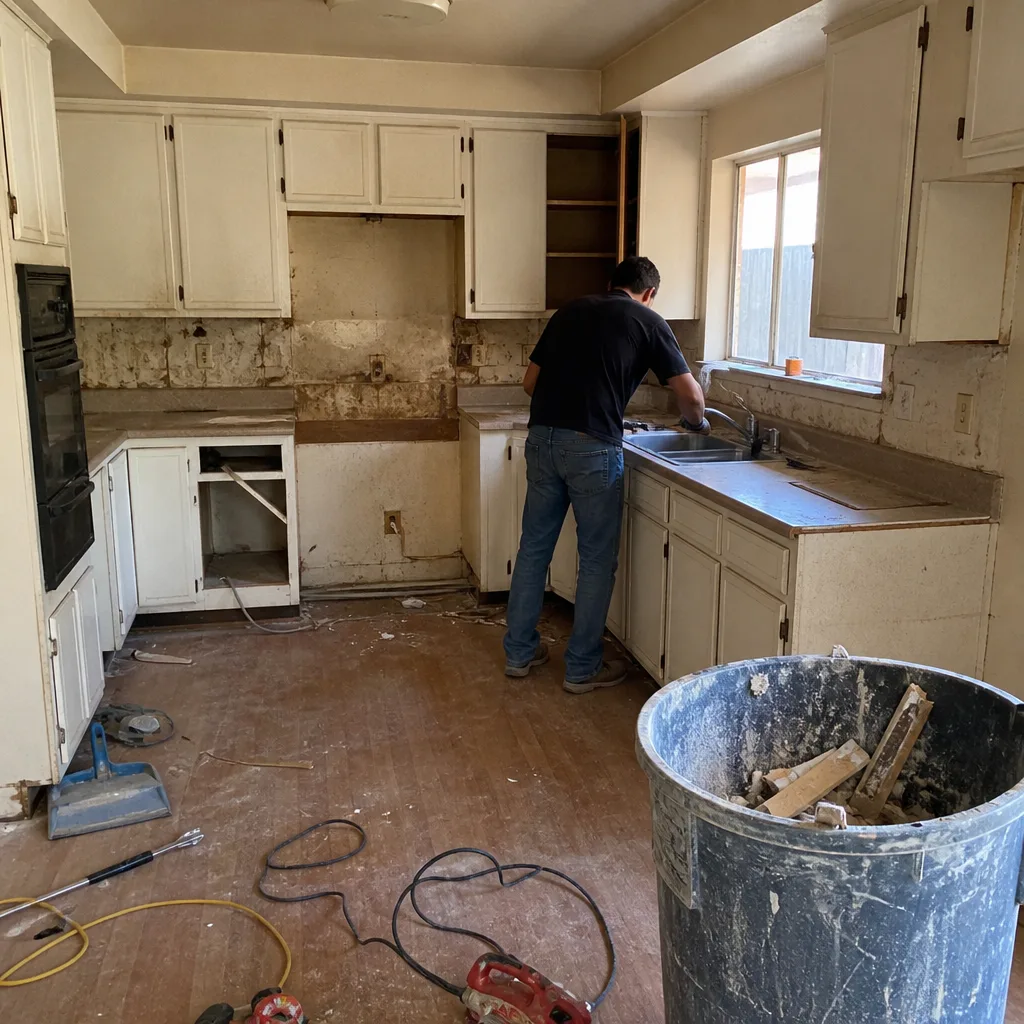
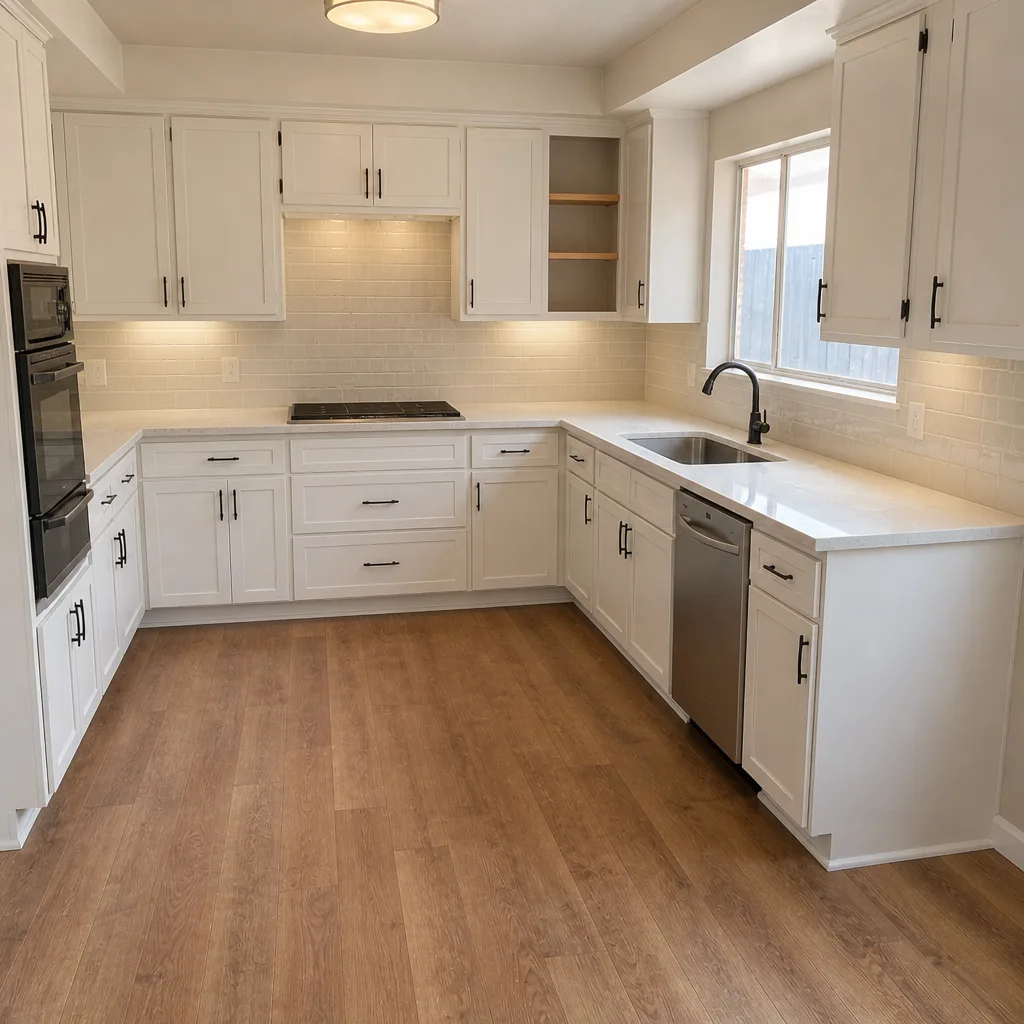
See the difference
 Before
 After
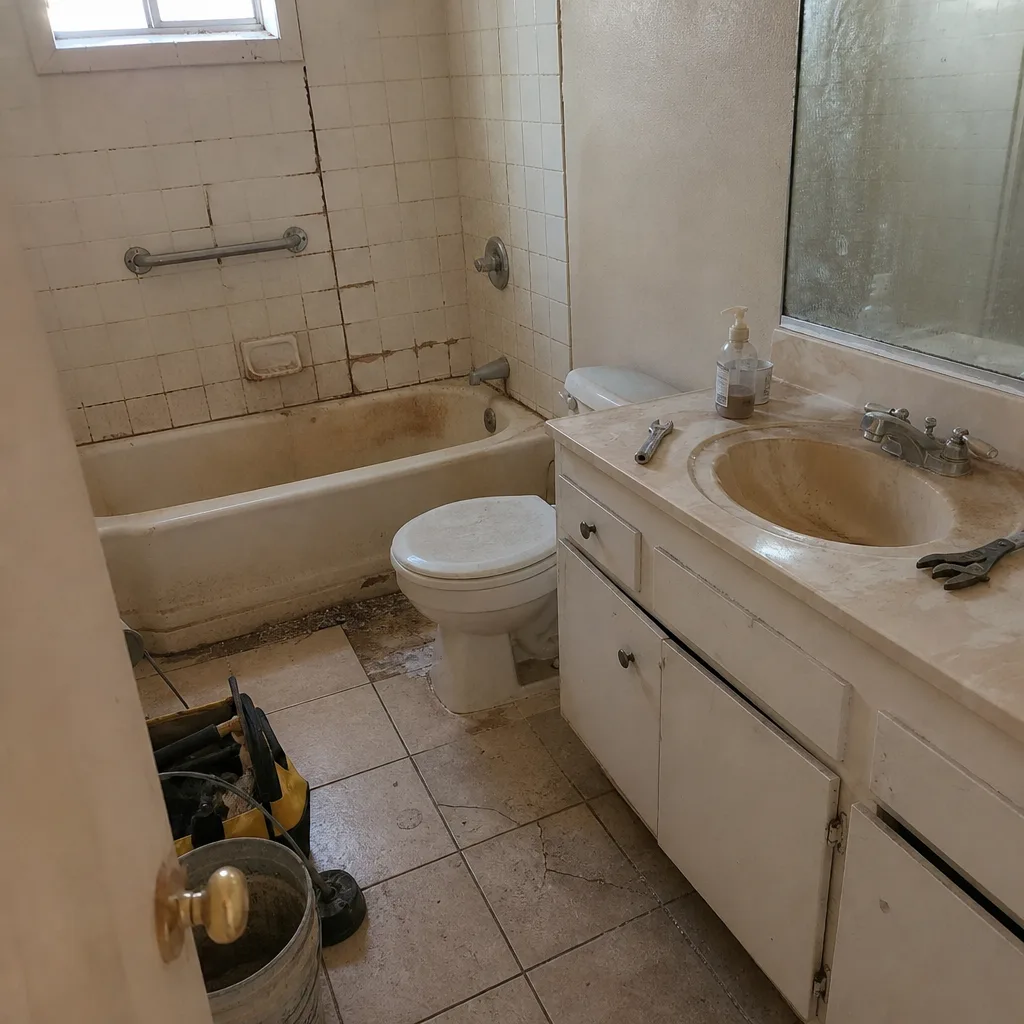 Before
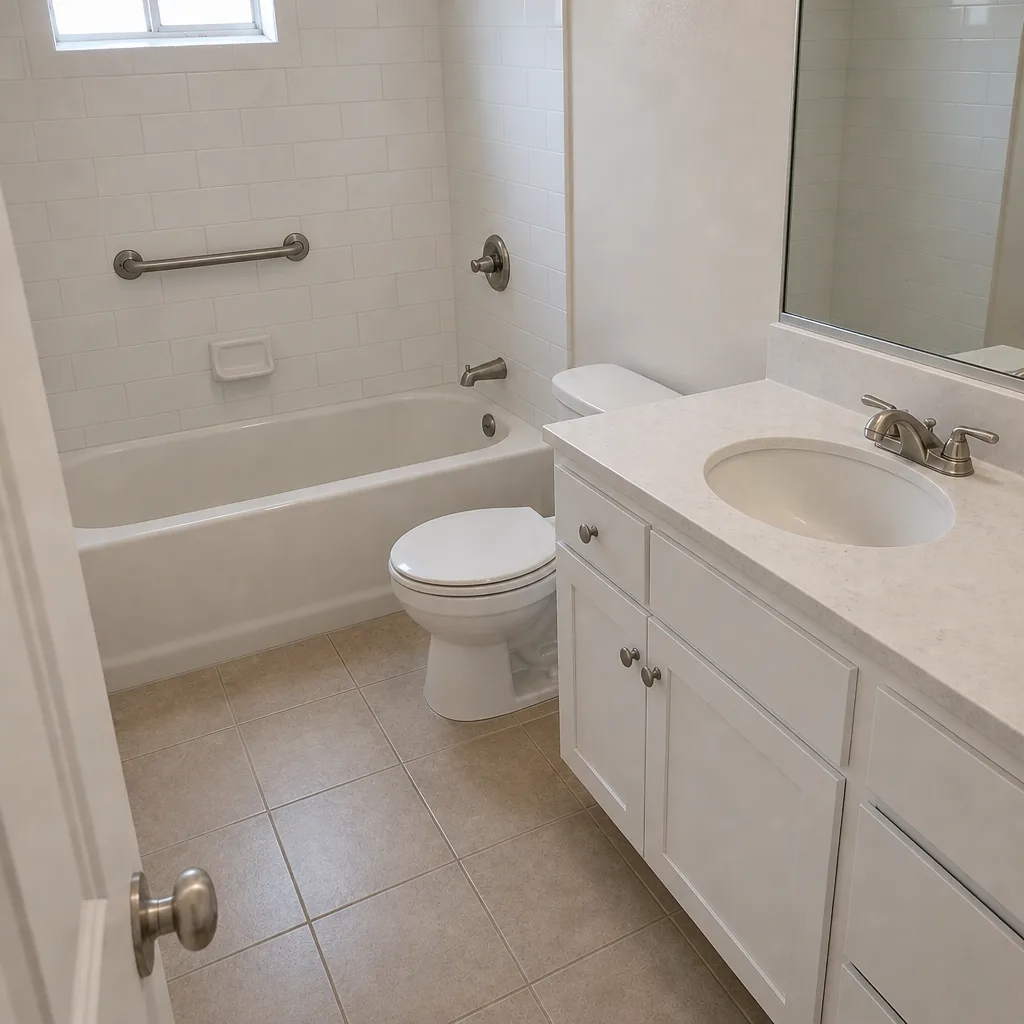 After
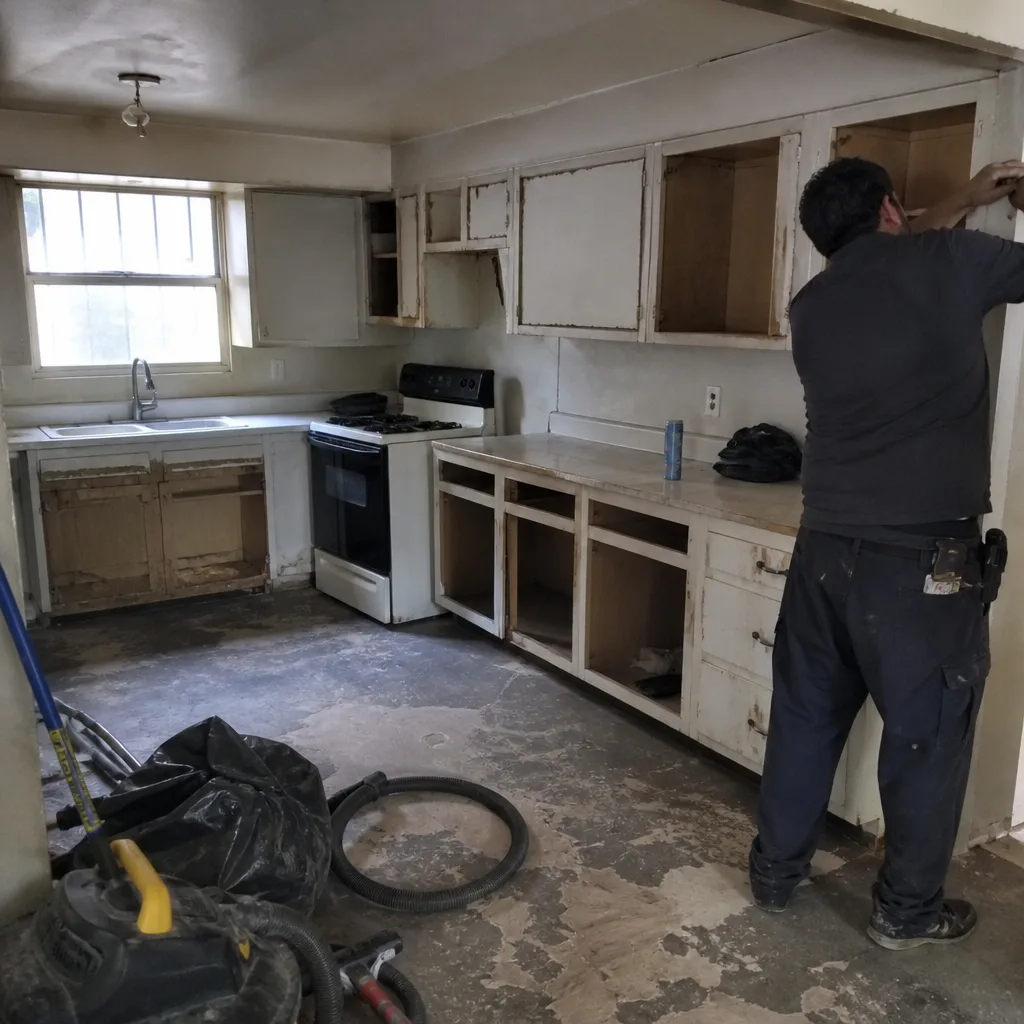 Before
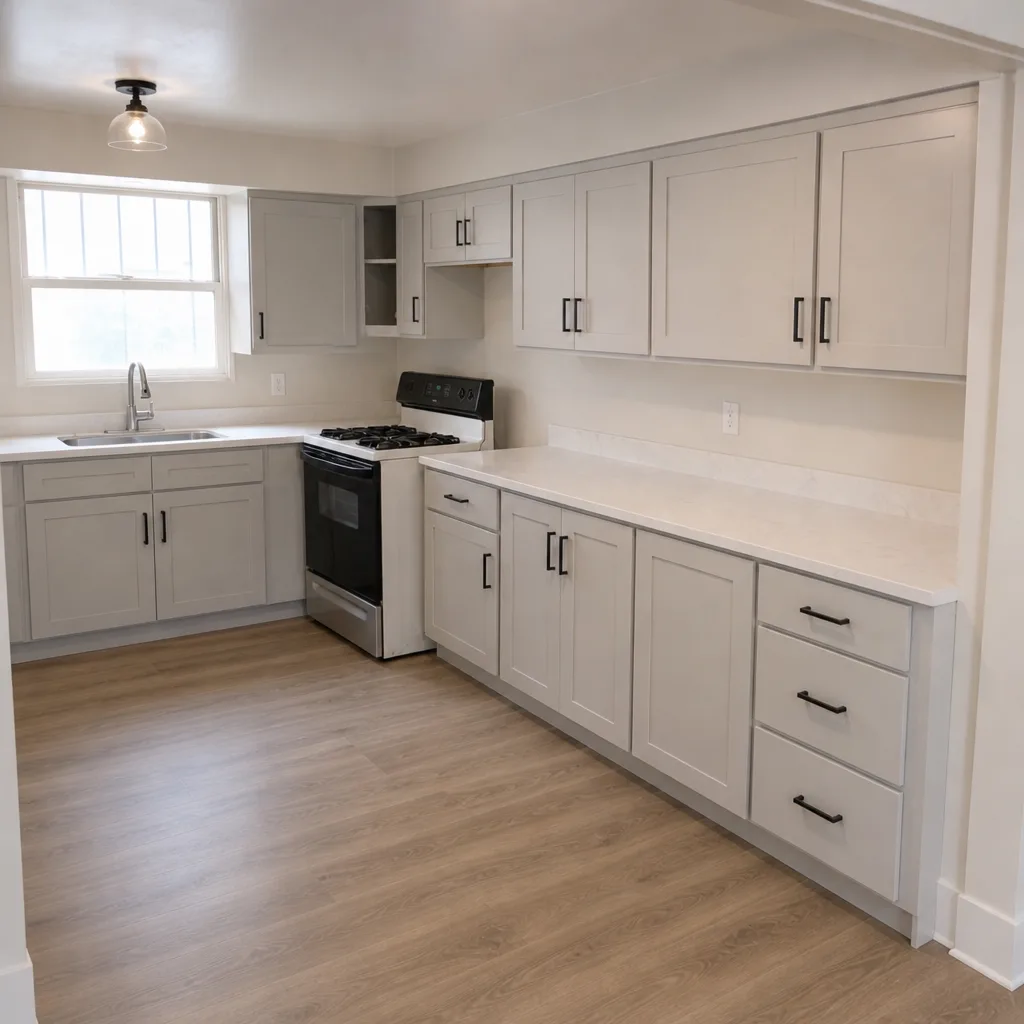 After
When to Call a Professional
Some items on this checklist are homeowner-level walk-arounds. Others are not. Call a professional for anything involving roof access, electrical panel work, gas lines, HVAC refrigerant and coil servicing, concrete repair beyond cosmetic crack filling, or any sign of moisture intrusion into a wall cavity. Those are the categories where “I’ll take a look” turns into a much bigger repair. Call a professional as well when you’re facing an item you don’t want to inspect alone – a stucco crack that runs more than a few inches, water staining at the ceiling, a door that’s started to stick after 10 years, or a bathroom caulk joint that’s been mildewed for a season. And call when you want the maintenance history started right, because a professional walk-through produces the documented record a homeowner can’t easily create alone. Elmstead Remodeling Spring Valley offers free estimates in Spring Valley – call (844) 320-4882. Every quote comes as a written price before any work starts, and every completed project is backed by the 365-Day Done Right Promise.
Frequently Asked Questions

Every 12 to 18 months for a full professional walk-through, with the seasonal task list done monthly by the homeowner. The 18-month threshold is where most of the items in this guide start to become visible to a trained eye. Skip two cycles and you’re usually looking at repairs instead of maintenance, which is a much larger number on the invoice.
Caulk, almost every time. The UV index and temperature swing work the sealants harder than any other exterior component, and a door or window joint that was sealed 18 months ago can be cracked and air-permeable now. Paint and siding are close behind, but caulk is the first line and it’s the cheapest thing to maintain.
Caulk replacement and grout re-sealing are within a careful homeowner’s reach, and our teams are always honest about that. Where we draw the line is a caulk joint that’s failed behind the tile or a grout line that’s cracked through to the substrate – those signal moisture behind the finish, and that’s a professional inspection, not a recharge-and-recaulk job. Call (844) 320-4882 for a free estimate if you’re not sure which side of that line you’re on.
Heave shows as tenting at the slab edge, cracks that run parallel to the slab’s slope, and a lip at walkway joints. A normal shrinkage crack is narrow and stable. If the surface has lifted more than 1/4 inch at an edge, or a trip point has developed at a joint, that’s heave worth documenting and fixing. Call (844) 320-4882 to schedule a free estimate on the repair.
A full professional walk-through is typically in the range of a few hundred dollars, and a written maintenance plan with an itemized scope runs higher. Actual repairs are priced separately, always in writing before work starts. The point of the review is to prioritize what matters and defer what doesn’t. Call (844) 320-4882 for an exact quote – estimates are free.
Yes, and increasingly so, because buyers here are learning to ask about desert-specific items – HVAC service records, concrete movement, caulk and stucco history – rather than the generic disclosure list. A dated, photographed maintenance record answers those questions before they become negotiation points, and it supports any manufacturer warranty claim that travels with the home. Call (844) 320-4882 if you want a professional to walk the home and start the record.
The Bottom Line
A Spring Valley home doesn’t need the maintenance a temperate-climate checklist prescribes. It needs a desert-specific calendar: HVAC inspection before the summer, roof and flashing check after the monsoon, weatherstripping audit before the cold nights. It needs monthly walk-arounds for caulk, grout, and concrete, and a professional review every 12 to 18 months to catch what a homeowner can’t see. And it needs documentation – the dated, photographed record that supports warranty claims and resale disclosures. Our technicians have up to 21 years of experience and the review is the cheapest thing you’ll ever do for the house. If you want the walk-through, Elmstead Remodeling Spring Valley offers free estimates in Spring Valley – call (844) 320-4882 to schedule yours.
Written by the team at Elmstead Remodeling Spring Valley.