Last updated November 18, 2026






Free written scope consultation - allowances, timeline, and change-order rules on paper before a single trade is scheduled
General Contractor Warning Signs Every Homeowner Should Know
Ask a contractor which electrical and plumbing subcontractors they’ll use on your project and listen closely. If the answer is a name, you’ve learned something reassuring. If the answer is “my guy” or “I’ve got a plumber I use,” you’ve learned something too: how much of your project has actually been planned. The red flags that cost homeowners the most money are rarely the obvious ones. A missing license number is easy to catch. The subtler patterns show up in the first phone call and the first week of work, long before damage is done. This guide names those patterns with enough specificity that you can act on them early, whether you’re remodeling a kitchen in Spring Valley or finishing a basement anywhere else.
Quick Answer
The most reliable warning signs of a bad contractor are behavioral, not just documentary: they can’t name their licensed subs, they quote prices verbally instead of in writing, they talk you out of permits, they treat your home carelessly, and they front-load payments before materials are ordered. Any one of these is worth a second conversation. Two or more is a reason to keep looking.
Styles & brands we work with
- Kitchen remodeling
- Bathroom remodeling
- Home additions & ADU
- Roofing
- Windows & doors
- Driveway & pavers
- Fence
Table of Contents
- Warning Sign 1: They Can’t Name Their Subcontractors
- Warning Sign 2: The Price-Only-Verbally Problem
- Warning Sign 3: Material Substitution and How to Prevent It
- Warning Sign 4: The Permit-Avoidance Conversation
- Warning Sign 5: How They Behave on the Job Site
- Warning Sign 6: Payment Schedules That Front-Load Risk
- What This Looks Like in Spring Valley
- Frequently Asked Questions
Warning Sign 1: They Can’t Name Their Subcontractors
Almost every residential project of real scope involves at least two licensed trades beyond the general contractor. Electrical work needs a licensed electrician. Plumbing needs a licensed plumber. A contractor who intends to pull permits and schedule inspections already knows who’s doing that work, because the sub has to be listed on the permit application in most jurisdictions. When they can’t give you a company name, one of three things is true: the subs aren’t lined up yet, the subs aren’t licensed, or the contractor is planning to do the work themselves under their general license, which is not how the trade licensing system works.
Here’s how to check cleanly in one conversation:
- Ask for the full company name of the electrical sub and the plumbing sub they expect to use.
- Ask whether those subs will be listed on the permit.
- Ask whether you can see the sub’s license number and insurance certificate before work starts.
A legitimate contractor answers all three without irritation, because they’ve been asked before and the answer is already in their file. When we quote a kitchen remodeling in Spring Valley, our technicians have up to 21 years of experience and know the tradespeople involved before a contract is signed. You should expect the same from anyone you hire.
Warning Sign 2: The Price-Only-Verbally Problem
Any number spoken but not written within 24 hours should restart your contractor search. This is not an exaggeration. Verbal pricing is the single most common setup for the “surprise” mid-project increase, because there’s no document to argue against. The contractor says $38,000 in your kitchen, the work begins, and six weeks later you’re told the price didn’t include cabinet installation, tile removal, or the dumpster. You have no recourse except to pay or stop the project, and stopping costs more.
A legitimate written price includes, line by line:
- The scope of work described in plain language, room by room
- Line-item labor and materials, not one lump sum
- Named brands and model numbers for cabinets, countertops, fixtures, and exterior products
- Explicitly stated exclusions, so you know what’s not in the price
- Permit fees and inspection costs, called out separately
- The payment schedule and what triggers each draw
- Clean-up, debris removal, and site protection items
A written price before any work starts, on every project, is the standard we hold ourselves to, and the standard you should hold anyone to. If they can’t put it in writing, the number isn’t a price. It’s a guess with your money behind it.
Warning Sign 3: Material Substitution and How to Prevent It
Material substitution is quiet. The contract says “premium cabinets,” the truck delivers cabinets with no visible label, and by the time the homeowner realizes the cabinets aren’t the brand they thought they paid for, they’ve been installed. Substitution usually isn’t outright fraud. It’s a margin move: the contractor swaps a named brand for an unnamed equivalent at a lower cost and pockets the difference, then explains it as “supply chain.”
The warning sign isn’t the swap itself. It’s whether the contract forecloses it in advance. A contractor planning to substitute resists specificity during the sales conversation. They talk about “quality brands” instead of naming KraftMaid or Wellborn. They avoid model numbers on countertops and say “quartz” instead of Cambria or Silestone. They leave the exterior vague instead of naming James Hardie siding or Ameristar fencing if the project includes those elements.
Three clauses that make substitution nearly impossible:
- A “no substitution without written approval” clause, signed by both parties, for every named material.
- Brand names and model numbers written directly in the scope, not in a sidebar.
- A “materials delivered to site before payment draw” clause tying progress payments to physical delivery.
Named-brand materials also mean the manufacturer warranty travels with the finished project, which is why we specify ours in writing. It’s not marketing. It’s the difference between a warranty you can enforce and one you can’t.
Warning Sign 4: The Permit-Avoidance Conversation
Permits aren’t bureaucracy. They’re the mechanism by which a third party checks the work and the record is attached to your house. Structural changes, electrical work, plumbing relocations, and most additions require permits in Spring Valley, as in the rest of Clark County. When a contractor suggests skipping the permit, they aren’t saving you money. They’re transferring all the exposure to you.
Watch for these exact phrases:
- “It’ll be faster without permits.”
- “Neighbors do it all the time without one.”
- “The city won’t notice.”
- “You don’t want the county in your business.”
- “We can skip inspections, we know what we’re doing.”
Every one of those sentences means the contractor is asking you to carry a risk they won’t carry. Unpermitted work surfaces at resale, when an inspector flags it during the buyer’s due diligence and the seller has to pay for retroactive permitting and possibly remediation. It can void homeowner insurance in a claim. It can fail a home inspection even years later. If your contractor suggests it, ask directly: will you pull the permit, and will you list your subs on it? If the answer is no, end the conversation. Read more about how we handle scope and permitting on our General Contractor in Spring Valley page.
Warning Sign 5: How They Behave on the Job Site
The first week of work tells you what the last week will look like. A contractor who treats a home with care in the first week usually maintains that standard, and a contractor who doesn’t is very unlikely to improve. Since most of our work is in occupied homes, often with children and pets in the next room, we pay close attention to what crew behavior predicts.
What a legitimate crew’s daily behavior looks like:
- Drop cloths and floor protection go down before tools come out, every day, on every visit, not just day one.
- Shoe covers at the door or a clean-boot protocol, no exceptions through the main living areas.
- Contained debris. Waste in bags or a designated bin, not piled in a hallway where a child could trip.
- Locked or controlled access points. Garage doors and exterior doors closed and secured at end of day.
- A daily wrap-up so the homeowner knows what was done, what’s next, and what to expect tomorrow.
- Team members who ask before moving or touching anything in the home that’s not part of the scope.
A crew that leaves a kitchen in disarray every night will also be careless about rough-in work and finishing details, because the same habits govern both. Treat site behavior as a preview, not a small thing.
Warning Sign 6: Payment Schedules That Front-Load Risk
Payment schedule is where a lot of bad-outcome projects get locked in before the first nail goes in. Three patterns are worth refusing outright.
- Front-loading above 10% before materials are ordered. A modest deposit is normal. A request for 30% or 50% upfront before a single cabinet has been ordered is the contractor asking you to finance their cash flow. If the project stalls, your money is gone and no materials exist to recover.
- Cash requests. Cash eliminates the paper trail, complicates your lien rights, and often signals tax non-compliance on the contractor’s side. Write checks or pay by card or bank transfer, always with a receipt.
- Final payment before punch-list completion and inspection. The punch list is your leverage. Hold the final draw until every item is completed and the inspection has passed. A contractor confident in their work has no issue with this. One who argues has told you something.
Payments tied to progress milestones (demo complete, rough-in inspected, cabinets set, counters installed, final inspection passed) are the schedule to insist on. If a contractor balks, that’s the warning sign, and it’s a real one.
What This Looks Like in Spring Valley
Spring Valley has a few conditions that make certain red flags show up more often. The housing stock is a mix of 1990s and 2000s construction and newer builds, and many of those late-90s kitchens and bathrooms are hitting their first major remodel right now. That means cabinet, countertop, and fixture replacements on a scale the valley hasn’t seen. High remodel volume attracts a lot of contractors, and not all of them are set up to do the planning required.
The desert climate matters for materials. Cabinets in a south-facing Spring Valley kitchen with single-pane-era glass take real heat load, and cheap cabinet boxes warp visibly within two summers. That’s one reason named brands like KraftMaid and Wellborn hold up better than the unlabeled equivalents a substitution-minded contractor will try to slide in. Countertops in high-heat rooms fare better when the material is specified by brand and thickness, not by a generic term. If you’re choosing finishes for a bathroom remodeling in Spring Valley, the same principle applies: a named brand with a named warranty beats “porcelain tile” every time.
Cooling season also changes what “quiet hours” means. Crews working in a Spring Valley home in August are working in an air-conditioned house with the doors often open, and a crew that doesn’t manage dust and debris will affect every room. This is one of the reasons our Cedarwell Care Promise calls for drop cloths, shoe covers, and a photo of the clean-up before the crew leaves on every visit, not as an add-on, but as part of the job.
See the difference
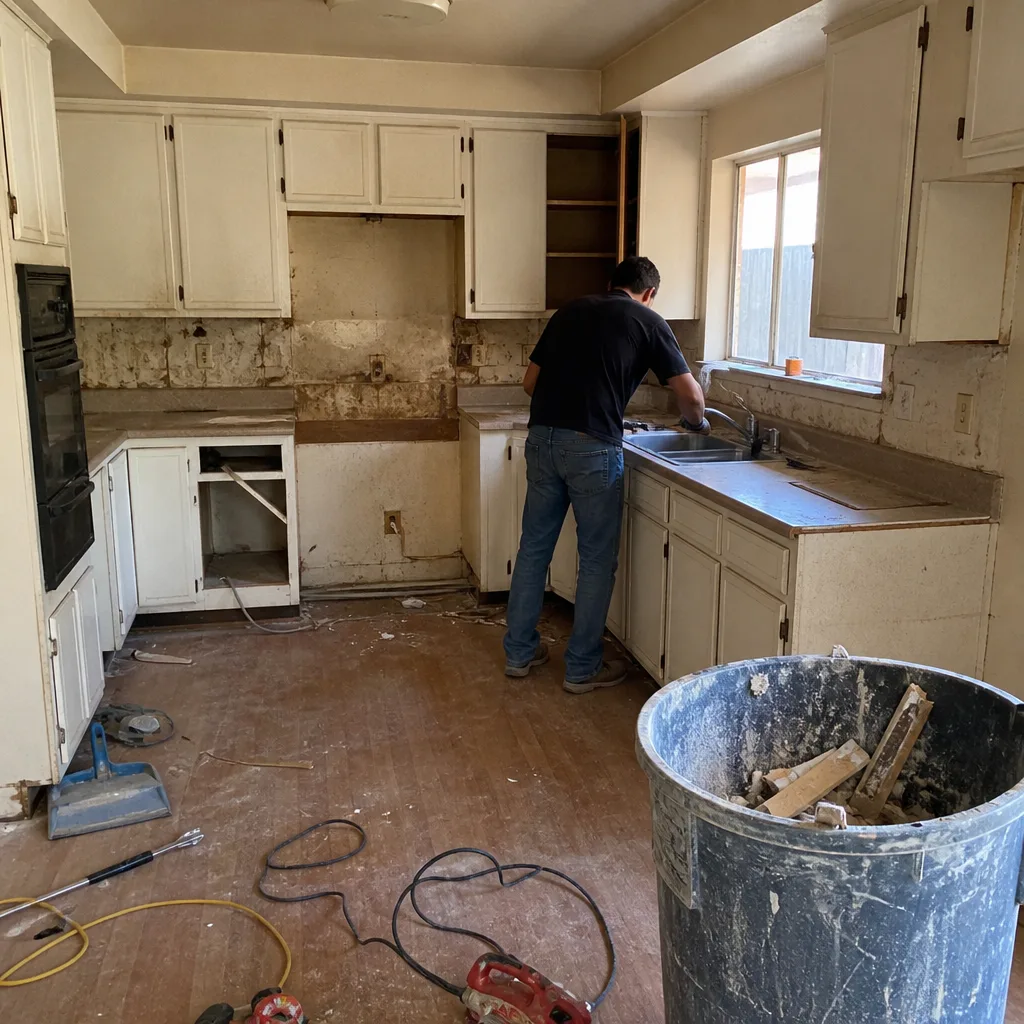 Before
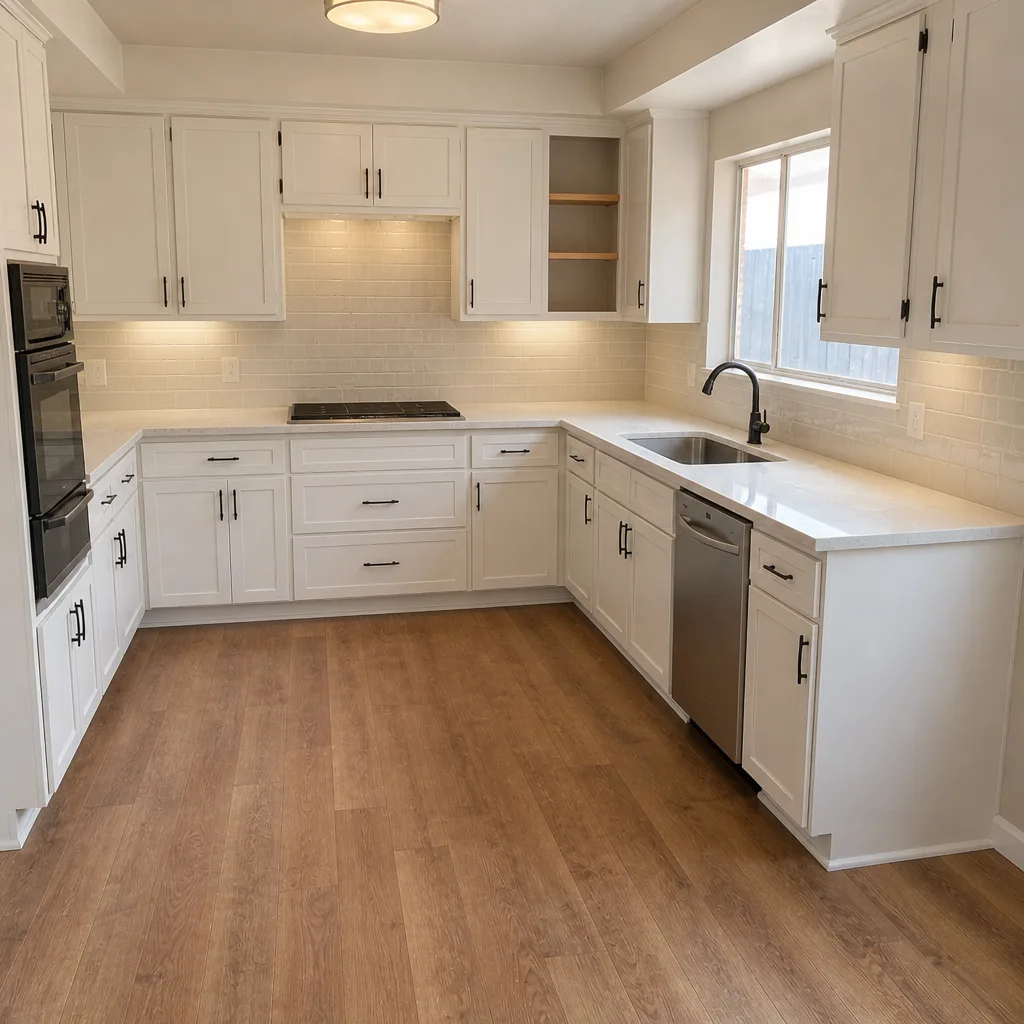 After
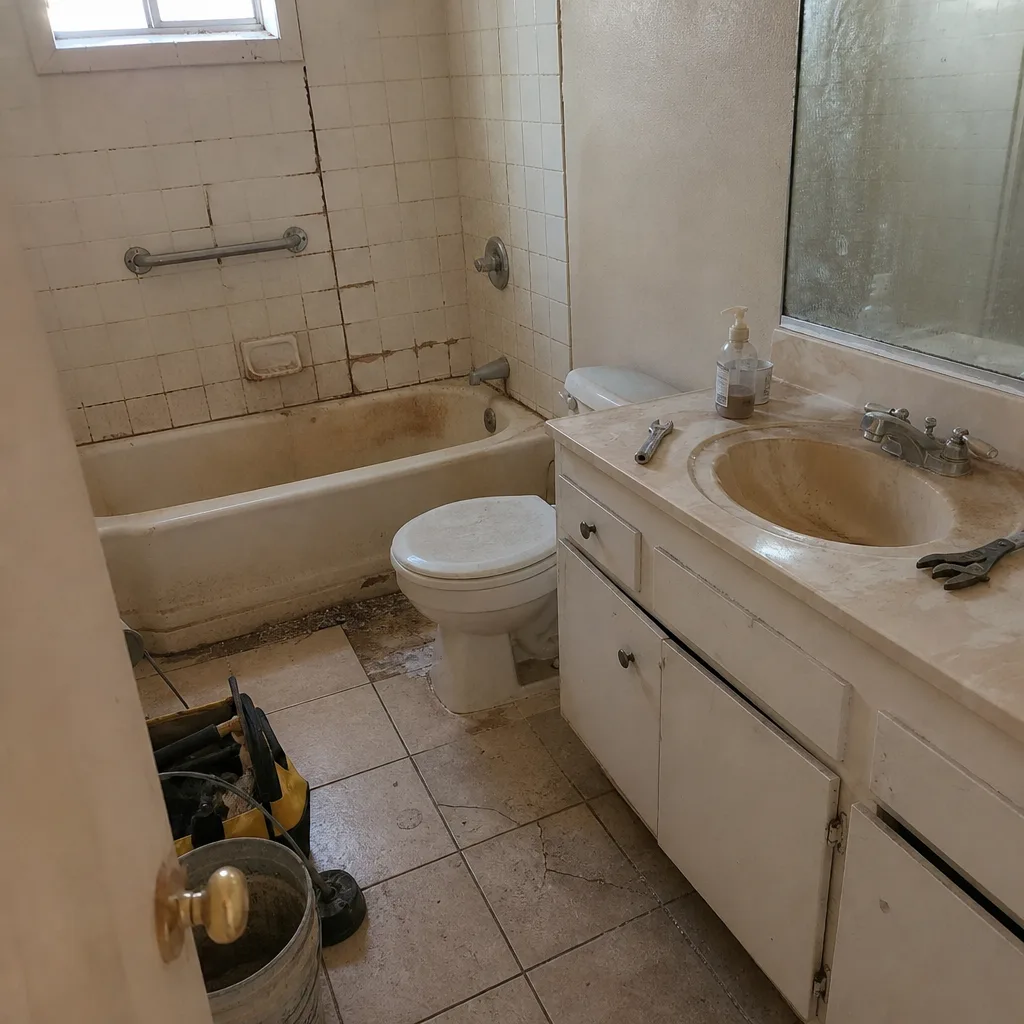 Before
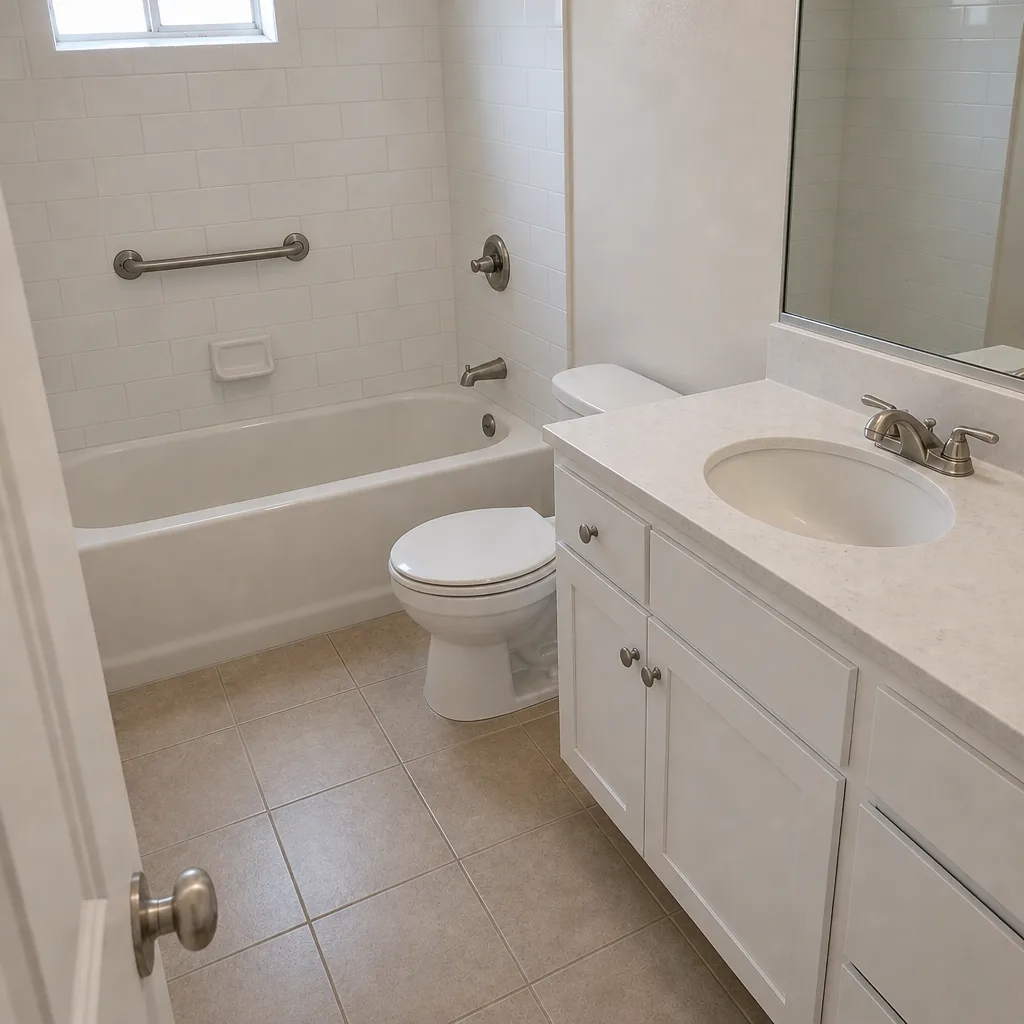 After
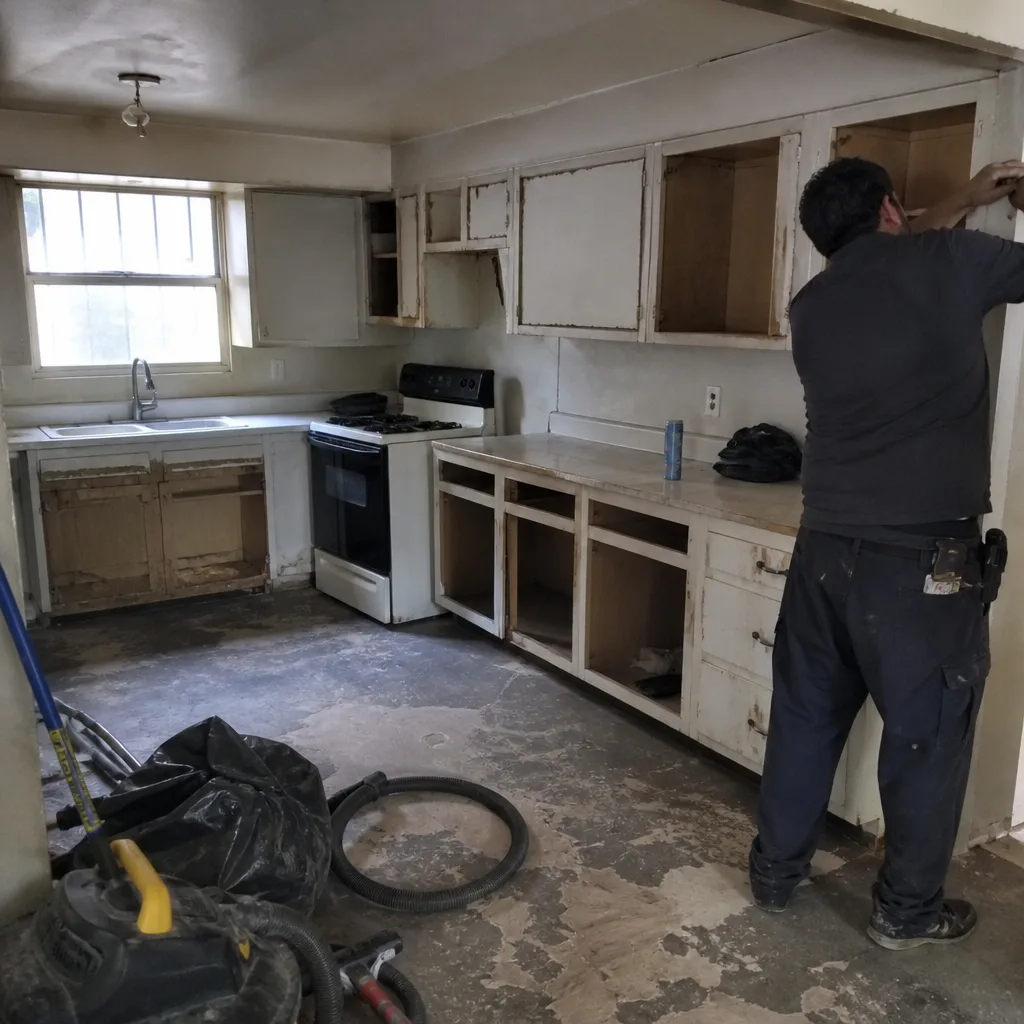 Before
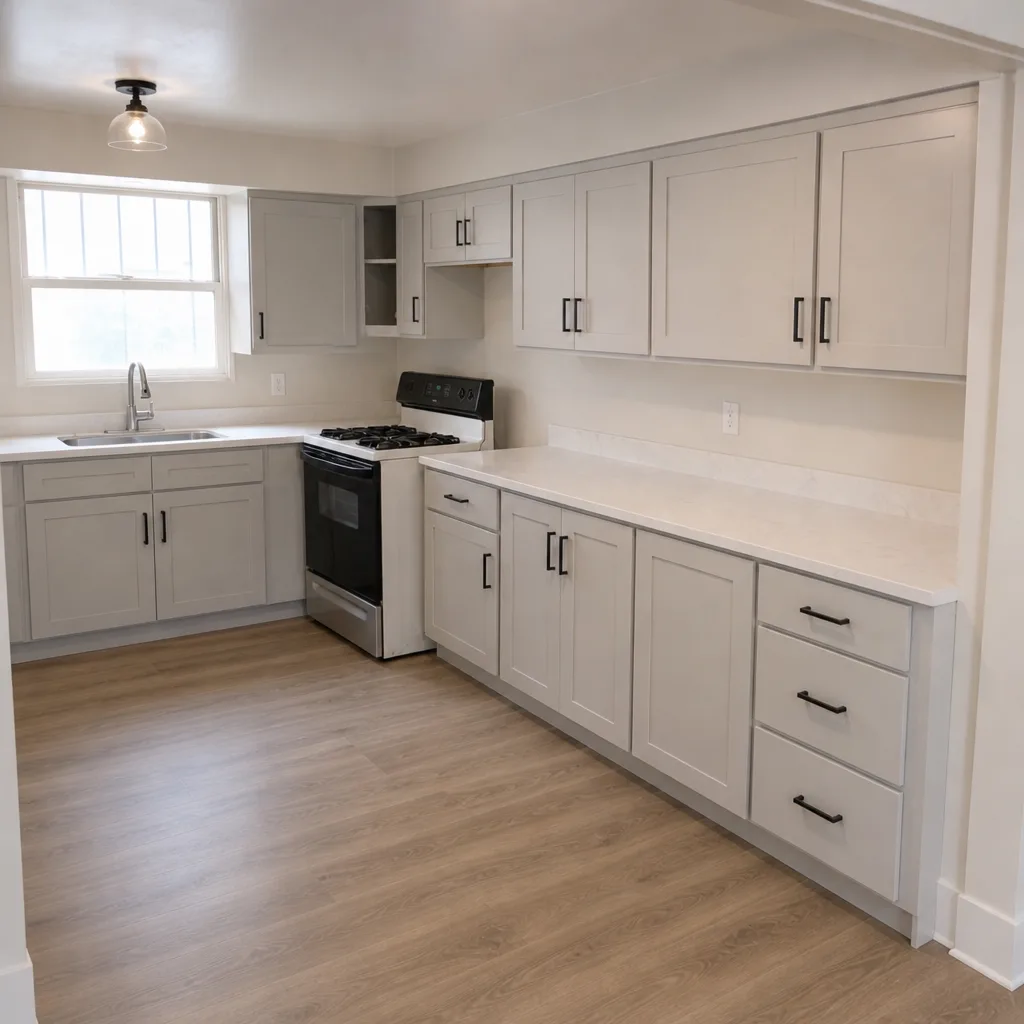 After
Common Mistakes to Avoid
- Signing on the phone. Any contract should be reviewed in person or by email, with 24 hours to read it. A contractor pushing for a signature during the first visit is trying to prevent you from comparing.
- Comparing bids on bottom-line number alone. A $42,000 bid and a $31,000 bid often differ because one includes permits, dumpster, and material brand names, and the other doesn’t. Compare line items, not the total.
- Skipping the insurance certificate check. Ask for the certificate of general liability insurance before work starts and call the number on the certificate to verify it’s in force.
- Letting the punch list slide. Spring Valley homeowners sometimes accept “we’ll come back” on unfinished items and never see the crew again. Hold final payment until the punch list is done and the inspection has passed.
- Not asking about the crew working in the house. Background-checked, uniformed technicians are a standard worth asking about, especially with children and pets in the home. You’re entitled to know who is walking through your door.
- Assuming a written price can be adjusted later. Change orders are legitimate, but the “change” should be an actual scope change, not a catch-up for items the original price should have covered. If changes appear without a written change order, stop and ask.
- Losing the contact lifeline. A contractor whose phone goes to voicemail for days at a time will go dark when things get hard. Ask how you reach them mid-project and confirm the answer is a live person.
When to Call a Professional
Some contractor decisions can be walked back after a first conversation; some can’t. If you’ve already got a signed contract with a number that wasn’t written before the start of work, a named material substituted without written approval, or a permit being skipped, that’s the point to bring in a second opinion before more is committed. If you’re at the start of a project and want a written price before you sign anything, that’s the easy moment. If you’re standing in a half-finished room wondering whether the crew will come back Monday, that’s also the moment.
Elmstead Remodeling Spring Valley offers free estimates in Spring Valley, with a written price before any work starts on every project, and phones answered by a live person 24/7. Call (844) 320-4882 to schedule your free estimate. Find more about how we approach a project start on our Elmstead Remodeling Spring Valley home page.
Frequently Asked Questions
The single most reliable sign is a contractor who cannot put a price in writing within 24 hours of speaking it. A verbal number that never becomes a written line-item price is the single strongest predictor of a mid-project increase. If you hear a number, ask for it in writing the same day. If you don’t get it, keep searching.
Ask for the license number and the certificate of general liability insurance, then verify both before work starts. In Nevada, contractor licenses are searchable through the state contractor board, and insurance certificates carry a phone number you can call to confirm coverage is active. A contractor who pushes back on these requests is telling you something important.
No. For any work that requires a permit, skipping it is a code violation and the exposure falls on the homeowner, not the contractor. Unpermitted work surfaces at resale, can complicate insurance claims, and may require retroactive permitting at your cost. If a contractor suggests skipping permits to “save time,” end the conversation and find another contractor.
A legitimate written price includes line-item labor and materials, named brands and model numbers for cabinets, countertops, fixtures, and exteriors, explicit exclusions, permit and inspection fees called out separately, the payment schedule tied to milestones, and site protection and clean-up items. Anything missing from that list belongs in the quote before you sign.
Payments should track progress milestones, not the calendar: a modest deposit to start (generally not more than about 10% of the contract), then draws tied to demo completion, rough-in inspection, material delivery, cabinet installation, countertop installation, and final punch-list completion and inspection passed. Hold the final draw until the punch list is complete.
Write the brand name and model number into the scope of work, and add a “no substitution without written approval signed by both parties” clause. Also tie a progress payment to materials being delivered to the site. Materials that arrive on the truck should match the names in the contract, and if they don’t, the payment stops until the contract is honored. If you’re planning a full remodel, our General Contractor in Spring Valley page explains how we sequence a project and name materials throughout.
The Bottom Line

The warning signs that matter most are the quiet ones: a contractor who can’t name their subs, a price that never gets written down, materials that get vague instead of branded, permits framed as an inconvenience, sloppy site behavior in week one, and a payment schedule that puts your money ahead of materials. Watch for those patterns instead of waiting for the obvious red flags, and you’ll catch trouble while it’s still a conversation. If you’re comparing contractors in Spring Valley and want a written price before any work starts, call (844) 320-4882 for a free estimate. Every project we run carries the 365-Day Done Right Promise, and every call is answered by a live person.
Written by the team at Elmstead Remodeling Spring Valley.