Last updated November 18, 2026



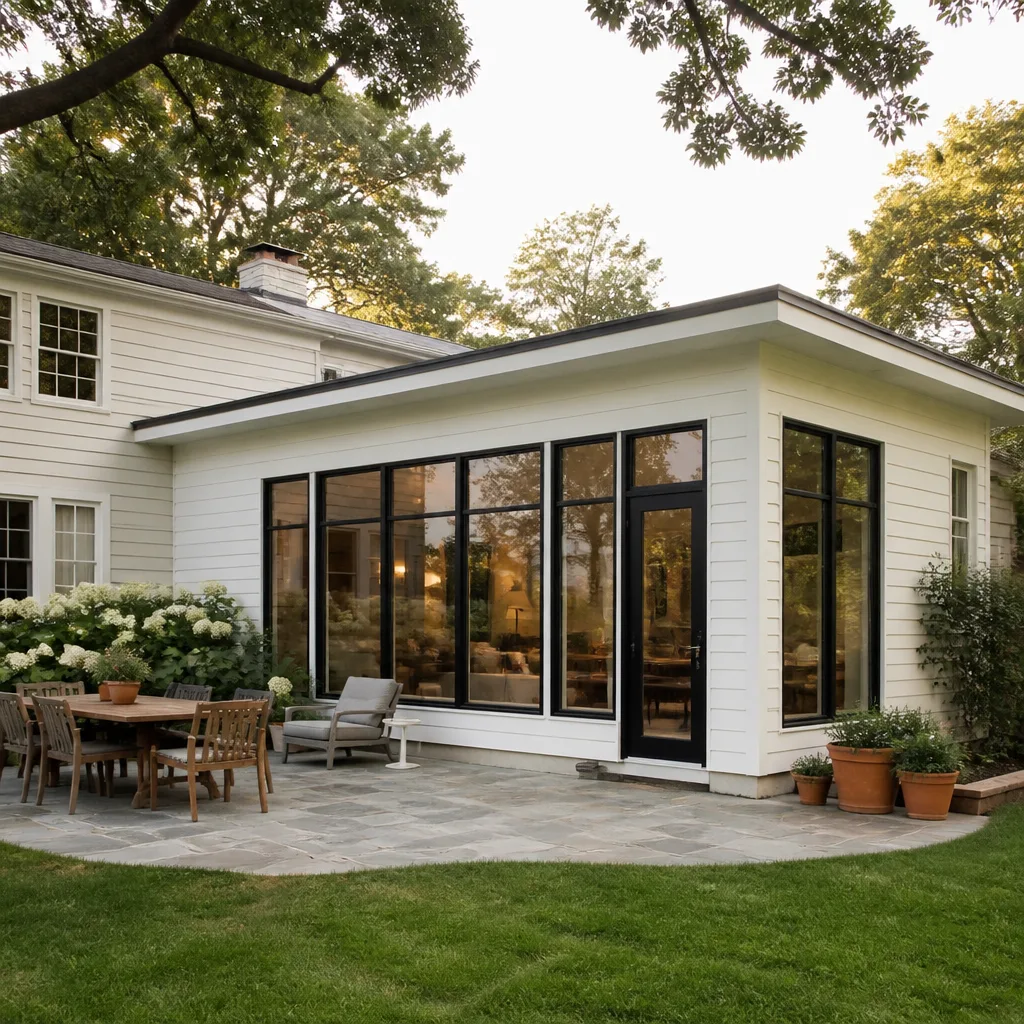
Free written scope consultation - allowances, timeline, and change-order rules on paper before a single trade is scheduled
The Complete Guide to Construction in Spring Valley
Clark County’s building department averaged 15 – 22 business days for residential permit issuance in recent years. That’s a window most online remodeling timelines don’t account for, and it’s the kind of gap that quietly collapses a renovation schedule built around a school year. In Spring Valley, the permit calendar is only one of several local variables that national planning guides ignore. Caliche soil, dense HOA architectural review boards, and 110°F summers change how foundation work gets priced, how concrete cures, and how materials have to be stored on site. This guide maps those variables so you can plan around Spring Valley’s reality instead of the averages.
Quick Answer
Construction and remodeling in Spring Valley costs more to plan and roughly the same to build as the rest of the Las Vegas Valley – a kitchen remodel runs $28,000 – $75,000, a bathroom $12,000 – $35,000, and a room addition $180 – $350 per square foot – but the local variables (caliche excavation, Clark County permitting, HOA architectural review, and heat-driven material handling) add two to six weeks of schedule and $2,000 – $12,000 in site work that a generic estimate will miss. Budget the planning time first, then the build.
Styles & brands we work with
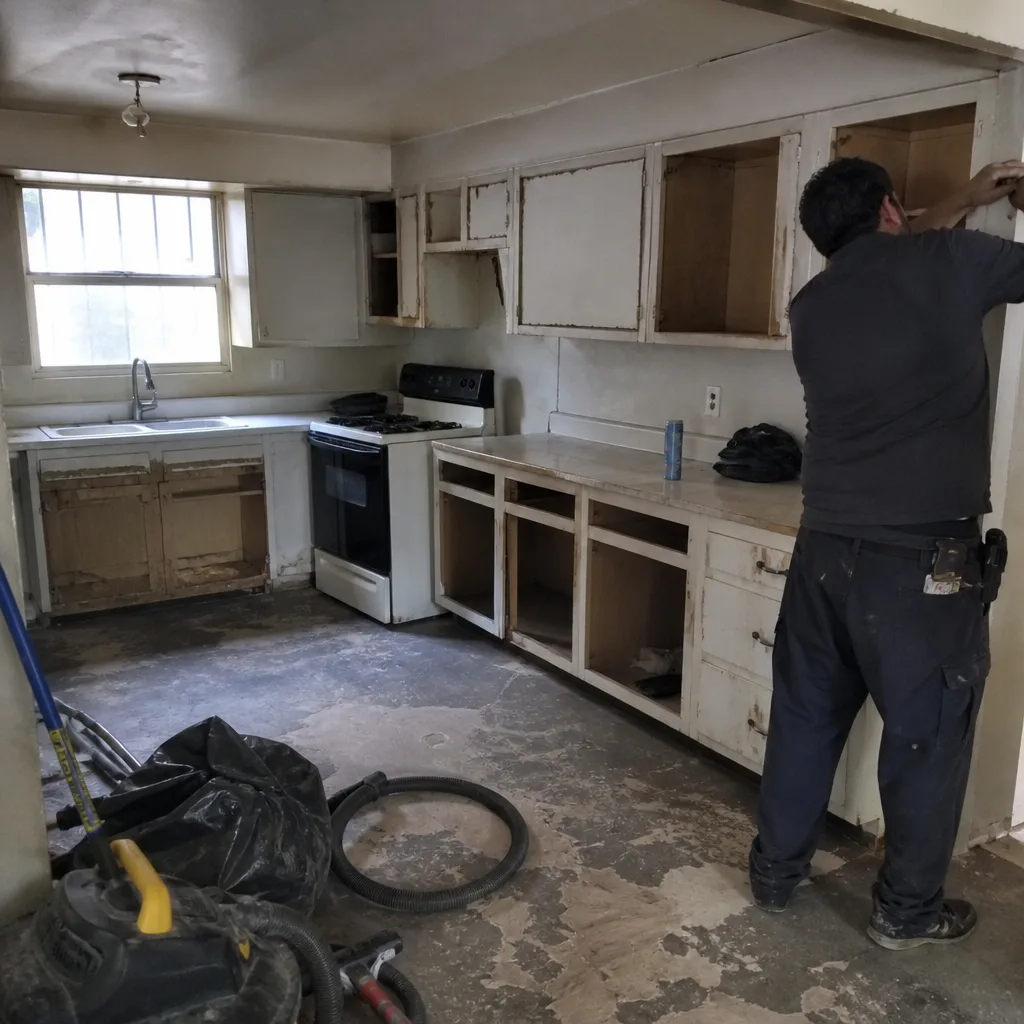
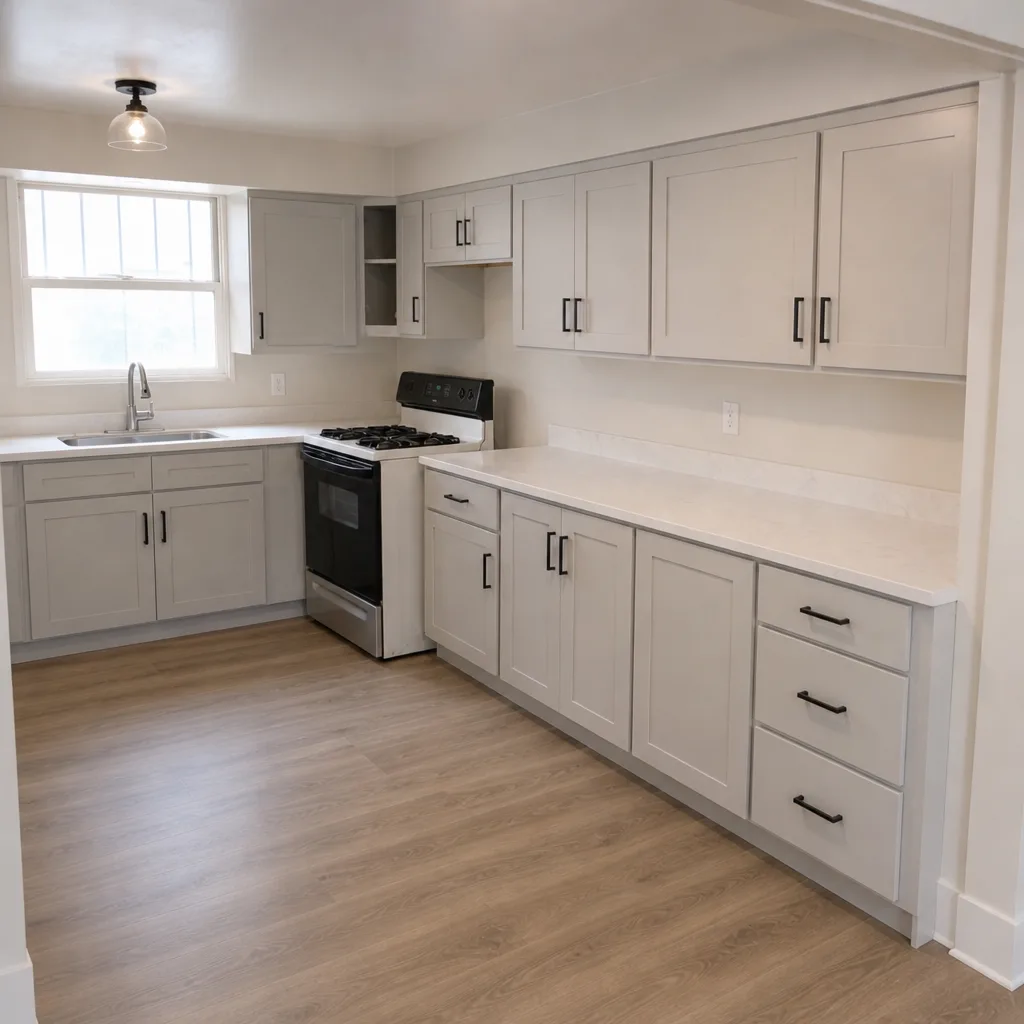
- Kitchen remodeling
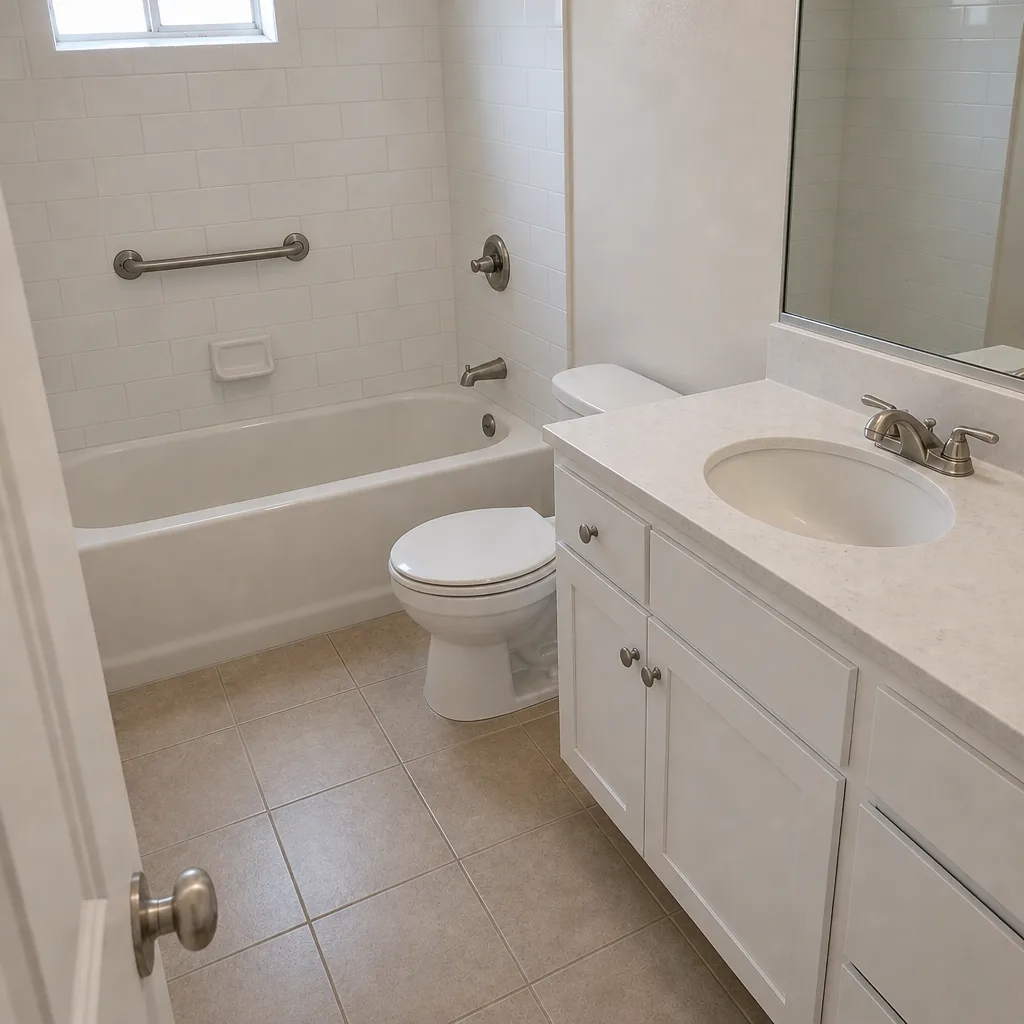
- Bathroom remodeling
- Home additions & ADU
- Roofing
- Windows & doors
- Driveway & pavers
- Fence
Table of Contents
- How caliche soil changes your foundation, trenching, and budget
- The HOA architectural review track most homeowners forget
- Clark County versus City of Las Vegas permits in Spring Valley
- What 110°F summers do to concrete, adhesives, and materials
- Reading a Spring Valley comps report before you pick a scope
- A realistic Spring Valley project timeline, step by step
- Spring Valley construction cost ranges by project type
- Choosing a contractor for a Spring Valley home
How caliche soil changes your foundation, trenching, and budget
Caliche is the calcium carbonate layer that sits beneath much of the Las Vegas Valley’s west side, and Spring Valley sits squarely on it. It’s a natural cement – rock-hard when dry, stubbornly dense when wet, and entirely indifferent to your trenching shovel. If you’re planning an addition, a slab for a patio cover, a pool house, or even a new sewer lateral, the excavation crew may hit it within the first few inches or several feet down. Where it sits and how thick it runs changes lot by lot across Spring Valley, which is why a soil investigation is worth the small cost before you sign a construction contract.
For a foundation or slab, caliche means one of three things: mechanical excavation with a breaker or ripper, undercutting and re-compacting with engineered fill, or the occasional over-excavation with imported base material. Each adds cost. A typical Spring Valley addition might see $4,000 – $12,000 in site preparation above what a sandy-soil market would budget, and the timeline gains two to ten working days. Trenching for utilities runs longer, too – a trench that takes half a day in loose soil can take two in caliche.
- Test before you design: A geotechnical report on your lot runs a few hundred to a couple of thousand dollars and prevents surprise undercutting later.
- Budget site work as a variable, not a fixed line: Ask your contractor to quote caliche excavation as a separate item with a unit price.
- Watch the neighbors: Ask four or five nearby homeowners on your street whether they hit caliche during their own projects. It runs in bands.
If you’re planning a whole-home remodel that touches footings or slab work, this is one of the first conversations to have. Our team at Elmstead Remodeling Spring Valley builds caliche allowance into the written price before any work starts, so the number doesn’t grow after the crew arrives.
The HOA architectural review track most homeowners forget
Spring Valley has one of the densest concentrations of HOA-governed neighborhoods in the Las Vegas Valley. Communities throughout the area – from the neighborhoods around Rhodes Ranch to the older subdivisions off Tropicana and Rainbow – enforce architectural review before you can pull a building permit from Clark County. That means two approval tracks running in parallel, not one. If your contractor assumes the permit is the only gate, the project sits in a holding pattern while your architectural request moves through committee.
The review usually covers anything visible from the street or a neighboring lot: exterior color, roof material, window styles, patio cover design, fence height and material, and any addition’s footprint. Plans often have to show the specific product model – not just “tile roof” but the actual profile, color, and manufacturer. Review cycles vary, but four to eight weeks is a realistic range, and resubmittals after committee comments add another cycle. That’s real time on top of the Clark County permit window, not inside it.
- Pull your CC&Rs and the architectural review application from your HOA portal before you meet with a contractor.
- Confirm the current review submittal format with the architectural committee in writing – plan sets, product cut sheets, site plan, color samples.
- Submit the architectural application the same week you submit the Clark County building permit, not after.
- Track both approvals in one calendar. Whichever lands last sets your construction start.
If your exterior products will appear in the architectural submittal, name-brand materials simplify the review. IKO, Atlas, and Tamko shingles all publish the technical cut sheets HOA committees expect to see, and James Hardie siding profiles are among the most commonly pre-approved in Spring Valley communities.
Clark County versus City of Las Vegas permits in Spring Valley
Most of Spring Valley is unincorporated Clark County, which means its building permits come from Clark County’s Department of Building & Fire Prevention, not the City of Las Vegas. But the boundary is irregular, and a handful of parcels along the eastern edge fall inside city limits. Applying at the wrong jurisdiction means your submittal gets rejected or transferred, and the clock restarts. For most homeowners the answer is Clark County, but confirming it before submit saves weeks.
The distinction matters because the two jurisdictions run different review processes, require different submittal packages, and have different inspection scheduling. Clark County’s residential review runs 15 – 22 business days for a straightforward submittal, with longer timelines for anything structural or involving site work. City of Las Vegas permits follow their own calendar, and a well-prepared submittal in either jurisdiction avoids the resubmittal loop that adds three to five weeks.
- Confirm the jurisdiction: Look up your parcel on the county’s GIS map before you start the application.
- Submit a complete package: Plans, engineering, energy compliance, and structural calcs together. Missing items are the most common cause of a resubmittal.
- Track inspections: Each project phase – foundation, framing, rough-in, insulation, final – has to be inspected and signed off before the next phase begins. Skipping a sign-off is the fastest way to fail the final.
- Get the final inspection: Keep the signed-off permit on file; it’s what future buyers and appraisers look for.
For a broader look at how our team handles permitting from start to final, see our General Contractor in Spring Valley service page.
What 110°F summers do to concrete, adhesives, and materials
Summers in Spring Valley regularly run past 110°F, and that heat reshapes the construction calendar in ways national guides ignore. Concrete cures on a curve that depends on temperature. At 110°F, placed concrete can flash-set on the surface in under an hour if it isn’t managed, causing plastic shrinkage cracks that show up months later. The fix is real – pour early in the morning, use chilled water or retarding admixtures, cover and moist-cure – but it costs scheduling flexibility. That means foundation and slab pours get scheduled for first light, and crews that don’t plan for it lose half a day.
Adhesives, thinset, and grout are just as temperature-sensitive. Tile installed over a sunbaked exterior wall at 130°F can fail if the thinset skins over before the tile seats. Exterior caulk and sealant manufacturers publish application temperature ranges – often capped at 80 – 90°F surface temperature – which means exterior weatherproofing and painting get pushed to spring and fall. Materials also need shade storage on site. Cabinets, laminate flooring, and boxed tile can warp, delaminate, or lose their adhesive backing if stored in a garage that reaches 140°F.
- Schedule foundation and slab pours before 9 a.m. in summer. Concrete placed at 5 – 31 January ambient temperature cures on a predictable curve.
- Plan exterior paint and caulk for March – May or October – November. These windows meet the manufacturer application temperature ranges.
- Store temperature-sensitive materials inside the house, not the garage. Cabinets, laminates, and flooring want conditioned air.
- Add a curing plan to the schedule. Concrete that cures under a wet burlap cover or a curing compound performs better than concrete that sunbakes.
- Set expectations for interior comfort. Crews working in an unairconditioned house in July move more slowly, and the schedule should reflect it.
Reading a Spring Valley comps report before you pick a scope
Over-improving your home past its neighborhood ceiling is one of the most expensive mistakes in remodeling. A $200,000 kitchen in a Spring Valley neighborhood where comparable homes sell for $425,000 won’t return the investment – buyers at that price point in that neighborhood have a fixed expectation, and the market holds the ceiling regardless of how nice your kitchen is. The comps report is your reality check before you sign the contract, not after.
Pull six to twelve recent sales within a half-mile of your address, ideally within your specific subdivision (Spring Valley has price zones that differ substantially from one to the next; the ceiling on a home near Tropicana Avenue doesn’t predict the ceiling on a home off Flamingo Road west of Rainbow). Look at sale price, square footage, year built, pool, lot size, and days on market. Then look at the highest-priced sales and note what those homes have that yours doesn’t. That gap is your remodel allowance.
- Set a ceiling: If similar homes top out at $475,000 and yours would sell today for $380,000, you have roughly $95,000 of improvement headroom before you start chasing the market.
- Prioritize the rooms that least over-improve: Kitchens and bathrooms return the most on resale. Bedroom count and square footage shift the price bracket more than finish quality.
- Preserve one thing: If your neighborhood’s ceiling rewards a specific feature – pool, RV parking, a covered patio – don’t remove it during a remodel.
- Compare against recent, not remote: Comps from 2023 aren’t useful in 2026. Use sales from the last six months.
A realistic Spring Valley project timeline, step by step
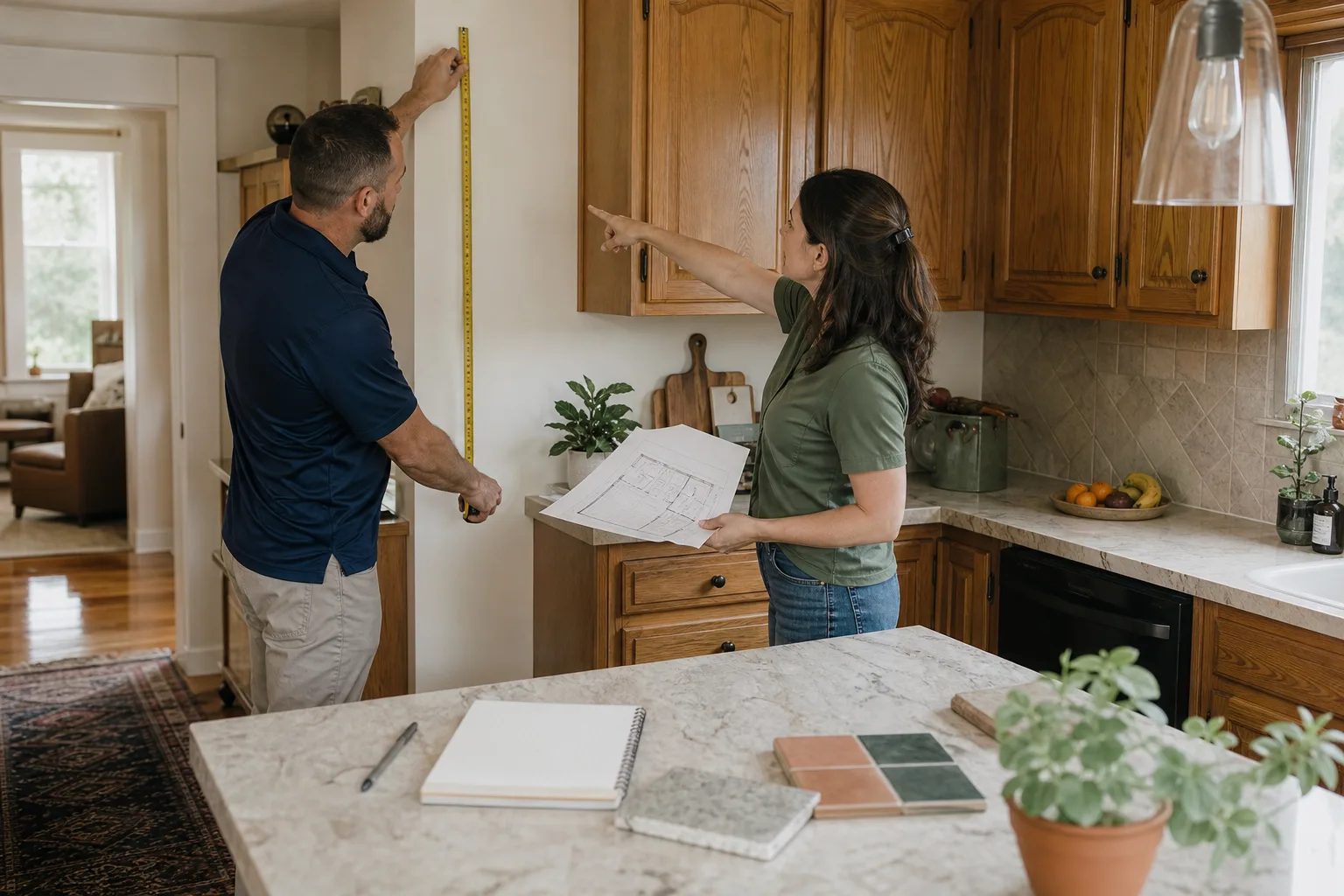
Here’s what a mid-size Spring Valley project actually looks like on a calendar, from the first call to the final inspection. The numbers below reflect the local permit window and the parallel HOA track, so they’re longer than what a national planning tool would tell you.
- Weeks 0 – 2: Design and product selection. Confirm scope, select materials with named brands, and finalize plans. Bath and kitchen remodels usually land in this window; additions can take twice as long.
- Weeks 2 – 4: HOA architectural submittal. If your project is exterior-visible, this runs parallel to the permit. Cycles of four to eight weeks are common; plan for at least one resubmittal.
- Weeks 2 – 6: Clark County building permit. 15 – 22 business days for a straightforward residential submittal, longer for structural or site work.
- Weeks 6 – 8: Site preparation and demolition. For additions and footings, add caliche excavation time. Interior remodels move faster because there’s no soil work.
- Weeks 8 – 12: Rough-in and framing. Structural work, plumbing, electrical, HVAC. Each phase inspected before the next can begin.
- Weeks 12 – 18: Finishes. Drywall, tile, cabinets, countertops, fixtures, paint. This is where the named-brand materials show up and where finish quality is won or lost.
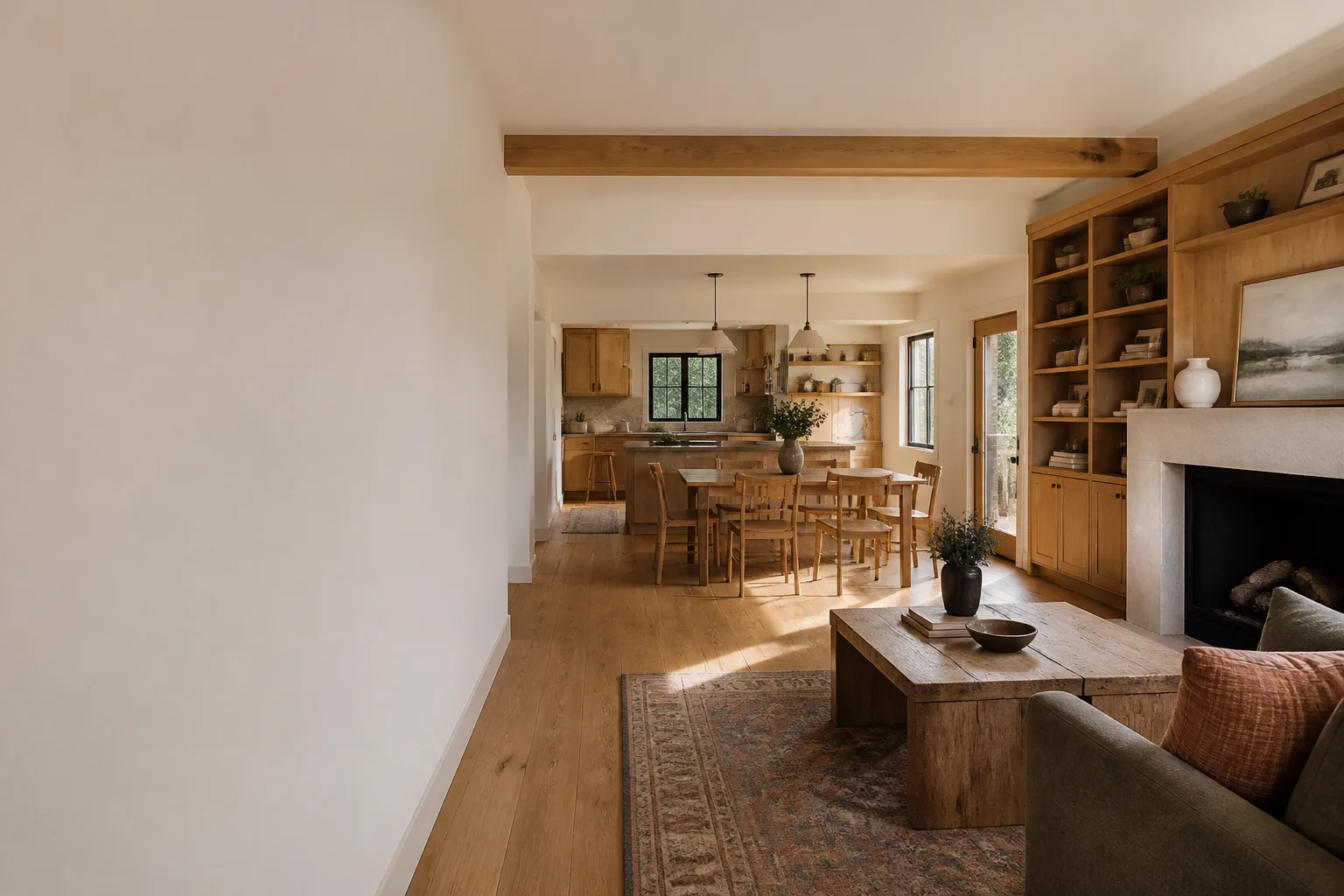
- Weeks 18 – 20: Final inspection and clean-up. Final inspection sign-off, then the deep clean. The photo of the clean-up is taken before the crew leaves.
Compress these numbers into a school-year renovation and you can see how the permit and HOA tracks eat the calendar. The families best served by this timeline are the ones who start planning in the winter for a summer or fall project.
Spring Valley construction cost ranges by project type
These ranges reflect the Spring Valley market for mid-grade to upper-mid-grade work as of early 2026. Budget site work, HOA fees, and permit costs as separate line items – they aren’t included in the construction numbers below.
- Bathroom remodel: $12,000 – $35,000. Full gut with tile shower runs the middle of that range; a family bath with tub and standard tile runs the low end.
- Kitchen remodel: $28,000 – $75,000. Cabinet brand, countertop material, and appliance package move the number most.
- Whole-home remodel: $85,000 – $250,000 and up, depending on square footage and how much structural work is involved.
- Room addition: $180 – $350 per square foot, plus $4,000 – $12,000 for caliche site work.
- Permit fees: Roughly 1 – 2% of construction value for Clark County residential permits.
- HOA architectural review fees: $250 – $1,500, depending on the community.
For tighter ranges by room, our Bathroom Remodeling in Spring Valley and Kitchen Remodeling in Spring Valley pages break down line items the way we write them in a quote. Every project we price gets a written number before any work starts, and the number doesn’t grow when the crew arrives.
Choosing a contractor for a Spring Valley home
Families with children and pets in Spring Valley tend to weigh three things beyond the number on the quote: who is walking through the house, how the house gets left at the end of the day, and what happens if something goes wrong six months later. Those are the right questions. Ask them directly, and ask for answers in writing.
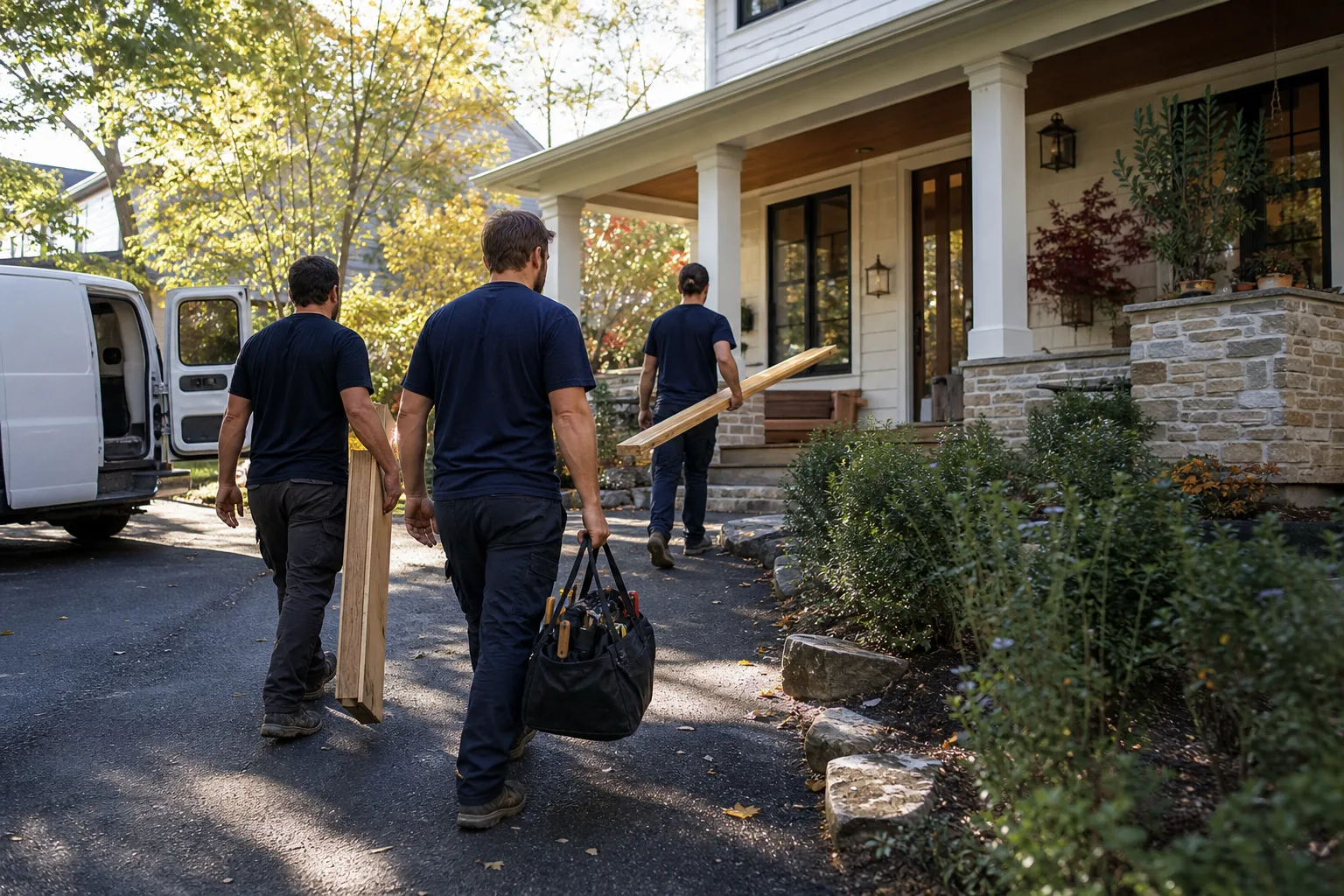
- Who is coming into my home? Background-checked, uniformed technicians on every job. Request the company’s hiring standards in writing.
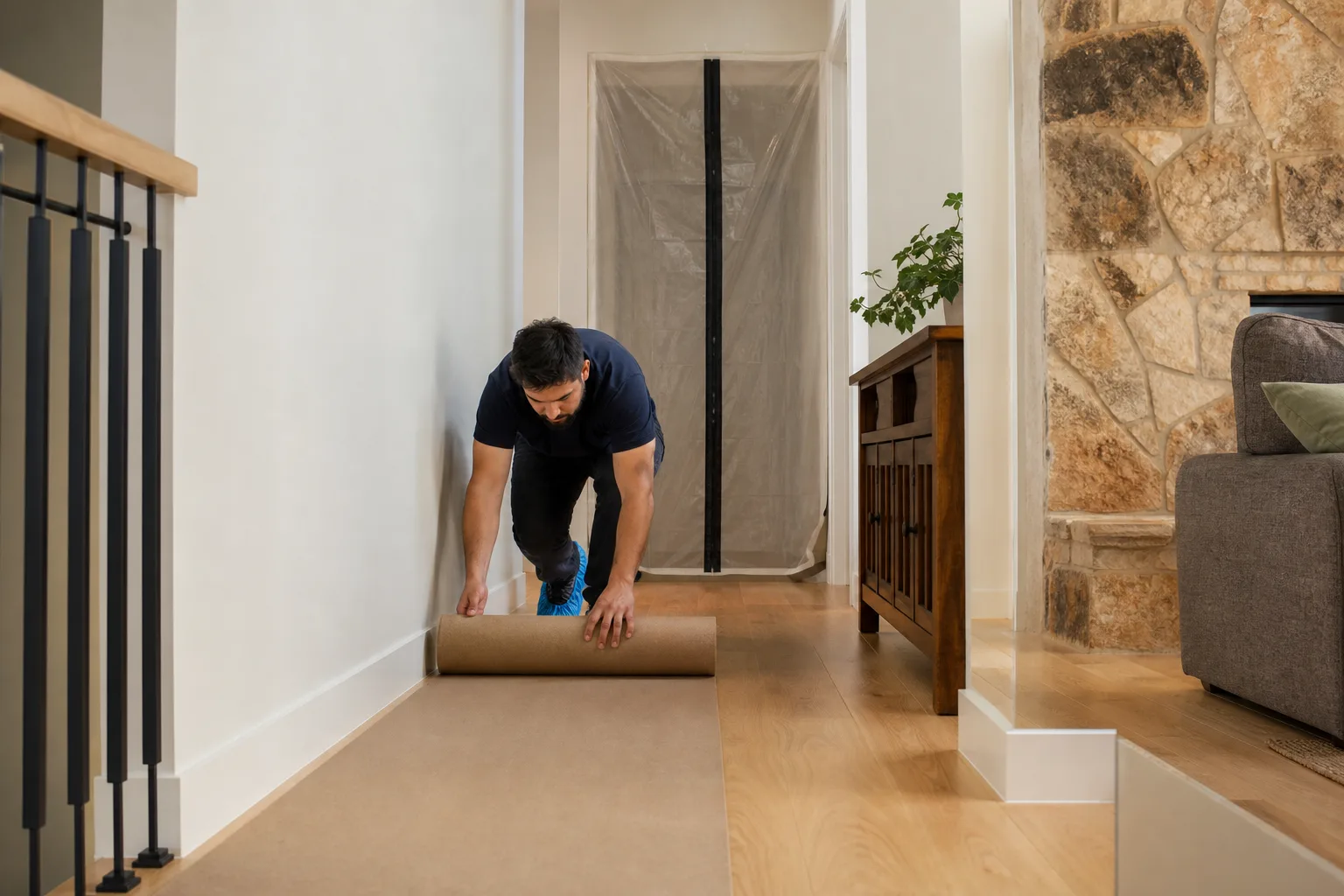
- What will they protect? Shoe covers at the door and drop cloths on the floors, on every visit, included on every job. Ask how they’ll handle pet-safe product choices where there’s a choice in the material selection.
- What happens if something goes wrong after the project? A written post-project commitment matters more than a verbal promise. Our contractor page explains the 365-Day Done Right Promise we stamp on every project.
- Is the price in writing before work starts? Yes, every time, on every project – not an estimate that grows, a written price.
- Are the materials named? Cabinets from KraftMaid or Wellborn, countertops from Cambria or Silestone, fixtures from Kohler, Moen, or Grohe, roofing from IKO, Atlas, or Tamko, siding from James Hardie. Name brands let you research the warranty before you sign.
Live-person phone coverage matters, too. Calls answered by a person – not a voicemail box, not an automated system – at any hour is a real operational commitment, and worth asking about before you need it.
Common Mistakes to Avoid
- Assuming the permit is the only approval you need. In Spring Valley, HOA architectural review runs on a parallel track and can’t be shortcut. Submit both at once.
- Budgeting site work as a fixed line. Caliche sits differently on every lot. Ask for a unit price for excavation so the number doesn’t grow mid-project.
- Scheduling concrete pours in July after 10 a.m. Plastic shrinkage cracks from flash-cured concrete can appear months later. Pours belong in the early morning or, better, in cooler months.
- Storing cabinets or flooring in a hot garage. A garage at 140°F ruins laminates, warps cabinet doors, and compromises adhesive backing. Materials belong in conditioned space.
- Choosing a remodel scope without pulling comps. A $200,000 kitchen in a neighborhood with a $475,000 ceiling doesn’t return what a $60,000 kitchen does. Read six to twelve recent sales first.
- Applying at the wrong jurisdiction. Most of Spring Valley is unincorporated Clark County, but a handful of parcels fall inside Las Vegas city limits. Confirm before you submit.
- Scheduling a school-year renovation without a permit buffer. Fifteen to twenty-two business days for a Clark County permit plus four to eight weeks of HOA review can eat a summer break. Plan the timeline backwards from your move-out or move-in date.
See the difference
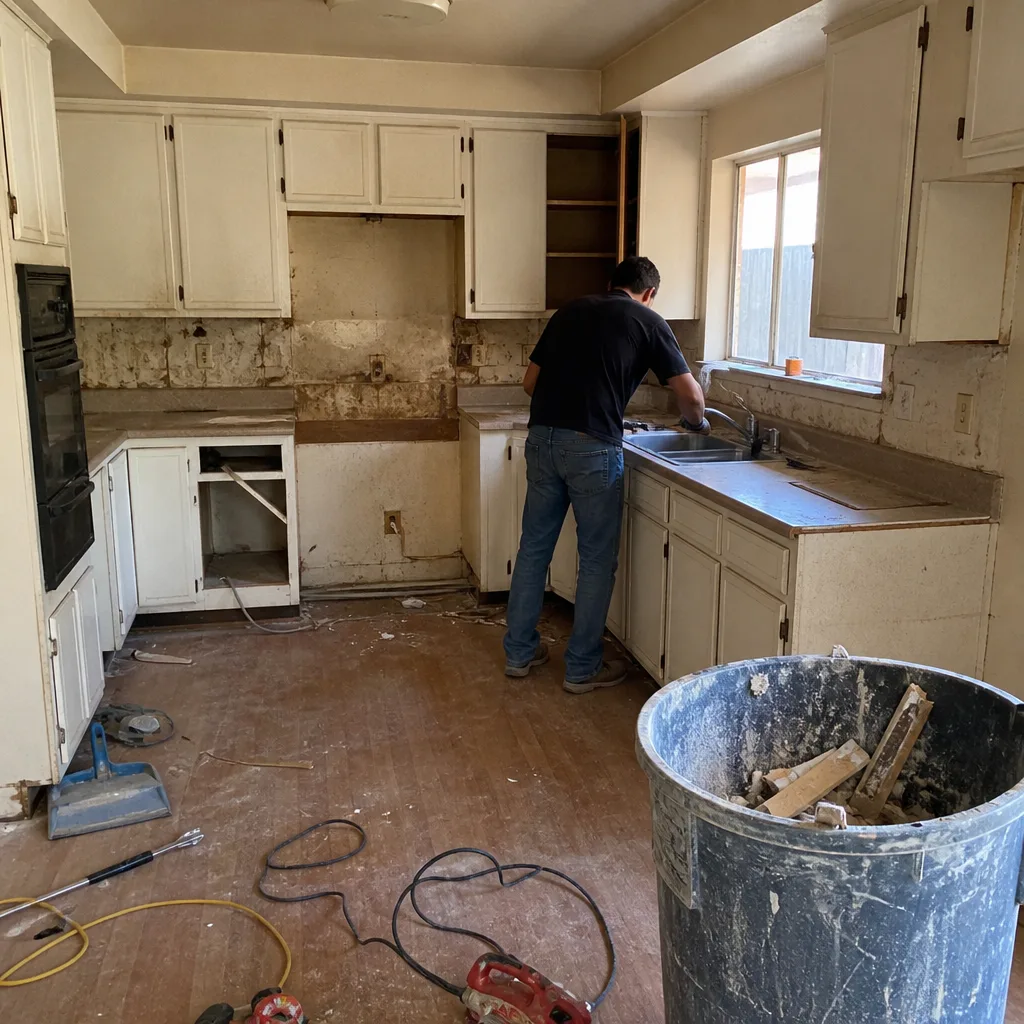 Before
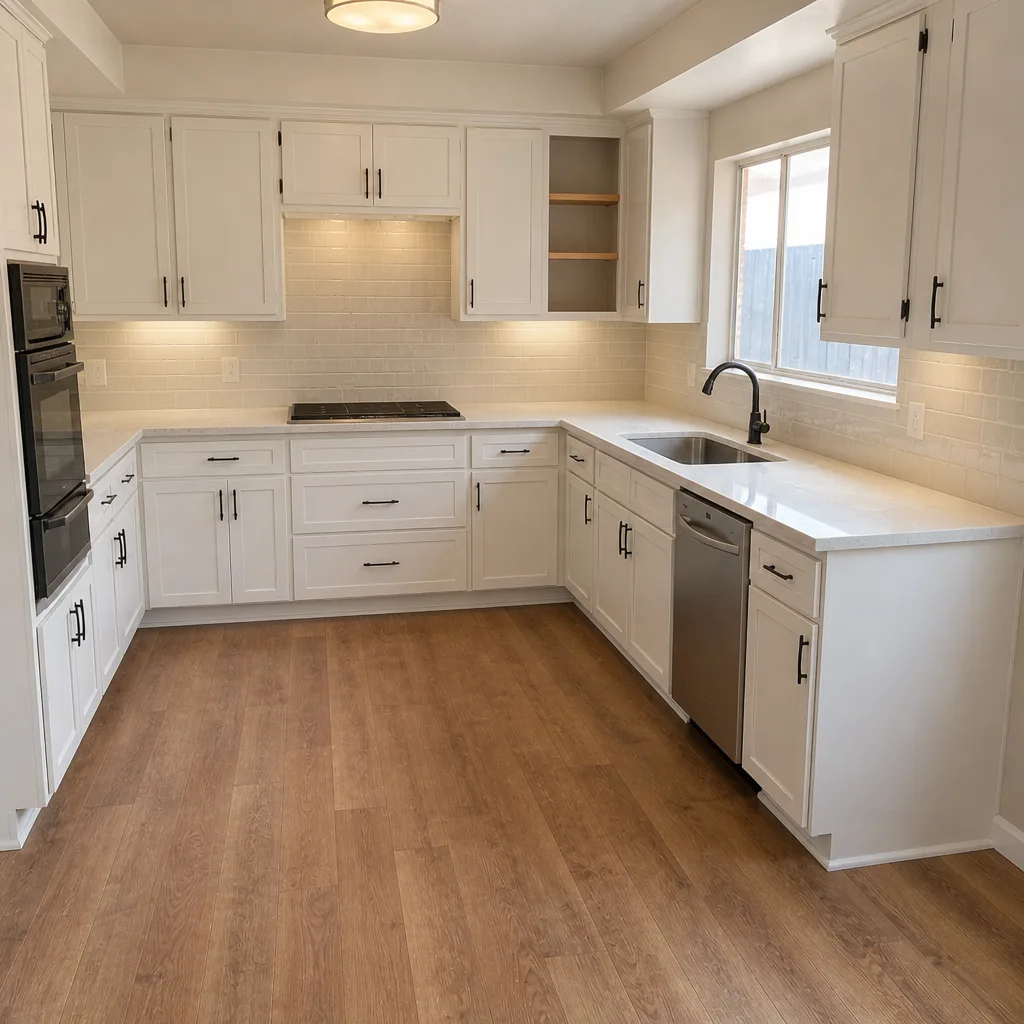 After
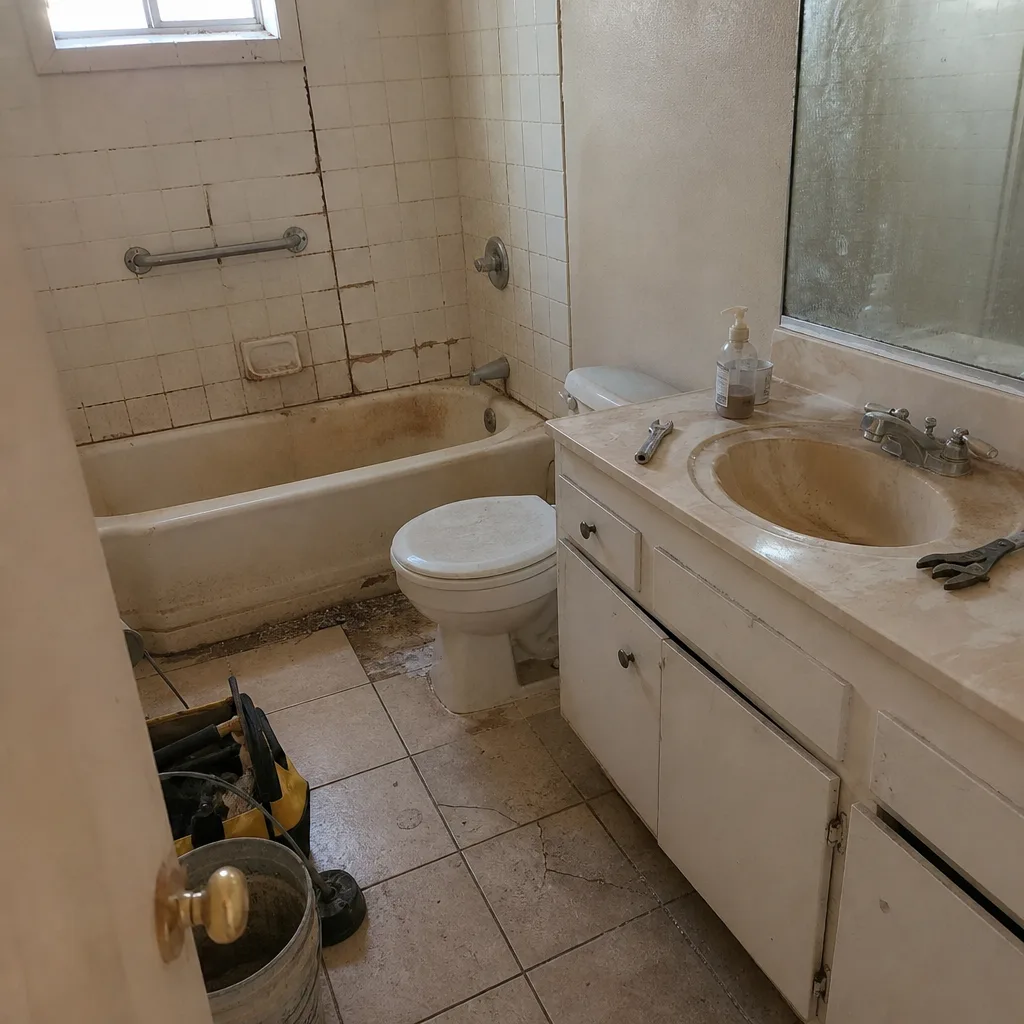 Before
 After
 Before
 After
When to Call a Professional
Call a professional the moment your project involves electrical panel work, gas line changes, structural wall removal, foundation or slab work, or anything that requires a Clark County permit – those are the areas where the safety stakes and the code consequences sit. Call us if you’re adding a room and need caliche excavation priced honestly, if your HOA architectural committee has sent back a submittal and you’d rather not do a third cycle, or if a previous contractor’s work is failing and you need to understand what a proper fix costs before you hire anyone. Elmstead Remodeling Spring Valley offers free estimates in Spring Valley – call (844) 320-4882.
Frequently Asked Questions
Clark County’s building department has averaged 15 – 22 business days for residential permit issuance in recent years, with longer timelines for structural or site-intensive submittals. Add four to eight weeks if your HOA requires architectural review, because those tracks run in parallel and each can add a resubmittal cycle. Call (844) 320-4882 for an exact quote on your project – estimates are free.
Caliche is a calcium carbonate layer that sits beneath much of Spring Valley and functions as natural cement when dry. It frequently needs mechanical excavation, undercutting, or engineered fill for footings and trenching, which typically adds $4,000 – $12,000 to site work and two to ten working days to the schedule. A geotechnical report on your specific lot tells you what to expect before you sign. Call (844) 320-4882 for a free estimate that breaks caliche out as its own line item.
You need both, but they run on parallel tracks. HOA architectural review is a separate approval from the Clark County building permit, and most Spring Valley associations require it before exterior work can proceed. Submitting both in the same week is the fastest path, and plan for at least one resubmittal cycle. Call (844) 320-4882 to schedule a free estimate that includes the HOA review steps.
Spring Valley kitchen remodels typically run $28,000 – $75,000 for mid-grade to upper-mid-grade work, with cabinet brand, countertop material, and appliance package moving the number most. Permit fees and HOA architectural review are separate line items. Call (844) 320-4882 for a written price before any work starts – estimates are free.
Summers regularly exceed 110°F in Spring Valley, which forces concrete pours to early morning, keeps exterior painting and caulking in the spring and fall windows when surface temperatures meet manufacturer ranges, and requires temperature-controlled material storage for cabinets and flooring. Add a curing plan for any slab work and expect a slightly longer schedule in the summer months. Call (844) 320-4882 for a free estimate with a summer-aware schedule.
No – our written price is given before any work starts, on every project, and it doesn’t grow when the crew arrives. Caliche excavation and unforeseen structural issues are quoted as separate line items with unit pricing so they’re visible on the quote, not added after. Call (844) 320-4882 for a free estimate and a written price in hand before you decide anything.
The Bottom Line
Spring Valley remodel conditions differ from the rest of the Las Vegas Valley in four concrete ways: caliche soil adds both cost and time to any site work; HOA architectural review runs on a parallel approval track; Clark County permitting averages 15 – 22 business days and can quietly eat a summer project; and 110°F summers force a heat-aware material and pour schedule. Reading a comps report before you pick a scope keeps you from over-improving past your neighborhood’s ceiling. The families who plan for these local realities budget less time, spend less on surprises, and end up with projects that hold up. Our Spring Valley kitchen remodeling and Spring Valley bathroom remodeling teams price every project with the local variables built in.
If you’re ready to plan your project with a free estimate – and a written price before any work starts – call Elmstead Remodeling Spring Valley at (844) 320-4882. Our team answers the phone live, any hour, every day.
Written by the team at Elmstead Remodeling Spring Valley.