Last updated November 18, 2026







Free written scope consultation - allowances, timeline, and change-order rules on paper before a single trade is scheduled
DIY vs Professional General Contractor: What’s Safe to Do Yourself
Painting an accent wall is a reasonable weekend project. Opening that same wall to move an outlet 18 inches is a different animal. If a fire starts in wiring you relocated without a permit, your homeowner’s insurance can deny the claim even when the work itself was done correctly, because the inspection record does not exist. That gap between “looks fine” and “is covered” is where most DIY remodel decisions actually get made, and it has nothing to do with how handy you are. This guide draws the line clearly, without judgment: which tasks in Spring Valley legally require a licensed contractor, which don’t, and where the real hidden risks sit when children and pets live in the house during the work.
Quick Answer
In Nevada, electrical, plumbing, HVAC, and structural work legally require a licensed contractor, and those are the categories where a mistake can injure your family or void your insurance. Painting, cabinet hardware, landscaping around finished hardscape, and similar finish-level tasks are safe for a motivated homeowner. The smartest approach for most Spring Valley families is a hybrid: a licensed contractor handles rough-in and anything behind the wall, and you take on the finish work you enjoy.
Styles & brands we work with
- Kitchen remodeling
- Bathroom remodeling
- Home additions & ADU
- Roofing
- Windows & doors
- Driveway & pavers
- Fence
Table of Contents
- Where Nevada Draws the Legal Line
- The Invisible Hazard: Lead and Asbestos in Older Spring Valley Homes
- The Real Cost of DIY (It’s Not the Tools)
- Rough-In vs Finish Work: The Hybrid That Actually Saves Money
- Three Finish Tasks That Are Genuinely Safe
- A Decision Framework You Can Use Tonight
- Common Mistakes to Avoid
- When to Call a Professional
Where Nevada Draws the Legal Line
Nevada is not subtle about this. The state requires a licensed contractor for work on a residential structure that involves electrical, plumbing, heating and air conditioning, or structural changes, and the Nevada State Contractors Board enforces it with real teeth: fines for unlicensed contracting, plus a requirement that the work be redone by a licensed professional. If you sell the house later and a buyer’s inspector flags unpermitted work, you’ll be paying twice for the same job.
Here is the practical breakdown of what requires a license versus what a homeowner can legally do on their own home in Spring Valley:
- Always licensed: Any new or relocated electrical circuit or outlet, panel work, plumbing supply or drain lines, gas line connections, HVAC installation or modification, and anything that moves or removes a load-bearing wall.
- Usually licensed: Water heater replacement, bathroom fan venting through the roof, and any work that requires a building permit and inspection.
- Generally allowed for homeowners: Interior painting, cabinet hardware, replacing a light fixture on an existing circuit (check your local jurisdiction), flooring over a sound subfloor, landscaping, and cosmetic finish work.
One detail that trips up Spring Valley families: an outlet relocation of a foot or two feels cosmetic, but it is electrical work under Nevada rules, and it requires a permit and inspection. The inspection is the whole point. It is the only document that proves to your insurer, and to a future buyer, that the wall was closed correctly.
The Invisible Hazard: Lead and Asbestos in Older Spring Valley Homes
Spring Valley has a wide range of housing stock. Neighborhoods developed in the 1970s and 1980s sit alongside newer builds, and any home built before 1978 may contain lead-based paint. Popcorn ceilings in homes from roughly the 1950s through the 1980s can contain asbestos, and that includes some Spring Valley homes that were updated cosmetically but never had the ceiling tested.
Why this matters more for families with children and pets than for a solo homeowner: disturbing lead paint or asbestos-containing ceiling texture releases fine particles that settle into carpets, ductwork, and the soil outside. Sanding a popcorn ceiling without testing, or scraping paint in a nursery, creates a hazard that outlasts the project by years. Testing is cheap and fast, and it is the one step a homeowner should never skip before any demolition or sanding in an older home.
If you’re not sure of the age of the ceiling texture or paint, treat it as suspect until a lab says otherwise. That is not a scare tactic. It is the same precaution any licensed contractor takes before a demolition day in a Spring Valley home of unknown vintage, and it is one of the reasons a professional bid includes testing that a DIY budget usually leaves out.
The Real Cost of DIY (It’s Not the Tools)
The tool rental is the visible cost. The invisible costs are what hurt. When you compare a DIY budget to a contractor bid, add these line items before you decide anything:
- Tool rental and purchase: A tile saw, a wet/dry vac, a rotary hammer, and a drywall lift run $200 to $500 for a single project if you don’t own them.
- Material waste from the learning curve: 15 to 25 percent overage on tile, drywall, and trim is common for a first attempt. On a bathroom tile job, that’s often $300 to $600 in unusable material.
- Permit self-pull fees and inspection time: Nevada permits come with fees and scheduled inspections, and those inspections fall during business hours, which means time off work.
- Redo risk: The cost of having a professional correct a partially finished DIY job is often higher than the original bid, because demolition of the attempt comes first.
- Insurance exposure: Unpermitted work that causes a fire or water loss may fall outside your coverage, which is a cost you cannot put a number on until it happens.
Add those up honestly and the DIY “savings” on a bathroom or kitchen project in Spring Valley often shrinks to a few hundred dollars, against a job that takes three times as long and comes with no warranty. That is the math most families miss when they’re standing in the tile aisle.
For larger projects, the comparison is starker. Our General Contractor in Spring Valley page lays out how a bid is actually built, line by line, so you can see where the money is going and where DIY would genuinely save.
Rough-In vs Finish Work: The Hybrid That Actually Saves Money
This is the single most useful concept in the whole DIY conversation, and almost nobody explains it plainly.
Rough-in is everything that goes behind the finished surface: framing, electrical wiring, plumbing, HVAC ductwork, and the inspection that follows. It is where the hazard lives and where the law requires a license. Finish work is everything you see and touch after the rough-in passes inspection: paint, tile, trim, cabinet faces, hardware, fixtures, and landscaping.
The hybrid approach works like this: a licensed contractor completes the rough-in and gets it inspected and signed off, then you take on the finish work you’re comfortable with. You get the permit, the insurance coverage, and the safety of professional work behind the wall, and you keep the cost savings on the parts you can genuinely do well. It is a legitimate arrangement, and it’s one we set up with Spring Valley families regularly.
One caution: for anything involving a garage door’s high-tension springs or cables, never treat it as finish work. Those springs are under extreme tension and can cause serious injury in an instant. That is a trained-professional job, full stop.
For a kitchen or bath project where you want to explore this split, our Kitchen Remodeling in Spring Valley and Bathroom Remodeling in Spring Valley pages describe which phases we can hand off and which we always keep in-house.
Three Finish Tasks That Are Genuinely Safe
Not every project needs a contractor, and saying so would be dishonest. Here are three tasks that are safe, satisfying, and well within reach for a motivated Spring Valley homeowner:
- Interior painting after primer. Prep, patch, prime, and paint. The key word is primer: it seals the surface and helps the topcoat adhere, and skipping it is the most common reason a paint job fails in a dry climate like Spring Valley’s. Choose low-VOC paint when children or pets are in the house, and keep the windows open.
- Cabinet hardware installation. New pulls and knobs transform a kitchen for the price of the hardware and a Saturday. Measure twice, use a template, and drill carefully. This is finish work in its purest form, and it’s reversible if you change your mind.
- Landscaping around completed hardscape. Once a patio or walkway is finished and cured, planting, mulching, and edging around it are safe and satisfying. Choose plants suited to Spring Valley’s heat and low rainfall, and keep irrigation lines clear of the hardscape footprint.
Three more hazards to leave to a professional: anything involving an electrical panel or new wiring, all gas line work, and any roof work that requires climbing or working at height. These are the areas where a single error can cause serious injury, and no weekend project is worth that risk to the people living in the house.
When a remodel is finishing up and the exterior is part of the scope, the material choices matter to how it ages. CertainTeed and James Hardie are two of the names we specify most often for that reason, and both carry manufacturer warranties the homeowner can verify independently.
A Decision Framework You Can Use Tonight
Run any planned task through these five questions before you pick up a tool:
- Does it require a permit? If yes, it requires a licensed contractor. That is the short version of Nevada’s rules.
- Would a mistake injure someone? Electrical, gas, structural, and height work all say yes. Finish work says no.
- Could it void your insurance? Unpermitted electrical and plumbing work can. Ask your insurer if you’re unsure, and get the answer in writing.
- Is it behind the wall or in front of it? Behind the wall is rough-in. In front of it is finish. That single distinction decides most projects.
- Can you finish it in the time you actually have? A half-finished bathroom with no water is a real problem when you have young children in the house. Be honest about the timeline.
If a task passes all five, do it yourself and enjoy it. If it fails even one, that’s the line, and crossing it isn’t brave, it’s just expensive.
Common Mistakes to Avoid
- Moving an outlet “just a little” without a permit. This is the most common DIY electrical error we see in Spring Valley, and it can void your insurance for any fire that starts in that wall.
- Sanding popcorn ceiling texture without testing for asbestos. In older Spring Valley homes, this releases fibers that settle into carpets and ductwork and remain a hazard long after the project is done.
- Skipping primer to save a coat of paint. In Spring Valley’s dry, sun-heavy climate, paint adheres poorly to unfinished drywall, and the job fails within a season or two.
- Self-pulling a permit and then missing the inspection window. Nevada inspections happen during business hours, and a missed inspection stalls the whole project and can trigger a re-inspection fee.
- Underestimating material waste on a first tile or drywall job. A 15 to 25 percent learning-curve overage is normal, and budget doesn’t always stretch to cover it.
- Handling garage door springs or cables as a weekend project. Those components are under extreme tension and can cause serious injury. Leave them to a trained professional.
- Starting demolition before the design and permit are settled. Demolition day always reveals something, and having a licensed contractor already engaged means the surprise gets solved correctly rather than patched around.
When to Call a Professional
Call a licensed contractor when the task involves anything behind the wall (electrical, plumbing, HVAC, framing), when it requires a permit, when it involves a gas line or an electrical panel, when it involves roof or height work, when it involves garage door springs or cables, or when your home was built before 1978 and you’re not sure what’s in the paint or ceiling texture. Call us too when you want a written price before any work starts, so you can compare it honestly to your DIY budget. Elmstead Remodeling Spring Valley offers free estimates in Spring Valley. Call (844) 320-4882.
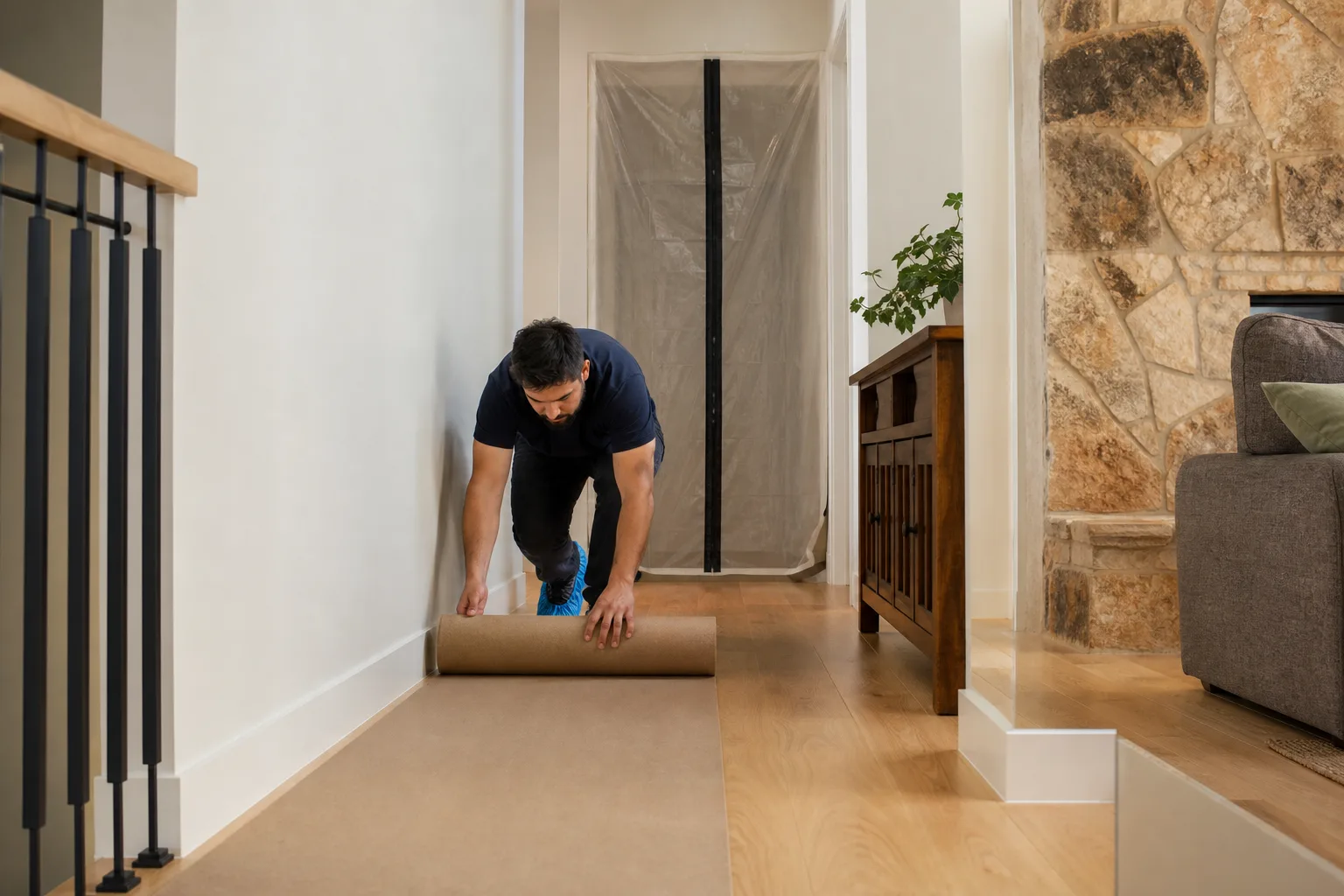
Every project we take on comes with the Cedarwell Care Promise: shoe covers and drop cloths on every visit, a written price before any work starts, quiet tools during your family’s rest hours where possible, and a photo of the clean-up before the crew leaves. The 365-Day Done Right Promise backs every completed job. If it isn’t done right, we make it right. Our technicians have up to 21 years of experience, and the manufacturers we work with, including KraftMaid, Wellborn, Cambria, Silestone, Kohler, Moen, Grohe, Schluter, and James Hardie, are ones you can research by name.
See the difference
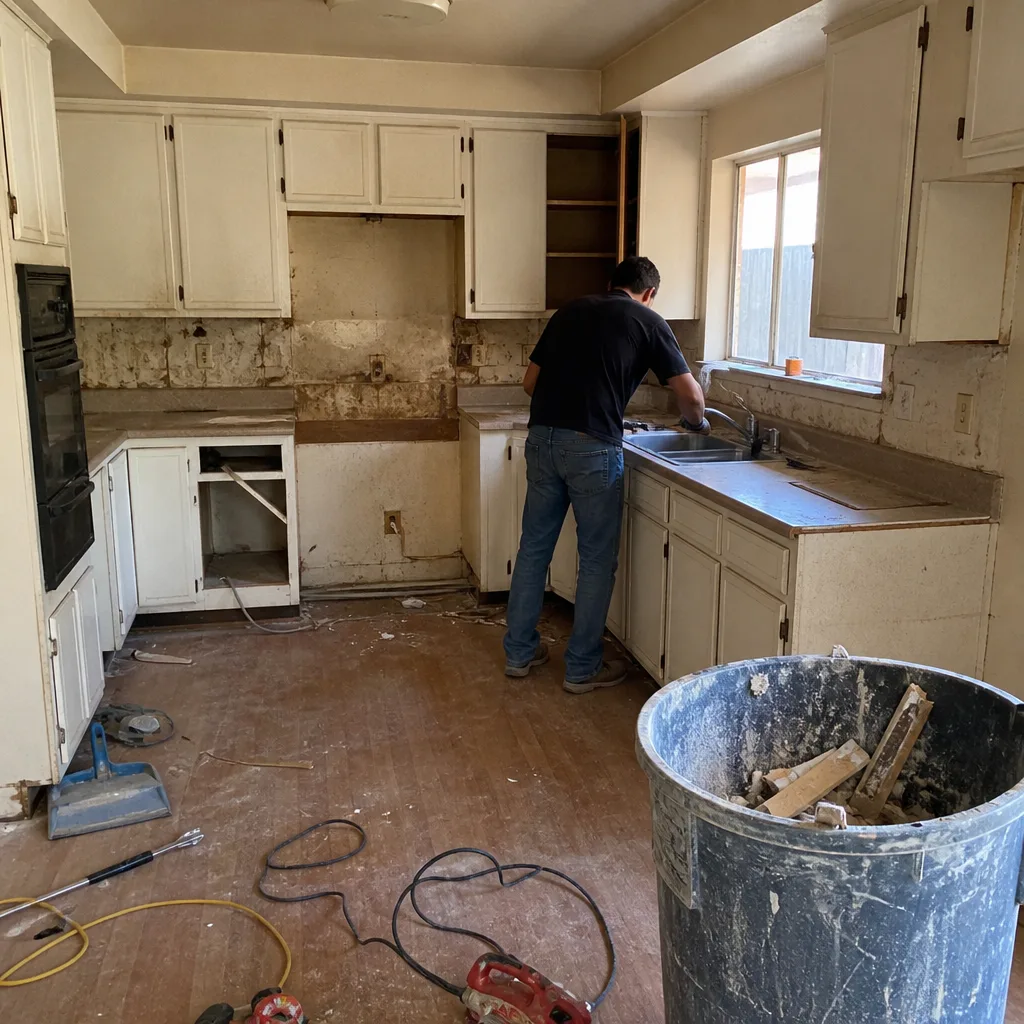 Before
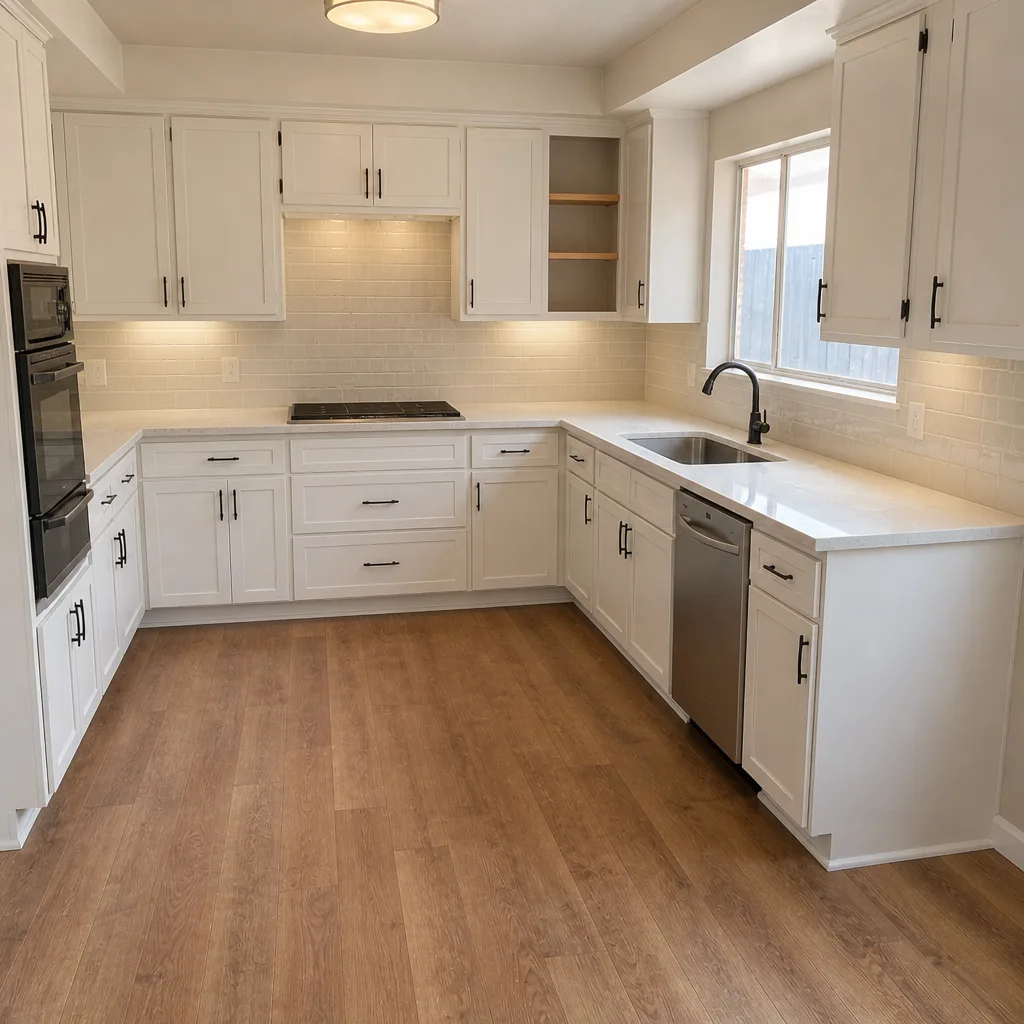 After
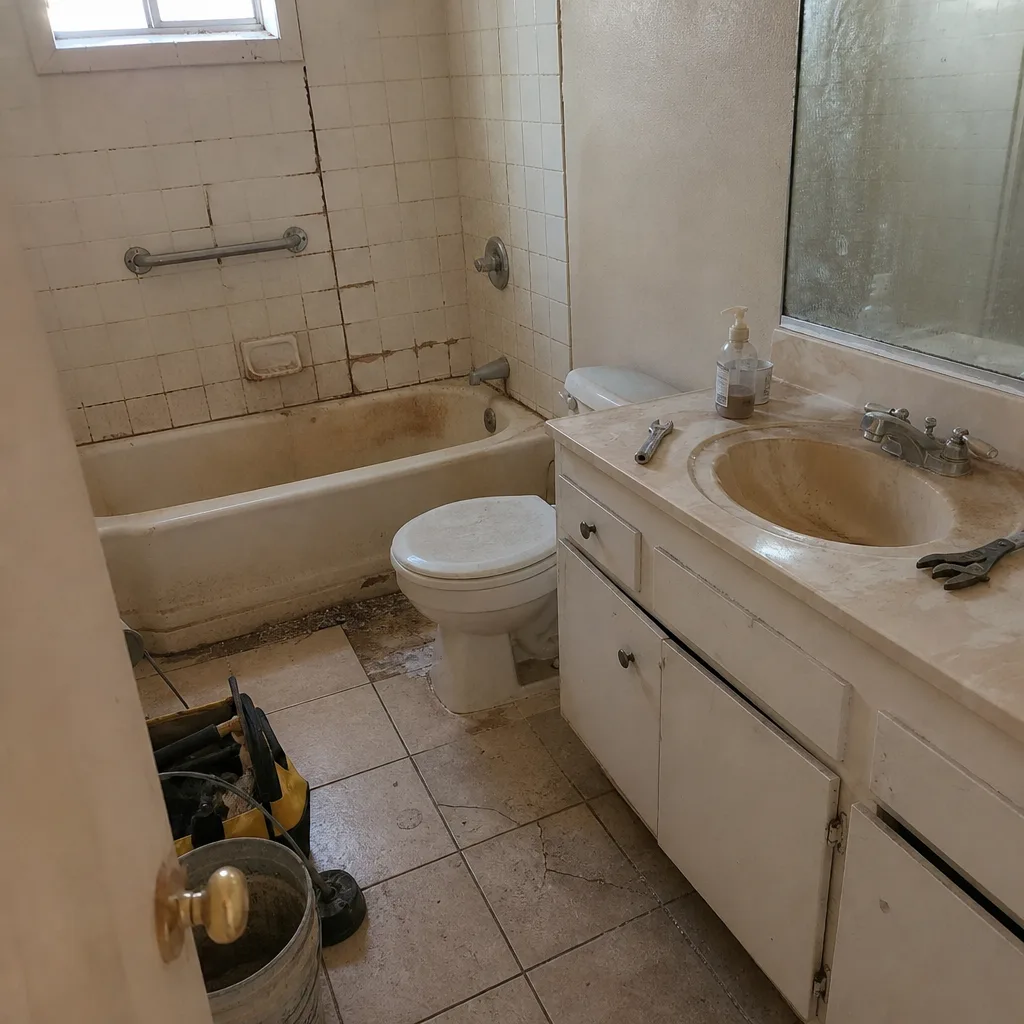 Before
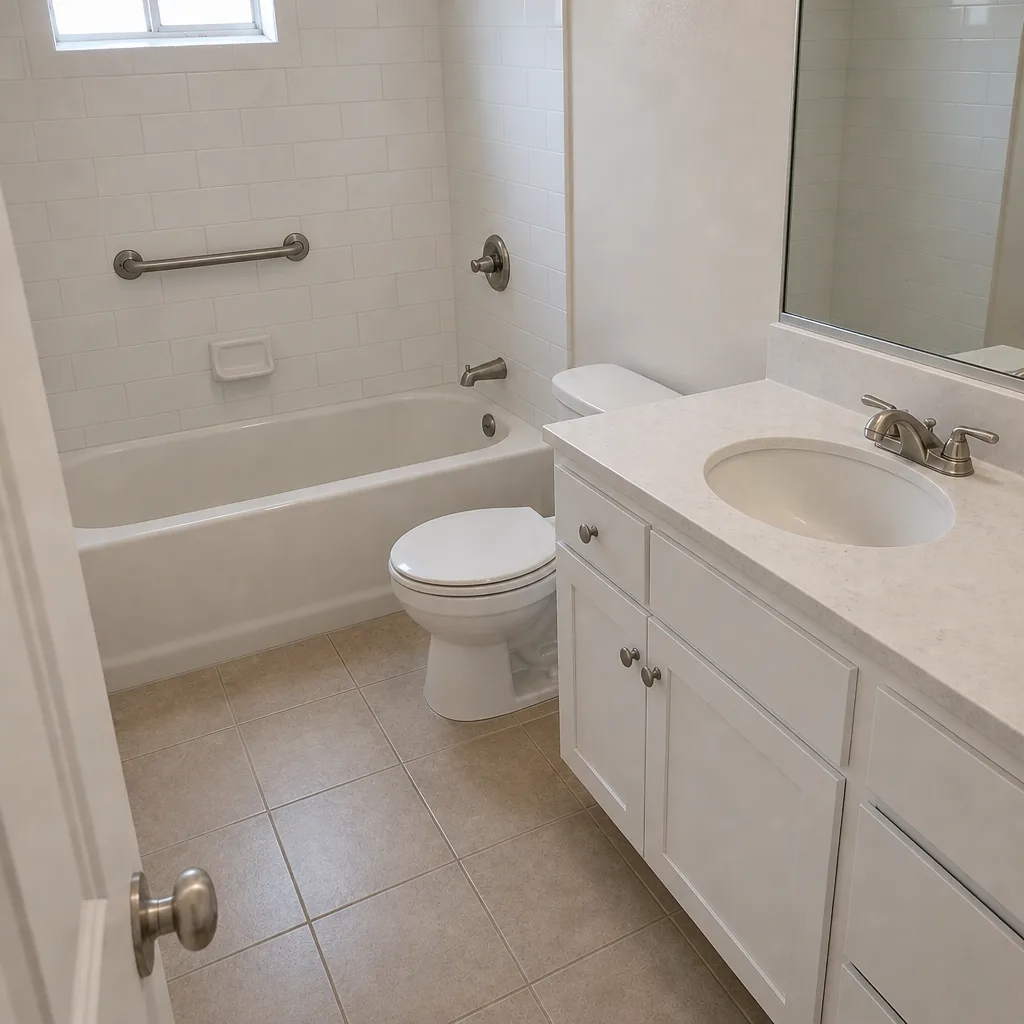 After
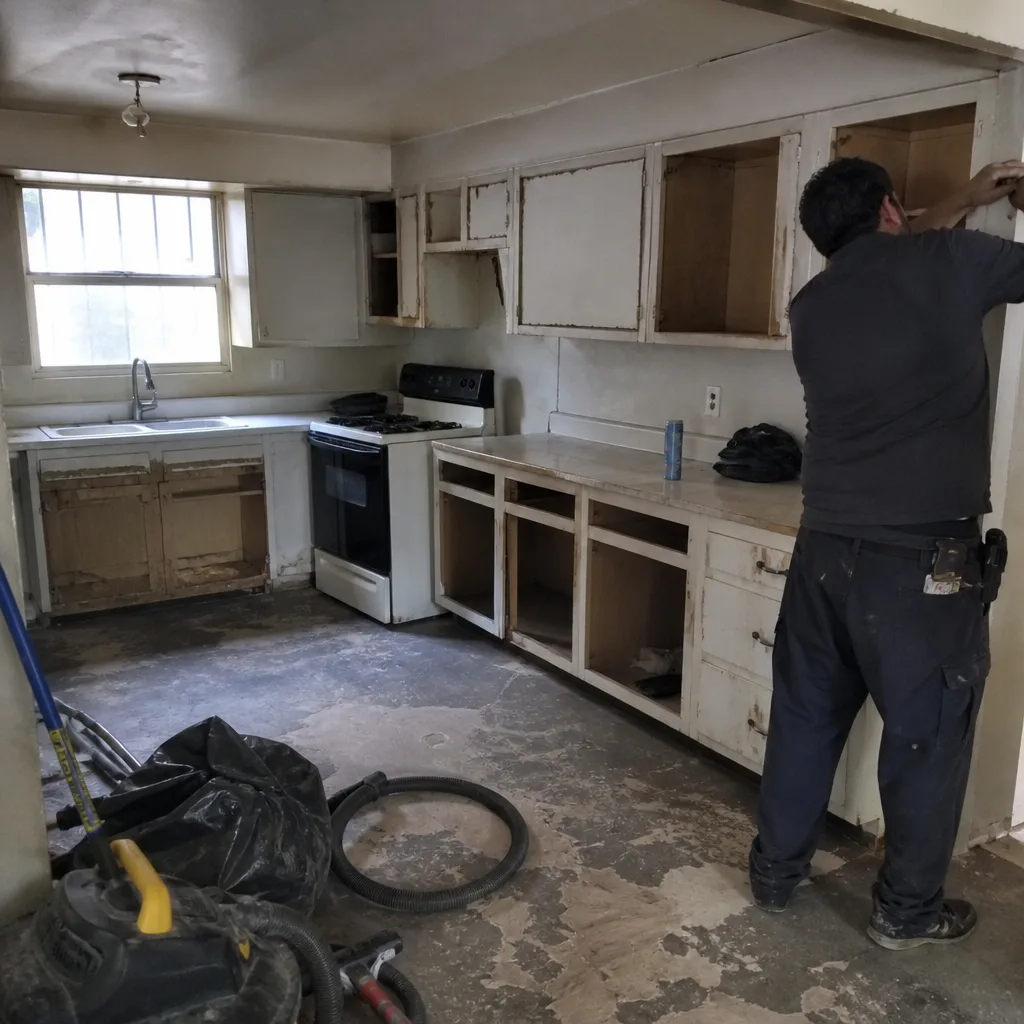 Before
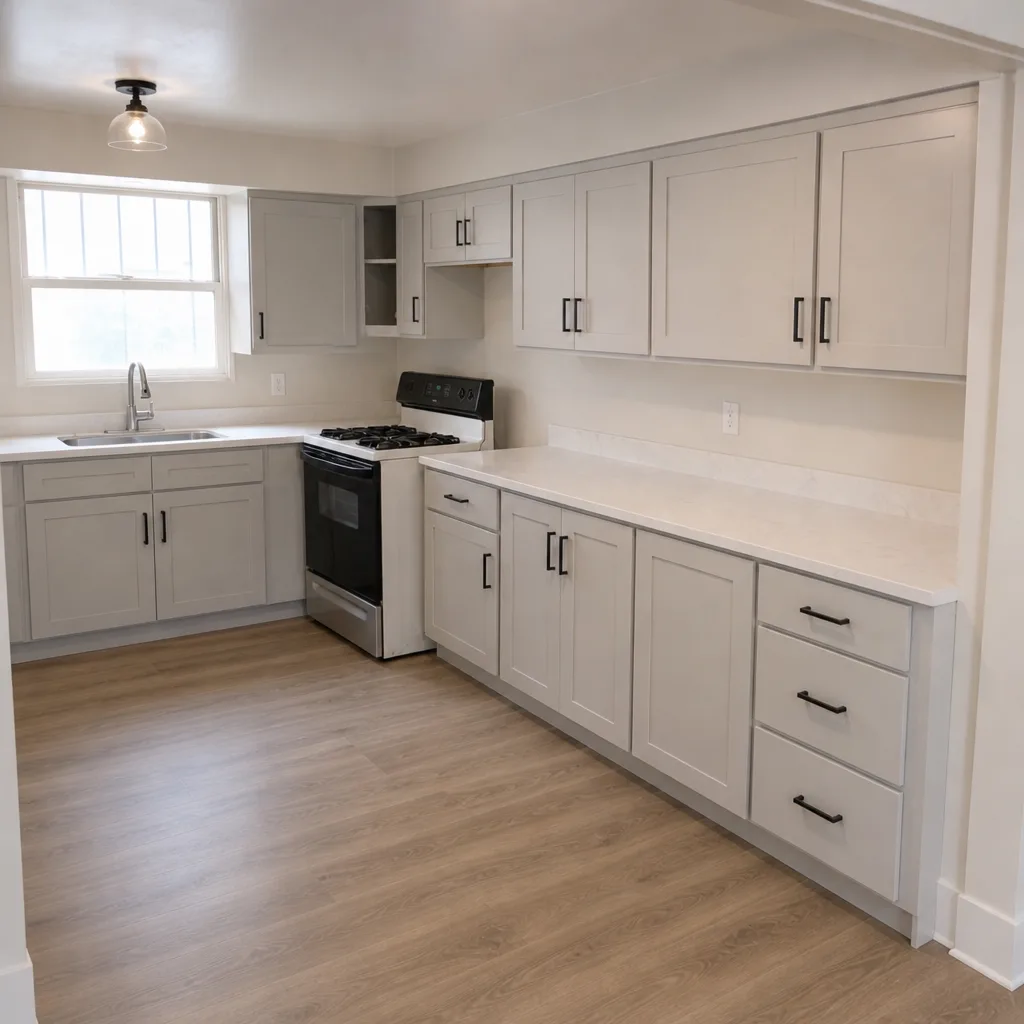 After
Frequently Asked Questions

Electrical, plumbing, HVAC, structural, and gas work all require a licensed contractor in Nevada, along with any project that requires a building permit. That covers new or relocated outlets, panel work, water heater replacement, bathroom fan venting, and anything that moves a load-bearing wall. Cosmetic finish work like painting and cabinet hardware generally does not.
It can, yes. If a fire or water loss is traced to unpermitted electrical or plumbing work, your insurer may deny the claim regardless of whether the work itself was done correctly. The inspection record is what proves the work was done to code, and without it, coverage is at risk. Call (844) 320-4882 if you want a contractor’s read on a permit question.
Homes built before 1978 may contain lead-based paint, and popcorn ceilings from roughly the 1950s through the 1980s can contain asbestos. The only reliable answer is a lab test on a sample of the paint or ceiling texture. Testing is fast and inexpensive, and it should happen before any sanding or demolition in a home of unknown vintage.
Yes, this is a legitimate hybrid approach. A licensed contractor completes and inspects the rough-in, and you take on the finish work you’re comfortable with: paint, tile, trim, cabinet hardware, and landscaping around finished hardscape. You keep the permit, insurance coverage, and professional safety behind the wall while saving on the finish phases.
Yes. Relocating an outlet is electrical work under Nevada rules, and it requires a permit and an inspection. The inspection is the point: it’s the document that proves the wall was closed correctly and keeps your insurance coverage intact.
Interior painting after primer, cabinet hardware installation, and landscaping around completed hardscape are safe finish-level tasks for a motivated homeowner. Choose low-VOC paint when children or pets are in the house, and leave anything involving garage door springs, electrical panels, gas lines, or height work to a trained professional. Call (844) 320-4882 for a free estimate if you’re unsure.
The Bottom Line
The DIY-or-hire decision isn’t a test of your skill. It’s a question of what’s behind the wall, what the law requires, and what your insurance covers. Painting, cabinet hardware, and landscaping are yours to enjoy. Electrical, plumbing, HVAC, structural, gas, and any garage door spring work belong to a licensed professional, and so does anything in an older Spring Valley home that hasn’t been tested for lead or asbestos. The hybrid model, licensed rough-in plus your own finish work, is the honest middle path. If you want a written price to compare against your DIY budget, call us at (844) 320-4882.
If you’re starting a larger project and want to see how we work, our team’s approach begins at the Elmstead Remodeling Spring Valley home page. Call (844) 320-4882 to schedule your free estimate. We answer the phone with a live person, 24/7.
Written by the team at Elmstead Remodeling Spring Valley.