Last updated November 18, 2026








Free written scope consultation - allowances, timeline, and change-order rules on paper before a single trade is scheduled
Home Remodeling Warning Signs Every Homeowner Should Know
Last spring a homeowner in Spring Valley called us after wiring a $4,000 deposit to a remodeler she’d met two days earlier. He’d told her he had another job starting Monday, that the price was good “if we lock it in today,” and that a written proposal would just slow things down. She never saw him again. The warning signs were all there in that first phone call, and they had nothing to do with gut instinct. They were specific behaviors and specific phrases, and they’re learnable. This guide names them, from the first conversation through the warranty period, so you can disqualify the wrong contractor before money changes hands.
Quick Answer
The clearest remodeling warning signs are verbal-only pricing, pressure to skip permits, a deposit demand above the 10% cap Nevada law sets before work begins, a proposal that names no material brands and no workmanship warranty term, and any push for a fast decision before you have a written contract in hand. If a contractor won’t put the price, the scope, and the warranty in writing before asking for money, that alone is reason to walk away. Most red flags surface before the contract is signed, not after.
Styles & brands we work with
- Kitchen remodeling
- Bathroom remodeling
- Home additions & ADU
- Roofing
- Windows & doors
- Driveway & pavers
- Fence
Table of Contents
- Pre-Contract Red Flags: What to Watch in the First Call
- Proposal Red Flags: Reading the Contract Before You Sign
- Permits and Nevada Law: The Warning Signs Homeowners Miss
- Mid-Project Red Flags: When the Crew Goes Quiet
- Change Orders and Payment Requests: The Trap to Recognize
- Post-Project Red Flags: Warranty and Lien Releases
- Already Under Contract? How to Document and Respond
- Common Mistakes to Avoid
Pre-Contract Red Flags: What to Watch in the First Call
The contractor who pushes hardest for a quick decision is using urgency as a substitute for a written proposal. “I have another job starting Monday so I need a deposit today” is the single clearest warning sign in the industry, because a contractor who has done the work of pricing your job properly doesn’t need to rush you. Here in Spring Valley, where the summer heat drives a lot of indoor remodel scheduling, we hear about this pressure most often in the early-summer months when crews are booking out. That’s exactly when a rushed homeowner is most likely to skip the written proposal.
Listen for these specific phrases and behaviors in the first conversation:
- Verbal-only pricing. A number spoken on the phone or sketched on a business card, with no written scope attached. If it isn’t written, it isn’t a price – it’s a hope.
- Pressure to skip permits. “We don’t need a permit for that” said about structural, electrical, plumbing, or gas work is a hard stop. Unpermitted work in Spring Valley can complicate a future sale and leave you holding the liability.
- A deposit demand above Nevada’s cap. Nevada law limits how much a contractor can collect before work begins. Asking for more than 10% upfront, or a large lump sum before any materials arrive, is a documented warning sign. Ask for the number in writing and verify it against state rules.
- No physical address or verifiable contact. A legitimate contractor will give you a business identity you can research. A cell number and a first name alone is not enough.
- Cash-only, no-receipt requests. Payment in a form that leaves no paper trail protects the contractor, not you.
- Badmouthing every competitor. It’s a small tell, but a contractor who can’t describe their own process in specifics is often hiding the fact that there isn’t one.
At Elmstead Remodeling Spring Valley home, we put a written price in front of you before any work starts, every time, on every project. That single practice eliminates most of what this guide warns about, because the paper trail is the protection.
Proposal Red Flags: Reading the Contract Before You Sign
A proposal can look professional and still be missing the three things that matter most: named material brands, a payment schedule tied to milestones, and a stated workmanship warranty term. Any one of these gaps is a warning sign. All three missing is a proposal you shouldn’t sign.
What a trustworthy proposal contains
- Named material brands. “Standard cabinets” tells you nothing. A real proposal names what’s going in – KraftMaid or Wellborn cabinets, Cambria or Silestone countertops, Kohler or Grohe fixtures. When brands are named, you can research them and their warranties travel with the finished project. When they aren’t, you’re buying a surprise.
- A payment schedule tied to milestones. Money should follow completed work, not anticipation of it. A schedule that pays the contractor in full before the job is done leaves you with no leverage.
- A stated workmanship warranty term. How long does the contractor stand behind the installation itself, separate from manufacturer warranties on products? If the answer is vague, that’s the answer.
- A detailed scope. Square footage, fixtures, finishes, demolition, disposal, and clean-up should all be listed. “Remodel bathroom” is not a scope.
- A start date and a completion window. Not a promise of same-day anything, but a realistic timeline in writing.
If you’re comparing proposals for a bathroom or kitchen and none of them name brands or warranty terms, that’s a market signal worth acting on. Our Bathroom Remodeling in Spring Valley and Kitchen Remodeling in Spring Valley pages show what a written, brand-named scope looks like so you have a benchmark to hold other bids against.
Permits and Nevada Law: The Warning Signs Homeowners Miss
The most expensive warning sign is the one that seems helpful: a contractor who offers to skip the permit to save you time and money. In Spring Valley, that offer should end the conversation. Permits exist so the work gets inspected, and inspection is your only independent confirmation that structural, electrical, plumbing, or gas work was done to code.
Here’s why it matters locally. Spring Valley sits in a region with intense summer heat and dry air, and code requirements around ventilation, insulation, and moisture control in bathrooms and kitchens exist because the climate stresses those systems. A bathroom vented to code handles monsoon-season humidity; one installed without a permit and without inspection may not. Electrical work done without a permit is the bigger risk – it’s the kind of shortcut that doesn’t show up until years later.
- Ask who pulls the permit. The answer should be the licensed contractor, and the permit should be in their name.
- Ask for the permit number before work starts. A real contractor will have it in hand and can show it.
- Watch for any offer to “do it under the table.” That’s a warning sign every time, no exceptions.
- Remember the deposit rule. Nevada caps how much can be collected before work begins. A contractor who asks for a large sum to “cover permit fees upfront” is conflating two things.
A General Contractor in Spring Valley who pulls permits and passes inspections has done the job the way the state intends. If you’re already talking to contractors and none of them leads with permits, that’s your signal.
Mid-Project Red Flags: When the Crew Goes Quiet
Most of the worst warning signs appear before the contract is signed, but a few are mid-project telltales, and they’re worth recognizing because by then you’re invested. The big one is a crew that doesn’t show up and doesn’t communicate. Life happens – a supplier runs late, a sub gets sick – but a professional tells you. Silence is the warning sign, not the delay itself.
Watch for these mid-project signals:
- No-show days without a call or text. If you’re the one chasing updates, the communication has broken down.
- Materials arriving that don’t match the spec. Open the boxes. If the cabinet brand, the countertop, or the fixture doesn’t match what the proposal named, stop and ask before it’s installed.
- Requests for money ahead of documented progress. “We need another draw” before the milestone in the schedule is complete is a warning sign. Money follows work, not the other way around.
- Crews who don’t protect the home. No drop cloths, no shoe covers, tools left where a toddler or a dog can reach them. How a crew treats the house during the job predicts how they’ll treat the warranty after it.
- Quiet tools during family rest hours ignored. If nap schedules and school hours were part of the agreement and they’re being steamrolled, that’s a sign the care promise was talk, not practice.
The Cedarwell Care Promise exists because these are the things families actually notice: shoe covers and drop cloths inside the house, quiet tools during rest hours where possible, and a photo of the clean-up before the crew leaves. When a contractor builds those into the contract and the crew follows through on them mid-project, the other warning signs tend to be absent too.
Change Orders and Payment Requests: The Trap to Recognize
The most common way a remodel budget goes off the rails is a request for a large “change order” payment before the change is documented. It sounds reasonable in the moment – you decided to upgrade the tile, and the contractor needs cash to buy it – but undocumented change orders are exactly how “no-hassle upfront pricing” turns into a bill that grows after the crew arrives.
A legitimate change order has three parts, in writing, before any money is exchanged:
- The change itself, described specifically. Not “upgraded tile,” but the exact product, the square footage, and where it goes.
- The price delta. What the original scope included, what the change adds or subtracts, and the net difference in writing.
- The schedule impact. Does the change push the completion date? By how much?
If any of those three is missing, don’t pay. The request itself is the warning sign, and it’s one of the most expensive ones to ignore. A contractor who is confident in their pricing won’t hesitate to put the change in writing. One who pushes you to pay first and “we’ll square it up later” is asking you to trust a verbal promise over your own signature.
When we say we don’t use estimates that grow after the crew arrives, this is the mechanism: the change order either exists as a documented, signed adjustment or it doesn’t get paid. That’s it.
Post-Project Red Flags: Warranty and Lien Releases
Two warning signs show up after the work is done, and they’re the ones homeowners have the least leverage against – which is why they matter so much.
The contractor goes unreachable during the warranty period. A door that doesn’t close right, a grout line that fails, a fixture that leaks: these need a response while the warranty is live. A contractor who answers the phone every day during the job and vanishes the moment there’s a punch list is telling you what the warranty is worth. If the proposal didn’t state a workmanship warranty term, you have very little recourse.
No lien release. This is the one most homeowners don’t know to ask about. Subcontractors and suppliers can file a mechanic’s lien against your property if they weren’t paid by the general contractor, even if you already paid in full. A final lien release, signed by each sub and supplier, is the document that protects you. Refusal to provide one is a serious warning sign.
- Ask for lien releases as a condition of final payment.
- Keep every warranty document – manufacturer warranties on named-brand products and the workmanship warranty term from the contractor.
- Test everything before you make the final payment: doors, drains, fixtures, outlets, cabinets.
- Take your own photos on the final walkthrough, alongside the crew’s.
Our 365-Day Done Right Promise is a workmanship warranty worth naming because it runs a full year past completion: if it isn’t done right, we make it right. That’s the standard to hold any contractor to.
Already Under Contract? How to Document and Respond
If you’ve already signed and you’re now recognizing warning signs, don’t panic and don’t go quiet. Document everything and put your concerns in writing. A paper trail is your leverage, and most problems that haven’t become disputes yet can be resolved with a clear written record.
Work through this in order:
- Read the contract for the change-order process. Most contracts spell out how changes are documented. Hold the contractor to their own process.
- Put every concern in writing, dated. A text or email saying “The cabinets that arrived on [date] are [brand], not the [brand] in the proposal” is documentation. A phone call isn’t.
- Photograph what doesn’t match. Materials, workmanship, unprotected floors. Photos are hard to argue with.
- Refuse undocumented payment requests politely but firmly. “I’ll release payment when the change order is in writing and signed” is a complete sentence.
- Ask for lien releases before final payment. If the contract doesn’t mention them, ask anyway.
- Know your recourse. Nevada has a state contractor licensing board and consumer protection resources. If the contractor is licensed, that’s where a formal complaint goes.
The goal isn’t confrontation. It’s clarity. A professional contractor will meet a written concern with a written response. One who won’t is showing you the same warning sign you spotted in the first phone call.
Common Mistakes to Avoid
- Comparing bids by price alone. A verbal number and a written, brand-named proposal aren’t the same product. Compare scopes, not just totals, and ask why one bid is $8,000 lower if it is.
- Paying more than 10% before work begins. Nevada caps the pre-work deposit. If you’re being asked for more, that request is the warning sign, regardless of how it’s framed.
- Letting a contractor “handle the permit” without seeing it. Ask for the permit number before the first day of work. Spring Valley inspections on ventilation and electrical are the reason the permit exists.
- Accepting “standard materials” as a scope line. If the proposal doesn’t name KraftMaid or Wellborn or Cambria or a comparable brand, ask. A named brand comes with a manufacturer warranty you can verify.
- Making a final payment before the lien releases are in hand. This is the mistake that leaves homeowners exposed to a mechanic’s lien even after they’ve paid in full.
- Not asking about the clean-up protocol. If the crew doesn’t have a stated approach to drop cloths, shoe covers, quiet hours, and pet-safe products, the care is going to be improvised. Ask before you hire, not after.
- Skipping the final walkthrough photos. Take your own. The photos you take on the last day are the evidence you’ll want if a warranty issue ever comes up.
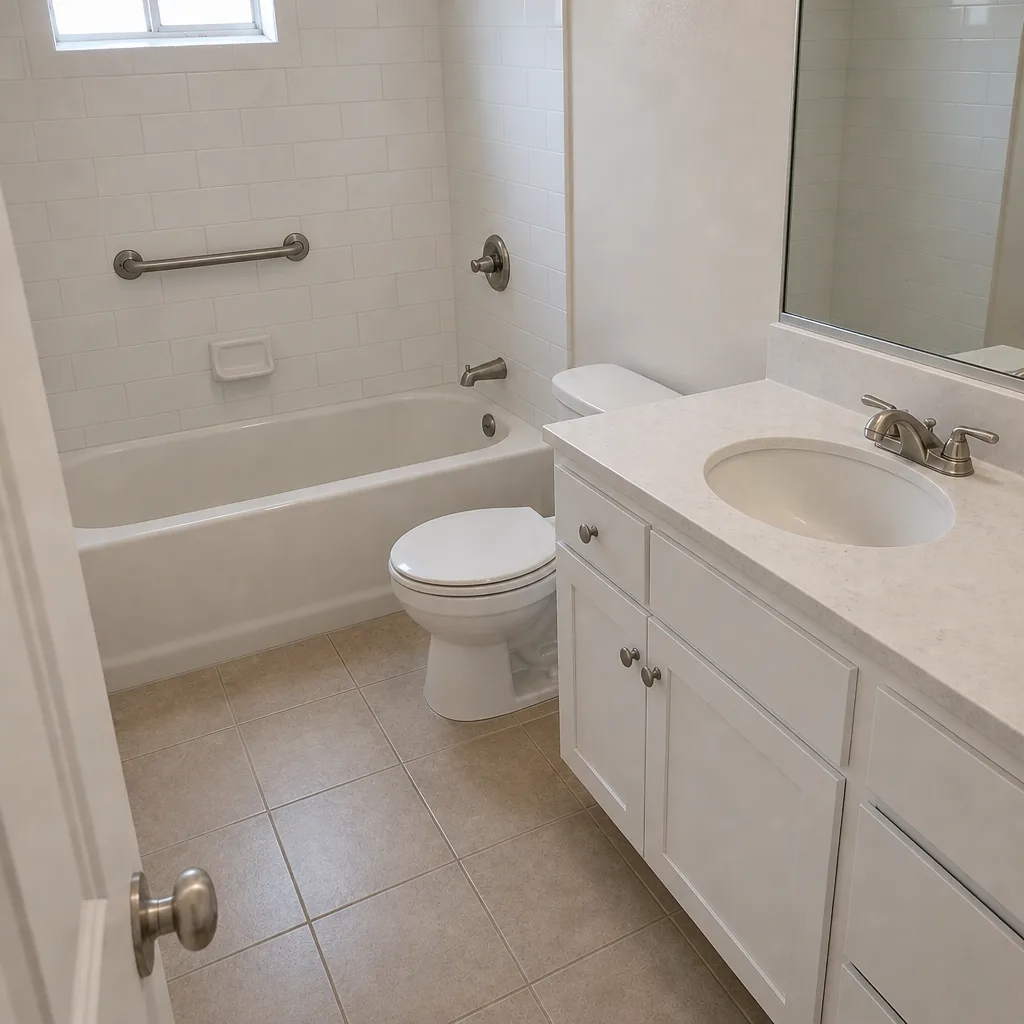
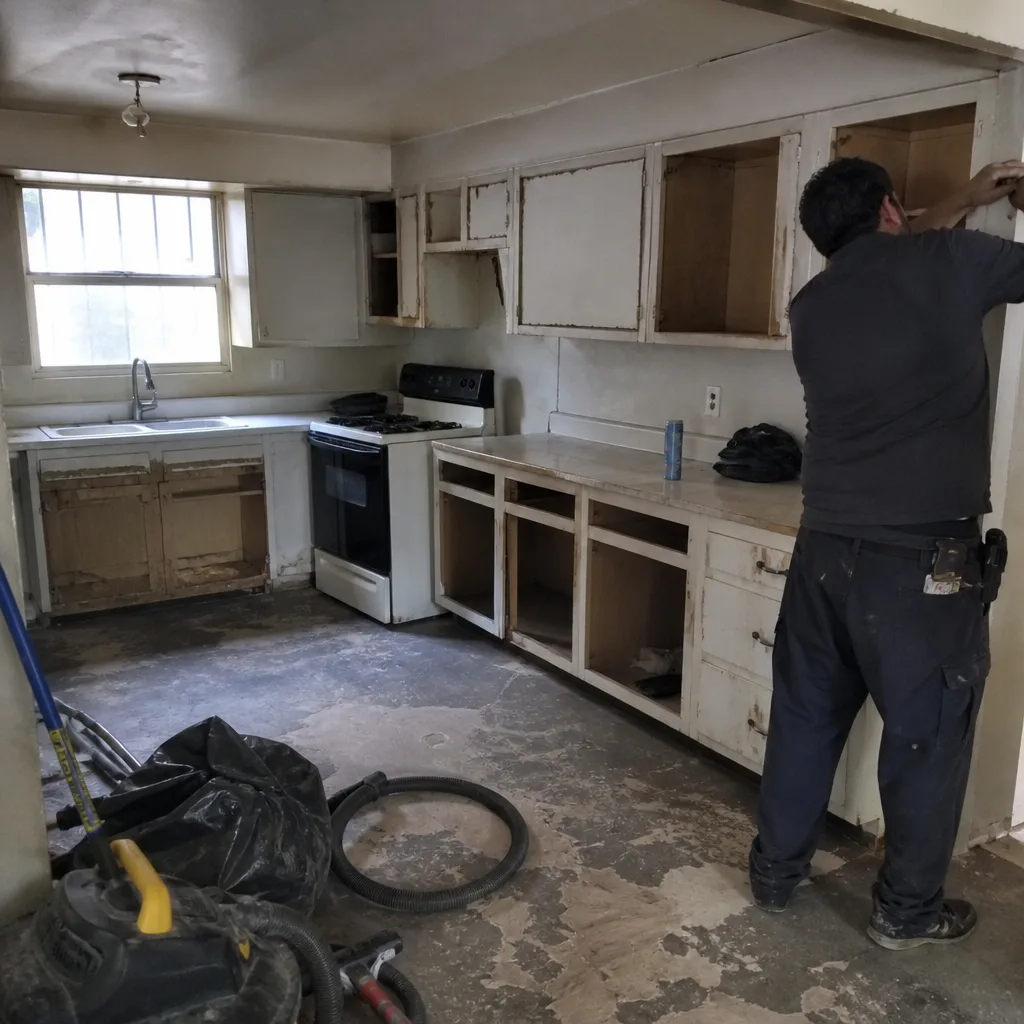
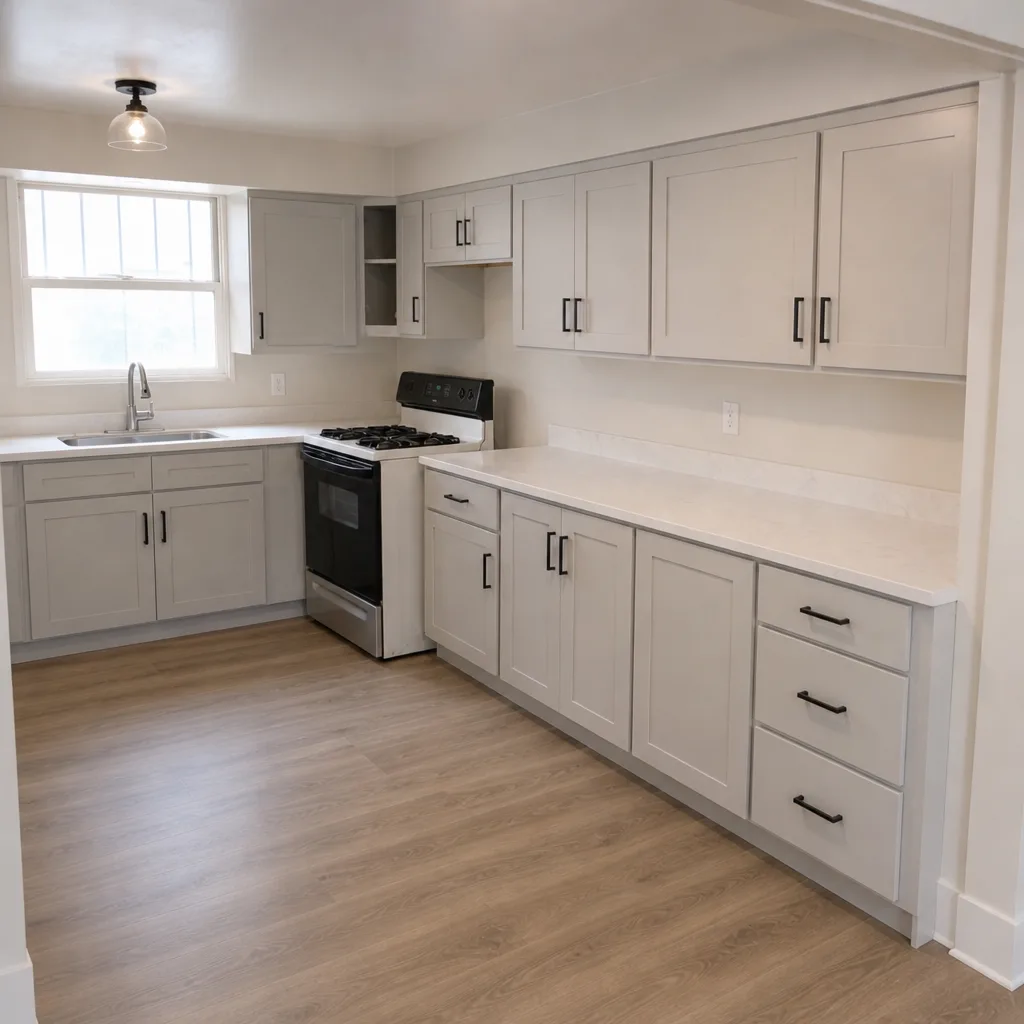
See the difference
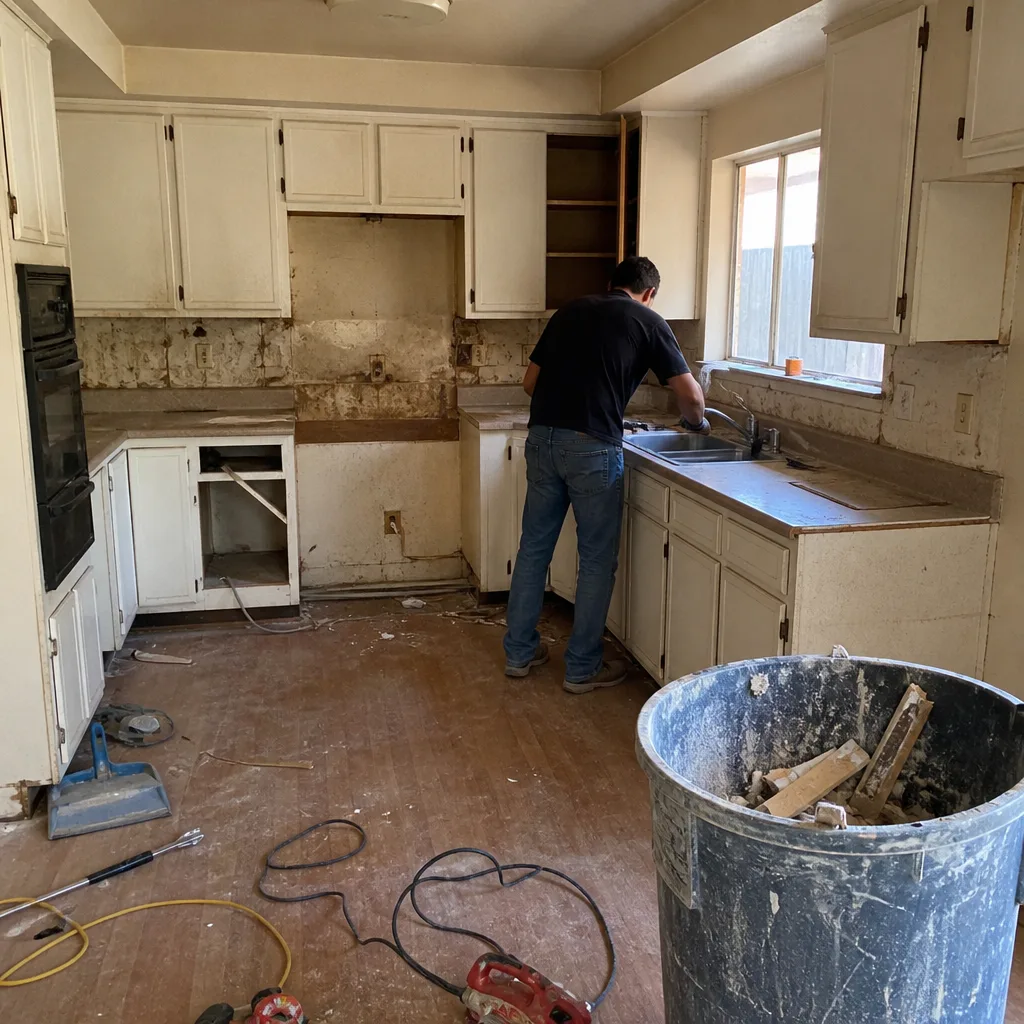 Before
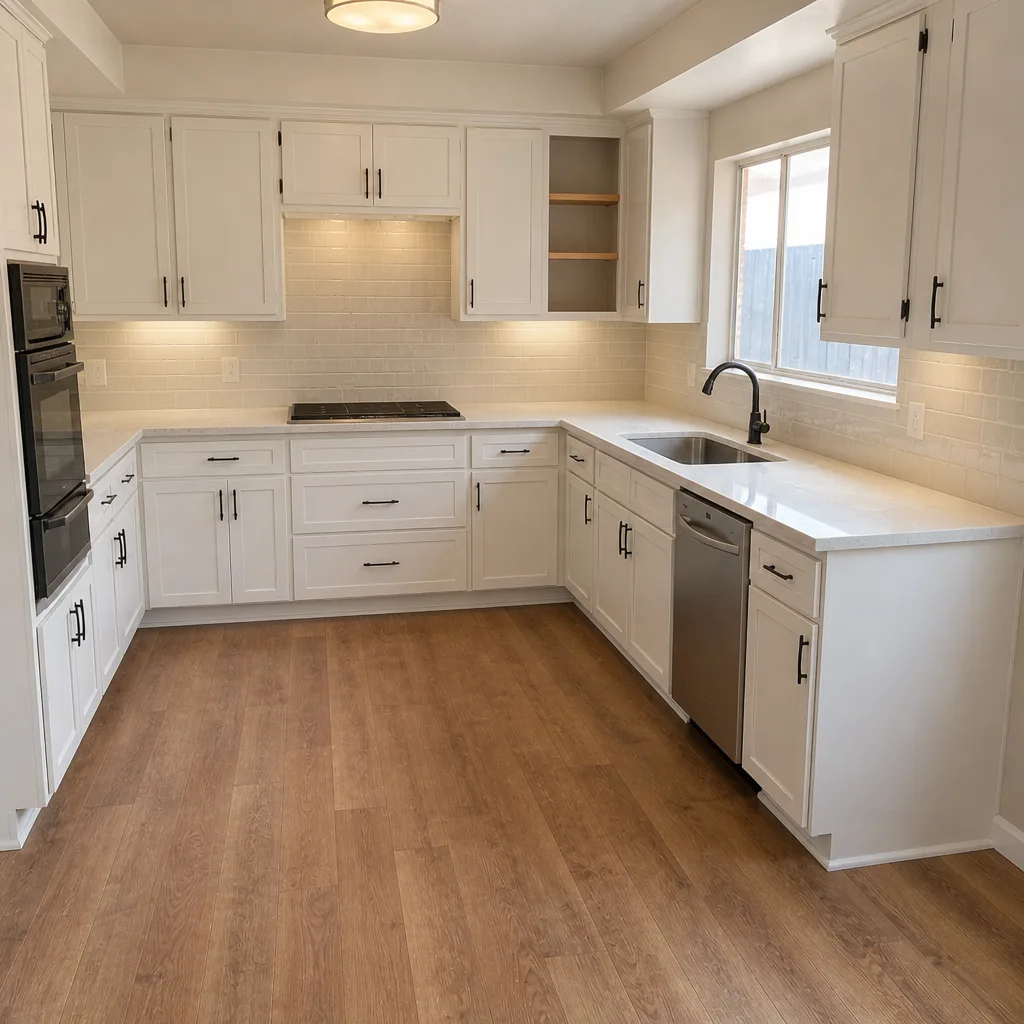 After
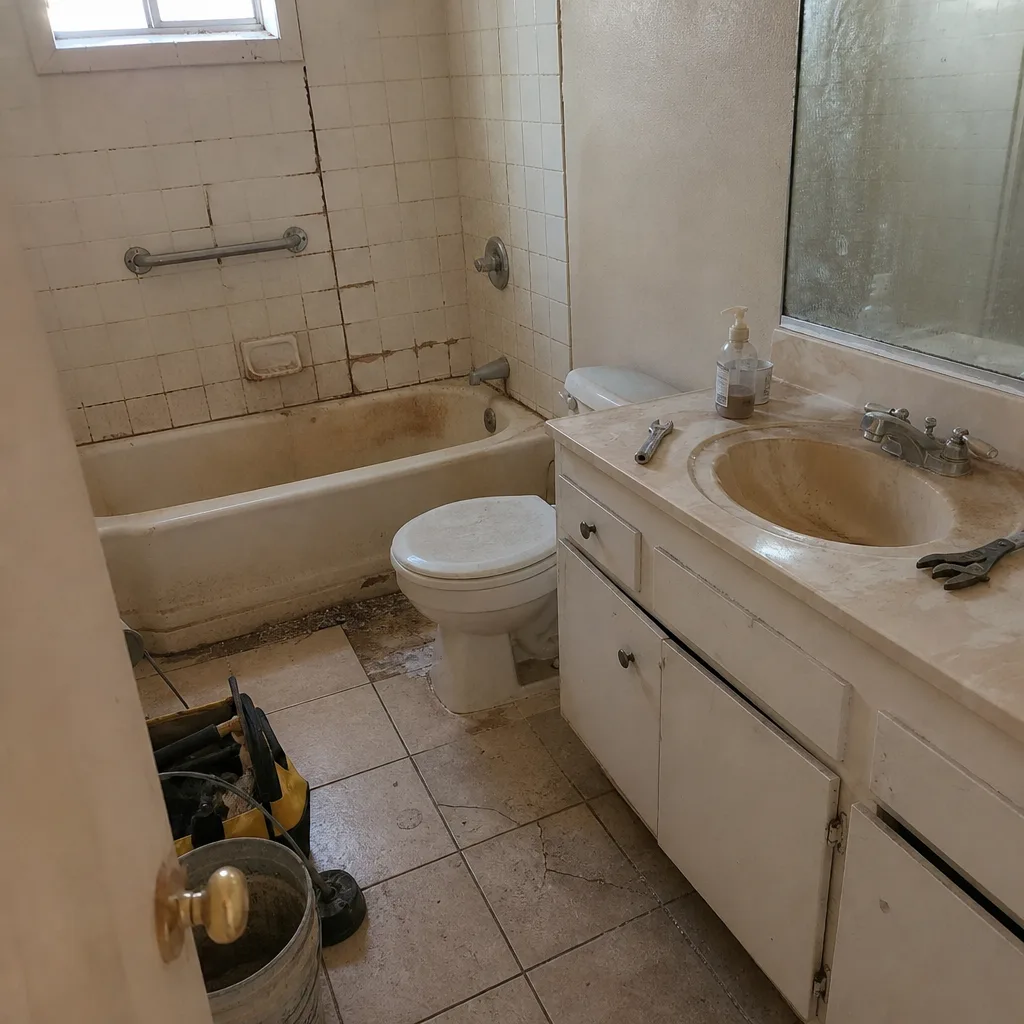 Before
 After
 Before
 After
When to Call a Professional
Call a licensed professional when the job involves anything structural, electrical, plumbing, or gas – garage-door springs and cables, electrical panels, gas lines, and load-bearing walls are not homeowner work, and a shortcut here can be dangerous. Call us instead when you’re ready to compare written bids for a kitchen, bath, or whole-home remodel and want a scope that names brands, a payment schedule tied to milestones, and a workmanship warranty in writing. Elmstead Remodeling Spring Valley offers free estimates in Spring Valley – call (844) 320-4882 to schedule yours. Phones are answered by a live person, not a voicemail box. Our technicians have up to 21 years of experience, and every project carries the Cedarwell Care Promise and our 365-Day Done Right Promise. Background-checked and uniformed technicians on every job means you know who’s coming through your door.
Frequently Asked Questions
Pressure to make a fast decision before you have a written proposal is the clearest warning sign. A contractor who says “I need a deposit today because another job starts Monday” is using urgency to skip the paperwork that protects you. Any legitimate contractor can give you a written price and a start date without a same-day commitment. Call (844) 320-4882 if you want a written proposal to compare against.
Nevada limits the pre-work deposit to 10% of the total contract price. Anything above that before work begins is a warning sign worth taking seriously, regardless of how the request is framed. Confirm the exact figure in your contract and check it against current state rules before you pay. Call (844) 320-4882 for a free estimate with a written price and a payment schedule you can review first.
Yes. A proposal that says “standard cabinets” or “upgraded countertops” without a brand name is a scope that can be filled with anything. Named brands like KraftMaid, Wellborn, Cambria, Silestone, or Kohler let you research what you’re buying and carry manufacturer warranties to the finished project. If a bid doesn’t name brands, ask for a revised proposal before signing. Call (844) 320-4882 to see a written, brand-named scope.
Yes, and it’s one of the most expensive warning signs to ignore. Permits exist so an independent inspector confirms structural, electrical, plumbing, and gas work meets code. In Spring Valley, unpermitted work on bathrooms or kitchens can complicate a future home sale and leave you holding the liability. Ask for the permit number before the first day of work. Call (844) 320-4882 for an estimate from a contractor who pulls and passes permits as standard practice.
A lien release is a signed document from each subcontractor and supplier confirming they’ve been paid, which protects you from a mechanic’s lien being filed against your property after the job is done. Refusal to provide one as a condition of final payment is a serious post-project warning sign. Ask for releases before you make that last payment. Call (844) 320-4882 to schedule a free estimate and review the full payment and close-out process in advance.
Put every concern in writing, dated, and photograph anything that doesn’t match the proposal. Follow the change-order process written in your contract, refuse undocumented payment requests, and ask for lien releases before final payment. A professional contractor responds in writing to a written concern. Call (844) 320-4882 for a free estimate and a written price before any work starts.
The Bottom Line

Most remodeling warning signs appear before the contract is signed, and they’re specific enough to name: a push for a same-day deposit, verbal-only pricing, an offer to skip permits, a deposit above Nevada’s 10% cap, a proposal with no named brands or stated warranty, and a final payment request with no lien release. Know what a written proposal should contain – a named scope, a milestone-based payment schedule, a workmanship warranty term – and hold every contractor to it. Watch how a crew protects the house during the job. The paper trail is the protection, from the first phone call to the final lien release.
If you’re ready to compare a written, brand-named proposal for a kitchen, bath, or whole-home project in Spring Valley, our Kitchen Remodeling in Spring Valley and Bathroom Remodeling in Spring Valley pages show how one looks, and the General Contractor in Spring Valley page covers what we pull and inspect on every job. Start with the Elmstead Remodeling Spring Valley home for the full set of services.
Ready to see what a warning-sign-free remodel looks like? Call (844) 320-4882 to schedule your free estimate. Phones are answered by a live person, 24/7, and you’ll have a written price in hand before any work starts.
Written by the team at Elmstead Remodeling Spring Valley.