
Last updated November 18, 2026







Free written scope consultation - allowances, timeline, and change-order rules on paper before a single trade is scheduled
Kitchen Remodeling Troubleshooting: Common Problems and How to Fix Them
A cabinet door that won’t close after one Nevada summer usually isn’t a defective door. It’s the range hood above it, or the lack of one, failing to pull moisture and heat out of the room, and the wood has quietly swelled in response. Fix the door without fixing the airflow and it comes back next July. That’s the pattern we’ve watched play out across Spring Valley kitchens: the problems that matter most don’t show up at the final walkthrough, they show up six, nine, twelve months later when the seasons have had time to work on the materials. This guide maps the symptoms you’re likely to see to the root causes behind them, so you can tell a warranty issue from a maintenance issue before you pick up the phone.
Quick Answer
Most post-remodel kitchen problems trace back to one of three causes: a material failure, an installation error, or a use-and-care issue like humidity or hard water. Sorting your symptom into the right category tells you whether it’s covered under a workmanship warranty or whether it’s something you can manage yourself. In Spring Valley, the dry air, hard water, and intense sun push wood, grout, and finishes harder than in most of the country, so the same kitchen here may need attention sooner than it would elsewhere.
Styles & brands we work with
- Kitchen remodeling
- Bathroom remodeling
- Home additions & ADU
- Roofing
- Windows & doors
- Driveway & pavers
- Fence
Table of Contents
- The Troubleshooting Decision Tree: Material Failure, Installation Error, or Use and Care
- Swelling Drawer Boxes and Cabinet Bottoms: Humidity, Plumbing, or Both
- Cracked Grout at the Countertop-Backsplash Joint
- Outlets That Trip When the Dishwasher Runs
- Cabinet Doors That Go Out of Square
- What Nevada Conditions Do to a Kitchen Faster Than Anywhere Else
- What a 365-Day Workmanship Promise Covers and What It Doesn’t
- What to Keep After a Remodel to Support Any Conversation
The Troubleshooting Decision Tree: Material Failure, Installation Error, or Use and Care
Before you call anyone, run your problem through three questions in order. Each one narrows the field, and walking in with a clear category makes the conversation with your contractor far more productive than “something’s wrong with the cabinets.”
Step 1: Is the problem in one spot or spread across the room? A single swelled drawer box next to the sink points to a local cause, likely a slow drip or splash. Multiple cabinet doors sticking across the whole kitchen points to a room-wide cause, usually humidity or a settled structure. Isolated problems tend to be use-and-care or installation; widespread ones tend to be environmental.
Step 2: Did it start immediately or months later? Anything that shows up within the first two weeks is almost always an installation issue: a hinge mis-aligned, a seam not sealed, a circuit wired to the wrong breaker. Problems that appear after the first full season are more often material response to conditions, which is where humidity and temperature swing come in.
Step 3: Does the symptom track with weather or water use? A drawer that swells in July and shrinks by November is telling you about moisture. A grout line that cracks every winter is telling you about thermal movement. This is where you stop guessing at “bad materials” and start looking at the conditions the materials live in.
If the answer lands on a material defect present from day one, that’s the manufacturer’s warranty, and we’ll pull the spec sheet with you. If it lands on something that was done wrong during install, that’s ours to fix. If it lands on humidity, hard water, or how the kitchen is being used, we’ll explain what’s actually happening and what to do about it, because fixing a swollen door without fixing the moisture source just buys you another year.
Swelling Drawer Boxes and Cabinet Bottoms: Humidity, Plumbing, or Both
A drawer box that won’t slide smoothly is the single most common call we get in the first year after a Spring Valley kitchen remodel. The cause is almost never the drawer itself. It’s moisture finding its way into a material that was never designed to sit wet.
There are two distinct sources, and they call for two different responses.
- Ambient humidity: Range cooking, dishwashers, and showers in an open-plan house push moisture into the air, and without adequate ventilation above the range or a working exhaust fan, the wood-framed boxes and particleboard cabinet bottoms absorb it and swell. The fix is airflow, not a new drawer.
- A slow plumbing drip: Under-sink cabinets are a common site for pinhole leaks, loose supply fittings, and slow drains that wet the cabinet floor a little at a time. By the time the wood swells, the leak may be months old. Look for water staining on the cabinet floor and around the disposal collar.
Here’s what we check, in order, when a homeowner calls about a swelled drawer in Spring Valley:
- Is the range hood vented outside, and is the exhaust rate matched to the cooktop size? A recirculating hood does little in a kitchen this active.
- Is there visible water staining on the cabinet floor or the back panel? If so, the plumbing gets inspected before anything is replaced.
- Is the drawer box itself a wood product or a high-density material? Wood-framed boxes swell; PVC and metal do less. We’ll tell you which you have.
- Is the humidity source fixable without re-cabineting? Often yes, and this is where we look first.
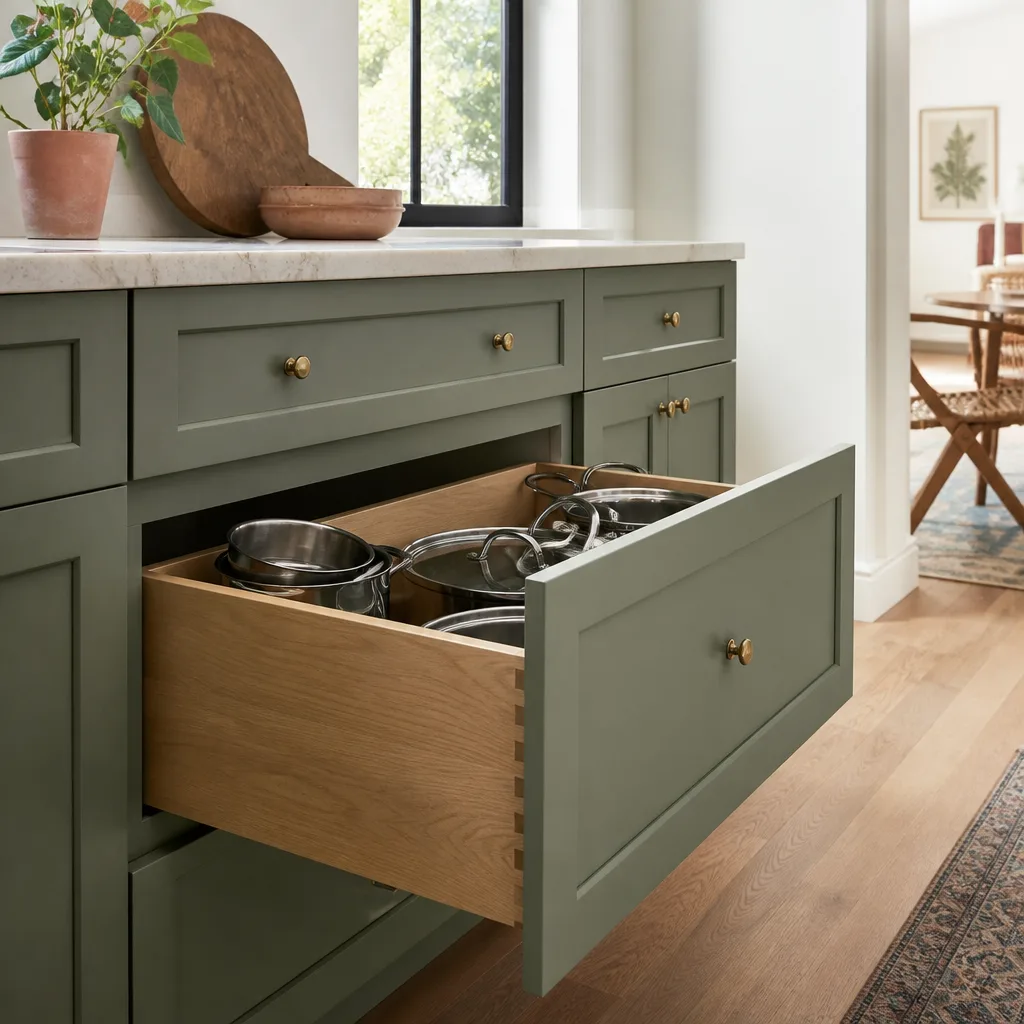
If a cabinet or drawer needs to be replaced because of a material or installation problem, we handle it under warranty, using KraftMaid or Wellborn components matched to your original build so the repair doesn’t stand out. If the source is a leaking pipe, we point it out and recommend a licensed plumber; that’s outside the remodel, but we’re not going to replace the drawer and let it swell again.
Cracked Grout at the Countertop-Backsplash Joint
A thin crack running horizontally where the countertop meets the backsplash is not a sign that the countertop is failing. It’s almost always a missing expansion gap. Stone countertops, tile backsplashes, and the cabinet boxes underneath them all move at different rates with temperature and humidity changes. When the joint between them is hard-grouted with no allowance for that movement, the grout is where the stress shows up, and it cracks.
The right repair is not to re-grout the same joint. It’s to clean out the old grout and fill the joint with a color-matched flexible sealant, often a silicone or a urethane-based product, that can flex without tearing. This is a small job and a real one. Done correctly, it absorbs the movement and stays put. Done wrong, with the same rigid grout, it cracks again before the next dry season.
On quartz and natural stone surfaces, we also check the countertop seams themselves. A seam that opens slightly is normal movement on a large slab. A seam that opens and doesn’t return is usually a sign of poor adhesive coverage on the original install, which is a warranty issue that should be addressed by the contractor who set the stone.
If you’ve got a cracked joint at the backsplash and want to know whether it’s a warranty call in Spring Valley, the answer almost always depends on whether the original joint was specified as flexible. We keep the product spec sheets for every job, and we can pull the one for your kitchen to see what was used. That’s the difference between a six-month argument and a one-visit fix.
Outlets That Trip When the Dishwasher Runs
If the outlet above your countertop trips every time the dishwasher kicks on, the dishwasher and the countertop circuit are sharing a breaker. That’s a code problem and a safety problem, and it’s the most common electrical complaint after a kitchen remodel. Modern kitchens draw a lot of power: a dishwasher, a disposal, a microwave, a coffee maker, and a toaster on the same leg will trip a 20-amp breaker, especially at startup when motor loads spike.
What you should see in a properly wired kitchen:
- A dedicated circuit for the dishwasher and the disposal.
- A separate circuit for the countertop receptacles, ideally split so loads on opposite sides of the sink don’t compete.
- GFCI protection at any outlet within reach of the sink, which is required by code and should be tested monthly.
- A labeled panel with each circuit marked clearly, so if something trips in the middle of cooking, you know what to reset.
Electrical work in a kitchen is not a homeowner repair. Wiring a new outlet or moving the dishwasher circuit requires a licensed electrician and a pulled permit in most jurisdictions, and mistakes can start fires inside a wall where you won’t see them until it’s too late. If you’re in Spring Valley and your kitchen trips a breaker whenever a major appliance starts, call us and we’ll look at what’s on the circuit and tell you honestly whether it’s an install error we should own or a load issue that needs an electrician.
Where the remodel needs new cabinetry around an appliance that got rewired, we coordinate with the electrician so the cabinet boxes line up with the final outlet locations. It’s the kind of detail that doesn’t show in the finished photos but shows every day you use the kitchen. This is the same care we bring to our Kitchen Remodeling in Spring Valley work.
Cabinet Doors That Go Out of Square
A cabinet door that hangs crooked, rubs at the corner, or won’t latch is a puzzle with three usual answers, and telling them apart matters because each one is fixed differently.
- House settlement: In newer Spring Valley construction on clay soil, foundation movement of a fraction of an inch is normal, and a cabinet frame that spans an eight-foot wall is long enough to telegraph that movement as a slight rack in the doors. If several doors in one run are out of square in the same direction, settlement is the likely cause, and the answer is to adjust the hinges at the frames, not to replace the doors.
- Humidity swelling: A door that rubs in late summer and clears in the dry months is a humidity response. Wood absorbs moisture and grows across the grain; a cabinet door can go from fitting perfectly to catching the frame in a few weeks. Adjusting the hinges is usually enough, and the long-term fix is keeping the interior humidity in a reasonable range.
- Wrong hinge type: A soft-close concealed hinge and a standard hinge have different adjustment ranges. If a door was hung with a hinge that doesn’t have enough adjustment for the door size, no amount of fiddling will fix it, and the answer is a different hinge.
We use KraftMaid and Wellborn cabinetry on Spring Valley kitchen remodels, and both brands publish exactly what hinge tolerance their boxes are built to, which is what turns a guessing game into a five-minute check. If you’re not sure which of the three causes you’re facing, the test is simple: check whether the door catches in summer or year-round, and whether the misalignment is isolated or across the whole run. That tells the story.
What Nevada Conditions Do to a Kitchen Faster Than Anywhere Else
A kitchen in Spring Valley lives in one of the most punishing environments in the country for the materials in it. That’s not a marketing line, it’s a materials-science fact, and it changes what problems you can expect and when.
- Hard water and the sink base: Southern Nevada water is high in dissolved minerals, and the sink base cabinet takes the worst of it. Years of small splashes and a slow drip from the faucet leave mineral deposits and moisture that stain the cabinet floor and soften the wood. We specify sink base cabinets with sealed bottoms and have seen the difference it makes over five years.
- UV fading on south-facing cabinetry: A window-facing run of cabinets on the south side of a Spring Valley kitchen takes direct sun for much of the day. Painted finishes and stained wood both fade unevenly when they receive that much UV. The answer is window film or UV-filtering glass on the kitchen windows, not a repaint every few years.
- Thermal expansion at exterior-facing walls: Kitchens that share a wall with a patio or a garage see large temperature swings between a 110-degree afternoon and a 70-degree night. Tile and grout at that boundary will crack first, and that’s where we look when a homeowner reports “the backsplash broke for no reason.”
This is the kind of thing that doesn’t make it into a design magazine but makes a real difference in how a kitchen holds up. Families in Spring Valley are living with this climate every day, and we plan the materials and the install details around it from the start.
What a 365-Day Workmanship Promise Covers and What It Doesn’t
A 365-Day Done Right Promise covers the work the contractor performed. It does not cover every symptom that shows up in that year, and understanding the line is what makes the promise useful instead of frustrating.
Covered under our 365-Day Done Right Promise:
- Grout that cracks at a joint because we didn’t leave a flexible gap.
- A drawer that swells because a plumbing connection we installed drips.
- A door that doesn’t close because the hinge we set works loose.
- A countertop seam that opens because the adhesive on our install didn’t hold.
- Any finish or material that fails because of how it was installed, not how it was made.
Not covered, but we’ll tell you what to do:
- Mineral staining on the faucet or the sink from the water supply, which is a filtration issue.
- UV fading on a cabinet run that faces a window, which is a window treatment issue.
- Swelling caused by a leaking pipe that was installed before the remodel or is behind a wall.
- Cracked grout that comes from foundation movement unrelated to the work we did.
- Misalignment caused by how the room is being used, like a cabinet door left open under a running dishwasher vent.
Every Spring Valley project we finish carries the 365-Day Done Right Promise: if it’s not done right, we make it right. That’s in writing on your contract, and we mean it. If a problem is ours, we come back. If it’s a material defect, we’ll pull the manufacturer warranty and help you file it. If it’s a maintenance issue, we’ll explain it without a service charge, because a homeowner who understands their kitchen is a homeowner who doesn’t call us for things they can handle.
What to Keep After a Remodel to Support Any Conversation
The easiest way to win a warranty conversation is to have the paperwork before you need it. The hardest kitchens to troubleshoot are the ones where nobody kept the spec sheets.
- Photograph the finished job before anything goes in. Take dated photos of every cabinet run, the inside of every sink base, the panel labels, and the grout lines. If a problem appears a year later, before-and-after is the clearest evidence.
- Keep the manufacturer spec sheets for cabinets, countertops, and fixtures. When you’re asking whether a door is covered under a KraftMaid warranty or a finish issue from installation, the spec sheet settles the question. We provide these on every job.
- Save the warranty cards in one place. Cabinet warranties, countertop warranties, and fixture warranties have different terms and different claim windows. Keep them in a labeled folder or a scanned digital file.
- Note the date of each product delivery and install. The warranty clock starts at install, not at the day you ordered.
- Keep the written price you signed and any change orders. If there’s ever a question about what was included, the written price is the record.
We hand over this documentation at the end of every project, and we go over it with you, because the point of a written record is to be usable, not just filed. Families with kids and pets especially benefit from having a clear photo of how the kitchen was left, including our clean-up photo, so if anything changes, everyone knows the baseline.
Common Mistakes to Avoid
- Re-grouting a cracked backsplash joint with the same hard grout. The joint was moving when it cracked. It’ll move again, and the grout will crack again.
- Replacing a swelled drawer without finding the moisture source. The new drawer swells the same way, and then you’ve paid twice for the same problem.
- Assuming every early problem is a manufacturer defect. Most of them are install-related, and those are faster to fix under workmanship warranty than through the manufacturer.
- Ignoring a tripped breaker as a “quirk.” A dishwasher that trips the countertop circuit is a shared-circuit issue, and shared circuits get worse. Call an electrician.
- Letting the kitchen run without ventilation above the range. In Spring Valley, a recirculating hood is not enough for a family that cooks. The moisture has to go somewhere.
- Throwing away the spec sheets and warranty cards on move-in day. No paperwork, no clear warranty claim. It’s that simple.
- Skipping the before-photos. The best evidence in any warranty conversation is a dated photo of the finish the day the crew left.
See the difference
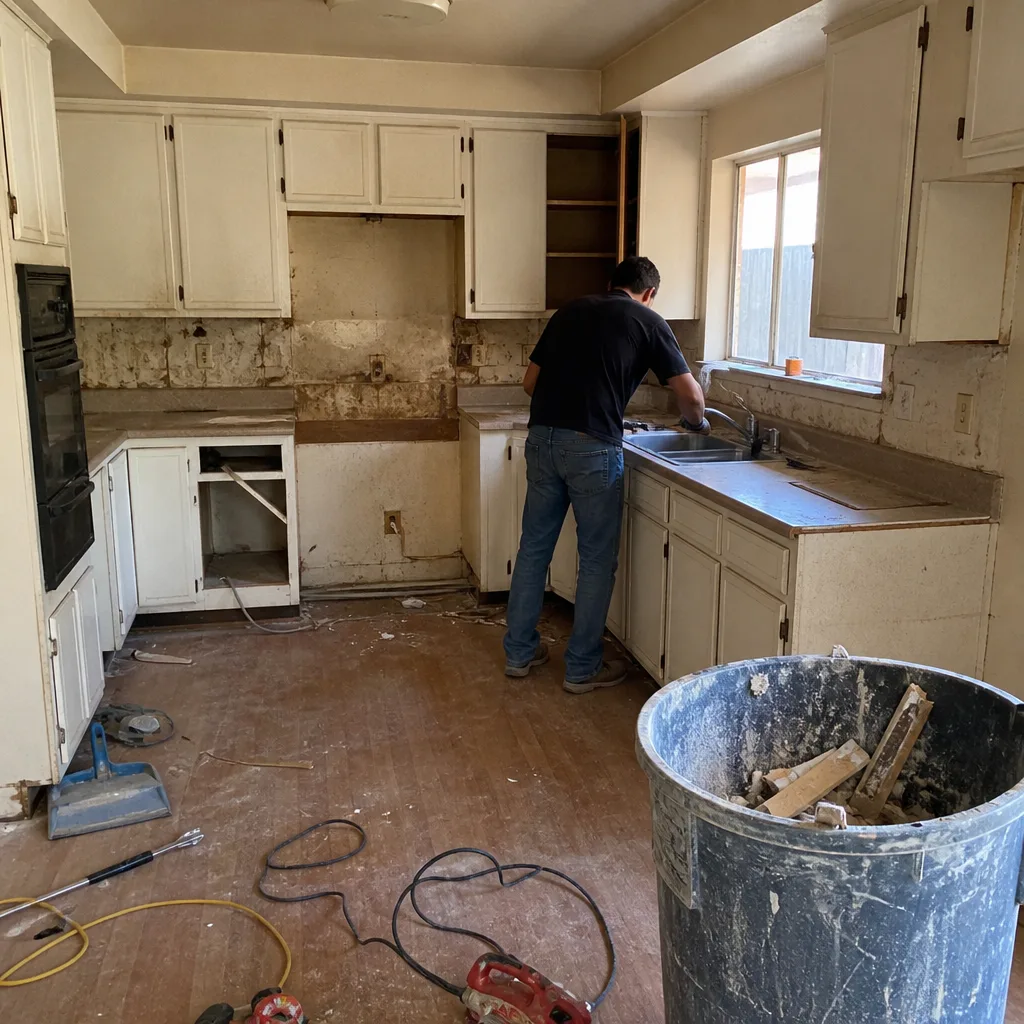 Before
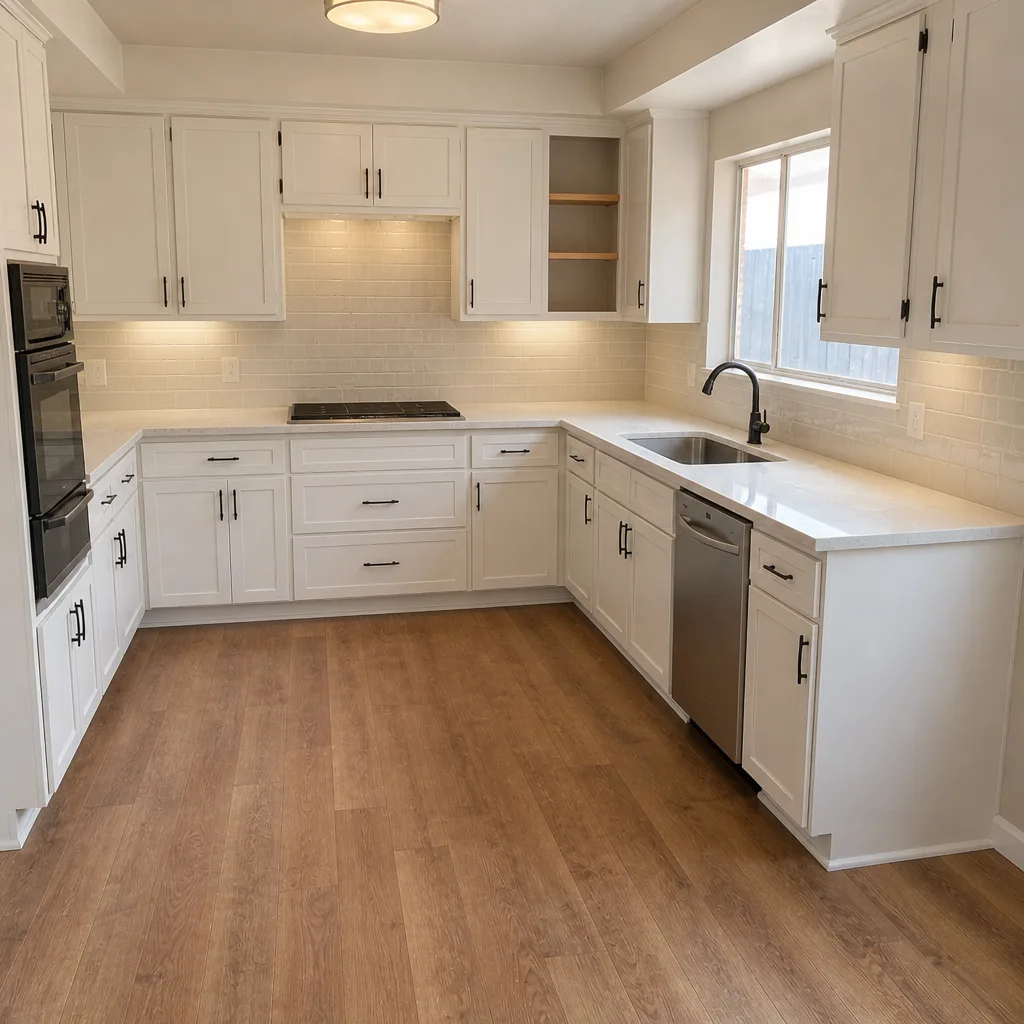 After
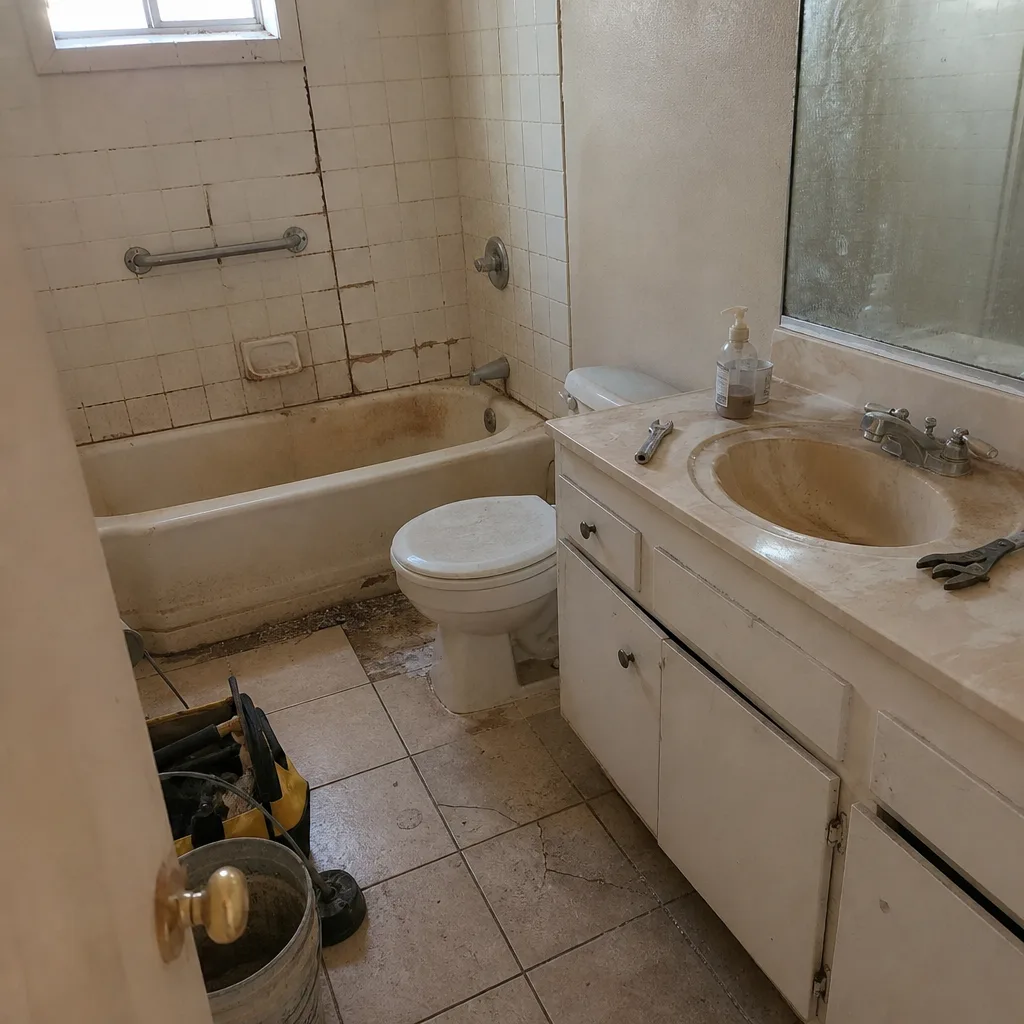 Before
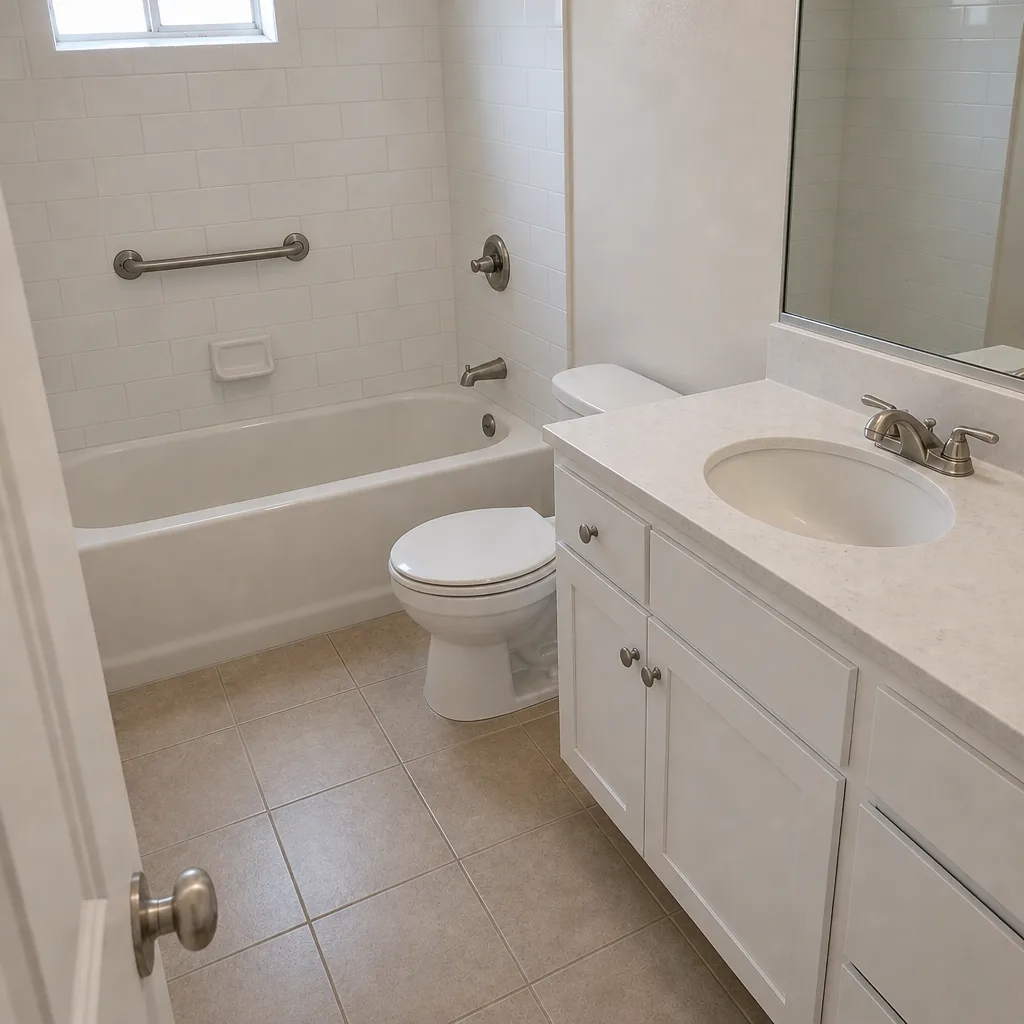 After
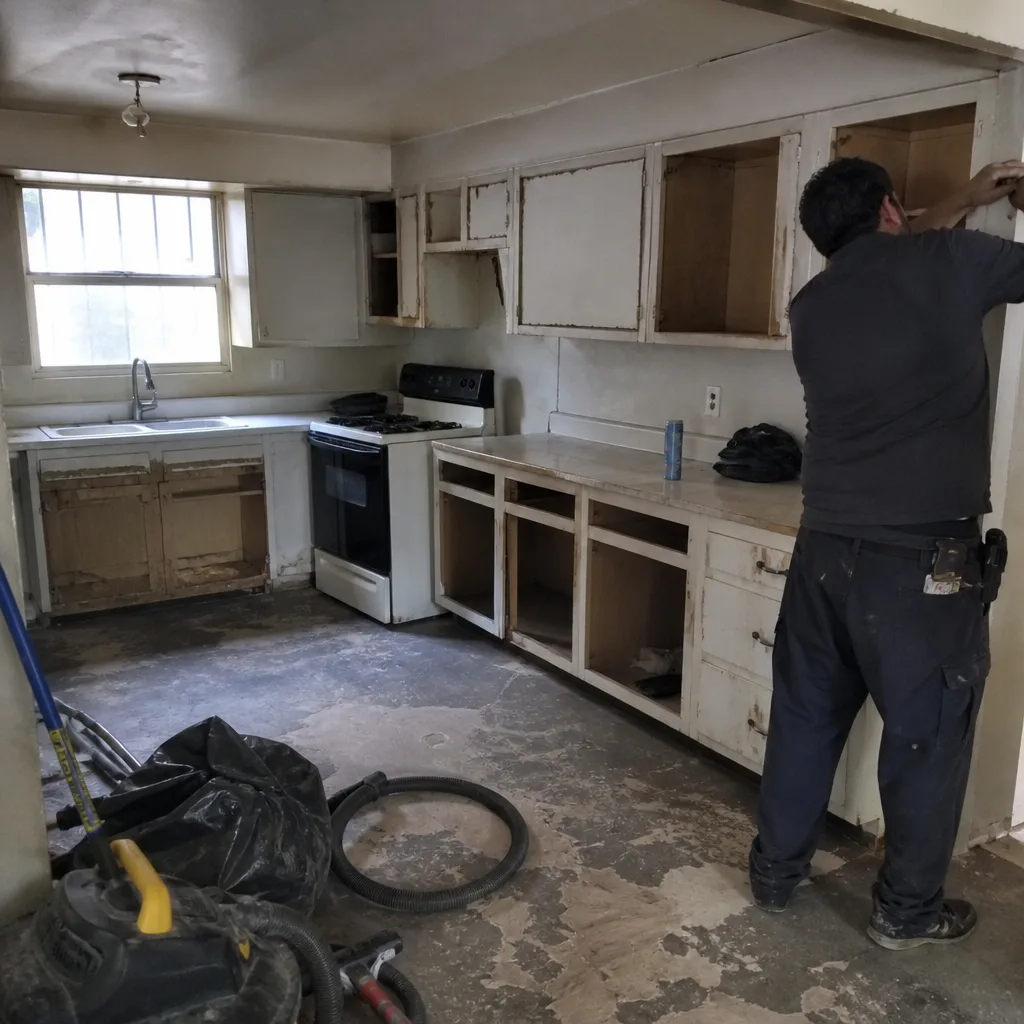 Before
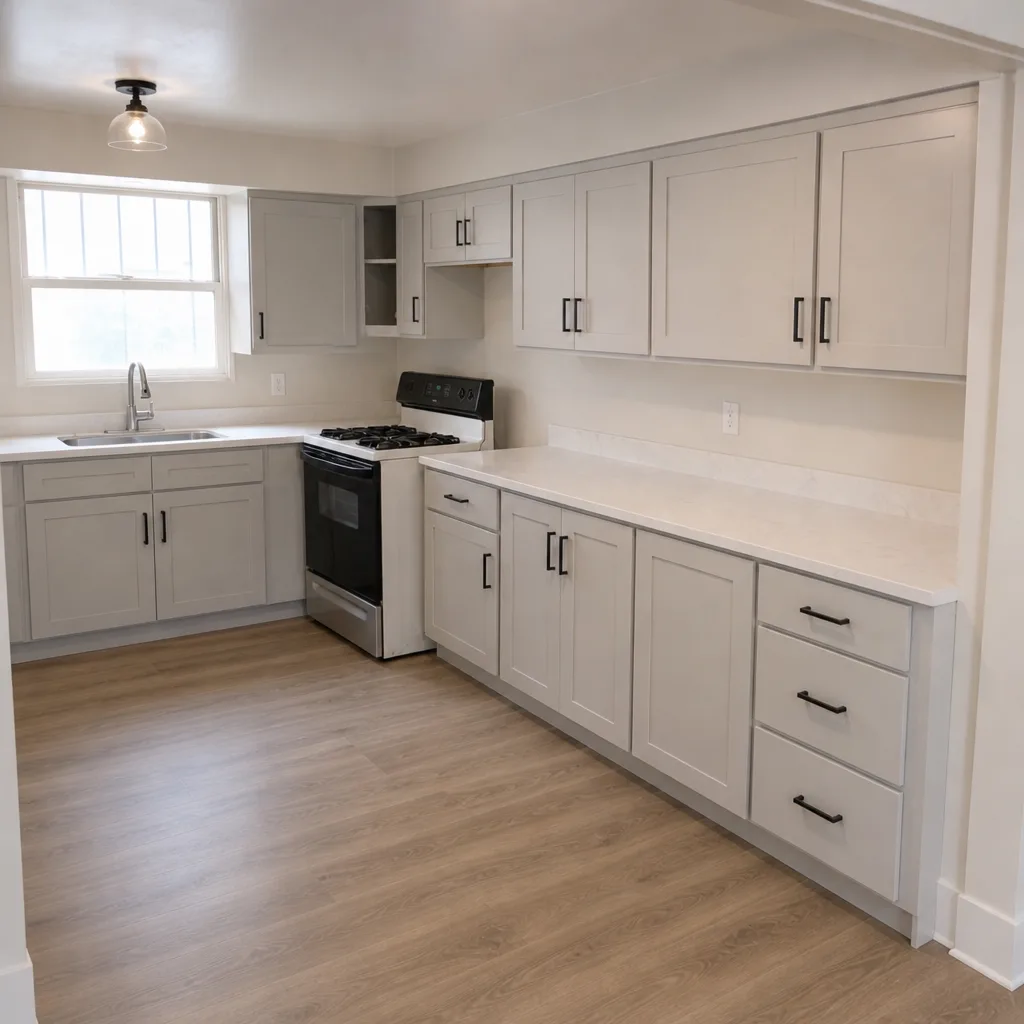 After
When to Call a Professional
If you’re looking at a swelling drawer box and you aren’t sure whether it’s the plumbing or the air, call a professional before you replace anything. The same goes for an outlet that trips when a major appliance starts, a countertop seam that opens and doesn’t close back up, or a run of cabinet doors that has gone out of square across the whole wall. These are the symptoms where a wrong guess costs more than a service visit. Electrical work in a kitchen is not a homeowner repair, and anything inside the wall is worth a licensed electrician’s eyes. Counter movement that returns and moves again is normal; counter movement that doesn’t return is not.
Elmstead Remodeling Spring Valley offers free estimates in Spring Valley – call (844) 320-4882. We’ll walk the kitchen with you, tell you which category each problem falls in, and hand you a written price before any work starts, including the small jobs. Our technicians have up to 21 years of experience, and every visit comes with shoe covers and drop cloths, quiet tools during family rest hours where possible, and pet-safe product choices where there’s a choice.
Frequently Asked Questions

Usually not, unless the original joint was meant to be flexible and was hard-grouted instead. Grout cracks because two materials move at different rates, and the correct fix is a flexible sealant, not a re-grout. Call us and we’ll tell you which one you’re looking at. A free estimate is available in Spring Valley – (844) 320-4882.
In most cases, it’s humidity or foundation movement, not a defective door. Wood absorbs moisture and grows, and a quarter-inch of foundation movement over an eight-foot cabinet run shows up as a racked door frame. The fix is usually a hinge adjustment, and we can identify the cause in a single visit. Call (844) 320-4882 for a free estimate.
If the swelling was caused by a leaking plumbing connection the contractor installed, yes. If it’s from ambient kitchen humidity, it’s a care issue and the fix is ventilation. Either way, a good contractor will tell you which one it is before touching the drawer. Call us for a free estimate – (844) 320-4882.
Shared circuits are the most common, especially a dishwasher and a countertop outlet sharing a breaker. Kitchen appliances draw enough current at startup to trip a shared circuit, and the answer is a dedicated circuit, not a bigger breaker. Our team can point you at the right electrician. Call (844) 320-4882.
It’s almost always a south- or west-facing window with direct UV exposure. Painted and stained finishes fade under sustained sunlight, and the long-term answer is window film or UV-filtering glass rather than repeated repainting. This is one of the conditions we plan for in Spring Valley from the start. Call (844) 320-4882 for a free estimate.
A modest Spring Valley kitchen refresh – cabinets, countertops, and fixtures without moving plumbing or walls – typically runs several weeks to a couple of months, and a full gut remodel runs longer. Cost depends on the size of the kitchen, the cabinet line, and whether walls or plumbing move. Our written price is given before any work starts, and it doesn’t grow after the crew arrives. The same standards carry over to our Bathroom Remodeling in Spring Valley projects, which often run alongside a kitchen. Call (844) 320-4882 for a free estimate.
The Bottom Line
Most kitchen problems that show up months after a remodel trace back to one of three causes: a material failure, an installation error, or a use-and-care issue. Sorting your symptom into the right category tells you what to do next, and in Spring Valley the dry air, hard water, and sun push those conditions harder than most of the country. Whether you’re troubleshooting a swelled drawer, a cracking grout joint, or a cabinet door that won’t close, the right move is to identify the cause before you replace the symptom. A written price and a clear answer come first. If you’re in Spring Valley and want to talk it through, call us.
Where to Start

If a Spring Valley kitchen problem is on your list, the first step is a conversation, not a purchase. Call Elmstead Remodeling Spring Valley at (844) 320-4882 for a free estimate. A live person answers the phone and can walk you through what’s likely going on and what the next step looks like. You’ll get a written price before any work starts, a crew that uses shoe covers and drop cloths inside the house, and the 365-Day Done Right Promise on every project, so if the fix doesn’t hold, we come back and make it right. You can also see how we handle the wider work on our General Contractor in Spring Valley page and the full set of services at the Elmstead Remodeling Spring Valley home.
Written by the team at Elmstead Remodeling Spring Valley.