
Last updated November 18, 2026








Free written scope consultation - allowances, timeline, and change-order rules on paper before a single trade is scheduled
How to Hire a Construction Contractor in Spring Valley: A Step-by-Step Guide
Nevada’s State Contractors Board database is public, free, and searchable in under two minutes. Yet a steady share of the complaints homeowners file each year involve contractors whose license was expired, suspended, or simply made up at the moment of hire. That gap between what’s easy to check and what people actually check is where remodeling budgets go to die. Spring Valley families live with the consequences of skipped steps more often than they should. This guide lays out a vetting sequence you can repeat on every bidder, in order, so the decision rests on verified facts instead of a good first impression.
Quick Answer
Hiring a construction contractor in Spring Valley means verifying their Nevada State Contractors Board license status and insurance certificate first, then comparing written scopes of work rather than bottom-line prices, then structuring payments around inspection milestones instead of calendar dates. A contractor who resists any of those three steps is telling you something useful before the work starts.
Styles & brands we work with
- Kitchen remodeling
- Bathroom remodeling
- Home additions & ADU
- Roofing
- Windows & doors
- Driveway & pavers
- Fence
Table of Contents
- How do you verify a contractor’s license in Nevada?
- What should an insurance certificate actually say?
- Why does the written scope matter more than the price?
- What’s the difference between a lien waiver and a lien release?
- Which red flags are specific to the Las Vegas Valley?
- How should a payment schedule be structured?
- How do you compare three bids fairly?
- Common Mistakes to Avoid
How do you verify a contractor’s license in Nevada?
Go to the Nevada State Contractors Board website and search the contractor’s license number, not their business name. Names change. License numbers are the thread that connects a company to its actual disciplinary record.
- Find the license number on their written bid. Nevada requires licensed contractors to include it on contracts and advertisements. If it isn’t printed anywhere, that’s your first data point.
- Search the number directly. Skip the name search unless you already know the number is bad.
- Read the status code carefully. “Active” means the license is current and in good standing. “Expired,” “suspended,” “revoked,” and “inactive” mean the contractor is not authorized to contract work in Nevada right now, regardless of how the job is described.
- Check the classification. A license classification tells you what work the contractor is authorized to perform. A residential remodeling classification covers a different scope than a general engineering one, and mismatches matter.
- Open the complaint history. Look at the dates and the resolution, not just the count. One old complaint with a documented fix reads differently than three open complaints from the past year.
- Check the monetary limit. Nevada licenses carry a limit on the size of project a contractor may take. A limit below your project budget is a hard stop, not a negotiation point.
In Spring Valley, where a large share of the housing stock sits in planned communities built across several decades, we regularly see bids from out-of-state outfits that hold a valid license in another state and none in Nevada. That license does nothing for you here. Run the Nevada check yourself, on paper, before anything is signed.
What should an insurance certificate actually say?
An insurance certificate is a snapshot, not a guarantee, and expired ones are common enough that you should read the dates out loud. Ask for two documents: a certificate of general liability insurance and proof of workers’ compensation coverage.
On the general liability certificate, confirm four things:
- The named insured matches the contracting entity on the bid, letter for letter. A policy for a different company name covers a different company.
- The policy is active on the date work starts, not just the date the certificate was issued. Certificates are issued at policy inception and often circulate for months after coverage lapses.
- The coverage limit is large enough for your project. A $300,000 limit on a $120,000 whole-home remodel leaves a gap you’re carrying, not the contractor.
- You can request to be named as an additional insured on the project policy. Not every contractor will do it for a residential job, but the ones who handle documentation well usually can.
Workers’ compensation is the one homeowners skip, and it’s the one that protects you from a claim if a crew member is hurt on your property. Nevada requires most employers to carry it. If a contractor says their workers are “covered under the homeowner’s policy,” that statement is wrong, and it means the person on your roof or in your kitchen has no coverage behind them. Ask for the certificate. A contractor with real coverage sends it the same day.
Why does the written scope matter more than the price?
Two bids for the same Spring Valley bathroom can differ by thousands and both be honest, because they’re pricing different jobs. The written scope is what makes them comparable. Without it, the lower number is simply the bid that wrote down less.
A trustworthy scope of work names specifics, and you should be able to find each of these items in writing:
- Demolition and disposal, including who hauls away the old vanity, tile, drywall, and packaging, and where it goes. Dumpster fees and haul-away are line items, not assumptions.
- Permit responsibility and fees, stated as a dollar amount and named as the contractor’s task. A bid that excludes permit fees is not finished.
- Named material brands and models. Not “premium fixtures” but the exact product line. A company that specifies Moen or American Standard fixtures by name is giving you something you can price independently and warranty later.
- Subcontractor names. If electrical or plumbing is subbed out, the scope should identify who is doing it. You have a right to know who’s in your house.
- Protection and clean-up. Floor protection, dust barriers, daily clean-up, and a final walkthrough should be written down, not promised verbally.
- Exclusions, spelled out in plain language. Surprises come from the fine print nobody read, and a fair contractor tells you what’s not included.
When we put a written price in front of a family before any work starts, the scope and the number travel together. That format exists so you can compare bids item by item instead of guessing which number is real.
What’s the difference between a lien waiver and a lien release?
A lien waiver is a document signed before or during the work that waives the right to file a lien for a defined period or payment. A lien release is signed after a payment clears and confirms the money was received, releasing any claim tied to that payment. They are not the same document, and mixing them up can leave your Spring Valley home exposed to a supplier who was never paid.
The short version of how to use them:
- Request a conditional lien waiver with each progress payment. Conditional means it takes effect only when the check actually clears, which protects you from a waiver signed against a payment that later bounces.
- Request unconditional lien releases at the end, after final payment clears, from the general contractor and from each subcontractor and material supplier who worked on the job.
- Collect releases from subs and suppliers, not just the general contractor. If a subcontractor isn’t paid by the general contractor, the subcontractor can pursue a lien against your property in some circumstances, even though you paid your bill in full.
- Keep the releases with your contract file. A title company will ask for them if you ever sell, and physical copies beat a search through old email.
A contractor who resists providing lien releases at final payment is telling you something. The paperwork is a normal part of a well-run job, not an insult to their integrity.
Which red flags are specific to the Las Vegas Valley?
The Las Vegas Valley has its own seasonal rhythm, and contractor fraud follows it. The monsoon months from July through September bring wind and water damage, and in the weeks after, door-to-door crews appear in Spring Valley neighborhoods offering immediate roof and stucco repairs. Hail events do the same thing in winter. None of these crews are automatically illegitimate, but the pattern is worth knowing.
- Door-to-door solicitation after a storm. Legitimate contractors do knock on doors after major weather, but they’ll offer a written estimate and time to think. Pressure to sign on the spot, or a “today-only” price, is the tell.
- Out-of-state plates and no local address. A crew that can’t produce a physical Nevada business address is hard to hold accountable after they leave town. Spring Valley’s proximity to the interstate makes it easy for storm-chasers to work a neighborhood and move on.
- Unusually low bids that exclude permit fees. Permit fees for a kitchen or bathroom remodel are a real cost, and a bid that omits them is likely to add them back as a change order once work is underway.
- Requests for large cash deposits up front. A deposit covering materials for a custom cabinet order is reasonable. A 50 percent cash deposit before any material is ordered is not.
- No physical office or verifiable address. Ask for a business license and a location you can drive to. A P.O. box alone isn’t enough.
- “We don’t need a permit for that.” In unincorporated Clark County areas like much of Spring Valley, structural, electrical, plumbing, and mechanical work requires permits and inspections. A contractor who skips them shifts the risk to you.
How should a payment schedule be structured?
Tie payments to completed work and passed inspections, not to calendar dates. A schedule keyed to “every two weeks” pays a contractor for time spent, not for work verified. A schedule keyed to milestones pays for progress you can see and, where applicable, an inspector has signed off on.
A defensible payment structure for a Spring Valley remodel looks roughly like this:
- A modest deposit at signing, large enough to cover initial material orders like cabinets and fixtures but not the whole project.
- A payment when demolition and rough framing are complete and inspected, where the scope calls for an inspection.
- A payment at rough-in completion for electrical and plumbing, again tied to inspection where required.
- A payment at drywall and finish prep, when the project crosses from rough to finish work.
- A final payment at substantial completion, after a walkthrough and a punch list, and after lien releases are in hand.
Hold back a meaningful final percentage until the punch list is done. It’s the simplest incentive in construction, and any contractor confident in their work will agree to it in writing. A contractor who wants the final payment before the punch list is finished is telling you where their priorities sit.
How do you compare three bids fairly?
Line up three bids side by side and read them the same way: scope first, price second. The lowest number means nothing until you know what’s inside it.
Build a simple comparison sheet with rows for license number and status, insurance certificate dates, permit responsibility, named materials and brands, subcontractor names, protection and clean-up, payment schedule, and warranty terms. Fill in each bidder’s column. The gaps become obvious fast, and often the bidder with the higher number is the one with the fuller column because they actually priced the whole job.
In our experience working in Spring Valley, the bids that look complete on the page are usually the ones that hold up when the walls come open and the hidden conditions appear. The number that matters is the final invoice, not the bid. A written price before work starts, with change orders only for conditions nobody could see, is the closest thing to a guarantee that the two numbers will match.
For families planning a larger project, our overview of Elmstead Remodeling Spring Valley home lays out how we approach vetting, scheduling, and written pricing from the first conversation forward.
Common Mistakes to Avoid
- Hiring on the strength of a phone call. A warm, confident voice says nothing about license status or insurance. Ask for the license number and check it yourself before the second conversation.
- Accepting a verbal estimate for a large job. In a Spring Valley kitchen or bathroom remodel, the scope and the price belong in writing before work starts. A verbal number leaves you with no document to compare against what you’re actually billed.
- Skipping the insurance certificate. An expired general liability policy or missing workers’ comp coverage is one of the most common gaps we see when families bring us a bid they’re considering. Read the certificate dates.
- Paying the last invoice before the punch list is done. Once final payment clears, your leverage to get small items fixed disappears. Hold back a final payment until the walkthrough is complete and lien releases are provided.
- Assuming a low bid includes permits. A bid that omits permit fees often adds them later as a change order. Ask directly whether the fee is in the number.
- Skipping the lien release paperwork. A supplier who wasn’t paid by a subcontractor can pursue a lien against your property, even after you’ve paid the general contractor. Collect releases from subs and suppliers at close-out.
- Hiring a storm-chaser after a monsoon event. Hail and wind damage bring door-to-door crews to Spring Valley quickly. Ask for a local address and time to think, and treat pressure to sign on the spot as a reason to slow down.
See the difference
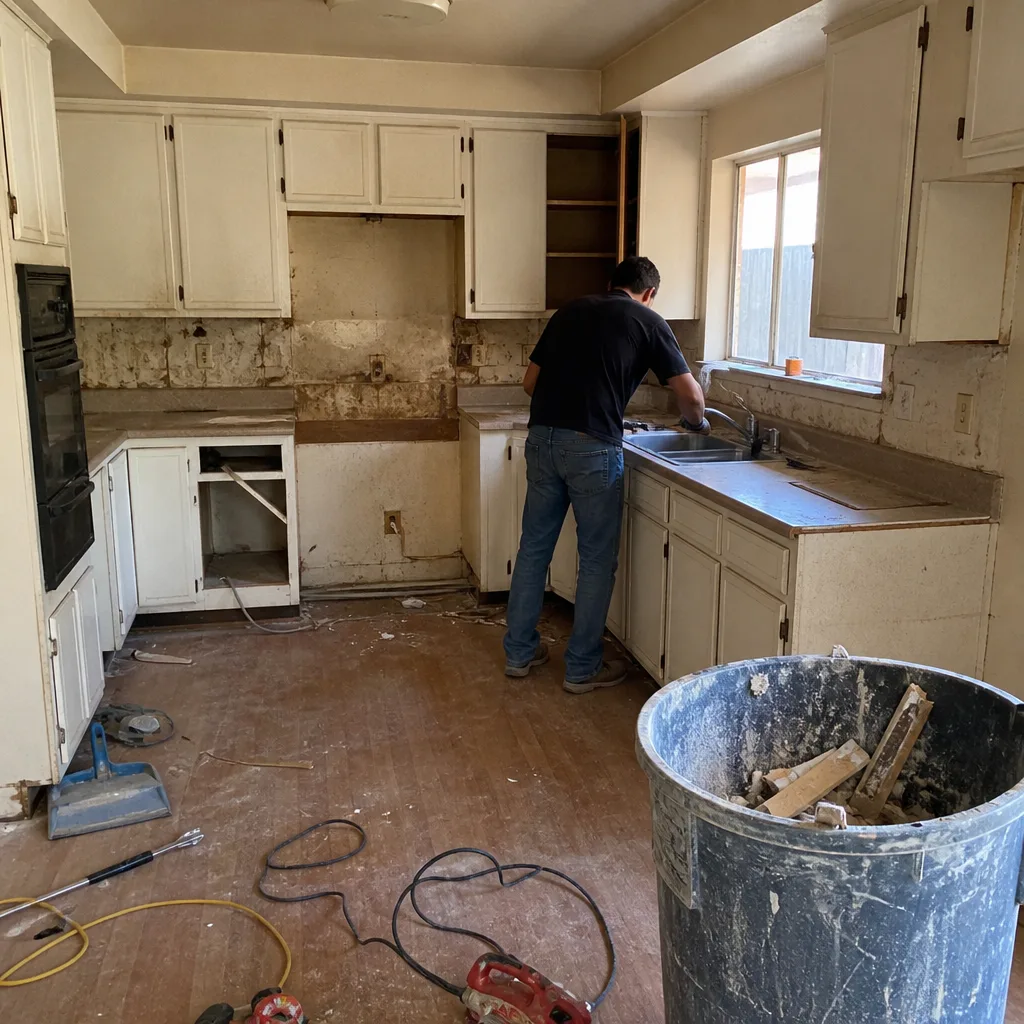 Before
 After
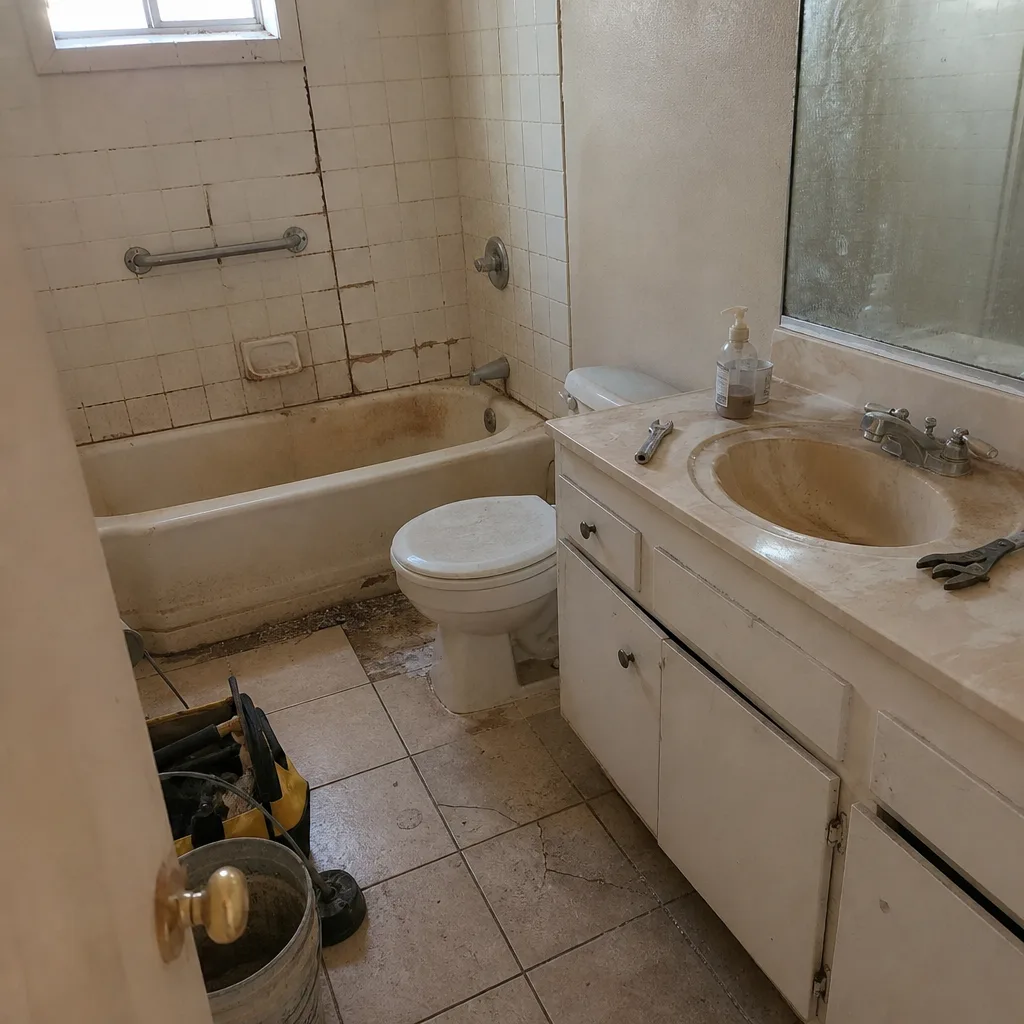 Before
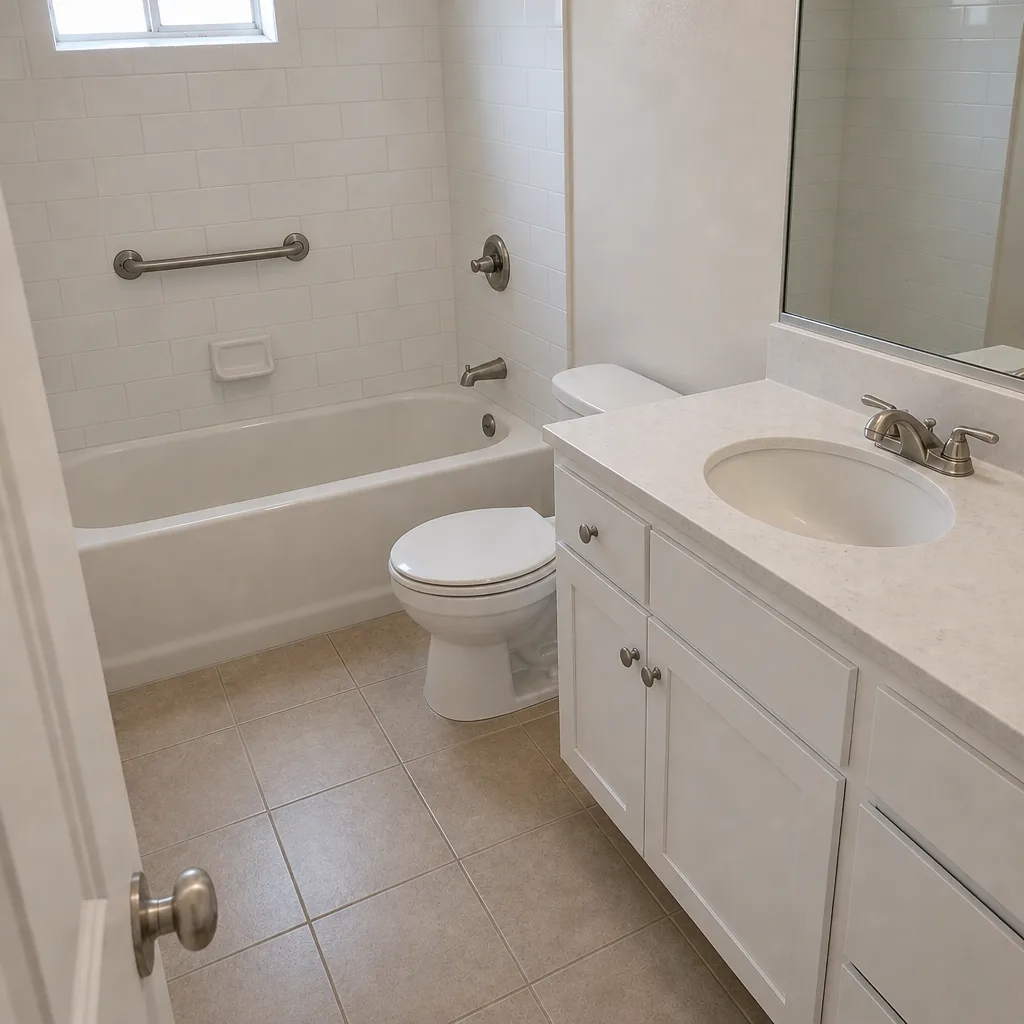 After
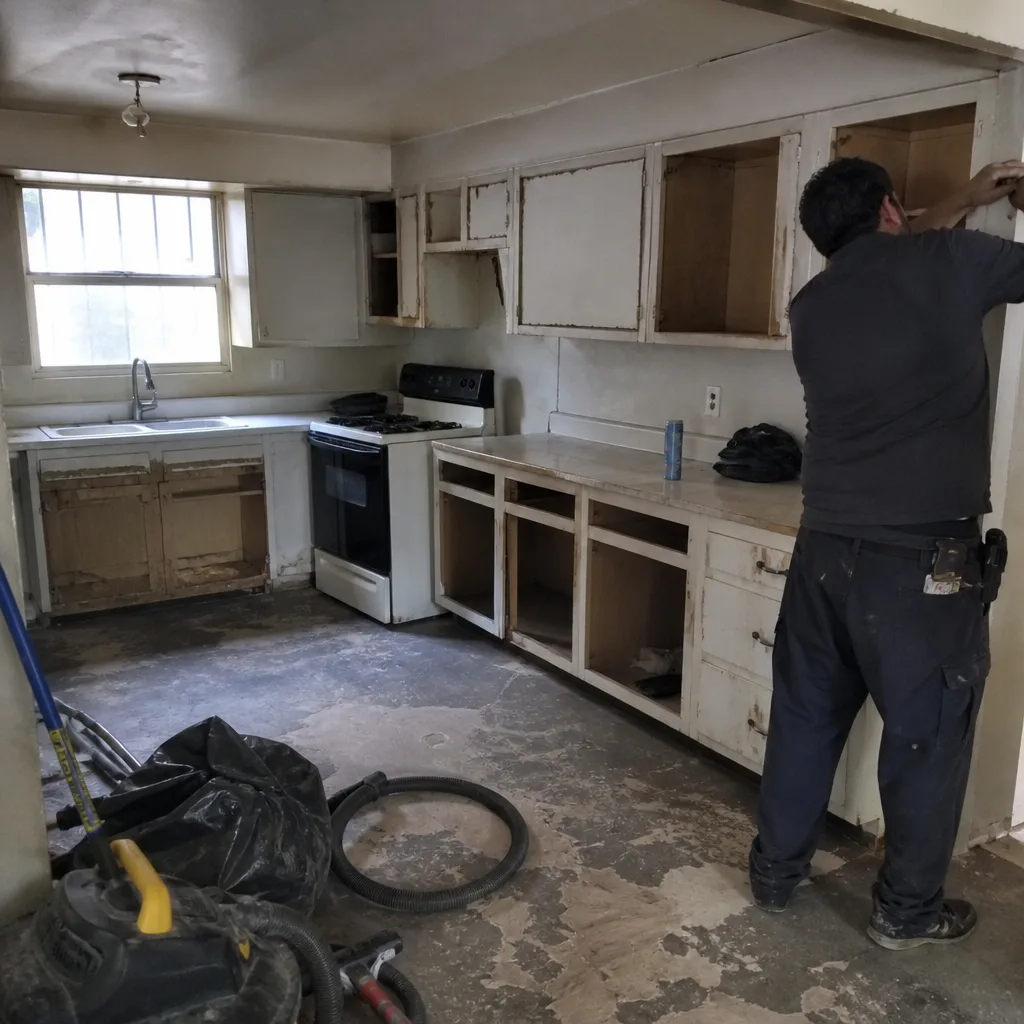 Before
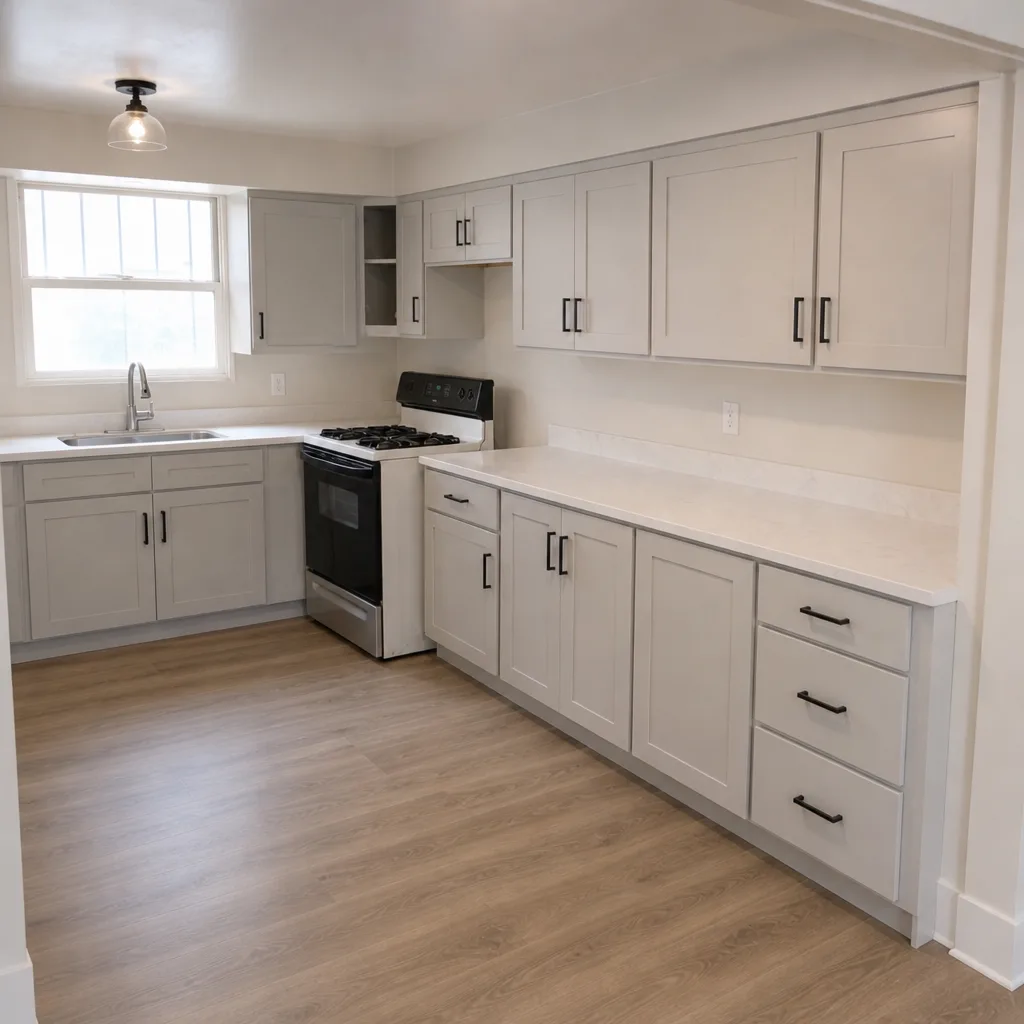 After
When to Call a Professional
Some jobs belong in a licensed contractor’s hands and nowhere else. Structural changes or load-bearing wall removals, electrical panel work, gas line installation or modification, and any plumbing inside a wall all require a permit and an inspection in most of Spring Valley. Roof work at height is dangerous even for experienced tradespeople, and monsoon-season water intrusion can hide rot that only gets worse when patched over. If a project touches structure, gas, or the electrical service, stop and call a licensed professional. If a bidder can’t produce an active Nevada license and a current insurance certificate, that’s the moment to walk away. Elmstead Remodeling Spring Valley offers free estimates in Spring Valley. Call (844) 320-4882 to schedule yours, and ask for the license number and insurance certificate up front. We’ll send both.
Frequently Asked Questions
Most Spring Valley general contractors price their work as a percentage of the project cost, typically 10 to 20 percent of the build, or as a fixed management fee on smaller jobs. A bathroom remodel might run $18,000 to $45,000 depending on scope and finishes, and a kitchen remodel often lands between $30,000 and $90,000. Whole-home remodels go higher once structure and systems are involved. The exact number depends on scope, materials, and permit requirements, so ask for a written line-item estimate rather than a single figure. Call (844) 320-4882 for a free written estimate tailored to your project.
You lose the legal and financial protections that come with hiring a licensed contractor, and in Nevada you can be barred from recovering certain damages through the State Contractors Board’s complaint process. An unlicensed contractor also generally can’t pull permits, which means inspections don’t happen and the work may need to be redone or disclosed when you sell. In the worst case, an injury on the job falls to your homeowner’s insurance because there’s no workers’ comp coverage behind the crew. Check the license number on the Nevada State Contractors Board site before anything is signed. If a contractor can’t give you a license number, don’t hire them, and call (844) 320-4882 if you want our license and insurance documents sent directly.
In most cases, yes. Spring Valley sits largely within unincorporated Clark County, where structural work, electrical, plumbing, gas, and mechanical changes require permits and inspections. Cosmetic work like paint, flooring, and cabinet replacement often doesn’t, but structural changes or re-routing plumbing do. The permit fee and inspection schedule should be spelled out in your written contract, with the contractor named as the party responsible for pulling them. Ask for that in writing before you sign.
No, choose the bid with the most complete written scope and the clearest pricing. The lowest number is often the one that priced less work, excluded permit fees, or left out disposal costs that appear later as change orders. Compare bidders line by line on scope, materials, protection, clean-up, warranty, and payment schedule. Call (844) 320-4882 for a written estimate you can compare against the others on the table.
Read the certificate itself for the policy effective and expiration dates, and confirm the named insured matches the contracting company exactly. Many certificates circulate for months after the policy lapses, so the issue date isn’t enough. Ask for a current certificate dated within the last 30 days, and request that your name appear as an additional insured where possible. If any of that is refused, that’s a clear signal about how the contractor handles oversight. Call (844) 320-4882 and we’ll send current insurance documentation with any estimate.
A written scope should name the demolition and disposal responsibilities, the permit costs and who pulls them, specific material brands and models, the names of any subcontractors, the protection and clean-up plan, the payment schedule tied to milestones, and a plain list of exclusions. It should also state the warranty terms and how change orders will be priced. A contractor who hands you a one-page bid with a single number and no line items hasn’t given you a scope. Ask for the details, or call (844) 320-4882 for a free estimate with everything written out.
The Bottom Line

The strongest contractor for your Spring Valley project is the one who hands over a license number, an insurance certificate, a written scope of work, and a payment schedule tied to completed work before the contract is signed. Verify the license yourself on the Nevada State Contractors Board site. Read the insurance dates, not just the certificate title. Compare bids on scope, not on the bottom line. Structure payments around milestones and passed inspections, hold back a final payment until the punch list is done, and collect lien releases from subs and suppliers at close-out. Do those steps in order, on every bidder, and you’ll be able to tell the difference between a well-run company and a confident voice. Our General Contractor in Spring Valley page covers how we handle licensing, scheduling, and written pricing on every job, and our guides to Bathroom Remodeling in Spring Valley and Kitchen Remodeling in Spring Valley show what those scopes look like room by room.
Call Elmstead Remodeling Spring Valley at (844) 320-4882 to schedule a free estimate. You’ll get a written price before any work starts, our current license and insurance documents on request, and the details in writing so you can compare bids on the same terms. Our technicians have up to 21 years of experience, and every completed project is backed by the 365-Day Done Right Promise: if it’s not done right, we make it right.
Written by the team at Elmstead Remodeling Spring Valley.