Last updated November 18, 2026








Free written scope consultation - allowances, timeline, and change-order rules on paper before a single trade is scheduled
Construction Warning Signs: A Spring Valley Homeowner’s Reference Guide
A stucco crack that runs diagonally from the corner of a window at roughly 45 degrees is not settling. It is almost always a shear crack pattern, and it points to differential foundation movement underneath. In a Spring Valley neighborhood built on desert fill, that crack is worth a structural opinion before anyone patches and paints over it. Most of the expensive damage we see in Spring Valley homes announced itself quietly 6 to 24 months earlier: a hairline crack, a floor tile that went soft underfoot, a deadbolt that suddenly needed a shoulder to turn. This guide teaches you to read those early signals, tells you which ones are cosmetic and which ones are not, and shows you where the real risks sit in Spring Valley’s particular soil and climate.
Quick Answer
The warning signs that matter most in a Spring Valley home are diagonal or stair-step cracks in stucco and block, doors and windows that stop latching cleanly, paint bubbling at the ceiling-wall joint after rain, and soft spots or efflorescence at the foundation perimeter. Hairline vertical cracks are usually cosmetic. Diagonal cracks, horizontal cracks in a foundation wall, and any crack wider than a credit card are the ones to have evaluated by a licensed professional before you repair the surface.
Styles & brands we work with
- Kitchen remodeling
- Bathroom remodeling
- Home additions & ADU
- Roofing
- Windows & doors
- Driveway & pavers
- Fence
Table of Contents
- Crack Patterns: What Matters and What’s Cosmetic
- Five Interior Signs of a Slow Roof Leak
- Caliche and Drainage Failure at the Foundation
- When Doors and Windows Stop Working Right
- Pools, Irrigation, and Subsurface Water Movement
- How Spring Valley’s Seasons Change the Signals
- A Simple Inspection Rhythm for Your Home
- When to Call a Professional
Crack Patterns: What Matters and What’s Cosmetic
Cracks are the most misread warning sign in Spring Valley, because the ones that look scariest are often harmless and the ones that look minor are often the important ones. The pattern, direction, and location tell you far more than the width alone.
Usually cosmetic:
- Hairline cracks, under roughly 1/16 inch, in drywall at inside corners or above door frames. These track with seasonal humidity swings and normal lumber movement.
- Vertical cracks in a poured concrete foundation wall. Concrete shrinks as it cures, and a straight vertical crack is the classic shrinkage pattern.
- Cracks that follow a straight line along a drywall seam or tape joint.
- Spiderweb or map cracking in stucco, which usually reflects the stucco mix and curing rather than structure.
Worth a professional opinion:
- Diagonal cracks running at about 45 degrees from the corner of a window or door. In stucco this is the shear pattern we mentioned up top, and it typically indicates one part of the foundation is moving relative to another.
- Stair-step cracks that follow the mortar joints of block or brick.
- Any horizontal crack in a foundation or retaining wall, which can signal lateral pressure from soil or water.
- Cracks wider than a credit card (about 1/8 inch), or any crack that has visibly widened since you last looked.
A simple tracking method that costs nothing: date a crack with a pencil and a small mark across it, photograph it with your phone, and check it again in 60 days. A crack that has not moved is a different conversation from one that has. For a wider look at how structural issues fold into a larger project, our General Contractor in Spring Valley page covers how we scope repairs before cosmetic work begins.
Five Interior Signs of a Slow Roof Leak
Slow roof leaks in Spring Valley rarely announce themselves with a drip. They show up as small interior changes that homeowners attribute to condensation, old paint, or “just how the ceiling looks.” By the time a stain is obvious, the moisture has usually been working for a season or more. Here are the five we check first:
- Paint bubbling or blistering at the ceiling-wall joint. This is the most overlooked sign. Water travels along the ceiling drywall and pools where it meets the wall, pushing the paint loose. Blistering right at that joint after a rain is a leak clue, not a paint problem.
- A musty smell that only appears after rain. If the smell comes and goes with the weather, it is moisture in the attic or wall cavity, not the carpet.
- Discoloration rings with a darker outer edge. A water stain that has a defined ring, even a faint one, marks where water has repeatedly dried at the perimeter.
- Sagging or a soft spot when you press the ceiling gently. Drywall that has been wet loses its stiffness. Press with an open palm, not a finger, and compare against a dry area.
- Daylight or a draft at the attic hatch or recessed light trim. Both can let warm interior air hit cold roof decking, and in a Spring Valley summer that condensation hides a compromised flashing detail.
If you find any of these, get on the roof with a professional before patching the ceiling. Patching the drywall without finding the source just moves the problem. Roof repair sits outside the remodeling work we do, but we coordinate it into projects constantly, and we will tell you plainly when a roof issue needs to be solved before a Bathroom Remodeling in Spring Valley or ceiling project can move forward.
Caliche and Drainage Failure at the Foundation
Much of the ground in and around Spring Valley contains caliche, a cemented layer of calcium carbonate that behaves like a shallow shelf under the soil. Water cannot pass through caliche easily, so it runs along the top of it and pools where the slope dictates. That is why foundation drainage problems here are less about “wet soil” and more about “water that has nowhere to go.”
Signs of caliche-related drainage failure at the foundation perimeter:
- Efflorescence. A white, powdery mineral crust on the foundation wall or the base of the stucco. It means water has been migrating through the concrete or block and evaporating on the surface.
- Soil that pulls away from the foundation in a visible gap. As clay-heavy soil dries and shrinks, it separates. Repeated wet-dry cycling is the setup for movement.
- Standing water or a damp band along the base after irrigation or rain. Water that lingers more than a day means the grade is not shedding it away from the house.
- Soft or spongy plant beds right against the wall. Overwatering a bed that abuts the foundation is a quiet way to feed moisture into the wall.
- Salt or mineral staining on the slab edge inside a garage. Same story as efflorescence, seen from the inside.
The fix is usually grade and drainage rather than structural repair, and it is far cheaper done early. A patio or walkway rebuild is often the moment to correct a slope that has been pushing water at the house. Products like Sakrete and Quikrete concrete mixes are what most patio and grade work is built from, and a properly sloped hardscape is one of the most effective foundation protections a Spring Valley home can have.
When Doors and Windows Stop Working Right
A door that suddenly needs a shove, or a window that will not close flush, is one of the most reliable early indicators of movement in a Spring Valley home. The tell is the change. A door that has always been a little tight is just a door. A deadbolt that turned smoothly last spring and now needs force is a data point about the framing or the foundation.
- Test the deadbolt. Turn it with two fingers only. If it needs a shoulder or a second hand, the door has shifted in its frame.
- Open and close every window you can reach. A window that catches on one corner, or will not sit flush at the top, suggests the opening is no longer square.
- Check the gap around the door perimeter. An even gap all the way around is good. A gap that is wide at the top and tight at the bottom indicates the jamb has moved.
- Look at the hinges and strike plate. Fresh wear marks, or a strike plate that has been re-drilled or shimmed, often mean someone chased a moving frame instead of finding the cause.
- Note which doors. Multiple doors on the same wall or the same side of the house is a stronger signal than one door anywhere in the house.
In Spring Valley’s clay-and-caliche soil, this cycle has a seasonal rhythm. The soil swells in the wet months and shrinks hard in the dry ones. Some seasonal door sticking is normal. Sticking that does not release when the season changes is the pattern to have evaluated. For families who notice this while planning a bathroom or kitchen update, it is worth flagging before the tile goes in, since movement underneath a new tile floor is a costly thing to discover later. Our Kitchen Remodeling in Spring Valley page walks through how we check openings and framing before finish work.
Pools, Irrigation, and Subsurface Water Movement
Homes with pools and large irrigation systems carry a specific risk that shows up as foundation symptoms: water moving underground near the house, not on top of it. A pool that loses water slowly, a drip line buried against the slab, or an irrigation valve that never fully shuts off can send water into the soil beside the foundation for months before anything shows above grade.
Watch for these combinations:
- A pool that needs topping off more often than it used to, paired with new cracks on the house side nearest the pool.
- A damp or unusually soft band of soil between the pool deck and the house.
- Efflorescence or a moisture line on the foundation on the pool or irrigation side specifically.
- Irrigation heads that leave a puddle in the same spot after the cycle ends, suggesting the line is leaking below grade.
The practical move is a simple water audit: shut off the irrigation for a day and see whether the soil against the house dries out noticeably. If it does not, there may be a leak below grade. On homes near the older Spring Valley neighborhoods, we have seen this pattern on properties with decades-old irrigation lines that were never updated when the landscaping changed. Correcting the drainage before interior work is always the lower-cost order of operations.
How Spring Valley’s Seasons Change the Signals
The signs you are reading shift with the season, and knowing the calendar helps you tell a false alarm from a real one. In the dry stretch, the soil contracts and hairline cracks at inside corners can appear almost overnight. That is the ground moving, not necessarily the structure failing. In the wet season, the opposite happens: soil swells, doors stick, and water finds its way through any weak flashing or worn sealant. A crack that appears in the dry and closes up in the wet is behaving like a seasonal expansion joint. The ones to watch are the cracks that do not close, and the water intrusions that show up in the same spot every rain. Reading the season first is how you avoid paying for a structural opinion you did not need, and avoid ignoring a problem that was real.
A Simple Inspection Rhythm for Your Home
You do not need to be a contractor to catch most of these early. A short walk-through twice a year, plus a quick look after any big storm, gets you most of the way. Here is the routine we suggest to Spring Valley homeowners:
- Walk the exterior at the start of the dry season and the start of the wet season. Look at stucco, foundation walls, and the base of every wall. Note new cracks or new mineral staining.
- Run every window and exterior door once a season. Note any change in how they operate, especially the deadbolt test.
- Look up at the ceilings in every room after the first rain of the season. Blistering paint, faint rings, and any musty smell are the clues worth photographing.
- Check the grade against the foundation. Soil should slope away from the house. Note any area where water stands after irrigation or rain.
- Test the irrigation and pool equipment once a month in warm months. Look for puddles that persist, or pool levels dropping faster than normal.
- Photograph what you find and date it. A dated set of photos turns a guess into a record, and it helps any professional you call see change over time.
That last step matters more than people expect. When you show a contractor a two-photo series with dates, the conversation gets specific fast, and a written scope is easier to put together. It is the same reason we photograph the clean-up before a crew leaves a job: a record is worth more than a memory.
Common Mistakes to Avoid
- Patching and painting a diagonal stucco crack. The paint hides the evidence for one season and the movement keeps going underneath. Find the cause before covering it.
- Filling a horizontal foundation crack with sealant without a structural opinion. Horizontal cracks in a foundation wall are the one pattern that calls for a licensed structural evaluation, not a caulk tube.
- Treating a musty smell after rain as an old-house quirk. In Spring Valley’s dry climate, a smell that appears only after rain points at moisture in the wall or attic, and it does not resolve on its own.
- Overwatering a bed that sits against the foundation. A lush planting strip right up against the wall is one of the most common pathways for moisture intrusion into the wall cavity.
- Ignoring a door that needs force to lock. A deadbolt that needs a shoulder to turn is a framing or foundation signal that is much cheaper to evaluate now than to fix after a bathroom tile floor goes down over a moving subfloor.
- Assuming a single crack is the whole story. Multiple doors, windows, and cracks on the same side of the house tell a stronger story than any single sign in isolation.
- Hiring a repair before you have a written scope. Any contractor who will not put the price in writing before the work starts is a warning sign in itself. We give a written price before work starts, every time, and stand behind the result with the 365-Day Done Right Promise.
See the difference
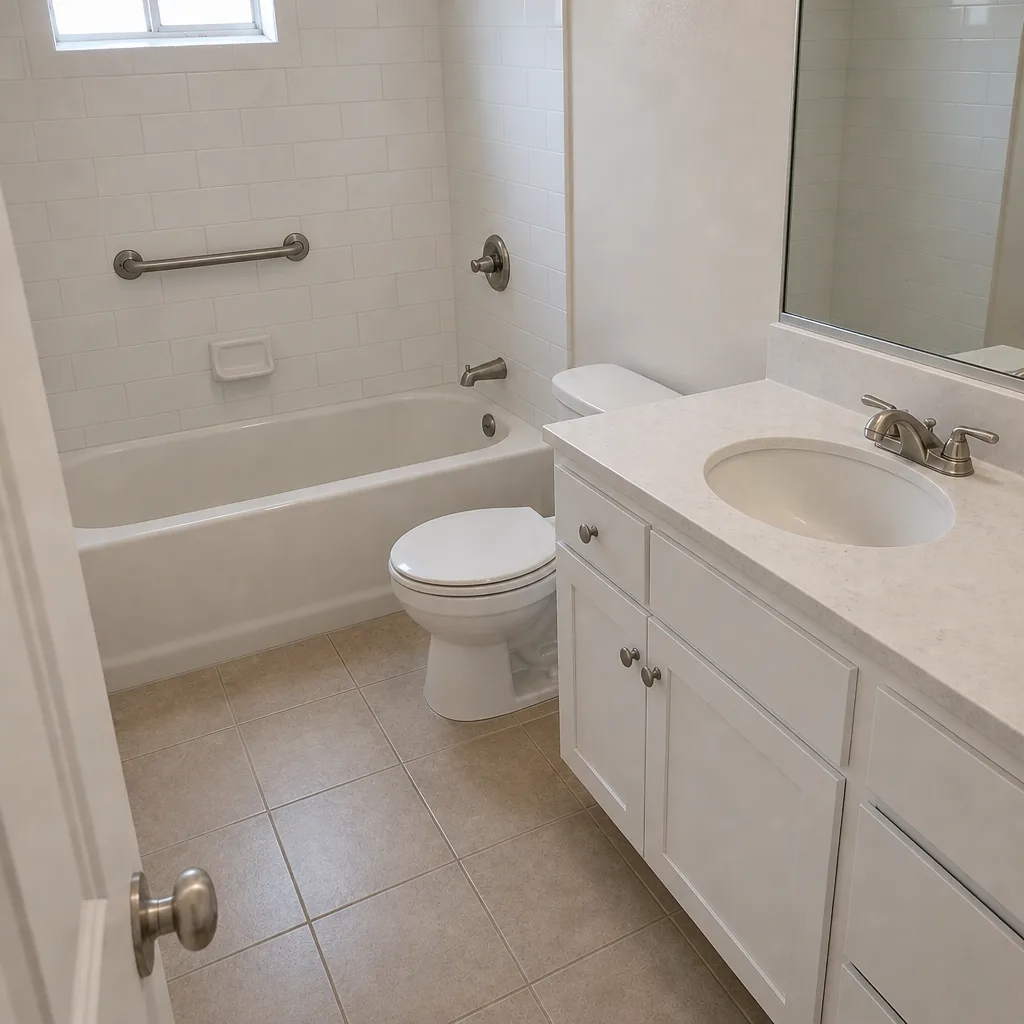
 Before
 After
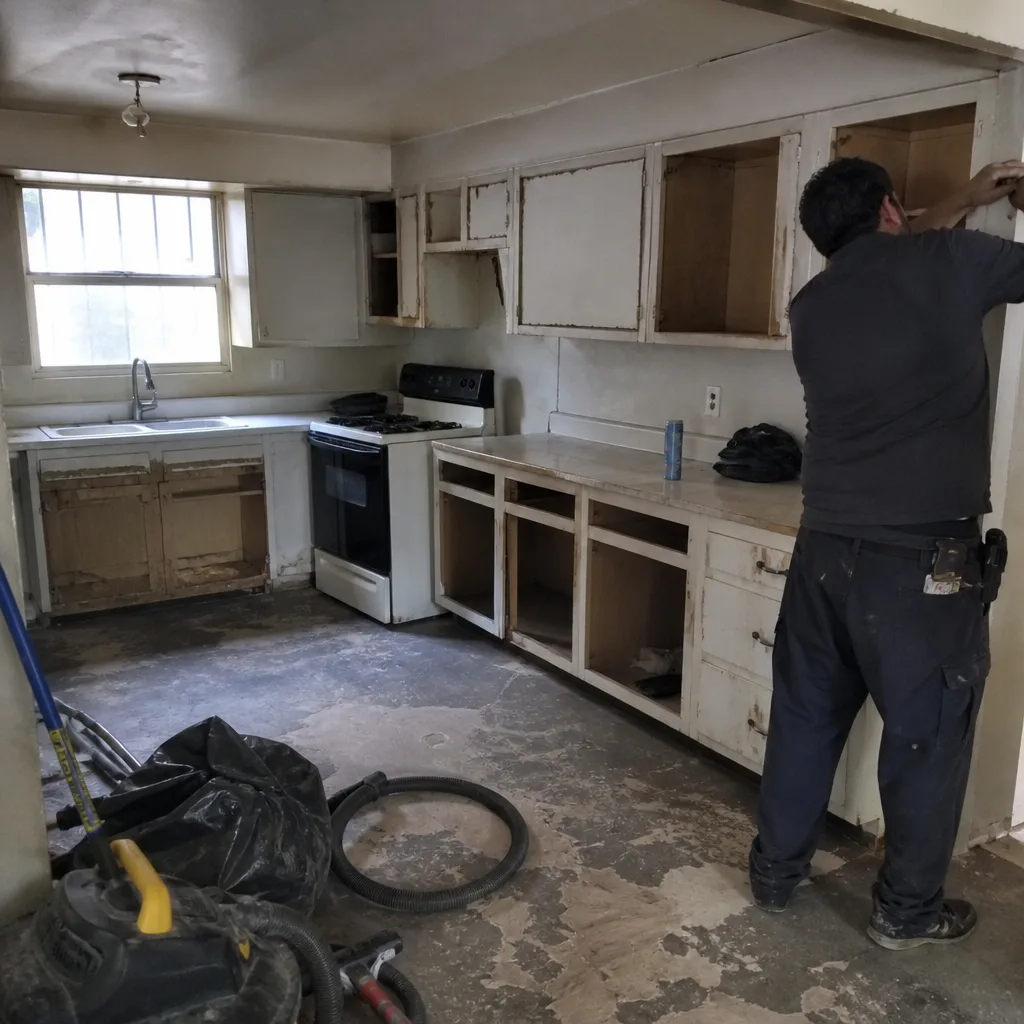
 Before
 After
 Before
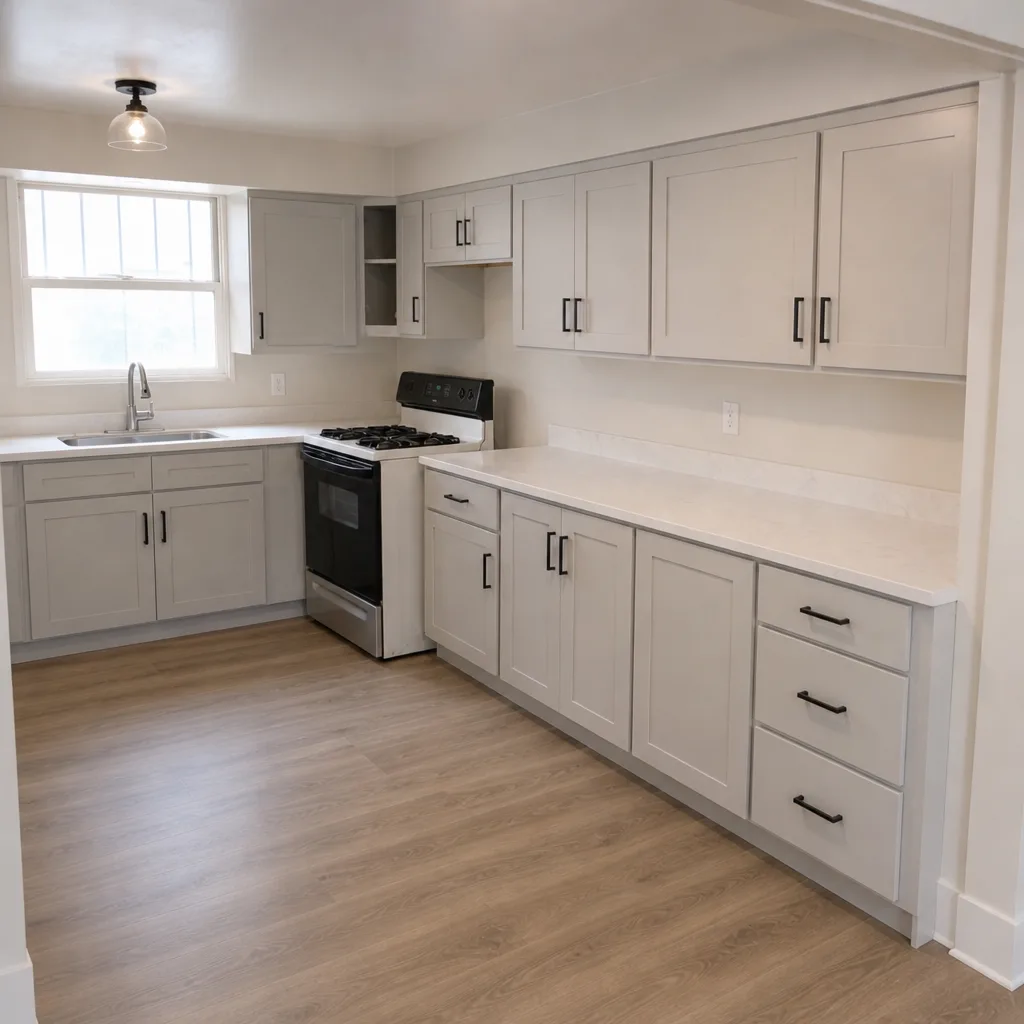 After
When to Call a Professional
Call a licensed professional when you see any diagonal or stair-step crack, a horizontal crack in a foundation wall, or a crack wider than a credit card. Call if a deadbolt or exterior door has changed how it operates, if paint is blistering at a ceiling-wall joint after rain, if you smell moisture after rain, or if you see new efflorescence or a damp band at the foundation after irrigation. For structural evaluation specifically, get a licensed structural engineer. For the remodeling work that follows – the repairs, the patio regrade, the bathroom or kitchen update where movement has to be corrected first – Elmstead Remodeling Spring Valley offers free estimates in Spring Valley. Call (844) 320-4882.
Frequently Asked Questions

A diagonal crack running at about 45 degrees from a window or door corner is the pattern to take seriously in Spring Valley, because it usually signals differential foundation movement rather than simple settling. Hairline vertical cracks and map cracking in the stucco are usually cosmetic. If the crack is diagonal, stair-stepped, wider than a credit card, or visibly growing, have a licensed structural professional look at it before patching. Call (844) 320-4882 to talk through what we’ve seen in Spring Valley and to set up a free estimate on the repair work.
Paint bubbling at the ceiling-wall joint after rain is one of the most reliable signs of a slow roof leak, because water travels along the ceiling drywall and pools where the ceiling meets the wall. It is rarely a paint problem. Photograph the spot and have a roofer or professional find the source before you patch the drywall. Call (844) 320-4882 if you want a free estimate on the interior repair once the roof issue is solved.
Doors stick in Spring Valley mostly because of seasonal soil movement in the clay-and-caliche ground, plus any real foundation movement underneath. A door that sticks in the wet season and frees up in the dry is usually normal. A deadbolt that needs force to turn, or a door that has stopped latching cleanly year-round, is the change worth evaluating. Call (844) 320-4882 for a free estimate if you are planning interior work and want the issue checked first.
That white powder is efflorescence, a mineral crust left when water moves through concrete or block and evaporates on the surface. It means moisture has been traveling through the wall from the soil side. The fix is usually drainage and grade work rather than structural repair, and it is cheaper caught early. For a free estimate on drainage or hardscape correction, call (844) 320-4882.
Yes. A slow pool leak or a drip line buried against the slab can push water into the soil beside the foundation for months before anything shows above grade, and in Spring Valley’s caliche-heavy soil that water can run along the caliche layer straight to the house. A quick water audit, shutting the irrigation off for a day and watching whether the soil dries, is a useful first test. Call (844) 320-4882 to schedule a free estimate on correcting grade or hardscape.
No. We give a written price before any work starts, on every project, so the number you agree to is the number on the invoice. If a hidden condition turns up once walls are opened, we stop, show you what we found, and get your agreement in writing before any additional work begins. To get your written price, call (844) 320-4882 for a free estimate.
The Bottom Line
The damage that costs Spring Valley homeowners the most is rarely the damage they saw first. It is the hairline diagonal crack that got painted over, the musty smell after rain that got a new coat of paint, the deadbolt that got a shoulder instead of a phone call. Learn to read the early signals – crack pattern, change in how doors and windows operate, moisture signs at the foundation, and anything that appears only after rain – and you will spend far less on repair than on recovery. When you find one of these signs and want a written scope and price before anything is touched, our Elmstead Remodeling Spring Valley home page is the place to start, or call us directly. Our technicians have up to 21 years of experience and work under the Cedarwell Care Promise on every project: a written price before any work starts, shoe covers and drop cloths inside the house, and a photo of the clean-up before the crew leaves. We answer the phone live, day or night. Call (844) 320-4882 for a free estimate.
Written by the team at Elmstead Remodeling Spring Valley.