Last updated November 18, 2026








Free written scope consultation - allowances, timeline, and change-order rules on paper before a single trade is scheduled
General Contractor Troubleshooting: Common Problems and How to Fix Them
A tile crack that appears six months after a bathroom remodel is rarely about the tile. It’s usually about what happened to the substrate underneath, and whether that substrate work was ever itemized in writing before it was covered up. That distinction matters because most remodeling problems we’re called to in Spring Valley aren’t construction failures at all. They’re communication failures that hardened into physical ones. A verbal “we’ll take care of that” that never made it onto a change order. A rough-in inspection that got skipped when the schedule tightened. This guide helps you tell the difference between a cosmetic punch-list item, a structural defect, and a contract problem, and what to do first in each case.
Quick Answer
Most post-project problems fall into three buckets: cosmetic punch-list items you can document and request in writing, workmanship defects that affect waterproofing or structure and require immediate professional attention, and contractual gaps where liability depends on your paper trail. Before you call anyone, gather your signed contract, change orders, inspection sign-offs, and dated photos. The fix starts with paper, not tools.
Styles & brands we work with
- Kitchen remodeling
- Bathroom remodeling
- Home additions & ADU
- Roofing
- Windows & doors
- Driveway & pavers
- Fence
Table of Contents
- Step 1: Diagnose the Problem Before You Call Anyone
- The Paper Trail That Determines Liability
- What Nevada Contractor Warranty Law Actually Requires
- Spotting Subcontractor Handoff Failures
- How to Escalate Through the Nevada State Contractors Board
- Spring Valley-Specific Problems We See
- Common Mistakes to Avoid
- When to Call a Professional
Step 1: Diagnose the Problem Before You Call Anyone
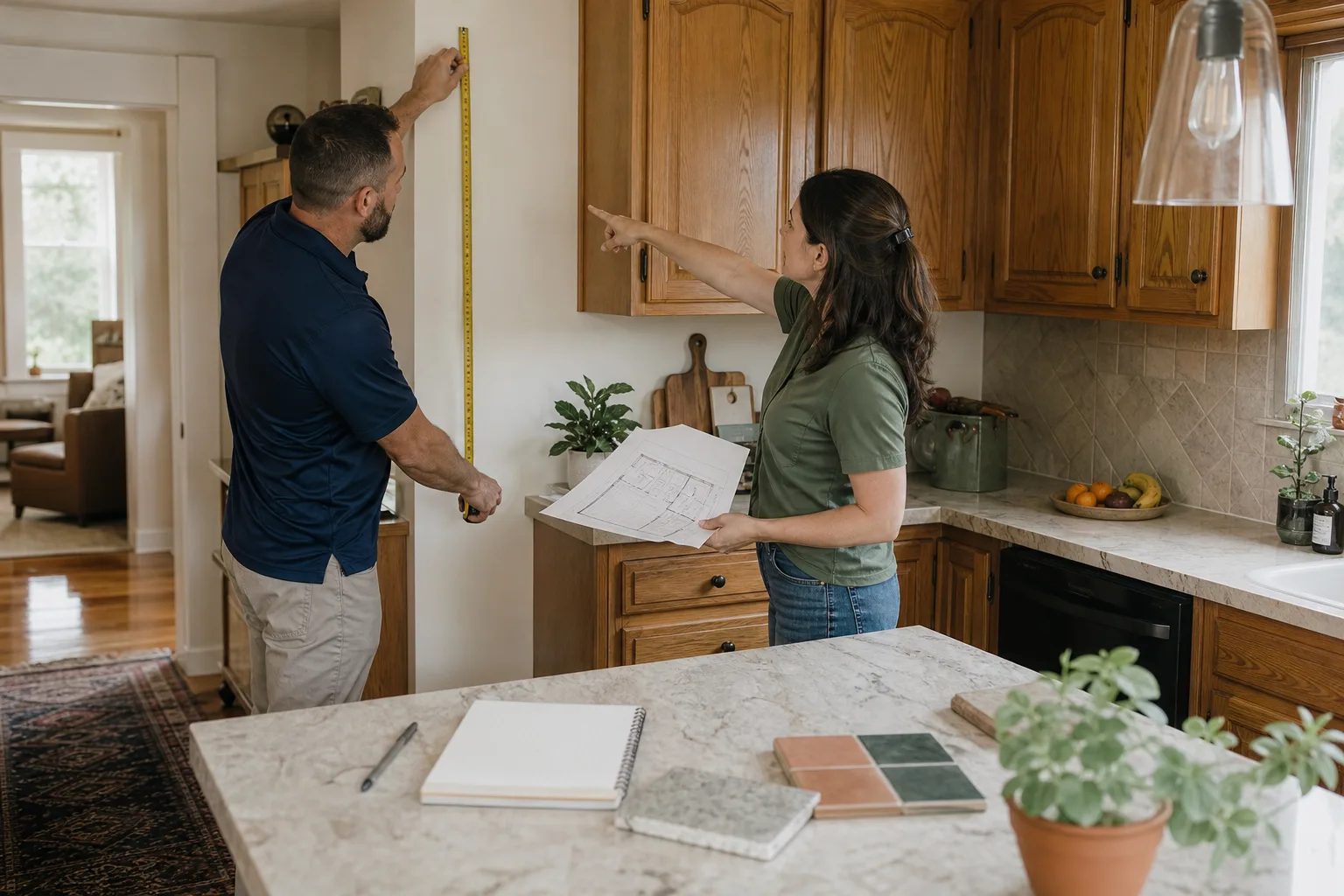
The single most useful thing a Spring Valley homeowner can do after a problem appears is figure out which category it belongs to. This takes fifteen minutes and a phone camera, and it changes how you approach the contractor, the inspector, and any claim.
- Photograph everything, dated. Wide shot first, then close-up. Include a reference object in at least one photo so scale is clear.
- Check if the problem is moving. Trace a crack with a pencil line. Measure a gap with a feeler gauge or a folded business card. Wait two weeks and re-measure. A stable gap is different from an active one.
- Identify what’s behind the visible surface. A failing grout joint in a shower usually means the waterproofing membrane underneath is compromised, not that the grout itself was wrong. A drywall crack over a doorway usually means framing movement, not bad paint.
- Find the corresponding line in your contract. If the underlying work (membrane installation, framing repair, substrate replacement) was never itemized, you have a paperwork problem first.
In our experience across Spring Valley, the difference between a quick fix and a $6,000 repair often comes down to whether the substrate work was written into the original scope. When it wasn’t, the contractor can argue the failure was pre-existing and out of scope. When it was, liability is much clearer.
The Paper Trail That Determines Liability
Four documents decide almost every remodeling dispute we’ve seen: the signed contract, the change orders, the daily logs, and the inspection sign-offs. If you don’t have them, ask for them now. Nevada requires contractors to provide certain records, and a written price before work starts (like the one Elmstead Remodeling Spring Valley provides on every project) creates a baseline against which any later dispute gets measured.
- Signed contract. Should list scope, materials by name (KraftMaid cabinets, Cambria or Silestone countertops, Kohler or Moen fixtures), payment schedule, and completion timeline.
- Change orders. Every scope addition and every price change, signed and dated by both parties. Verbal approvals are the number one source of “the price grew after the crew arrived” complaints.
- Daily logs. Brief notes on who was onsite, what was done, and what was found. A good contractor keeps these. Ask for a copy if a problem emerges.
- Inspection sign-offs. In Clark County, rough-in inspections for plumbing and electrical happen before drywall goes up. The inspection card or approval slip is your proof that the work was seen by a county inspector at the covered stage.
If any of those documents are missing, request them in writing by email. If they can’t be produced, that absence itself becomes part of the story, and it’s usually the reason a homeowner needs a lawyer rather than a punch-list meeting.
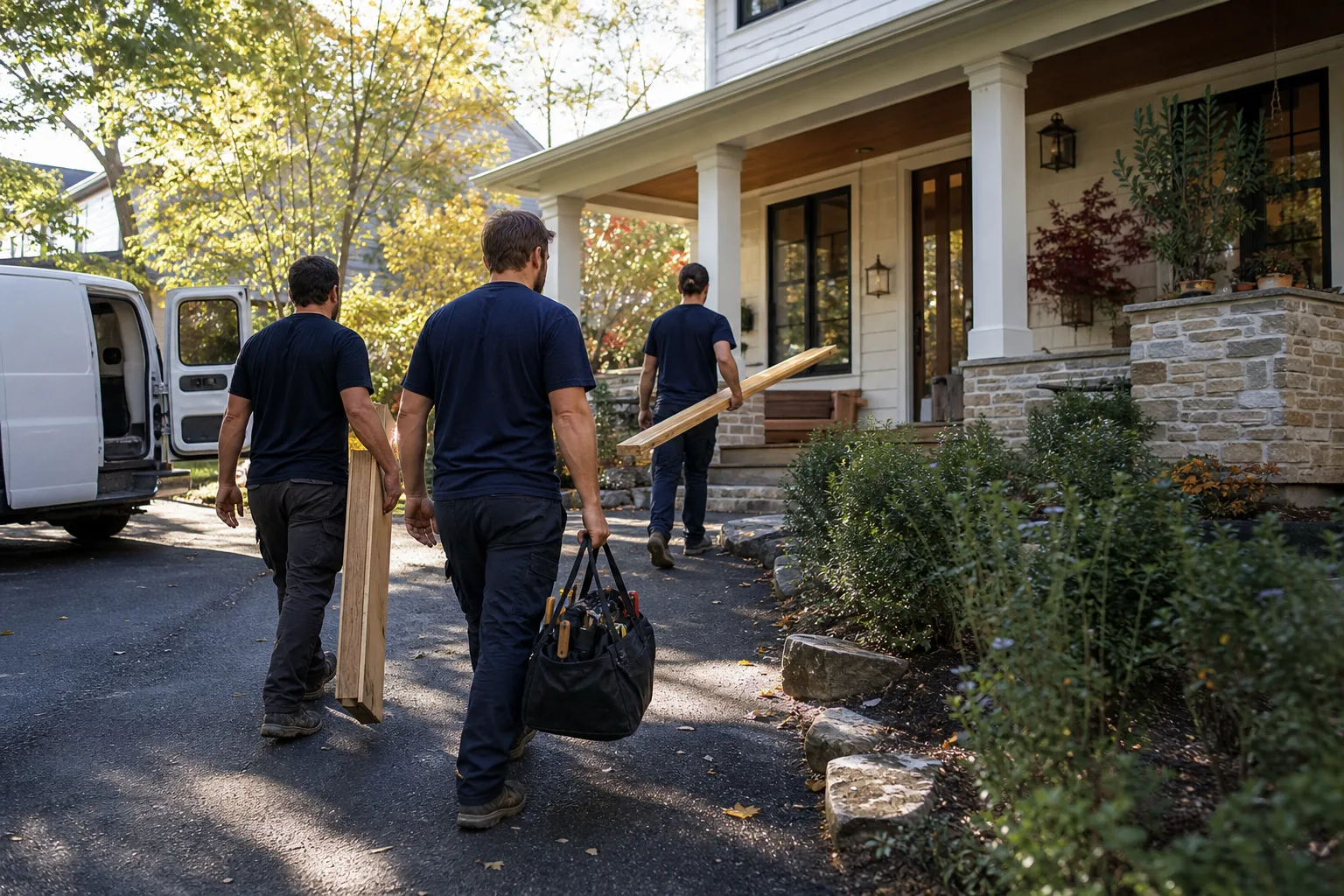
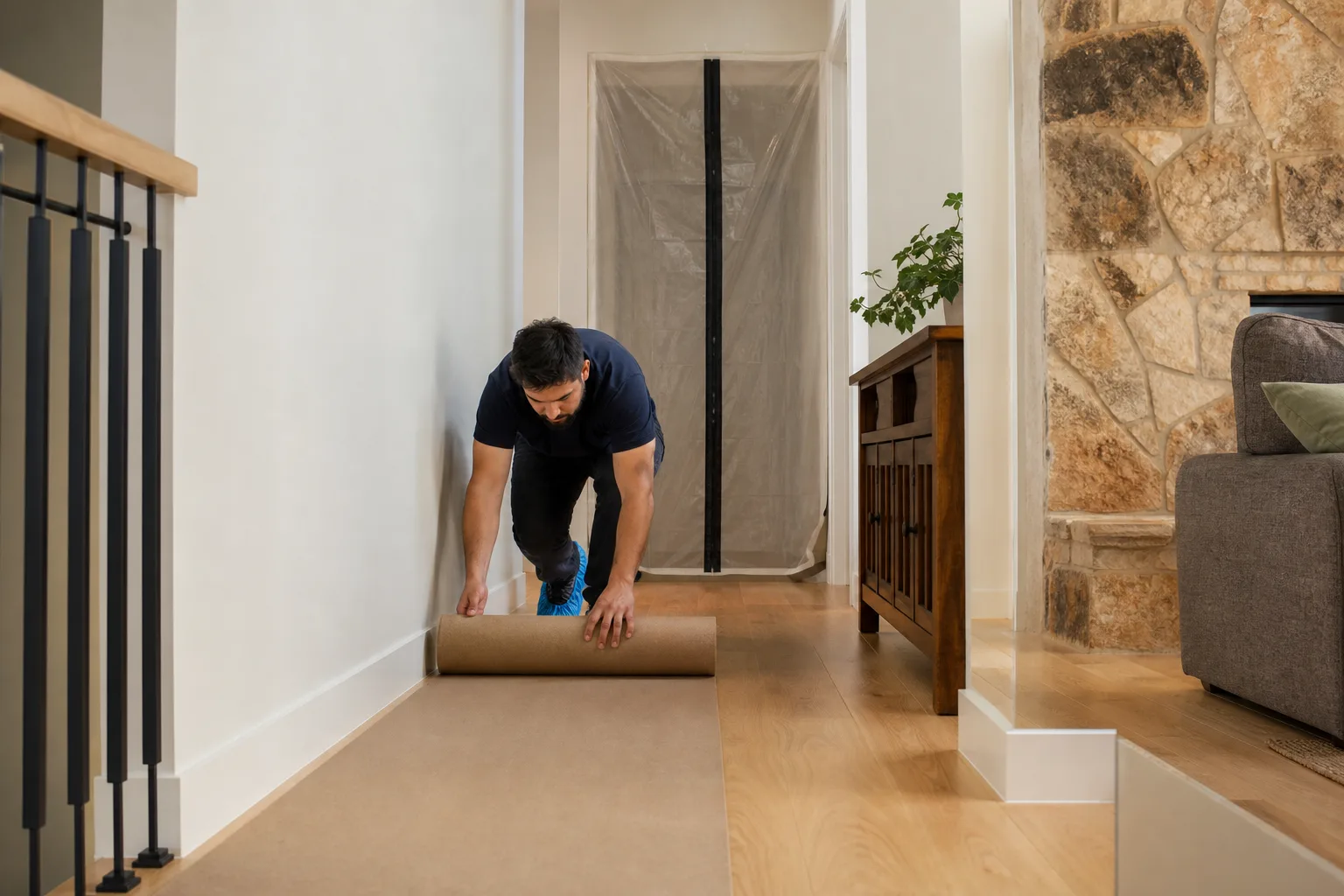
Elmstead Remodeling Spring Valley is a Cedarwell company, and every project is governed by the Cedarwell Care Promise: shoe covers and drop cloths inside the house, a written price before any work starts, a photo of the clean-up before the crew leaves, and quiet tools during family rest hours where possible. That written price is not just a courtesy. It’s the record that anchors any later conversation about what was and wasn’t included.
What Nevada Contractor Warranty Law Actually Requires
Nevada’s contractor licensing and workmanship rules live in NRS Chapter 624. In plain terms, licensed contractors in the state are held to workmanlike standards and are subject to discipline through the Nevada State Contractors Board for defective work, abandonment, and certain contract violations. The Board can investigate complaints and, where warranted, order correction or restitution.
What NRS 624 does not do is replace a written guarantee with an open-ended promise. There’s a filing window for complaints, and there are limits on what the Board will take up. This is where a written workmanship warranty adds something the statute alone can’t:
- A named time window. A 365-Day Done Right Promise tells you, in writing, that for a full year after the job closes, problems that trace to the work get made right, on the contractor’s side of the ledger. The statute gives you a regulatory path. The promise gives you a phone number and a process.
- A single point of contact. With a warranty, you call the company. With the Board, you file a complaint and wait for an investigator’s schedule.
- No filing deadline to miss. A one-year promise is simple to track. Board filing windows are worth knowing but easier to miss during a busy year.
Both matter. A homeowner with a written warranty and a Board complaint option has two legitimate paths. A homeowner with neither has one path, and it’s the expensive one.
Spotting Subcontractor Handoff Failures
Most defects we’re called to in Spring Valley didn’t come from a bad crew. They came from a bad handoff between two good crews. A plumber finishes rough-in and leaves before the tile setter arrives. Drywall goes up before the rough-in inspection gets signed. The window order arrives three weeks late, so the framer comes back to re-do a header and the waterproofing schedule collapses. These are sequencing failures, and a homeowner can catch them in real time if they know what to look for.
- Ask for the sequence in advance. Before demo starts, ask your contractor to write down the order of trades and where inspections fall in that order. If they can’t produce it, that’s information.
- Watch for drywall going up before inspection sign-off. In Clark County, plumbing and electrical rough-ins should be inspected before they’re covered. If drywall starts and you never saw an inspection, ask.
- Check moisture before tile goes down. In a bathroom, the waterproofing membrane under the tile needs to be fully cured and flood-tested. If the tile setter is on the job the same day the membrane was rolled, ask for the flood test record.
- Look for “bridged” transitions. Where interior meets exterior (patio doors, slider frames), a gap that gets caulked instead of flashed will fail within two summers in Spring Valley’s heat.
- Photograph every stage before it’s covered. Rough-in, membrane, framing, insulation. Ten minutes of photos can be worth thousands of dollars in a dispute later.
Background-checked, uniformed technicians on every job are the baseline. What separates a well-run project is that the person running it is keeping the sequence honest, not just the individual trades. A crew that asks before moving anything in your home is also a crew more likely to ask before covering anything up.
How to Escalate Through the Nevada State Contractors Board
The Nevada State Contractors Board is the correct next step when a licensed contractor has left defective work and won’t return to fix it, or when a project has been abandoned mid-stream. Before you go that route, do these five things in order. Litigation should be last, not first, because it’s slower and more expensive than a Board complaint and often unnecessary.
- Send a written notice to fix. Email is fine. Be specific: what the problem is, when you noticed it, what you want done, and by what date. Give a reasonable window (two to three weeks for non-emergency work).
- Attach the paper trail. Contract, change orders, relevant photos, and any prior service tickets. The more concise the packet, the faster the reviewer moves.
- Wait for the response window. If the contractor responds with a plan, hold them to it in writing. If they don’t respond, keep the non-response.
- File a complaint with the Nevada State Contractors Board. Provide your license number for the contractor, the address of the project, and a clear description of the defect and the history. The Board’s website walks through the current complaint process.
- Keep paying utilities, keep the home livable, keep records. Don’t withhold final payment without legal advice; withholding can complicate your own position in some disputes.
In our experience, roughly nine out of ten disputes we’re consulted on never reach the Board because the written notice alone restarts the conversation. The remaining tenth usually gets resolved through the Board’s complaint process before anything reaches a courtroom.
Spring Valley-Specific Problems We See
Spring Valley sits on the west side of the Las Vegas Valley, in unincorporated Clark County, and the local conditions reshape the generic troubleshooting list. The summer heat cycling against refrigerated interiors stresses everything from expansion joints to exterior caulk. Winter temperature swings in the 30s and 40s at night, then 70s by afternoon, move trim, doors, and thresholds. Alkali soil throughout much of the valley pushes moisture against slab edges and stucco. And the mix of 1990s-era tract homes, newer builds in the southwest, and older custom houses on larger lots means the failure modes aren’t uniform.
A few patterns worth knowing if you own a home in Spring Valley:
- Tile cracks and grout failures in primary bathrooms. Frequently a waterproofing membrane problem, not a tile problem. Watch for any crack that follows a straight line along a membrane seam.
- Exterior caulk and flashing failures within two summers. Our UV load is real. Caulk rated for cooler climates fails fast here. Windows sourced from brands like ES Windows or Mr-Glass, when installed correctly, come with weather-rated seals that hold up better than generic replacements, but the installation behind the frame is what fails first.
- Drywall cracks above doorways and windows. Often framing or header movement, sometimes slab movement. Worth mapping before assuming.
- Patio door thresholds that leak during monsoon season. Catch this in the dry months, not after the first big storm.
Elmstead Remodeling Spring Valley is independently owned and operated as a Cedarwell company, and the local crews know these patterns because they work on them week to week. If you’re planning a kitchen remodel or a bathroom remodel in Spring Valley, the substrate decisions made in the first three days of the project often decide what happens in year three.
Common Mistakes to Avoid
- Skipping the change order. “It’ll be cheaper if we just do it” said verbally on a Friday becomes a $4,000 line item on a Monday. If it’s worth doing, it’s worth a one-page signed change order. No exceptions.
- Withholding final payment without advice. In Nevada, withholding can complicate your position rather than strengthen it. Ask the Board or a lawyer before making withholding a strategy.
- Repairing the symptom before photographing the cause. If you caulk a leaking threshold before you photograph the wet framing behind it, you’ve probably erased your best evidence.
- Letting tile go down without a flood test on the membrane. Spring Valley bathrooms fail at the membrane more than anywhere else. The flood test is thirty minutes of work that decides the next ten years.
- Taking a contractor’s word for the inspection. Ask to see the county inspection card. In Clark County, you have every right to see it.
- Hiring on price alone during the punch-list phase. The cheap fix on a waterproofing problem often means opening the wall again in eighteen months. Pay for the diagnostic, not the patch.
- Not writing down what was said at the walkthrough. If a contractor promises something during the final walk, email a summary that night and ask them to confirm. That email becomes a written document.
When to Call a Professional
Some problems are worth a call the day you find them, not next month. Call a licensed professional immediately if you see water staining on a ceiling or wall below a bathroom, if a tile or grout failure is accompanied by a spongy floor, if you smell sewer gas or musty air after a remodel, if a crack in drywall is wider than a quarter inch or visibly moving, or if any door or window has stopped closing squarely within the first year of a project. Those signal structure, waterproofing, or settling, not cosmetics.
The cosmetic list (paint touch-ups, a loose handle, a small grout line that’s popped) can wait for a scheduled punch-list visit. The structural list should not. Elmstead Remodeling Spring Valley offers free estimates in Spring Valley and answers the phone with a live person, 24/7, not a voicemail. Call (844) 320-4882 to schedule your free estimate, or just to talk through what you’re seeing. Sometimes the answer is a five-minute conversation.
See the difference
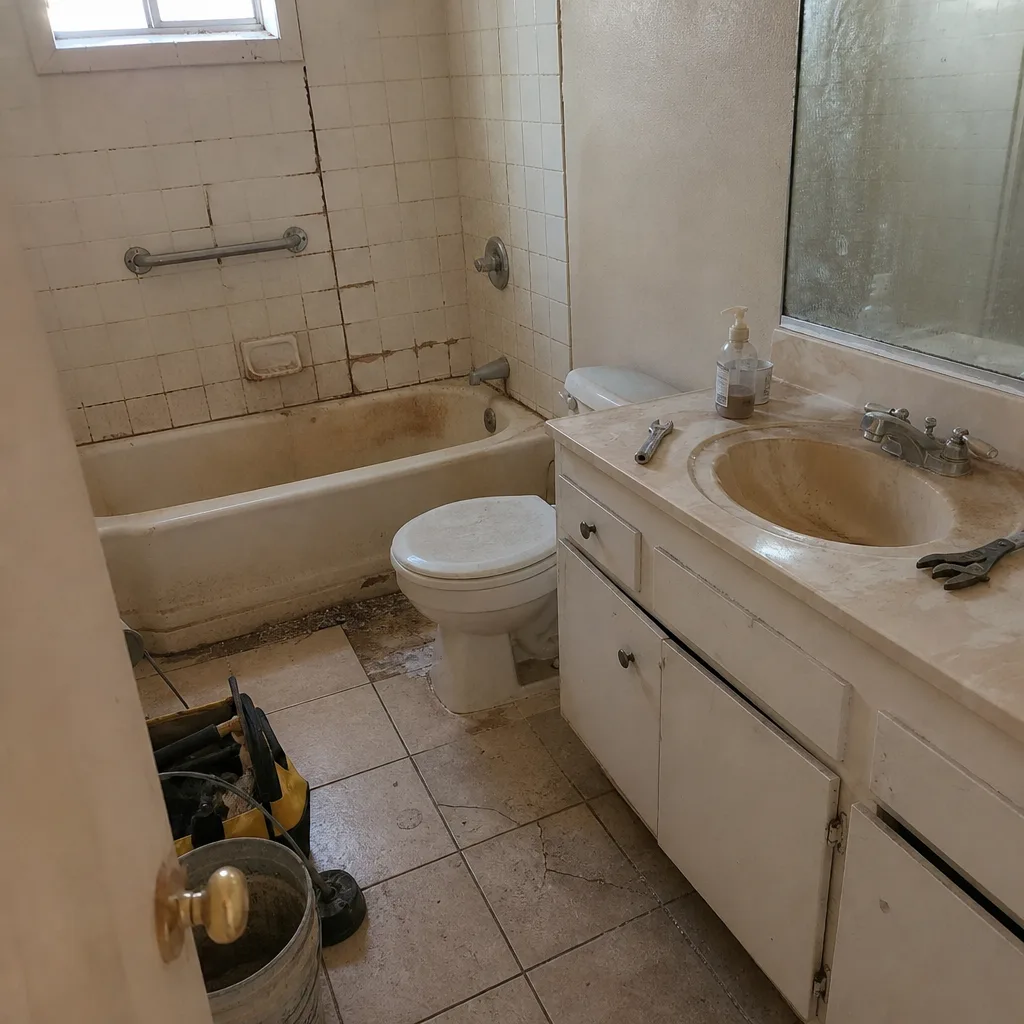
 Before
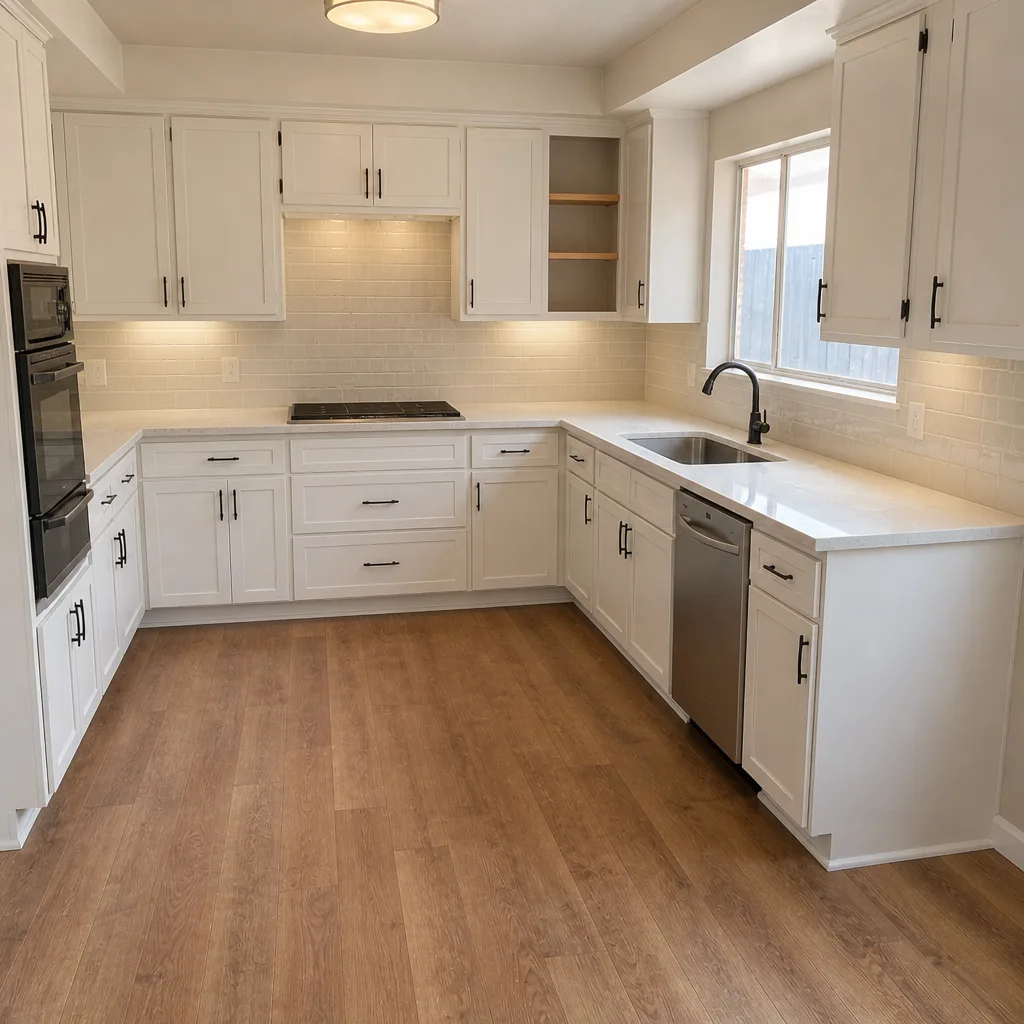 After
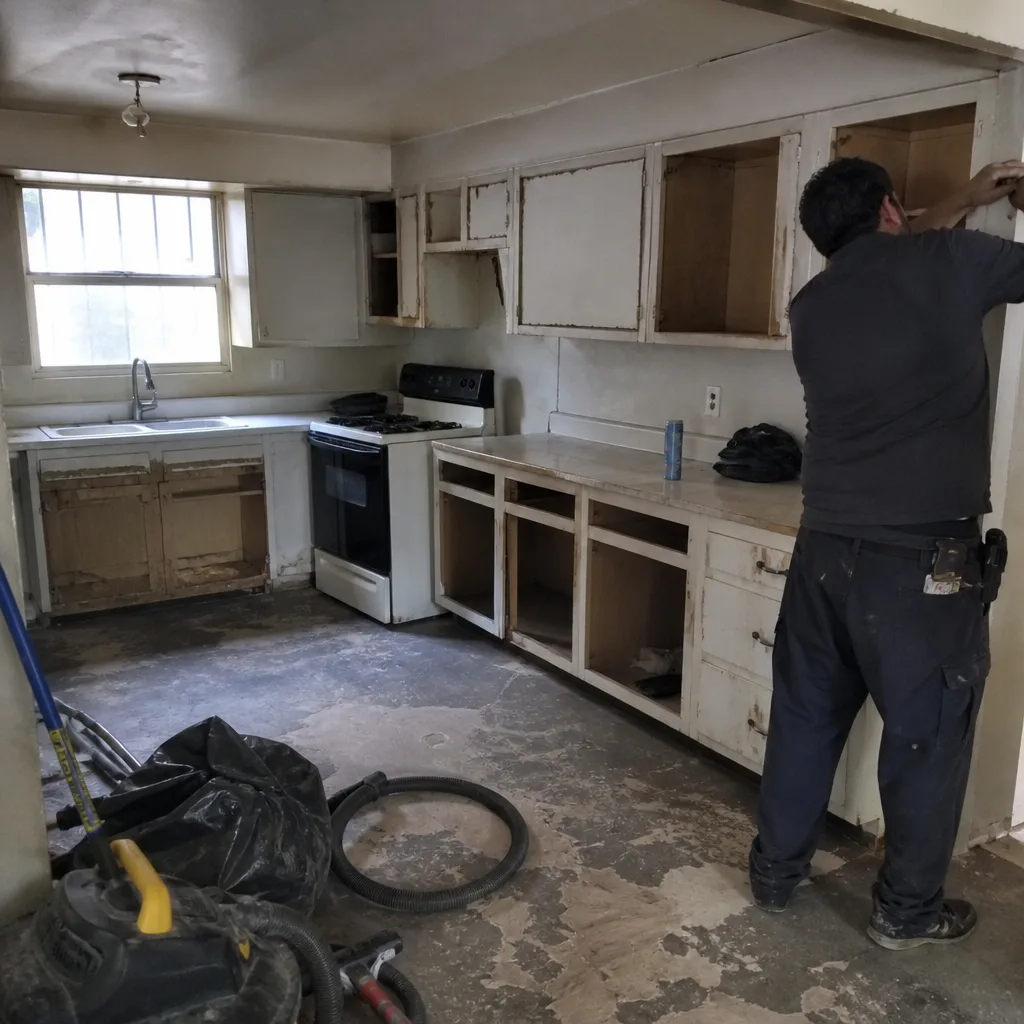
 Before
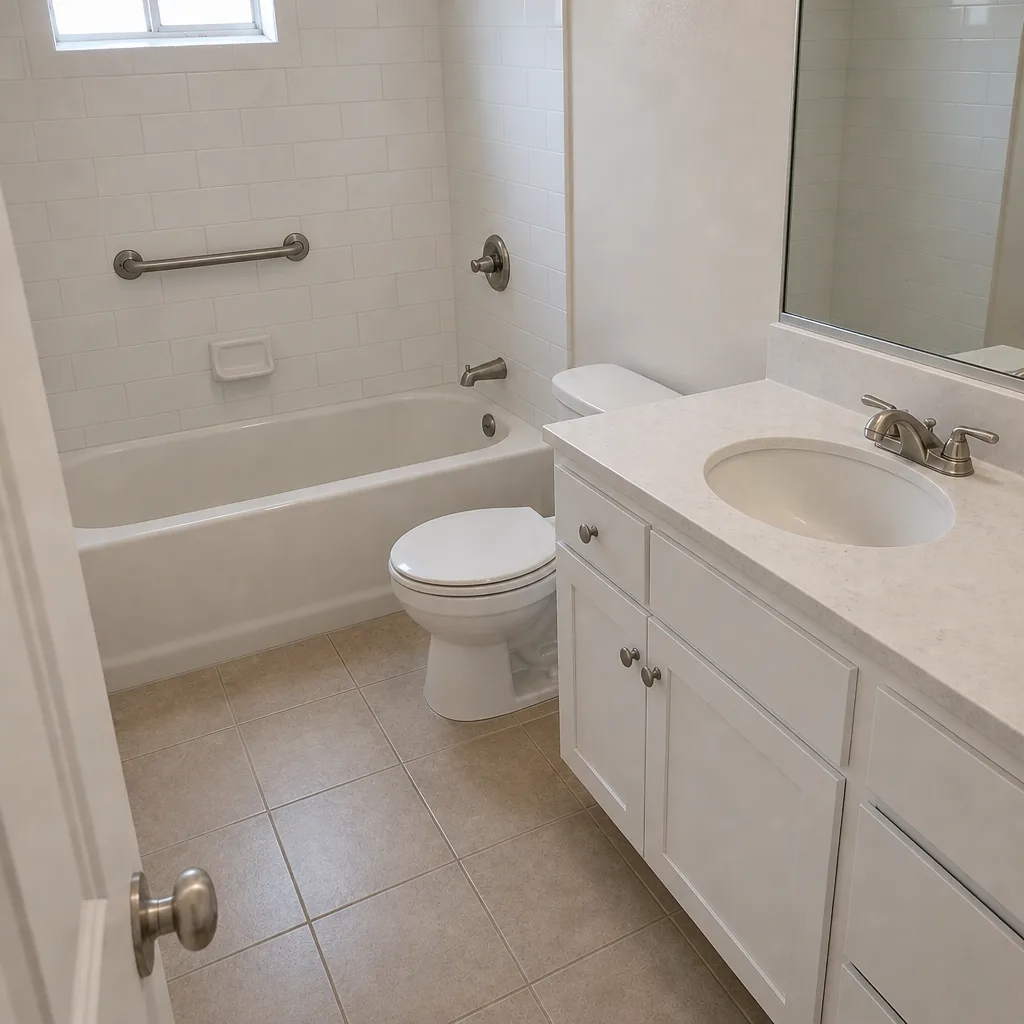 After
 Before
 After
Frequently Asked Questions

Cosmetic problems are surface-level, stable, and don’t affect water or air. Structural problems move, widen, or involve moisture. Trace a crack with a pencil, measure it, and re-check in two weeks. If it’s growing, if it’s accompanied by water stains, or if the floor feels spongy near it, it’s structural. If it’s stable and isolated to painted surfaces, it’s cosmetic. Either way, photograph it before you touch it, then call (844) 320-4882 for a free estimate on the repair.
Nevada does not mandate a specific written warranty period, but NRS Chapter 624 holds licensed contractors to workmanlike standards and gives homeowners a path through the Nevada State Contractors Board for defective work or abandonment. A written workmanship guarantee like a 365-Day Done Right Promise is a contractual layer on top of that regulatory floor, and it’s usually what makes a resolution fast. Call (844) 320-4882 to talk through what a written warranty on your next project should cover.
In Spring Valley, repairing a failed shower pan or membrane typically runs $1,800 to $4,500 if caught before structural damage, and $5,000 to $9,000 or more if the framing or adjacent drywall has to be opened and rebuilt. The range is wide because the visible symptom (a crack, a loose tile) tells you almost nothing about what’s underneath. Call (844) 320-4882 for an exact quote. Estimates are free.
Send a written notice by email that states the problem, references the date you first reported it, attaches photographs, and asks for a fix by a specific date. Give two to three weeks for non-emergency work. That single email restarts most conversations, and if it doesn’t, it becomes the first page of your Nevada State Contractors Board complaint. Call (844) 320-4882 if you’d like help identifying what the email should say.
No. In Clark County, plumbing and electrical rough-ins should be inspected before they’re covered by drywall. Skipping that step doesn’t save time, it trades a two-week delay for a defect that may not show up for years and complicates every conversation afterward. Ask to see the inspection card. Any licensed contractor should be able to produce it without hesitation. Call (844) 320-4882 for an estimate if you’re inheriting a project from a contractor who didn’t.
A written warranty gives you a named time window, a named contact, and a defined process. The state’s protections give you a regulatory investigation if talks break down. Both matter, but they solve different problems. A 365-Day Done Right Promise on every completed project means the conversation about a post-project problem has a one-year window in writing and a specific person to call. Call (844) 320-4882 to see the written price and the written warranty on any project quote.
The Bottom Line
Most remodeling problems in Spring Valley are not construction failures. They’re communication failures that hardened into physical ones, and the fix usually starts with paper rather than tools. Before you call anyone, gather your contract, change orders, inspection sign-offs, and dated photos. Diagnose whether you’re dealing with a cosmetic item, a structural defect, or a contract gap. Then escalate in order: written notice, response window, and the Nevada State Contractors Board if talks break down. A licensed contractor with a written price before work starts and a written workmanship guarantee on the back end gives you the two bookends that prevent most disputes in the first place. Call (844) 320-4882 to schedule your free estimate with Elmstead Remodeling Spring Valley and see what a Cedarwell Care Promise project looks like in writing.
Written by the team at Elmstead Remodeling Spring Valley.