Last updated November 18, 2026




Free written scope consultation - allowances, timeline, and change-order rules on paper before a single trade is scheduled
DIY vs Professional Bathroom Remodeling: What’s Safe to Do Yourself
A YouTube tutorial on tiling a shower will show you how to set tile. It will almost never show you how to test whether the waterproofing membrane beneath it is properly installed. That skipped step is the one that decides whether your shower lasts five years or twenty-five. In bathrooms, the visible work is the easy part and the hidden work is the job. This guide draws the line between the tasks a careful homeowner can genuinely handle and the ones that protect the whole house when a trained professional does them, with local notes for anyone remodeling a bathroom in Spring Valley.
Quick Answer
Safe DIY bathroom tasks are the reversible, surface-level ones: painting walls after professional prep, hanging a mirror, swapping cabinet hardware, installing a toilet on an existing flange, and recaulking an existing tub surround. Everything that touches waterproofing, moved plumbing, new electrical circuits, or wet-location GFCI work should go to a licensed professional, because those failures stay hidden until they have damaged framing or created a shock hazard.
Styles & brands we work with
- Kitchen remodeling
- Bathroom remodeling
- Home additions & ADU
- Roofing
- Windows & doors
- Driveway & pavers
- Fence
Table of Contents
- Where the Legal Line Sits in Nevada
- Waterproofing: The Task You Should Never DIY
- The Genuine DIY Wins in a Bathroom Remodel
- The Hybrid Approach for Budget-Conscious Families
- How Kids and Pets Change the Calculus
- How to Verify a Contractor Did the Hidden Work Right
- What Each Path Really Costs
- Common Mistakes to Avoid
- When to Call a Professional
Where the Legal Line Sits in Nevada
Nevada draws a fairly clear line, and it’s worth understanding before you buy a single tool. Cosmetic work on existing fixtures is generally yours to do. Work that alters the plumbing system or adds to the electrical system belongs to a licensed tradesperson, and a permit is usually required. Bathrooms sit at the exact intersection of water and electricity, which is why the rules tighten here more than in almost any other room.
Here’s how it breaks down in practice:
- Usually safe to DIY: Swapping a faucet on existing supply lines (with the water shut off), replacing a toilet on an existing flange, installing a new showerhead, replacing a vanity light fixture that already has a box and wiring in place.
- Requires a licensed plumber: Moving a drain line, relocating a toilet, adding a new supply run, roughing in a new shower valve, converting a tub to a walk-in shower where the drain has to move.
- Requires a licensed electrician: Adding a circuit, installing a GFCI outlet in a wet location, adding heated-floor wiring, moving an outlet near a sink, installing a new exhaust fan where no circuit exists.
Those last items aren’t just about permits. A GFCI installed incorrectly in a wet location is the classic example of a bathroom failure that turns into a shock hazard, and it’s the reason inspectors check them so carefully. In Spring Valley, where many homes were built during a heavy growth period and some have had add-on work over the years, we’ve seen bathrooms with wiring that predates the current occupant and no clear record of who did it. That’s a good reason to have the electrical side opened up and checked rather than assumed correct. If you’re planning a larger project, a General Contractor in Spring Valley can coordinate the licensed trades so the permit and inspection side stays in order.
Waterproofing: The Task You Should Never DIY
If there is one sentence to carry away from this guide, it’s this: improper waterproofing is the single most expensive DIY mistake in bathroom remodeling. A membrane installed with a gap, a corner not properly bonded, or a pan that slopes the wrong way won’t fail dramatically. It will leak slowly, behind the tile and into the framing, for months or years before anyone notices. By the time you see it, you’re replacing subfloor, studs, and possibly drywall in the room next door.
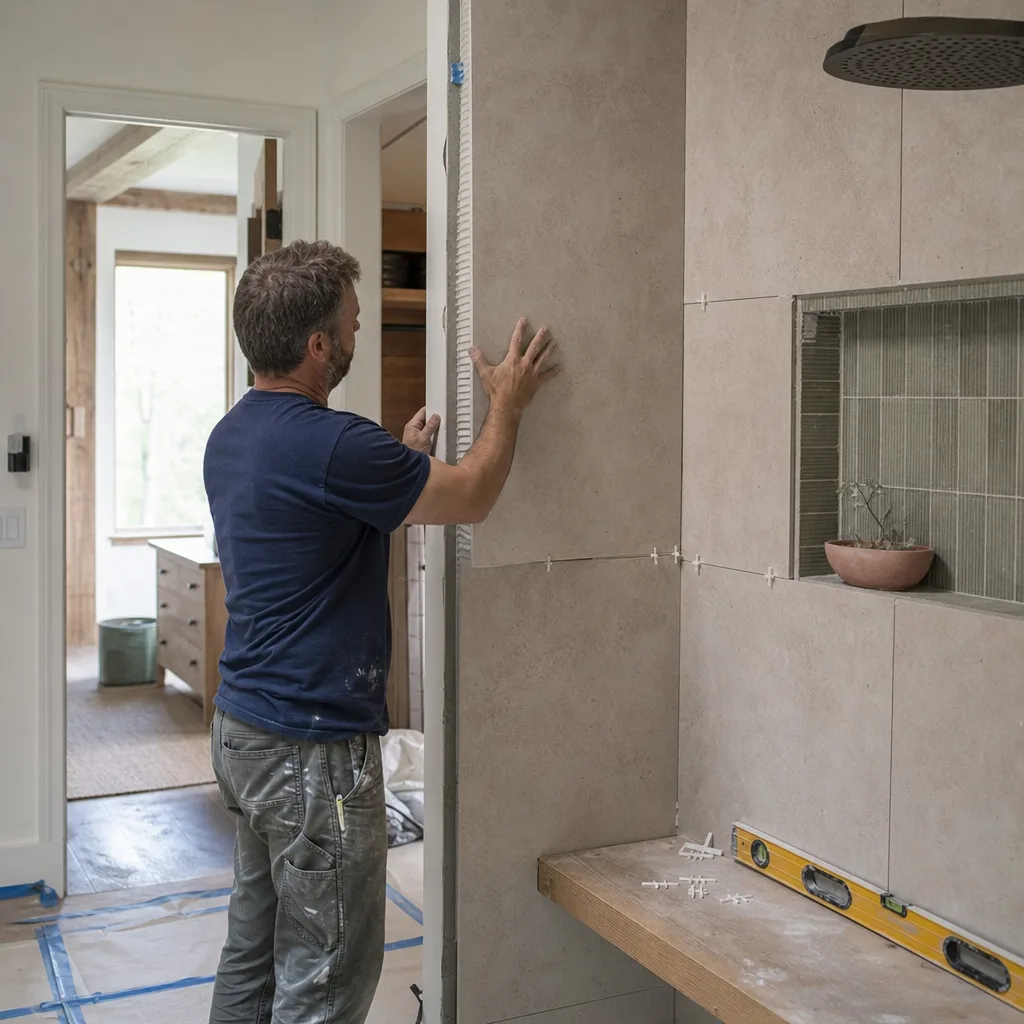
This is why professional waterproofing isn’t just a nicety. It’s the reason the job holds up. In our experience, the waterproofing step gets the least attention in online tutorials because it’s not photogenic. Tiling a shower makes a satisfying video. Rolling on a liquid membrane and embedding a fabric in the corners does not. But the membrane is the part that determines whether your shower stays dry for the next two decades.
A properly done waterproofing job includes several checks most homeowners never see:
- The substrate is flat, dry, and free of dust before any membrane goes down.
- Corners and seams are reinforced with the manufacturer’s specified fabric or tape.
- The membrane is applied at the manufacturer’s specified thickness and coverage, often with a wet-film gauge.
- The shower pan has the correct slope toward the drain.
- A flood test (where the system allows it) is performed and documented.
That last point matters for verification. Ask your contractor whether they flood-test the pan and whether they photograph it before tile goes on. Those photos become proof you can keep. Our team treats that step as part of the job, not an extra. A Bathroom Remodeling in Spring Valley project we’d stand behind includes waterproofing done to manufacturer spec, checked, and photographed before the tile goes down.
The Genuine DIY Wins in a Bathroom Remodel
Not everything is off-limits. Some tasks are genuinely safe for a careful homeowner, save real money, and don’t put the house at risk. The pattern here is that they’re reversible, surface-level, and don’t involve hidden systems.
- Painting the walls after professional prep. Once the walls are patched, sanded, and primed by the crew, rolling on the color coat is a project a homeowner can take on with confidence. Bathroom paint should be a moisture-resistant formula, and two thin coats beat one thick one every time.
- Installing a vanity mirror. A mirror is one of the safest fixtures to hang yourself. The one caution: know where the studs are before you drill, and never drill blind into a wall where a supply line or drain might be running.
- Swapping cabinet hardware. This is one of the highest-impact, lowest-risk changes in a bathroom. New pulls and knobs take an afternoon and transform the look of the vanity with no water or power involved.
- Recaulking an existing tub surround. If the surround and the substrate beneath are in good shape and the old caulk has simply worn out, removing it and laying down a fresh line of mold-resistant silicone is a reasonable DIY job. If the caulk keeps failing, stop and look for a waterproofing problem behind it.
- Installing a toilet on an existing flange. Pulling an old toilet and setting a new one on the same flange is a manageable DIY task when the floor is sound and the flange is intact. The weight and the wax seal are the two things people underestimate; have a second person help lift.
In Spring Valley, where the dry climate can make cure times on caulk and paint shift compared with more humid parts of the country, follow the product label rather than the tutorial. Higher elevation and low humidity mean paint and sealant can set faster than expected. That’s not a reason to skip steps; it’s a reason to read the can.
The Hybrid Approach for Budget-Conscious Families
The middle ground is where most of the smart savings are. Instead of choosing between full DIY and full turnkey, a hybrid scope splits the work by risk. The contractor handles the parts that fail invisibly. You handle the parts you can see, and the two scopes are written down before anyone picks up a tool.
Here’s how a hybrid bathroom remodel usually divides:
- Contractor scope: demolition and haul-away, rough-in plumbing and electrical, permit and inspection, waterproofing and flood test, subfloor and backer board.
- Homeowner scope: finish tile (within the prepared area, and only if you’re genuinely comfortable with layout and grout), painting after prep, mirror and hardware install, caulking the finished edges.
- Written division: the scope split goes in writing with a clear line between the two, so there’s no “I thought you were doing that” in week three.
The key to making this work is a contractor willing to write down where the line sits. That’s part of how our written price works on every project: the scope is spelled out before work starts, not decided as we go. A hybrid approach on a Spring Valley bathroom also lets a family stagger the spending, which matters when a project shares the budget with school expenses, a car, or a pet’s vet bill.
If your project pulls in the kitchen too, the same logic applies. A Kitchen Remodeling in Spring Valley project can follow the same division: contractor handles the rough-in and waterproofing, you handle the paint and final hardware.
How Kids and Pets Change the Calculus
A bathroom remodel is a construction site inside a home where children and pets live. That reality should shape who does what during the active phases, and it’s the reason professional management of dust and chemicals matters more in a family home than in an empty flip.
Several factors push toward professional handling of the active work, even if you plan to do some finish work yourself:
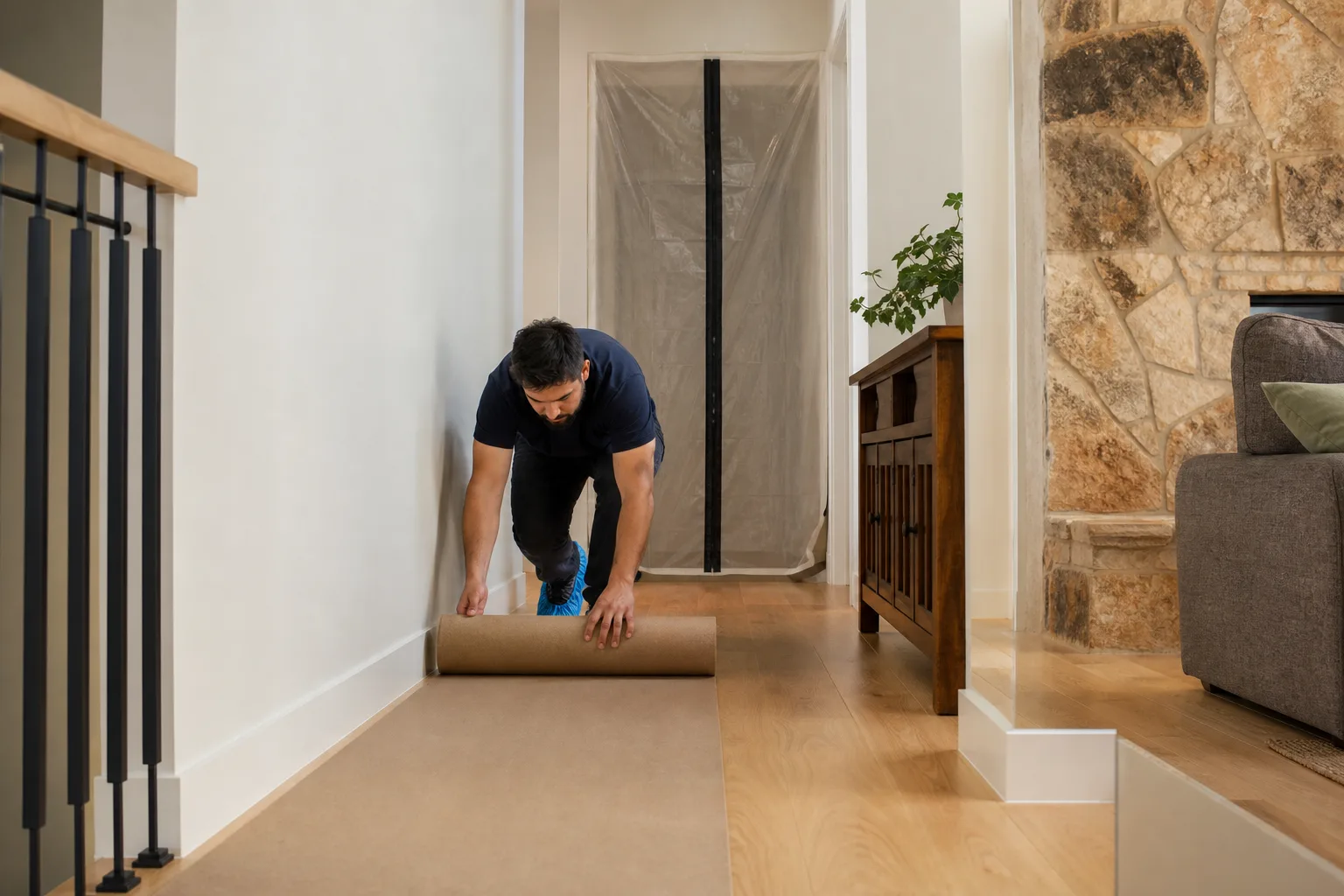
- Dust containment. Tile cutting and substrate work generate fine silica dust. A contractor will seal off the work zone with plastic sheeting and run a HEPA vacuum, which is the dust control you want when a toddler is napping in the next room.
- Adhesive and sealer exposure. Thinset, grout, and grout sealer off-gas during cure. Professional scheduling keeps active work to times when the family can be out of the space and vents running, and product selection can favor low-VOC options where a choice exists.
- Open floor penetrations. During rough-in, the bathroom floor is open around the drain and supply lines. A dropped toy or a curious paw at that stage is a genuine risk that a trained crew manages with barricades.
- Pets and tools. Power tools, sharp materials, and open adhesive buckets are all hazards for pets. The crew that manages the phases also manages the safety of the site while it’s open.
This is where our Cedarwell Care Promise does real work. Shoe covers and drop cloths come in on every visit. We use quiet tools during family rest hours where we can. We ask before we move or touch anything. And we photograph the clean-up before the crew leaves, so a family coming home to a construction zone sees proof the house was left in the shape it should be. None of that is an add-on. It’s included. Elmstead Remodeling Spring Valley home is where the Cedarwell Care Promise and the 365-Day Done Right Promise are described in full.
How to Verify a Contractor Did the Hidden Work Right
Since the most important work is the work you can’t see, verification matters. The following checks let you confirm the hidden steps were done correctly even though the wall is closed up when the job ends.
- Ask for photos of the waterproofing before tile. Corners, seams, and the pan should be documented. If the contractor is hesitant, that’s an answer in itself.
- Confirm the permit was pulled and inspection passed. In Nevada, permitting bodies post inspection results. Ask for the record and read it.
- Check product spec sheets. Materials from brands like Schluter (waterproofing), Kohler, Moen, and Grohe (fixtures), and Cambria or Silestone (surfaces) publish installation specifications you can compare against the work. Named-brand materials exist partly so a homeowner can verify that the products used meet the manufacturer’s warranty terms.
- Read the warranty on the finished project. A contractor willing to stand behind the finished work with a written commitment is a contractor who had to have done the hidden work right. Our 365-Day Done Right Promise is that commitment on every project: if it’s not done right, we make it right.
What Each Path Really Costs
Exact numbers vary with the size of the bathroom, the materials you choose, and how much of the rough-in has to be moved. The direction of the spending is consistent, so these ranges give a starting point for planning purposes. Spring Valley pricing reflects typical local labor and permitting.
- Full DIY (cosmetic refresh, no waterproofing or rough-in): $2,000 – $6,000 in materials for paint, a vanity, a mirror, fixtures, and a toilet, with no labor line. Risk is concentrated in anything you attempt that touches waterproofing or plumbing.
- Hybrid remodel (contractor handles demo, rough-in, waterproofing, and inspection; you finish paint and tile): $9,000 – $16,000 for the contractor scope, plus $1,500 – $4,000 for the finish materials and your own labor.
- Full professional bathroom remodel: $18,000 – $35,000 depending on materials, layout changes, and whether plumbing moves. Higher-end finishes push above that range.
- Verification add-ons (flood test documentation, inspections, warranty registration): typically included in the project price when a contractor is doing the waterproofing and rough-in.
What every one of these ranges has in common: getting a written price before work starts is what protects you. A hybrid or full contractor project where the price is written before the first tool goes in the door is the difference between a budget and a surprise.
Common Mistakes to Avoid
- Trusting a tiling tutorial to teach waterproofing. Tiling videos are excellent for tile. They almost never show you how to test a membrane, and that’s the step that fails invisibly.
- Skipping the permit to save a fee. In Nevada, unpermitted plumbing and electrical work in a bathroom can complicate insurance claims and resale. The inspection is what proves the work, and it’s not expensive relative to the risk.
- Recaulking a failing shower without checking the membrane. If the caulk keeps failing, that’s a signal the waterproofing has gone, not the caulk. Fresh caulk over a hidden leak just hides the damage longer.
- Starting demolition before the scope is written. Once the wall is open, the opportunity for a clear written scope is gone. Get the price and scope in writing before demo, not after.
- Letting dust control slide because “it’s just a small bathroom.” Silica dust from a tile saw travels. A sealed work zone and a HEPA vacuum matter, especially in a home with children and pets.
- Assuming the electrician checked the pre-existing wiring. In older Spring Valley homes, it’s worth asking whether the panel and bathroom circuits get a look, not just the new work. The cost of a check is small; the cost of an unseen problem isn’t.
- Buying fixtures before the rough-in is set. A shower valve’s rough-in depth varies by brand. Choosing the fixture without confirming the rough-in spec with the plumber is a classic way to discover the valve doesn’t fit the wall.
When to Call a Professional
Call a professional for anything that touches waterproofing, moved plumbing, new electrical, wet-location GFCI, permit-required work, or any task where the failure would hide inside a wall. Also call when the home has children or pets and the active work phases will open the floor, generate dust, or require adhesives and sealers that off-gas. In our experience, the family that tries to save money on the waterproofing ends up paying more during a repair a few years later. A Spring Valley remodeler who will show you the photos and the inspection record is the one to hire for the parts you don’t want to learn on. Elmstead Remodeling Spring Valley offers free estimates in Spring Valley and a written price before any work starts. Call (844) 320-4882 to schedule yours.
See the difference
 Before
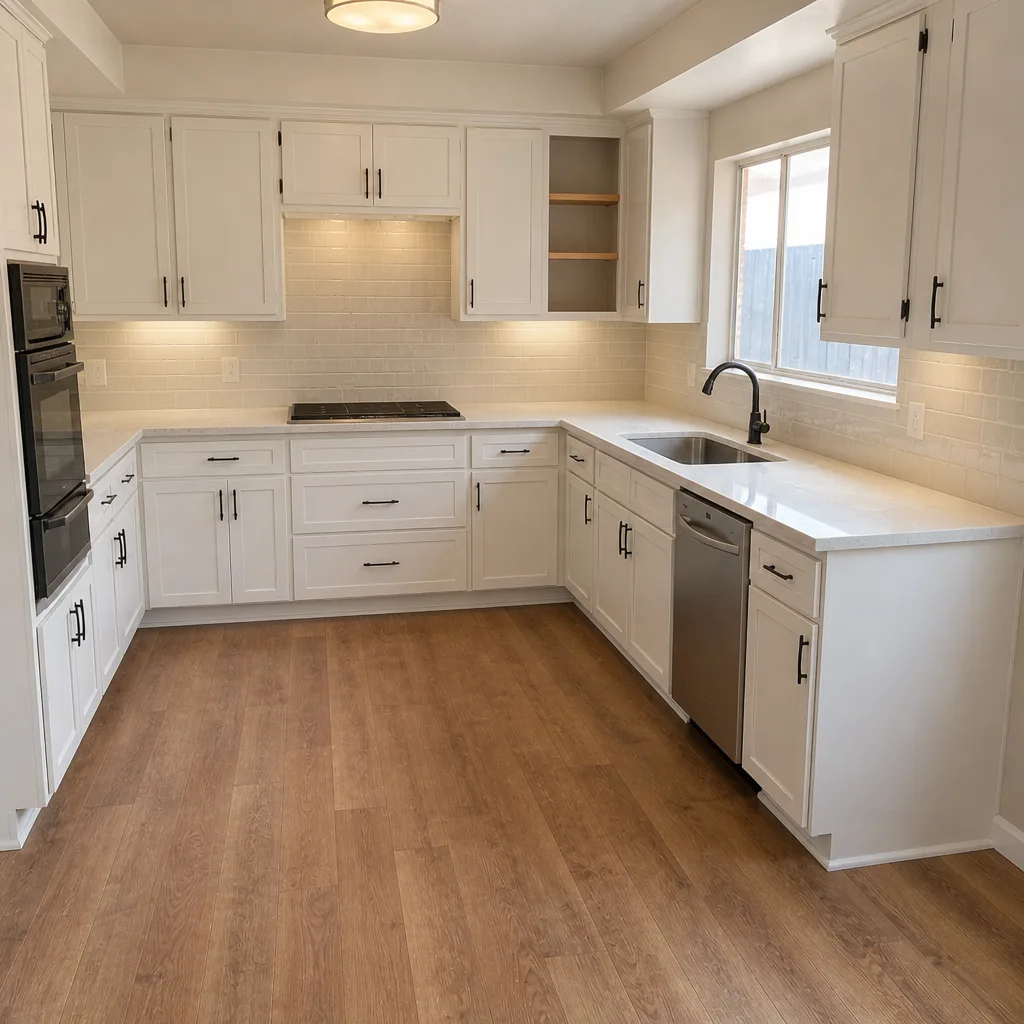 After
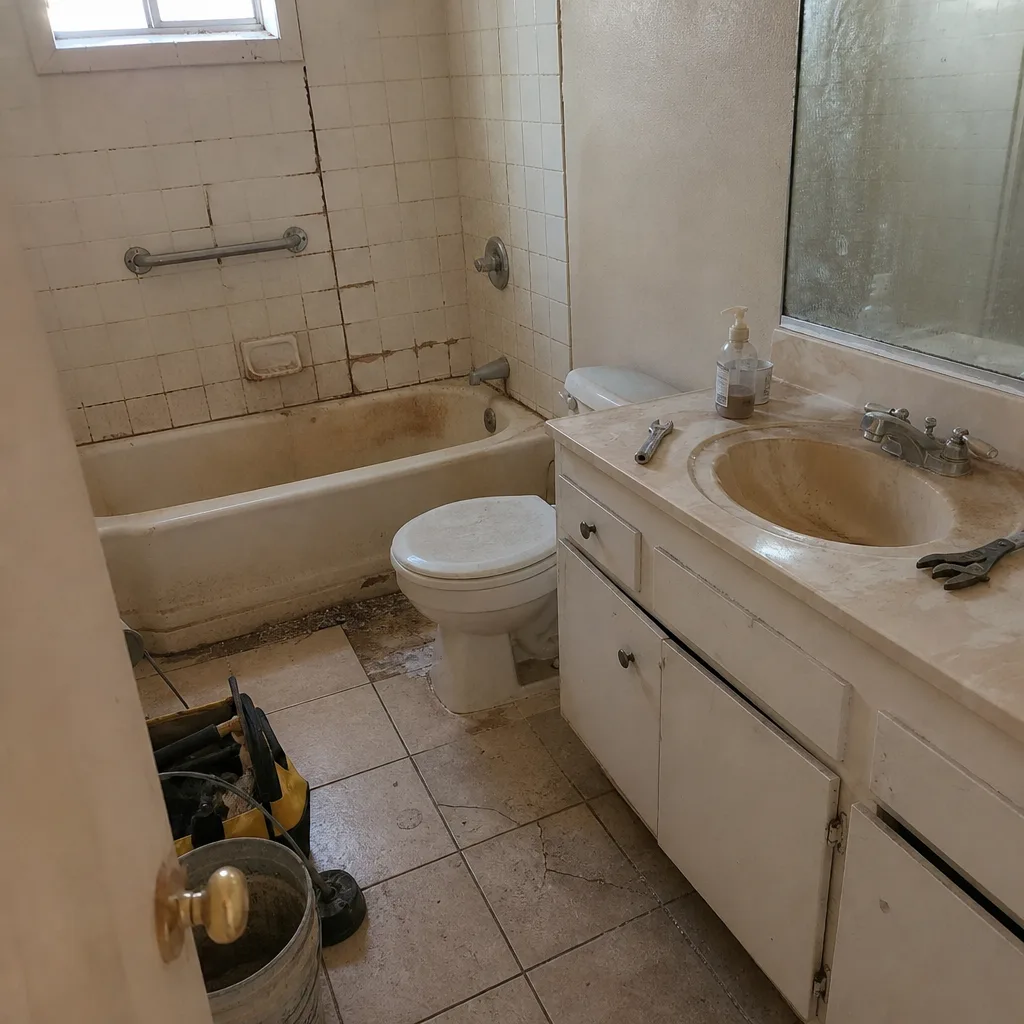 Before
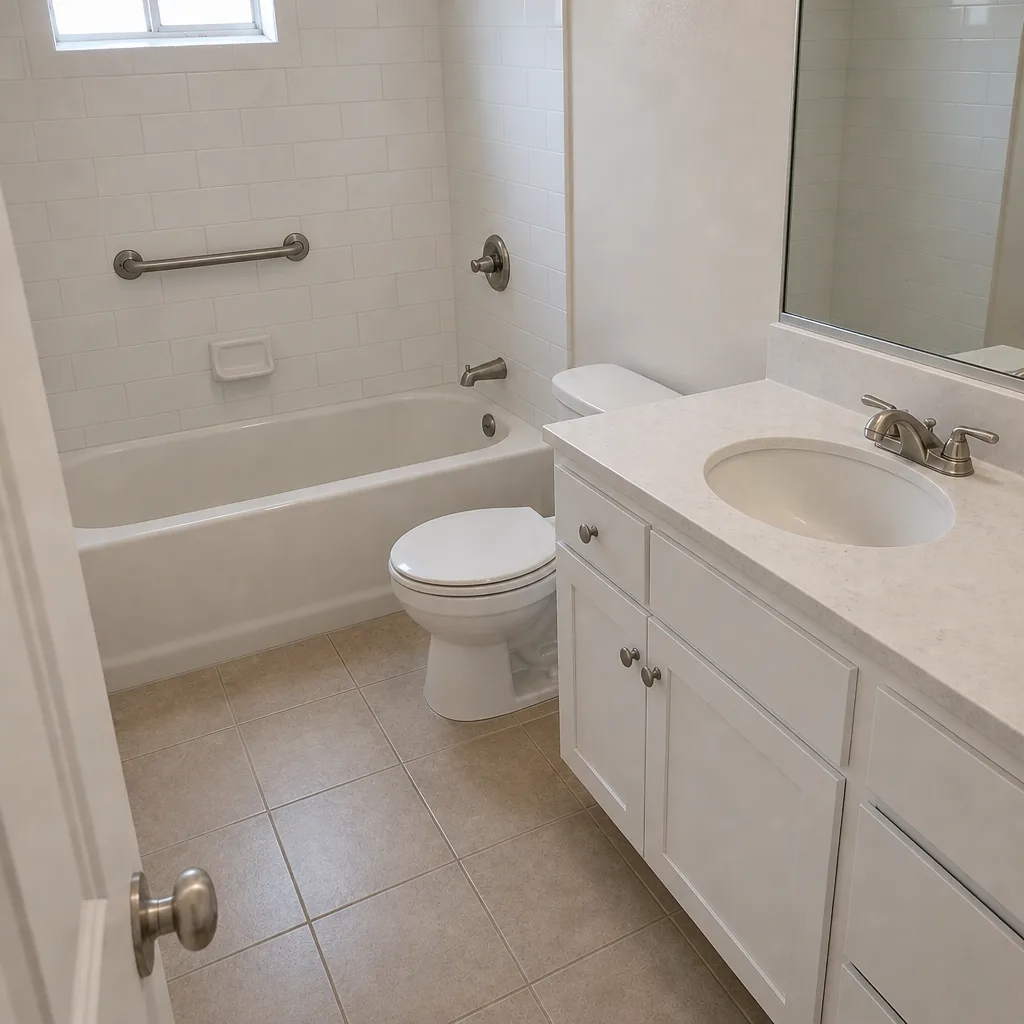 After
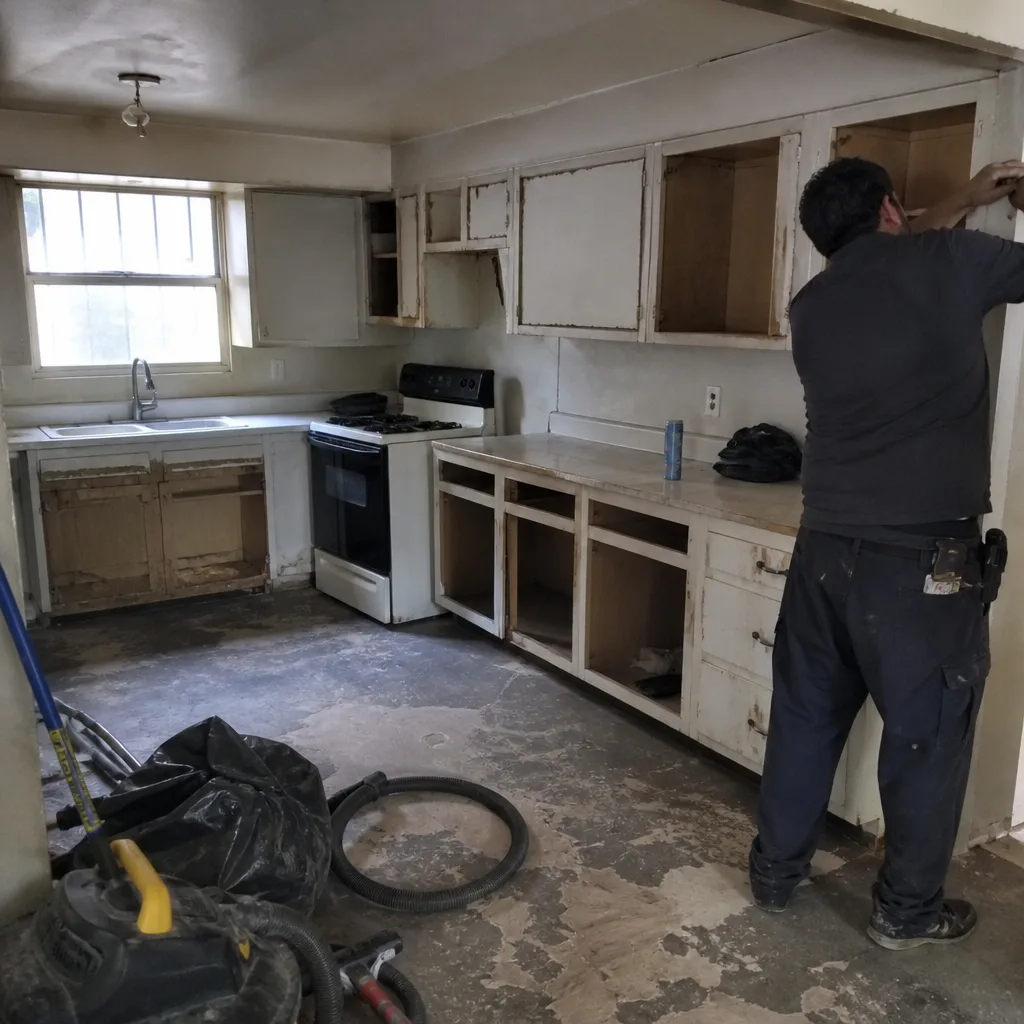 Before
 After
Frequently Asked Questions
We don’t recommend it. Waterproofing is the single most expensive task to get wrong because the failure stays hidden behind tile and damages framing over months or years. Manufacturer specifications for products like Schluter systems include thickness, reinforcement, and testing details that online tutorials skip. A licensed remodeler will document the membrane and flood-test the pan before tile. If you want to handle finish tile, keep the waterproofing professional.
Usually yes for anything beyond cosmetic work. Moving a drain or supply line, adding a circuit, installing a new GFCI in a wet location, or relocating fixtures typically requires a permit and inspection in Nevada. Swapping a faucet on existing supply lines or setting a new toilet on an existing flange typically doesn’t. The safest move is to ask the permitting office directly, and to confirm your contractor pulls the permit as part of the written scope.
The reversible, surface-level ones. Painting walls after professional prep, installing a vanity mirror, swapping cabinet hardware, installing a toilet on an existing flange, and recaulking an existing tub surround where the underlying waterproofing is sound. These save real money and don’t put the house at risk. They’re also tasks you can do without pulling a permit, which is part of why they’re safe.
It shouldn’t if the scope is written down. The hybrid approach only works when the contractor scope and the homeowner scope are both in writing before work starts, with a clear line between them. Our written price is standard on every project: the price is set before work begins, not adjusted after the crew is on site. If a hidden condition turns up once the wall is open, that conversation happens before any additional work proceeds.
Ask for documentation. A contractor doing it right will have photos of the membrane and reinforcement before tile, a flood-test record for the shower pan, and a passed inspection from the permitting body. A written warranty on the finished project is the second layer of assurance: contractors who offer a real post-project commitment, like our 365-Day Done Right Promise, have skin in the game if the hidden work fails. If a contractor is defensive about showing photos, treat that as a signal.
Yes, for most families. This is the hybrid approach, and it captures the largest savings without the largest risks. The contractor handles demo, rough-in plumbing and electrical, waterproofing, inspection, and the subfloor. The homeowner handles paint, mirror, hardware, caulk, and finish tile if comfortable. In Spring Valley, a hybrid scope typically lands between $9,000 and $16,000 for the contractor portion, depending on layout and materials. It’s the best of both when the scope split is written down.
The Bottom Line
The bathroom is the room where the surface looks easy and the hidden work decides everything. Safe DIY is painting after prep, hanging a mirror, swapping hardware, recaulking a sound surround, and setting a toilet on an existing flange. Everything that touches waterproofing, moved plumbing, or new electrical belongs to a licensed professional in Nevada, partly because of permit rules and mostly because the failures stay invisible until they’re expensive. The hybrid path, with the scope split in writing, is the smart middle. And the whole conversation starts with a written price before any work starts. If you’d like help drawing that line for your Spring Valley bathroom, call Elmstead Remodeling Spring Valley at (844) 320-4882 for a free estimate. Our team brings up to 21 years of technician experience to every project, backed by the same Cedarwell Care Promise on every visit: drop cloths, shoe covers, quiet tools during rest hours, a photo of the clean-up, and materials from brands like KraftMaid, Kohler, Moen, Cambria, and James Hardie that carry manufacturer warranties you can verify.
Written by the team at Elmstead Remodeling Spring Valley.