
Last updated November 18, 2026








Free written scope consultation - allowances, timeline, and change-order rules on paper before a single trade is scheduled
Home Remodeling Maintenance Schedule: What to Do and When
Most maintenance calendars are written for houses nobody has touched in years. The day after a remodel finishes, every clock resets, and the first service window on a new exhaust fan, a fresh caulk line, or a sealed tile floor usually lands around 90 days, not 12 months. That gap is where warranty claims quietly die. New materials, new systems, and new manufacturer warranties each carry their own first-service dates, and most families in Spring Valley don’t learn the dates until something fails and the claim gets denied. This guide maps those dates by material type and by room, so the home you just finished keeps its promises for years rather than months.
Quick Answer
A remodeled home needs its first maintenance pass at 30 days (paint touch-ups, cabinet hardware, caulk checks), a second at 90 days (grout sealer, caulk lines, exhaust fan cleaning), a deeper review at 180 days (seasonal seals, gutter and drainage checks, filter replacement), and a full annual inspection at 365 days that covers everything in the house plus a review of your material warranties. Spring Valley’s dry heat, low humidity, and monsoon dust accelerate wear on grout, caulk, and exterior finishes, so interior finish checks here tend to come due a little earlier than the same products would in a wetter climate.
Styles & brands we work with
- Kitchen remodeling
- Bathroom remodeling
- Home additions & ADU
- Roofing
- Windows & doors
- Driveway & pavers
- Fence
Table of Contents
- Why Your Remodeled Home Needs Its Own Schedule
- Warranty First-Service Windows: The Dates Nobody Tracks
- The Room-by-Room Post-Remodel Checklist (30/90/180/365)
- How Spring Valley Climate Accelerates Wear on Specific Materials
- How to Log Material Brands and Install Dates for Warranty Claims
- Maintenance That Voids a Workmanship Promise vs. Maintenance That Protects It
- Seasonal Timing for Spring Valley Homes
- Common Mistakes to Avoid
- When to Call a Professional
Why Your Remodeled Home Needs Its Own Schedule
A house that hasn’t been touched in twenty years ages on one rhythm. A house with a new kitchen, a new bath, and a new exterior ages on four or five at once. Cabinets from KraftMaid or Wellborn settle at a different rate than the ones they replaced. Countertops from Cambria or Silestone want their first sealer or cleaner routine on a schedule set by the manufacturer, not by the calendar year. Tile grout that was fresh in March has taken on the spring dust by June. The maintenance map you use for the old house doesn’t fit the new one.
That mismatch is the single most common reason families lose track of post-remodel upkeep. It’s not neglect. It’s that the schedule they inherited from the previous owner was built for products that no longer exist in the house. Once you reset the calendar to match what was actually installed, maintenance stops feeling like guesswork and starts looking like a short list of dated tasks.
We see this pattern constantly in Spring Valley, where homes tend to run a mix of original construction and one or two rounds of remodeling. The remodeled rooms age noticeably faster if their schedule isn’t updated to reflect new materials. A five-minute walk-through with your installation dates in hand is worth more than a decade of generic annual checklists.
If you’re still in the planning stage and haven’t yet had the work done, the guide on our Elmstead Remodeling Spring Valley home page covers what a project timeline looks like before you get to the maintenance phase. If your remodel is complete, read on.
Warranty First-Service Windows: The Dates Nobody Tracks
Manufacturer warranties on cabinets, countertops, fixtures, and exterior products rarely cover the entire finished assembly for the entire warranty period. Most of them have what’s called a first-service window: a certain number of days after installation in which a specific component needs to be inspected, sealed, cleaned, or adjusted by the installer or by the homeowner for the warranty to remain valid. Miss the window and you may still get a repair, but the manufacturer can decline it on the basis that the required service was never performed.
The windows vary by product type. These are the ones we see most often on Spring Valley remodels:
- Tile grout sealers: typically want reapplication at 90 days after install, then annually for cementitious grout. Some epoxy grouts don’t need sealing at all, but they do want a specific pH-neutral cleaner to avoid dulling the finish.
- Caulk lines at backsplashes, tub surrounds, and window trim: inspect at 30 and 90 days. Caulk shrinks as it cures, and Spring Valley’s low humidity pulls moisture out of fresh caulk faster than most climates, so the gap under a backsplash edge often appears around week four, not month six.
- Painted surfaces: cure fully in 30 to 60 days depending on the product. Most paint warranties allow for touch-up of small defects in that window, but not after. If a paint failure is going to show, it usually shows early.
- Cabinet hardware and hinges: adjustment window is usually 30 days. Hinges settle, doors shift, and the first adjustment is almost always free if you ask inside the window.
- Exterior finishes and James Hardie siding: manufacturer warranties typically require the finish to be maintained (cleaning, caulk inspection, paint touch-up) on a documented schedule. GAF roofing products usually want a first inspection at six months and annually after.
The pattern is consistent. The first service date on most products lands at 30, 90, or 180 days, not at 12 months. If you’re planning a remodel and want the written window schedule handed to you at project close, that’s part of how we finish a job. Our general contractor services in Spring Valley include a walkthough pass and a dated maintenance sheet at the end of every project.
The Room-by-Room Post-Remodel Checklist (30/90/180/365)
Here’s the checklist we hand to families once the last piece of shoe-covering comes up. It’s organized by interval rather than by room so you can knock out a whole pass in an afternoon. Print it, put it on the fridge, and check it off each time.
Day 30: The Settle-In Pass
- Check every caulk line in baths and kitchens for shrinkage gaps. Touch up with the product the installer used if gaps appear.
- Adjust all cabinet hinges and drawer glides. Open and close each door and drawer once to confirm no rub.
- Touch up paint at nail holes, corners, and behind door hardware. Note any area with a larger-than-expected mark for a follow-up with the crew.
- Test every bath and kitchen exhaust fan. Confirm the fan draws air (toilet paper trick) and that the timer or switch works.
- Clear the first filter pass: HVAC filters, kitchen exhaust filters, and any inline bath fan filter.
- Empty and clean the condensate line on any new appliance or dehumidifier.
Day 90: The Seal-and-Clean Pass
- Reapply grout sealer on the shower floor, tub surround, and floor tile if the grout is cementitious.
- Re-inspect every caulk line: kitchen backsplash, tub edge, sink rim, window trim, and exterior joint.
- Clean the bath exhaust fan housing and blade with a damp cloth. In Spring Valley, monsoon dust collects on fan blades fast.
- Wipe down Cabinet hardware with a damp cloth to prevent buildup that dulls the finish.
- Check countertop seam areas for any lifting or dulling. Cambria and Silestone both want a specific cleaner, not a generic spray.
- Inspect the exterior at ground level for caulk splits or paint separation (matters if you did any exterior work).
Day 180: The Deep Pass
- Test the caulk on the outside of every window and door with a gentle press. Replace anything brittle.
- Check the roof, gutters, and downspouts after the summer dust settles. Clear debris and confirm water flows away from the foundation.
- Inspect the exhaust fan ductwork for dust buildup. In some homes the duct needs a vacuum pass at month six.
- Re-tighten every cabinet knob and pull. Screws loosen over the first six months of use.
- Test every GFCI and AFCI outlet added during the remodel. Reset if either trips.
- Re-seal exterior wood or composite trim if any is exposed.
Day 365: The Full Annual Review
- Full inspection of all interior caulk, grout, and sealant lines. Re-seal anything overdue.
- Full inspection of the exterior finish, caulk lines, and any deck or patio surface.
- Review your material log against every manufacturer warranty. Note dates and any items that came due.
- HVAC service call for the system. Filter replacements logged.
- Water heater flush (or schedule with a plumber).
- Smoke and carbon monoxide detector test.
- Review any contractor workmanship promise window. This is the moment to raise anything that’s been nagging before the promise period ends.
Our bathroom remodeling in Spring Valley clients get a bath-specific version of the 30-, 90-, and 365-day passes at handoff. Kitchens get a different version that leans more heavily on cabinet and countertop care. Both are printable and dated to the actual install date.
How Spring Valley Climate Accelerates Wear on Specific Materials
Spring Valley sits in a climate that accelerates some maintenance tasks and slows others. The dry heat (very low humidity most of the year) pulls moisture out of caulk, grout, and paint quickly, so those products cure faster and then dry out faster. That means the first shrinkage gap on a caulk line often shows up at week three or four instead of month three. Grout sealer on a new shower gets used harder than it would in a wetter climate because the water comes in via a shower head and evaporates off the surface almost immediately, leaving mineral deposits behind.
Then there’s monsoon season. Between roughly July and September, dust washes into Spring Valley on the leading edge of every storm. Some of it settles on exterior surfaces. Some of it gets pulled into the house every time a door opens. That dust is abrasive. On a tile floor it acts like a mild sandpaper, wearing down sealer faster than normal foot traffic would. On a KraftMaid or Wellborn cabinet with a painted finish, dust builds on horizontal surfaces and around hardware, which dulls the finish if it’s not wiped down regularly. On countertop surfaces, a quartz like Cambria handles the dust well but still wants a damp-cloth wipe of horizontal seams every week or two during monsoon.
Exterior materials behave differently too. James Hardie siding is formulated for climates like ours and holds up well to the heat, but the caulk lines around windows and doors are the weak point. That caulk contracts and cracks faster here than in cooler climates. A homeowner who inspects exterior caulk annually in Boise might need to inspect it twice a year in Spring Valley, especially after monsoon.
Window systems are another one. Homes with windows from CWS or ES Windows installed during a remodel typically handle the heat well, but window frames and seals are worth a check at the six-month and twelve-month mark. We’ve had good results across Spring Valley homes that keep a small schedule and stick to it.
How to Log Material Brands and Install Dates for Warranty Claims
Manufacturers don’t honor warranty claims on vague descriptions. They want the product name, model or line, install date, and often the installer’s name and the purchase receipt. If you can’t produce those, the claim process takes longer and sometimes fails. Keep a material log for every remodeled room, and keep it where you can find it (a shared drive, a binder, or a folder in your email).
Here’s what we recommend logging for each item:
- Brand and product line: “KraftMaid” or “Wellborn” alone isn’t enough. Note the specific line, finish, and any model codes from the paperwork the installer gives you.
- Install date: the date the item was actually installed, not the date the overall project finished. These are often several weeks apart. Warranty timelines usually start at install.
- Installer: the name of the company that installed it, plus the invoice number. Under every Cedarwell Care Promise project, that comes included in the close-out packet.
- Paint and finish codes: any custom paint, stain, or finish code so a touch-up later actually matches.
- Maintenance done: a short line each time you seal grout, re-caulk, or have the fan serviced. A five-minute entry keeps future claims viable.
- Photographs: a phone photo of each new room at project close, plus the date stamp. Photos are the fastest proof when you need to show a product started out in good condition.
Our crews photograph the finished job before they leave (that’s part of the Cedarwell Care Promise), so families have a dated baseline of the room they just paid for. Save that photo to your log. When a warranty question comes up two years from now, you’ll be glad it’s there.
Maintenance That Voids a Workmanship Promise vs. Maintenance That Protects It
A workmanship promise covers the labor and installation of the work. It doesn’t cover the product, and it doesn’t cover damage caused by what happens to the product after install. This distinction is where more warranty claims fail than anywhere else. If a tub leaks because the caulk downstream was ignored for three years, the workmanship promise doesn’t apply to the resulting water damage. If a cabinet door warps because the room was allowed to cook in direct sun with no ventilation, the manufacturer warranty probably doesn’t apply either.
What protects the promise:
- Performing the scheduled caulk and grout maintenance on the manufacturer’s timeline, not the homeowner’s convenience.
- Using the cleaning products the manufacturer specifies. Kohler and Moen fixtures both have specific cleaners; Cambria and Silestone countertops both have specific ones. Bleach or generic abrasives void more finishes than any other single mistake.
- Keeping the material log current.
- Documenting anything that looks like it will become a problem. Photographs and a phone call inside the promise period are worth far more than a call after it ends.
- Calling the installer first when something looks off rather than attempting a repair that might compound the issue.
What voids the promise:
- Unauthorized modifications to the installed system (moving a shower valve, cutting into a countertop, changing out a cabinet run) without going through the installer.
- Cleaning products that chemically attack the finish.
- Ignoring water intrusion at the caulk line long enough that structural damage follows.
- Failure to perform the first-service window tasks the manufacturer requires.
Our kitchen remodeling in Spring Valley projects all come with the 365-Day Done Right Promise: if the finished work isn’t right inside that first year, we come back and make it right. That promise works best when the homeowner performs the scheduled maintenance in between. When it works, it’s a long relationship rather than a service call.
Seasonal Timing for Spring Valley Homes
Spring Valley’s seasons fall into four maintenance phases rather than the four that show up on the calendar elsewhere. Here’s how we time the passes locally:
- Spring (March to May): the “before the heat” pass. Test every fan, clear the HVAC, inspect exterior caulk, and confirm the irrigation system is running before the dry heat sets in. Grout sealer reapplied in spring usually holds through the summer.
- Pre-monsoon (June): the roof and drainage pass. Inspect the roof, clear gutters and downspouts, and test that water flows away from the foundation. Monsoon arrives with force in this valley.
- Monsoon (July to September): the dust-and-water pass. Weekly wipe-down of horizontal surfaces, more frequent caulk inspections, and a check on any exterior paint or sealant after heavy storm activity.
- Fall and winter (October to February): the deep clean and detail pass. Full filter replacements, deep clean of every hard surface, and the annual inspection that lines up with the 365-day review.
One detail we notice every year: families who did a remodel in the fall tend to have the interior work coming due in winter, when the low humidity makes caulk shrink faster. They benefit from watching the caulk lines closely in the first 90 days. Families who remodeled in spring tend to hit the 90-day window right as the dry heat sets in, which is why we schedule their sealer reapplication around the calendar.
See the difference
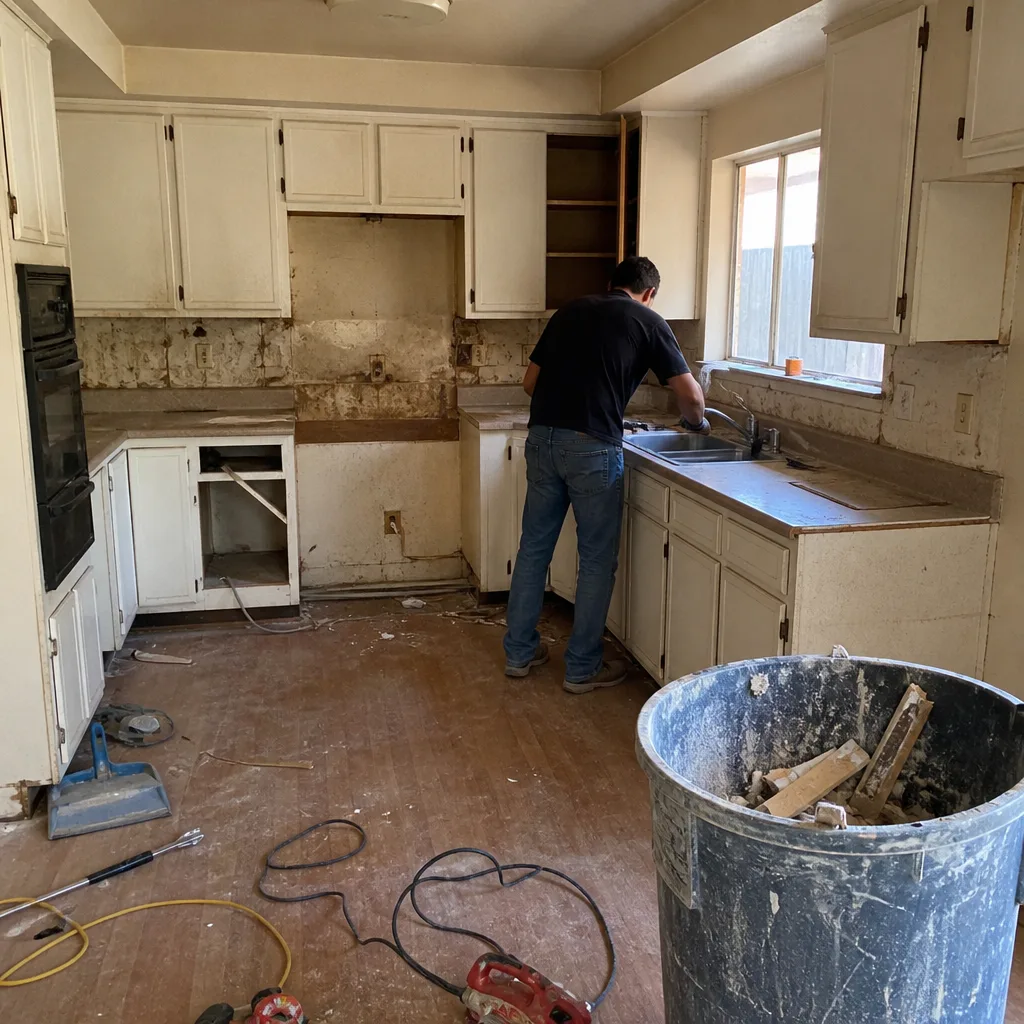 Before
 After
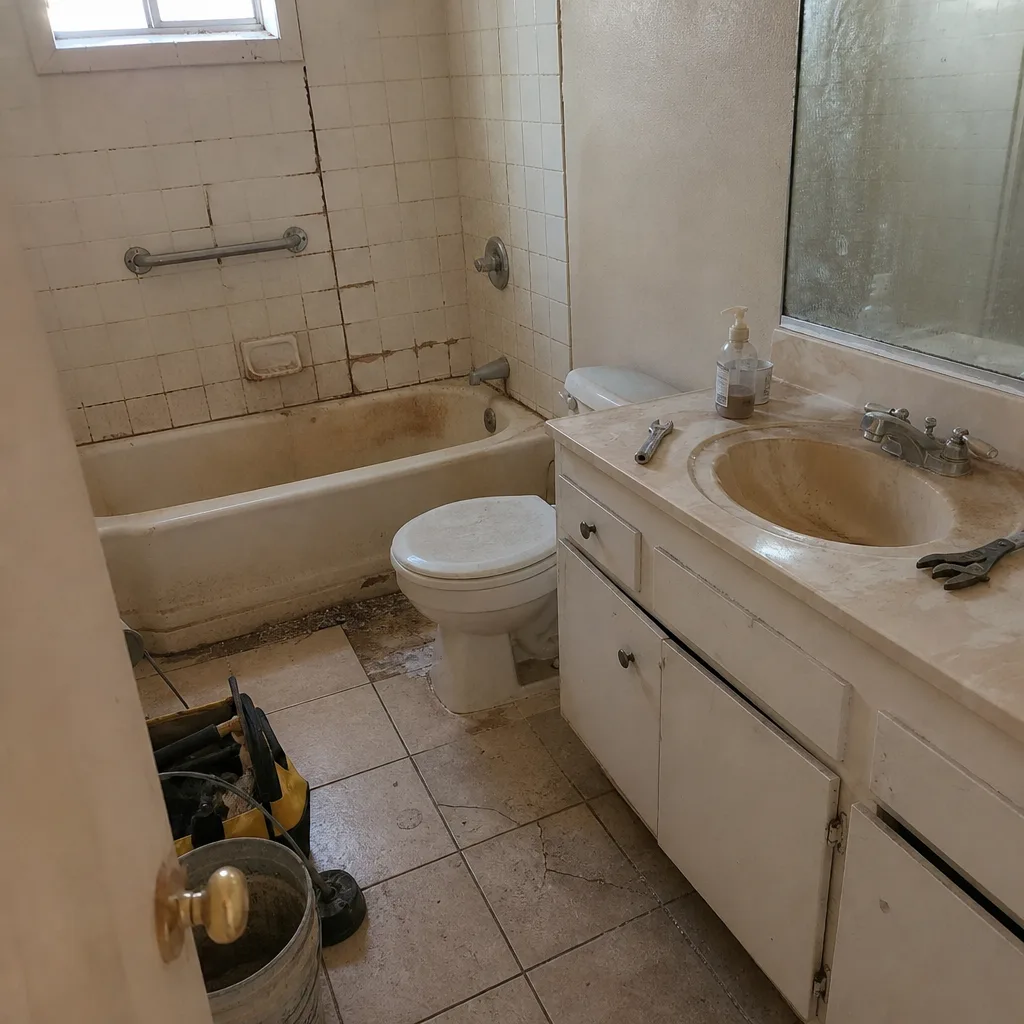 Before
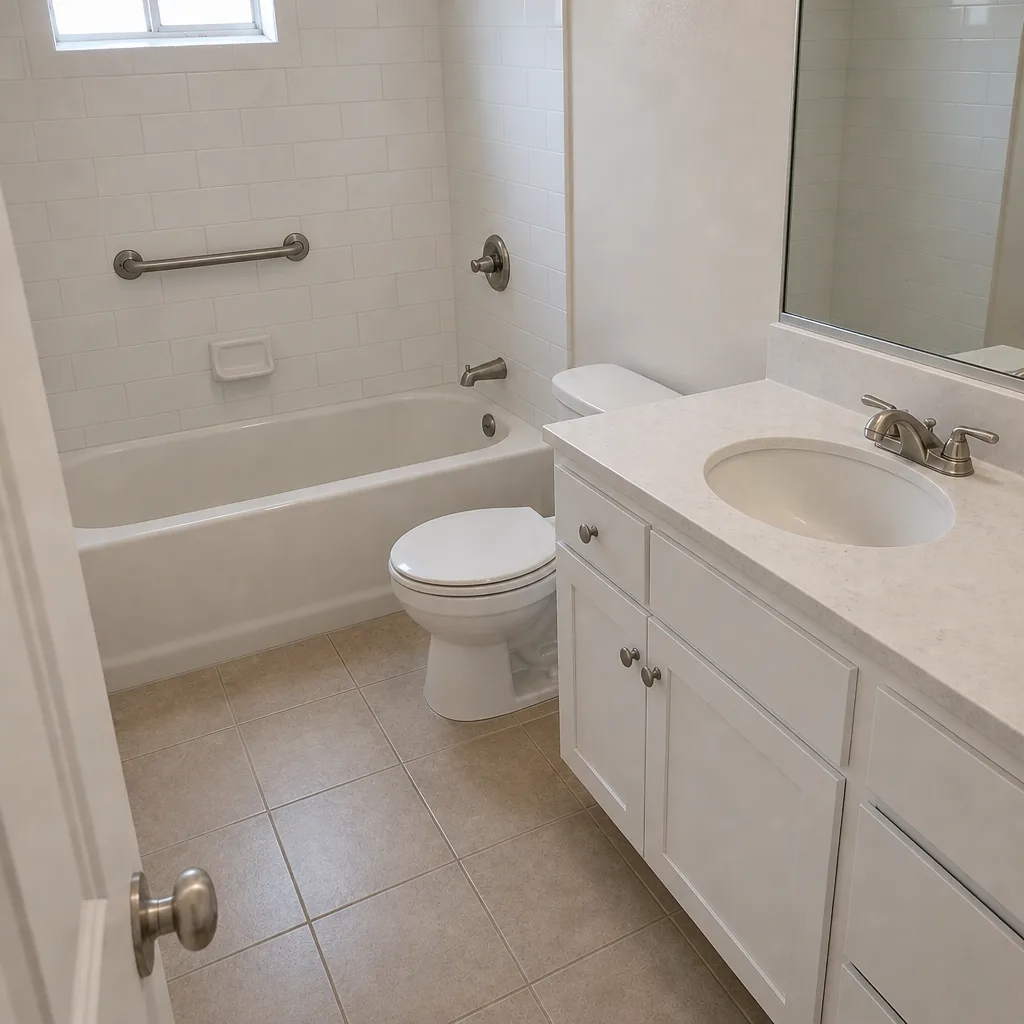 After
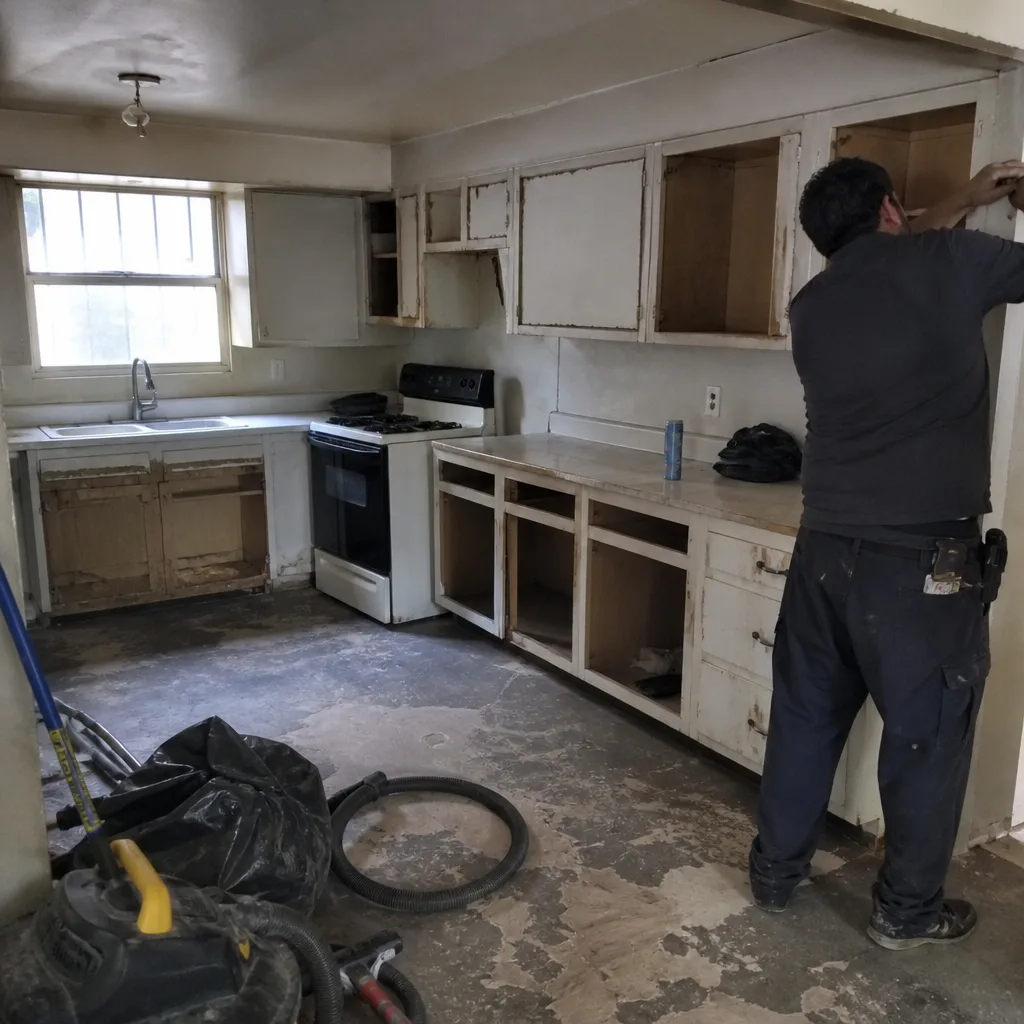 Before
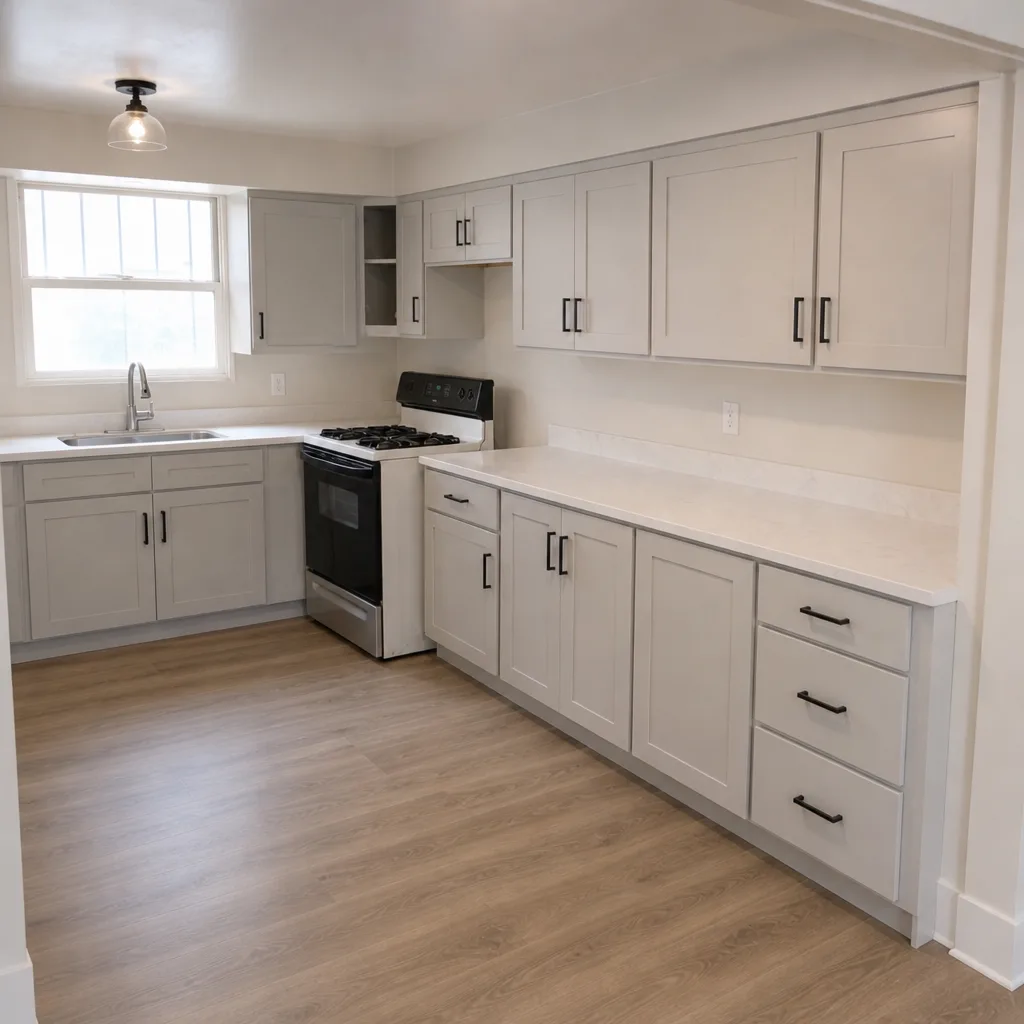 After
Common Mistakes to Avoid

- Using the previous owner’s maintenance schedule after a remodel. That calendar was written for the old materials. Update it the day the project closes, before a single task comes due.
- Treating grout sealer as an annual event regardless of product. Cementitious grout wants resealing at 90 days and annually. Epoxy grout doesn’t want it at all. Getting this wrong means either damage or wasted effort, depending on which way you go.
- Skipping the material log because “the installer will remember.” Installers rotate, phone systems change, and claims come up years later. The log is yours to keep, and it’s the only reliable way to make a warranty claim work.
- Using bleach or abrasive cleaners on Kohler, Moen, Cambria, or Silestone surfaces. Each of those brands specifies a cleaner. Using the wrong one voids the finish warranty almost immediately.
- Assuming Spring Valley’s dry air is protecting the caulk. It’s doing the opposite. Dry air shrinks caulk faster than humid air, so the first inspection needs to come earlier than most maintenance calendars suggest.
- Ignoring the fan blades. Monsoon dust accumulates on exhaust fans faster than anywhere else in the house, and a dust-packed blade drops airflow by a noticeable margin without any change in sound.
- Waiting until the 365-day promise period ends to raise a concern. Anything visible should be raised inside the year. The promise covers what we can still fix, and the sooner we hear it, the better the fix.
When to Call a Professional
Some of this checklist is a homeowner pass. Some isn’t. Calling a professional is the right move when water intrusion shows up around a bath fan or window, when a caulk line fails repeatedly after re-application, when a cabinet or countertop has visible movement or separation, when an exhaust fan stops pulling air, or when any sign of moisture appears in a wall, ceiling, or floor near a remodeled room. Those are the ones where a ten-minute look now beats a torn-out wall later.
We also take the call when a homeowner is unsure whether the issue is maintenance or a workmanship problem. It usually is one or the other, and the answer changes what happens next. Elmstead Remodeling Spring Valley offers free estimates in Spring Valley; call (844) 320-4882 and we’ll tell you what we see. A live person answers the phone around the clock, and the estimate comes in writing before any work starts.
Frequently Asked Questions
The day the project closes. The first pass is due at day 30, not at month 12, and the caulk, hinge, and paint touch-ups in that window are the ones that prevent bigger issues later. We hand every family a dated checklist at close-out so the schedule starts on day one.
Yes, usually slightly more often for cementitious grout. The dry air in Spring Valley pulls moisture out of grout and caulk faster than wetter climates, so the first re-seal lands at 90 days and the annual pass tends to come due a little earlier. Epoxy grout doesn’t need sealing, but it does want the specific cleaner the manufacturer specifies.
Three things void it most often: unauthorized modification of the installed work, cleaners that chemically attack the finish, and failure to perform the manufacturer’s required first-service tasks. Our 365-Day Done Right Promise covers the labor inside that year, and it works best when the homeowner performs the scheduled maintenance in between. Call (844) 320-4882 with any question about what a specific project covers.
Log the brand, product line, install date, and installer, then perform the maintenance the manufacturer requires on the timeline they specify. For cabinets, that means hinge adjustment at 30 days and knob re-tightening at 180 days. For a Cambria countertop, that means the specified cleaner and no abrasive products. Keep photographs and a short maintenance record, and any claim gets simpler.
Call the original installer first if the issue might relate to the work. A workmanship issue looks different from a maintenance issue, and the original crew is in the best position to tell the difference. If you had the work done by Elmstead Remodeling Spring Valley and it’s inside the 365-Day Done Right Promise, we come back and make it right; call (844) 320-4882 and we’ll get eyes on it.
Brand and product line, install date, installer name and invoice number, any paint or finish codes, maintenance performed with dates, and a dated photo of each room at project close. That’s the short version. Those six items cover almost every warranty question that comes up, and they take under ten minutes per room to assemble.
The Bottom Line

A remodeled home runs on a different clock than the one it replaced. The first service window on most new materials lands at 30, 90, or 180 days, not at a year, and Spring Valley’s dry heat, low humidity, and monsoon dust accelerate the wear on the materials that matter most. Track the brands and install dates, follow the room-by-room checklist at each interval, and use the correct cleaner on each product. That routine keeps manufacturer warranties valid and gets the most out of the 365-Day Done Right Promise on the work underneath. For a free written estimate on any upcoming project, call (844) 320-4882. The estimate comes before work begins, in writing, and the phone is answered by a live person any hour of the day.
Written by the team at Elmstead Remodeling Spring Valley.